Do you miss the PDA?
- Transfer
- Tutorial
Do it yourself!
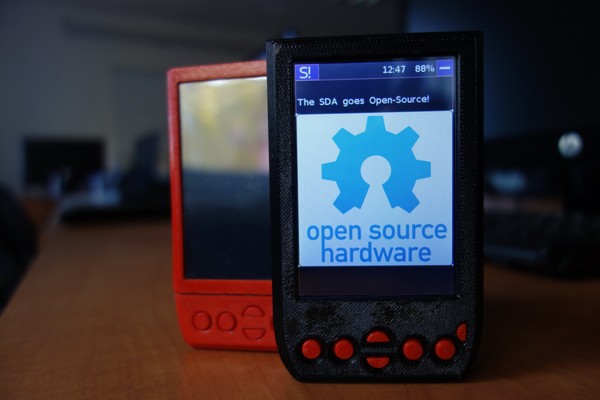
The device is made on the STM32F4 microcontroller and runs under the control of a specially developed OS for it. Applications for it can be written in a scripting language and placed on a memory card. In standby mode, charging lasts about five days, with the display turned on with a backlight brightness of 60% for more than six hours.
The software uses third-party developments under the MIT license, the finished result is laid out under it. If you are still not sure that you need such a gadget, change your mind to the opposite, using the simulator (requires WebAssembly, the translator worked):

Yes, and he does not even have a hint of framelessness.
Device diagram:
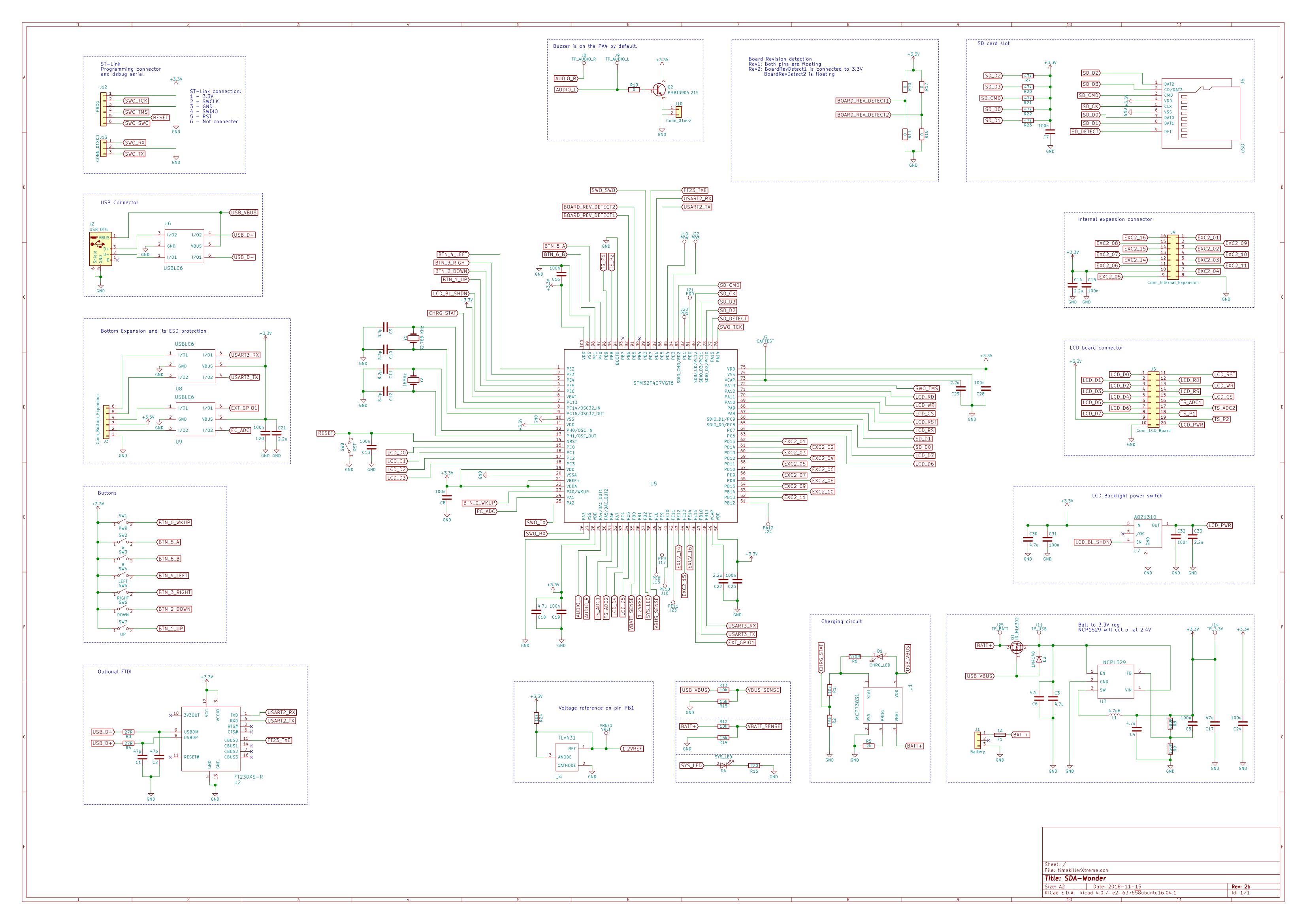
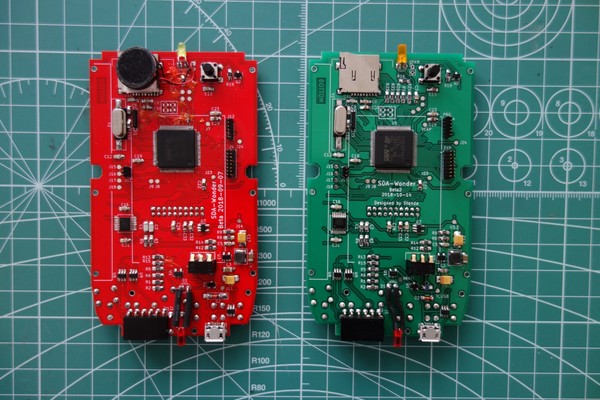
View of the board with a list of components:

Both pages are in PDF , files for making the motherboard , files for making the display connection board , files for printing the case .
A couple of videos:
Remember the story about the iPhone prototype - a huge board that will not fit in any case? The author prototyped this design in much the same way. I took the finished Nucleo board on the STM32F103 and an inexpensive Chinese display with a resistive sensor. It turned out this way:

On this rough prototype, the author developed and debugged a simple library for implementing the user interface. In order not to reflash the microcontroller every time I want to add a new application, the author wrote a small interpreter of simple scripts and took ChaN's FatFs library to read them from the map. Then he wrote a graphics library and interpreter of the same scripts for PC, which simplified their debugging.
Everything worked, but it was very far from portability, which led to the development of a second prototype. In it, the author applied a universal board for microcircuits in QFP cases and replaced the microcontroller with the STM32F405RGT6. There was already a dynamic head, but there were no buttons and software power management. The prototype worked from the old power bank through a stabilizer with a small voltage drop. At this stage, the author wrote several applications, including a reader of very long TXT files.


The third prototype received a 3D-printed case, but inside it was still the same. Layout, conductors, hot-melt adhesive ...

Compare the result with the vintage Palm'om:
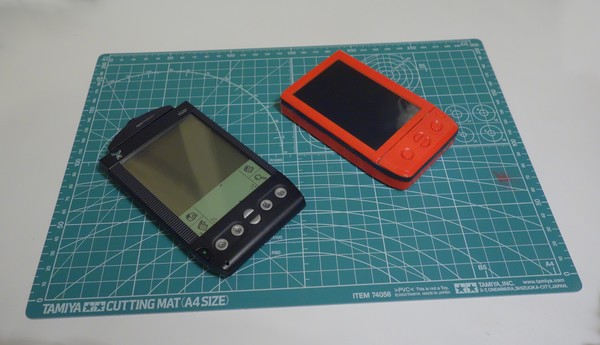
Next, the author developed a printed circuit board and redid the case, the physical buttons became like Palm's:

You can play MP3s by adding the standard DFPlayer module with one more card:
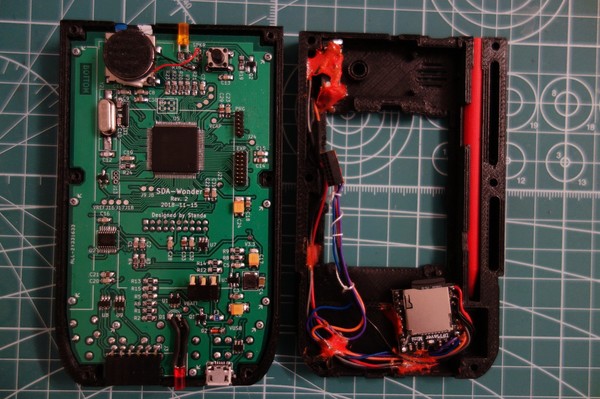
A couple of video on assembly, here you can see that the slot for the main memory card (the one where the applications, not the MP3 files) is located on the back of the board:
The device is made on the STM32F4 microcontroller and runs under the control of a specially developed OS for it. Applications for it can be written in a scripting language and placed on a memory card. In standby mode, charging lasts about five days, with the display turned on with a backlight brightness of 60% for more than six hours.
The software uses third-party developments under the MIT license, the finished result is laid out under it. If you are still not sure that you need such a gadget, change your mind to the opposite, using the simulator (requires WebAssembly, the translator worked):
Yes, and he does not even have a hint of framelessness.
Device diagram:
View of the board with a list of components:
Both pages are in PDF , files for making the motherboard , files for making the display connection board , files for printing the case .
A couple of videos:
Remember the story about the iPhone prototype - a huge board that will not fit in any case? The author prototyped this design in much the same way. I took the finished Nucleo board on the STM32F103 and an inexpensive Chinese display with a resistive sensor. It turned out this way:
On this rough prototype, the author developed and debugged a simple library for implementing the user interface. In order not to reflash the microcontroller every time I want to add a new application, the author wrote a small interpreter of simple scripts and took ChaN's FatFs library to read them from the map. Then he wrote a graphics library and interpreter of the same scripts for PC, which simplified their debugging.
Everything worked, but it was very far from portability, which led to the development of a second prototype. In it, the author applied a universal board for microcircuits in QFP cases and replaced the microcontroller with the STM32F405RGT6. There was already a dynamic head, but there were no buttons and software power management. The prototype worked from the old power bank through a stabilizer with a small voltage drop. At this stage, the author wrote several applications, including a reader of very long TXT files.
The third prototype received a 3D-printed case, but inside it was still the same. Layout, conductors, hot-melt adhesive ...
Compare the result with the vintage Palm'om:
Next, the author developed a printed circuit board and redid the case, the physical buttons became like Palm's:
You can play MP3s by adding the standard DFPlayer module with one more card:
A couple of video on assembly, here you can see that the slot for the main memory card (the one where the applications, not the MP3 files) is located on the back of the board: