April 27, 2019 at 23:52
Windows XP is officially dead, now finally

Everyone liked the XP search dog, right?
Most users buried Windows XP more than 5 years ago. But loyal fans and hostages of the ecosystem together still continued to use this operating system, going for various tricks to maintain its vegetative state. But time passed, and Windows XP finally reached the end of the road, as its last still supported option - POSReady 2009 - is no longer officially supported.
The point of no return is passed.
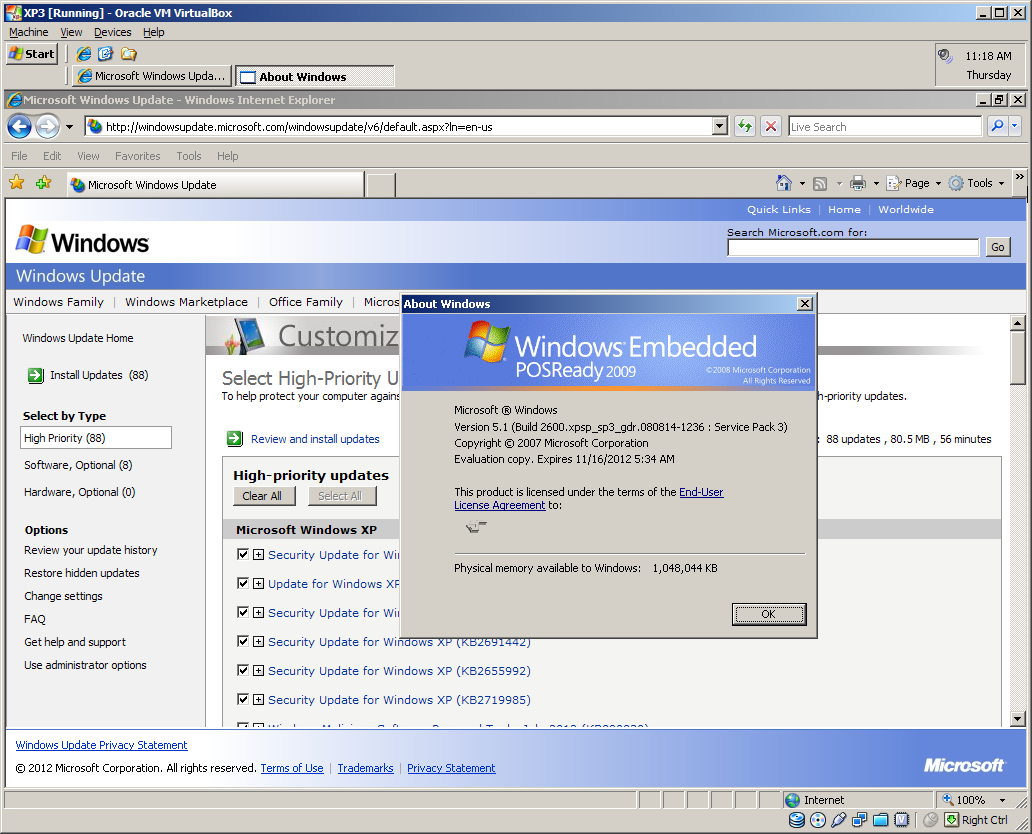
Screenshot of neowin.net .
Windows Embedded POSReady 2009, which, as its name implies, is primarily designed to launch applications that attract customers with exclamations like “Free Checkout!” Finally completely lost its official support in April 2019, which marked the absolute end of the impressive life for such a massive family of operating systems.
British Boots retailer demonstrates an old Windows XP login screen at a self-service terminal in its store in Islington:
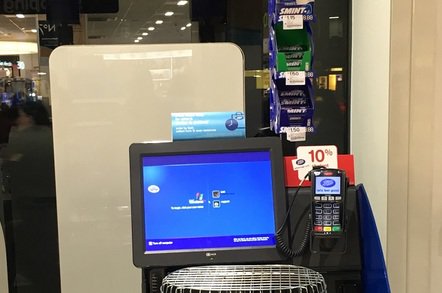
Photo of a Windows POSready 2009 outlet theregister.co.uk
Discovered by the Register reader, the POS terminal joyfully displays the old XP login page, although employees placed an inverted basket in front of the machine so that customers would not touch it.
Windows XP is no longer supported. However, some publications were delayed for years after the official date of death. Embedded Standard 2009 was finally turned off in January, and extended implementation support in the form of Embedded POSReady 2009 ended on April 9th.
A few days earlier, on April 5, 2019, Microsoft released the latest update for the “Last of the Mohicans” with KB4487990, which fixed time zones for Sao Tome and Principe and Kazakhstan's Kyzylorda.
After that there was dead silence. The corporation has turned off all life support systems. The patient is dead and will never come out of a coma again.
The global support for most variants of Windows XP, unfortunately, ended back in 2014, amid loud screams and gnashing of teeth, when enterprises realized that they would suddenly have to go somewhere from their usual platform. XP has been available for installation since 2001, but due to the fact that many missed the disastrous Vista and set the trend for refusal from updating, a significant number of XP workstations remained alive to this day.
Fortunately, Windows 7 was so good that most people could just start using it. But not all. Windows XP was the first OS to seriously suffer from a problem called “too good to quit,” which caused end-users to refuse to upgrade long enough after the OS went through its golden years.
This was partly a reaction to Windows Vista and partly the result of XP being unusually long in flagship status. When Bill Gates decided to focus on security in Windows XP Service Pack 2 (SP2), Microsoft did not rebrand or release a new version of the OS, despite a number of significant changes. Before XP, Microsoft quickly sorted through its consumer operating systems: in 1992 - Windows 3.1, then - Windows 95, 98 and Windows 2k and ME in 2000. The term of office of XP turned out to be much longer - it was the main consumer OS of Microsoft for more than five years (2001-2006) and continued to be popular in the market until the release of Windows 7 in 2009.
This longevity can sometimes be just annoying. Having come to light in the last days of the popularity of floppy disks, Windows XP immediately suffered from one of the inherent flaws - the inability to manually load the disk controller drivers from anything other than a floppy disk, which was already very annoying at the end of the operating life of this OS when using controllers with AHCI or RAID (Yes, it was possible to incorporate drivers into new copies of Windows XP written to disk. However, it was rather unpleasant to constantly write new copies of Windows XP.)
In the XP era, Microsoft learned some lessons about how hard it is to get people to move from the version of the OS they loved and would like to continue to use to the new version. Most likely, it was this experience that led to the approach to Windows 10 as an eternal, constantly updated product - although Microsoft also took several steps to weaken this policy and return additional control to users.
Some large users, such as the British government, have maintained the flames of life in dying Windows XP after 2014, paying Microsoft significant pounds sterling for personalized access to updates, while others have found that “masking” their computer’s aging operating system under “POSReady” with specific registry changeswill allow you to receive security updates for quite some time.
Despite the fact that outdated (from a security point of view) computers with Windows XP remained fertile ground for spreading viruses, in some cases, machines running this OS actually thwarted the plans of attackers. At least this was the case during one of the recent outbreaks of WannaCry malware in 2017, when it was discovered that computers with XP fell too often into the BSOD and “ pretended to be dead ”, which prevented the spread of the virus, whose exploit did not work “as it should ".
Unpatched computers with Windows 7 became the main target for hackers, who were particularly confused by Marcus Hutchins , who found the global “switch” of the WannaCry epidemic.
It is worth remembering that for Windows 7, Microsoft has set a date for execution in 2020, which is just around the corner.
While Microsoft is pleased to propose upgrading to Windows 10 or Windows 10 Pro for POSReady 2009 computers, the hardware available to users is unlikely to benefit from this, as it has to be replaced due to increased system requirements.
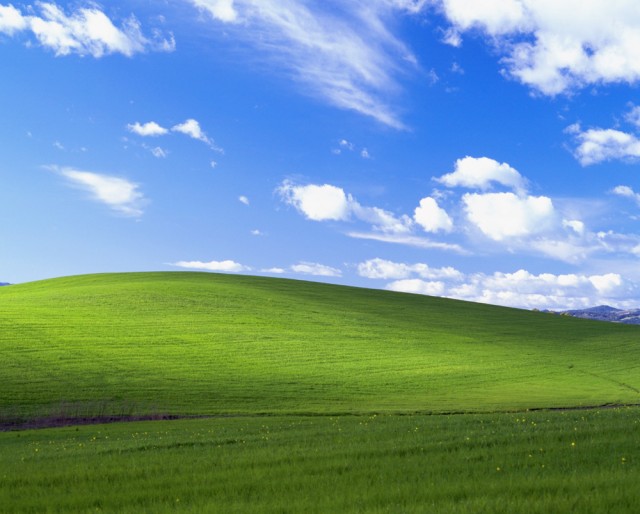
Bliss, original photo by Chuck O'Rear
Well, since there will be no more updates, it is time to gather around the campfire with glowing license agreements, hold hands and sing memorial songs while looking at wallpapers with
serene green fields.
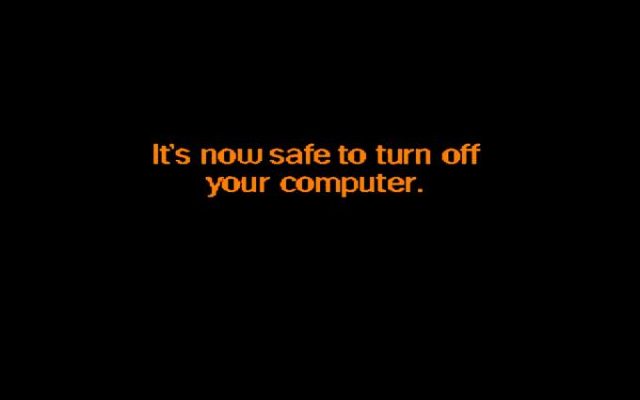
Image extremetech.com
And then put Linux or ReactOS.
PSAnyone who still refuses to believe in the death of Windows XP may find it interesting to re-read the topic published on December 27, 2018 under the heading " Why does Windows XP still steer in 2019, or QUESTION? " However, it is obvious that now the tricks described in this material will become harder and harder to crank.
Only registered users can participate in the survey. Please come in.
Do you personally still have a computer with XP?
- 0.5% SP1 without updates 2
- 4.3% SP2 without updates 17
- 10.1% SP3 without updates 40
- 10.3% SP3, which was updated to 2014 41
- 2.7% SP3 with a registry patch for POSReady (updated until April 2019) 11
- 0.5% Real Version Embedded or POSReady 2
- 3% XP, which does not fit the specified options at all 12
- 68.3% no, I don’t have such a computer or device 270