April 26, 2019 at 10:06
When new technologies are more important than the basics: why the “bendable” Samsung Galaxy Fold turned out to be a failure
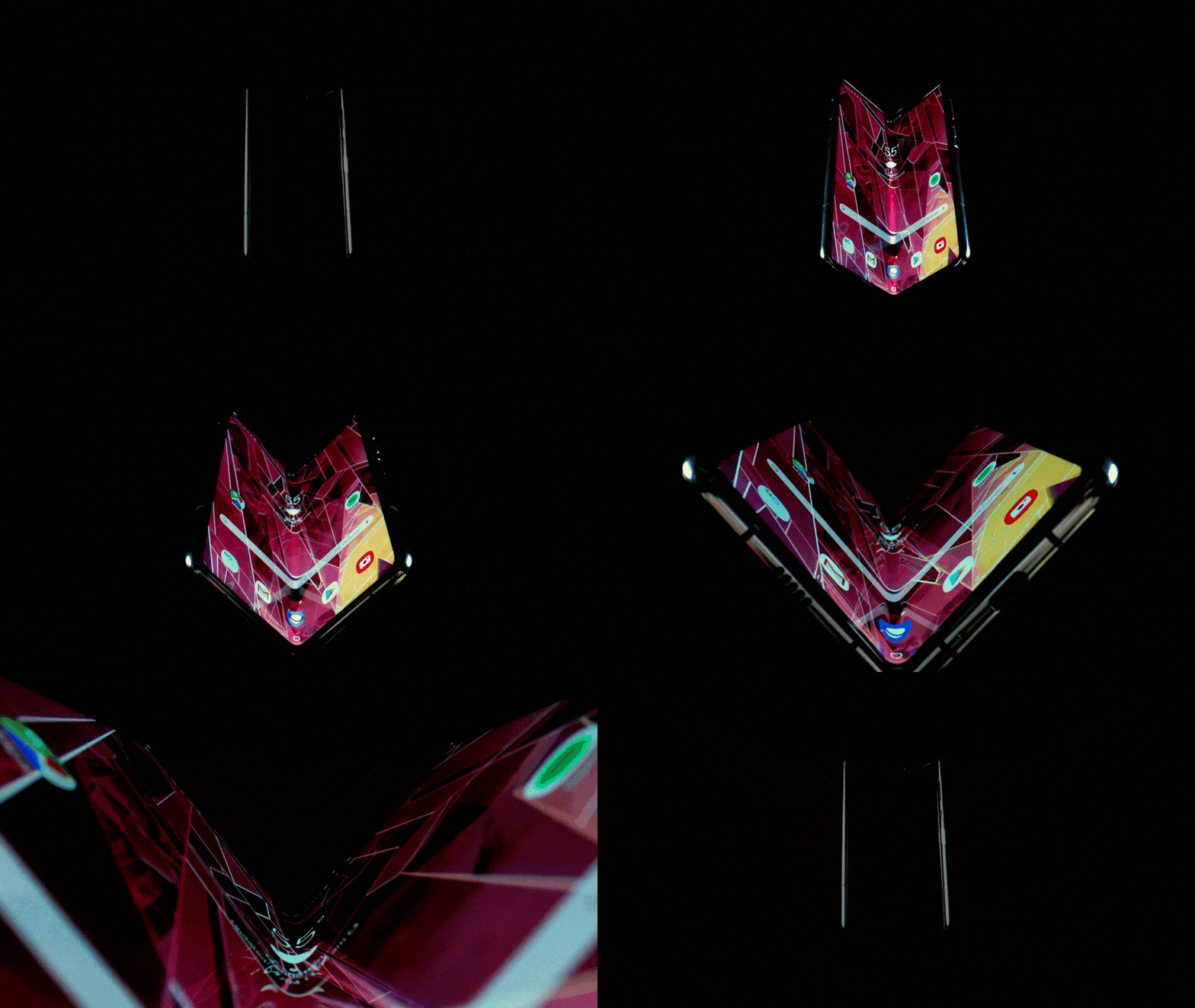
Galaxy Fold - a device with a 7.3-inch screen, which folds in half and becomes compact, many seemed like a real dream. A good tablet in the smartphone form factor! And for such a high price ( $ 1980 in the USA ) you could expect excellent quality. For example, Samsung reported that the flexion-extension mechanism was tested at 200,000 iterations. Buyers in the United States, especially non-poor tech geeks, were ready to accept the novelty with might and main.
Unfortunately, it did not work out . A couple of weeks before the release of the product, several dozens of publications and popular American bloggers received a device for review. Three of them at once - Michael Fisher, Blick and TheVerge - reported a few days later that their smartphone had broken.
The company had to withdraw all the devices, and refuse to release them in China, which was supposed to take place in just a couple of days. Some are already comparing the fiasco with the Galaxy Note 7, whose batteries began to explode due to squeezing the battery. Billions of dollars spent by a company to develop a device could be flushed down the toilet.
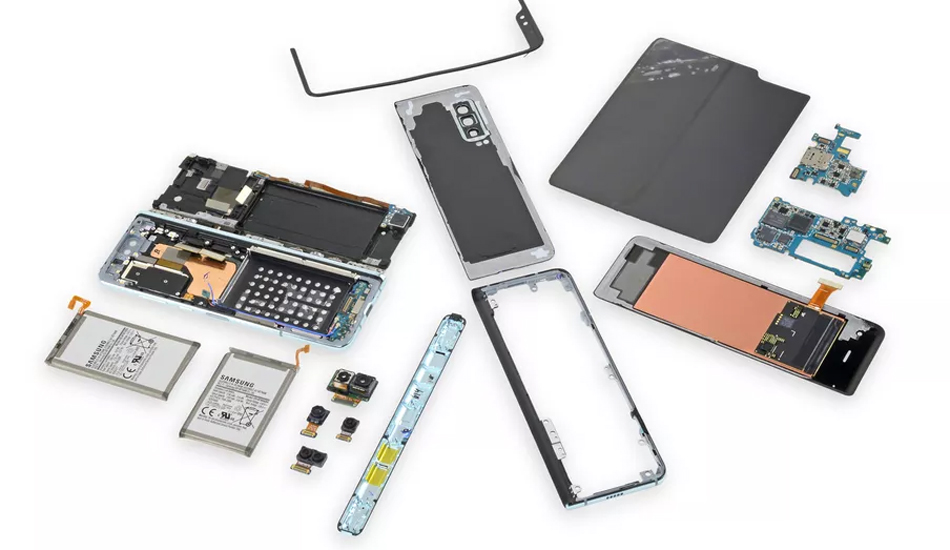
The other day, iFixit published its detailed analysis of the device, and the problems turned out to be rather funny (and sad). Having inserted the most anticipated and hype new technology in the last few years into its device, the company managed to forget several fundamental rules of smartphone manufacturing.
What is the problem?
After several days of use, several Galaxy Fold reviewers (who handled the device as carefully as possible) appeared a small tubercle in the center of the screen, at the bend. Quite small, but with a finger it is quite perceptible, and noticeable to the eye distorting this area of the screen when the smartphone is on. Someone tried, without much effort, to “push” this thickening back, but it did not yield: something propped it from below. Some have suggested that this is a broken bending mechanism - the one that was supposed to work out 200,000 iterations.
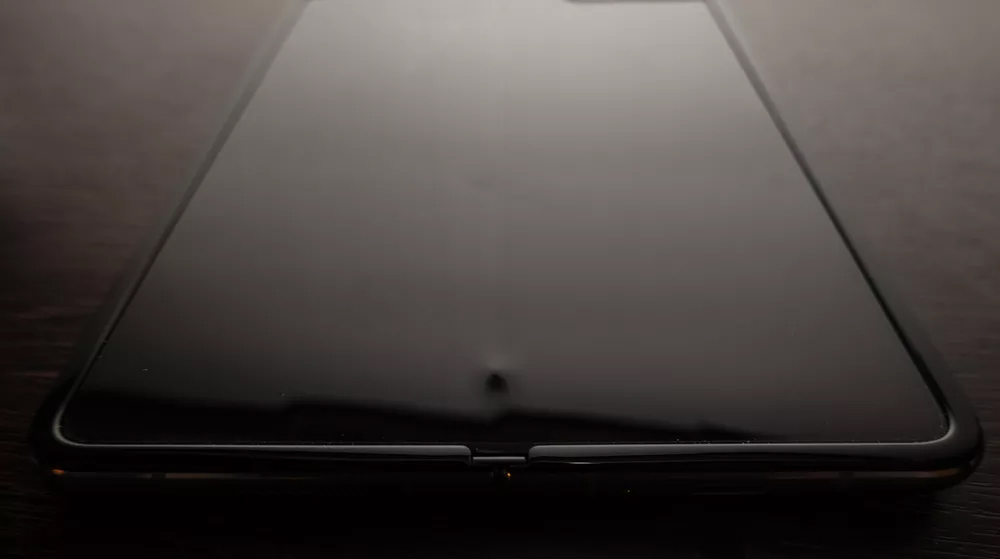
It would be possible for such an innovative device to forgive a small tubercle on the display if it weren’t for one “but”. It is located in the most actively used place. And if you continue to close and open the smartphone, it constantly rests on the screen, which over time, after a few days, inevitably leads to breakdowns.
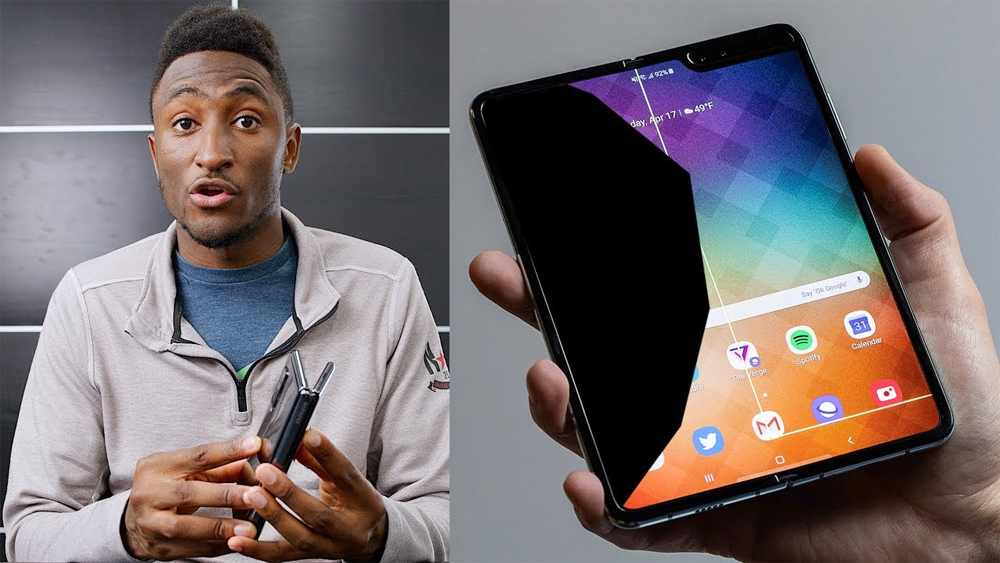
For many other journalists and bloggers, the problem was even more serious: the screen just broke! Bloomberg, Steve Kovach, Marques Brownlee uploaded photos and videos with their smartphones, in which part of the display was black or showing ripples. To work with such a device, in fact, it became impossible.
Where from?
Now, thanks to a detailed disassembly of the device from iFixit, the reasons begin to become clear. For example, it becomes clear that the reviewers thought in vain about the hinge that allows the screen to bend. It is strong, made very well, and did not break. The problem was that the smallest particles of dust or debris accumulated in the gap under the mechanism, gradually moving during its operation into the space under the screen.
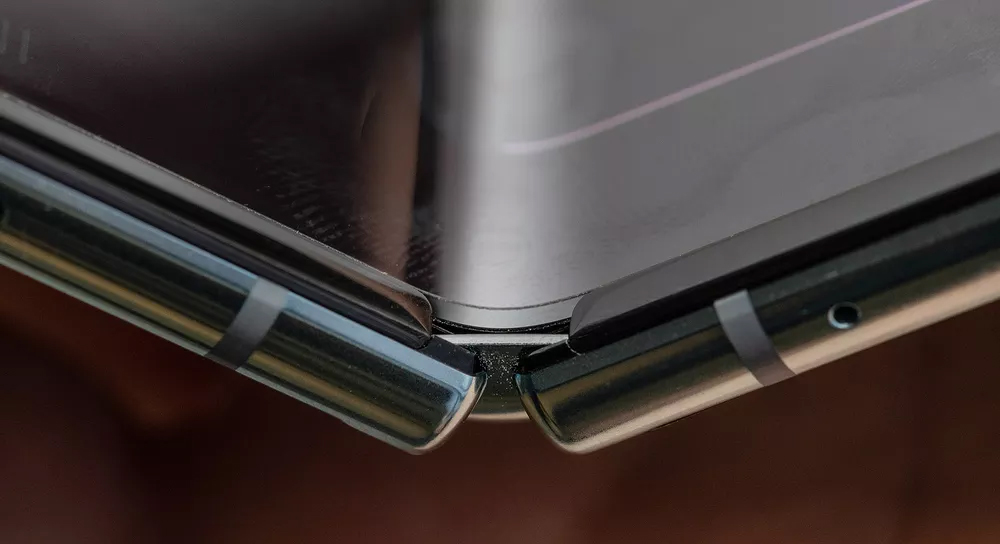
That is, Samsung made every effort to ensure that its fold device worked as it should. But I forgot to put a plug on the bottom of the Galaxy Fold so that no dust could get inside it! Down at the bend of the device is just a small hole. And since the OLED screen is an extremely delicate thing, especially if it is not protected by something like Gorilla Glass, even such a trifle turned out to be enough.
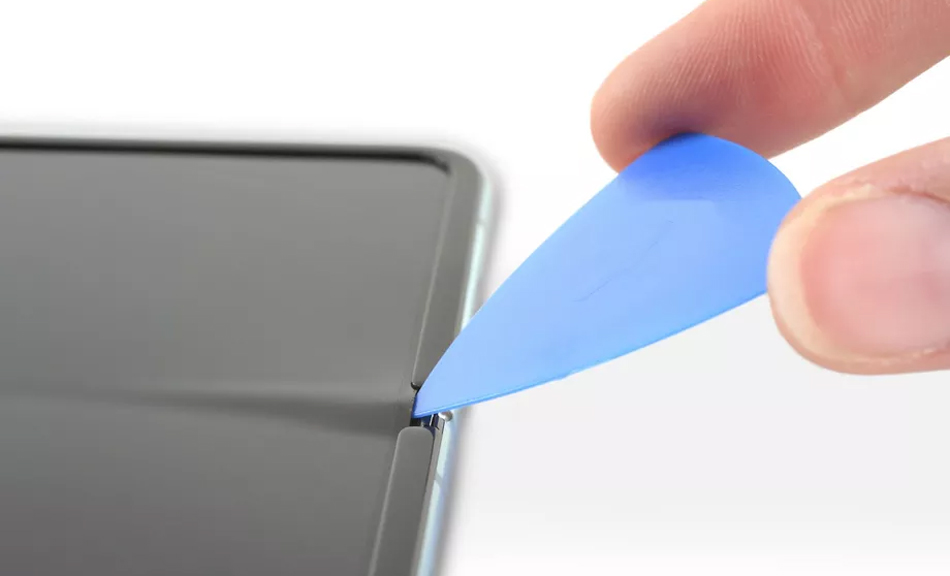
If the company closed the hole with at least some flexible plastic for a penny, problems with a sudden tubercle might have been avoided. Gaps are also present at the rear, also along the opening-closing mechanism. Right behind them there is enough empty space so that fine dirt can comfortably settle down, waiting for their chance. No wonder the device does not even have an IP rating for dust protection.
The folding device itself, according to iFixit, looks very durable, and the claimed 200,000 operations performed by the Samsung machine can probably withstand, that is, the company did not deceive anyone. But now it is becoming clear that 200,000 iterations are a mechanism . The smartphone itself has not been bent so many times, otherwise some of the problems should have manifested itself. Plus, it seems that the Samsung machine, which tested the display, exerted a uniform load on all parts of the screen, and did not work as a normal user. That is, the company's tests did not match the actual operating conditions.
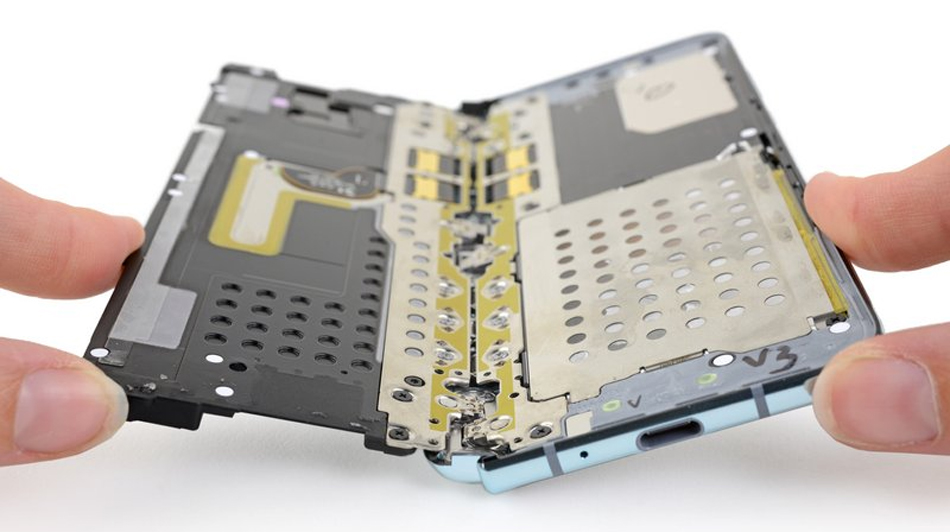
Why did not reveal problems with clogging mud? Probably the reason for the excessively sterile environment in which the telephone samples were tested in the factory. According to iFixit, if a user clicks on a bend where pollution has fallen, the phone is damaged with almost 100% probability. The conclusion is simple: there was simply no fine dust and dirt around the test samples.
As for the even more serious problems with the black / rippling screen that Bloomberg, Marques Brownlee and others encountered, they simply removed the protective film from the display. Very similar to the sticky plastic that comes with other Samsung gadgets, which can be cleaned before use. Only in this case, it turns out, it soon completely breaks the screen, again, due to uneven pressure on it.
How could anyone guess? There are no warnings about this on the boxes, nor on the devices, nor in the instructions, and even reviewers watching the world of smartphones did not know about it. Moreover: in the left corner of the screen, this film does not fit snugly, and it may seem that it needs to be removed. If Samsung wanted to guarantee that no one would take it off, it could hide the edges of the film under the screen, or give a warning.
But that’s not all. With some devices, there is another problem: uneven screen scrolling. The left side moves a little faster than the right. Apparently, the reason is that the display iron, unlike standard smartphones, is located mainly on the one hand, and not on the top or bottom, as in standard smartphones (this is also noticeable in the analysis of iFixit). It is difficult to see the presence of this delay effect, but then it can no longer be seen.
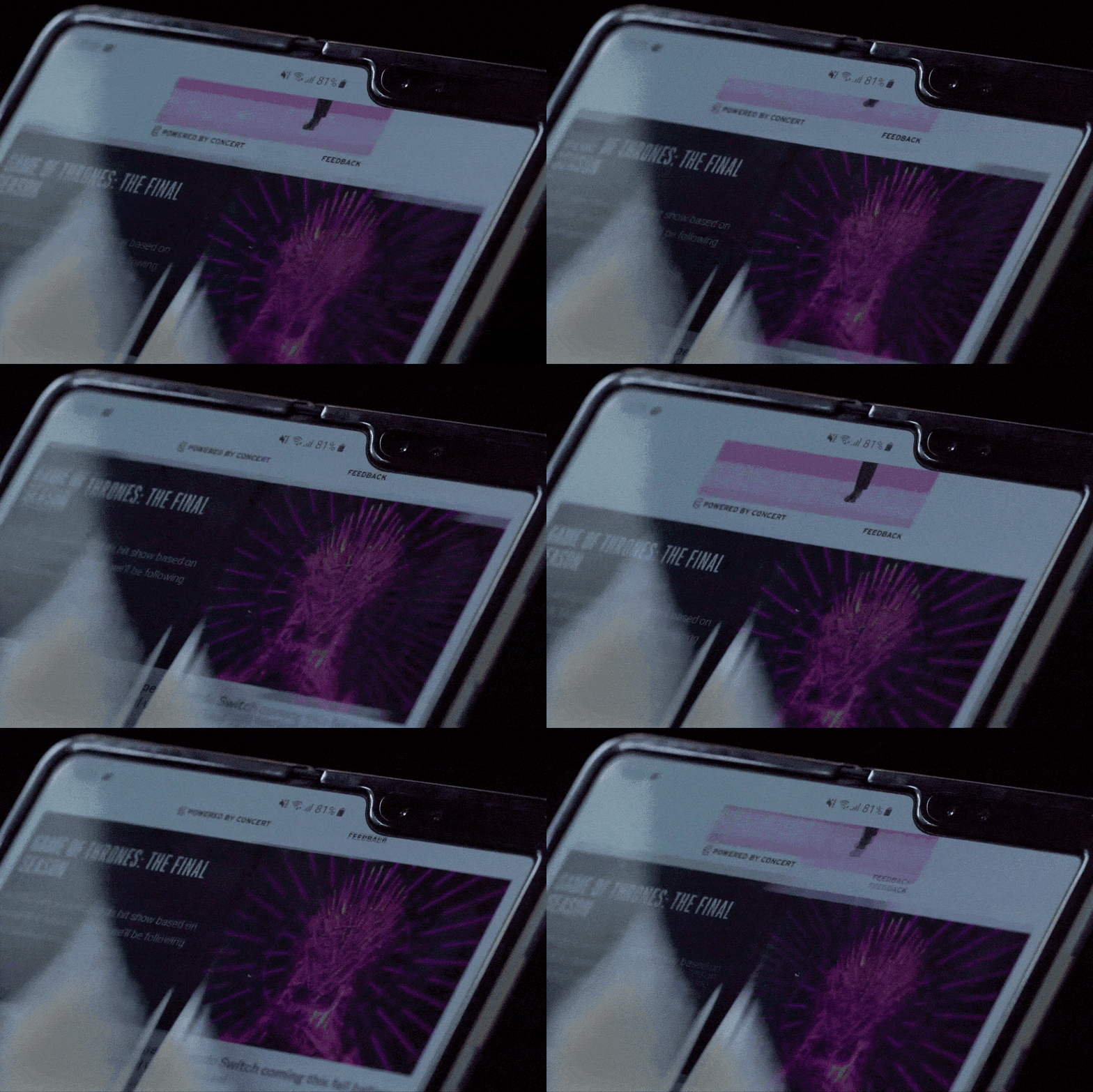
We are used to worrying about scratches on expensive gadgets or worrying about small debris causing malfunctioning buttons on the keyboard of expensive macbooks. But the bits of dust that distort the screen of a new smartphone worth $ 1980 after one day of use - this is a new level.
Judging by iFixit, the correct testing of smartphones in conditions close to reality, as well as a description of the features of their operation, would help keep the device in working condition and avoid a wave of criticism. Now - maybe it's too late.
It is actually not difficult to fix the problems, but buyers, after devastating reviews, are unlikely to give the gadget a second chance, especially given its high cost. This may call into question the future of all fading smartphones. Galaxy Fold now runs the risk of making history as another overly ambitious project, which first of all thought about the prospects of the new technology, but forgot about pragmatism.
PS Buying in the USA is profitable with Pochtoy.com. Delivery with us - from $ 11.99 per pound. We even pay extra for new customers ! A $ 1 bonus for each kilogram sent. And all Habr readers after registration receive a 7% discount on delivery by HABR code.
And if you would like, on the contrary, to sell goods in US stores, we now have a new service for this - fulfillment .
Update : iFixit parsing links no longer work, this morning they removed it from their site at the request of Samsung. You can see it in the web archive .