
 March 16, 2019 at 17:22
The world's first “gender-neutral” voice assistant presented at SXSW IT Festival
At SXSW introduced a virtual assistant whose voice in sound does not resemble either female or male. We tell how it was created and look at the prospects. Photo Gareth Halfacree / CC BY-SA
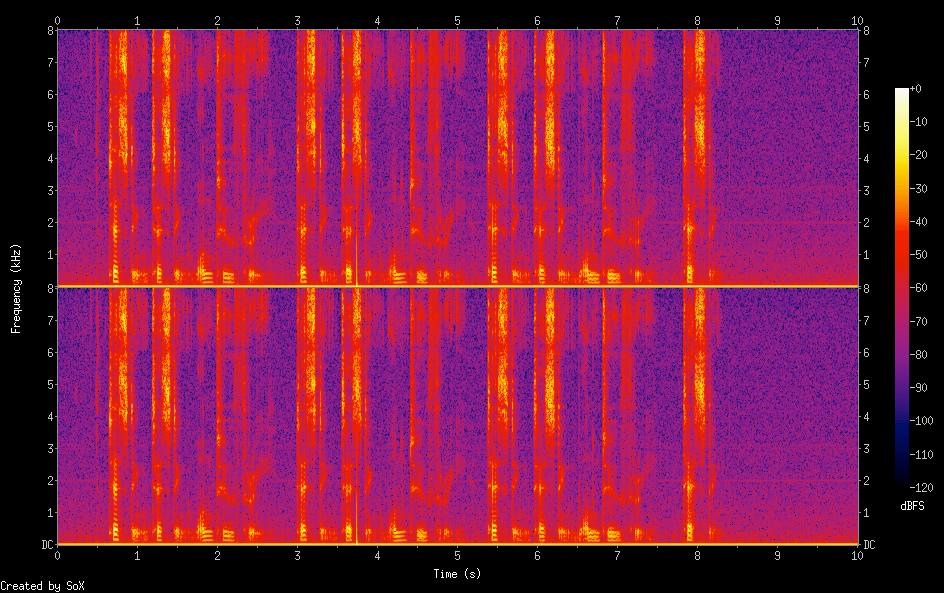
According to studies, users of smart speakers and voice assistants lack a “neutral” version of the voice without pronounced female or male features. In the Space10 R&D poll, almost half of the 12,000 respondents would prefer to hear the “asexual” voice of an assistant. In this design, people better associate it with AI systems hidden “under the hood” of an assistant. The neutral voice is more suitable for the image of the “car”. However, large players in this market do not have such an option.
Virtue experts proposed their solution - at the SXSW conference in Austin they introduced a new “asexual” voice assistant called Q. It was developed together with the nonprofit organization Equal AI, thirtysoundsgood and Koalition Interactive, as well as linguistic experts.
To create a new assistant, the voices of five people were “combined” into one. The final “voice” was given to listen to potential users of an assistant from different countries of Europe - people had to rate on a five-point scale how much he looked like a woman. In accordance with the test results, the voice was corrected - made lower or higher - then again allowed to listen to users.
Iterative work with a focus group of four and a half thousand respondents led the authors of the project to a “neutral” voice.
You can listen to how the assistant sounds in the video at this link , as well as on the project website .
Journalists speak positively about project Q. According to CNBC columnist, the assistant sounds quite “confident”, but at the same time seems friendly and responsive. The authors of the project spoke about the prospects of the assistant. They believe in the success of the idea, because Q expands the choices for users of smart speakers and voice assistants.
The developers do not plan to launch their own device or application, but want to attract the attention of IT companies and offer them to add a neutral voice for their assistants. The creators of Q plan to tell their transport companies, state and other organizations that use voice announcements about their product.
However, the future of the project remains unclear. None of the technology companies have yet announced their desire to work with the creators of Q, and, perhaps, after the noise in the technology media, a “gender-neutral” assistant will be developed by IT giants independently.
In the area of voice assistants, there are no Q analogues yet. However, the ability to choose the "gender" of the vote is already there in all notable projects in this area. For English-speaking users, Google Assistant has ten different male and female voices, and Siri has a male and female voice with different accents. You can change the sound in Amazon Alexa - different voices are available in the "skills" of the smart speaker.
Photo by Tony Webster / CC BY-SA
Analogs Q can be found in the chatbot area. One of the first "gender-neutral" bots was developed at the British company Sage - it was called Pegg. According to project manager Kriti Sharma, the assistant was made asexual to create a bot identity for him, rather than “a bot pretending to be a man . "
Neutral chat bots are also being developed for GoDaddy and Lowe's chain of stores - both bots will be used in the field of customer service.
Although the creators of smart speakers and assistants expand the range of available voices, the "default" sound of the assistant is left unchanged. According to Slate, this persistence may be related to brand recognition - if the assistant’s voice changes dramatically, it will cause a negative reaction for users who are used to distinguishing between different services by ear.
Most likely, “neutral” voices will not become the generally accepted standard in the market of large voice assistants. However, the popularity of such solutions among users can lead to the emergence of new players who can offer a wide variety of images of virtual assistants.
Further reading - about sounds and music from our blog and Telegram-channel:
 They say trees and other plants
How to turn the graphics to the sound, and why is it necessary to record and edit podcasts What are the characteristics and problems of sound games

Why a “gender neutral” voice is needed
According to studies, users of smart speakers and voice assistants lack a “neutral” version of the voice without pronounced female or male features. In the Space10 R&D poll, almost half of the 12,000 respondents would prefer to hear the “asexual” voice of an assistant. In this design, people better associate it with AI systems hidden “under the hood” of an assistant. The neutral voice is more suitable for the image of the “car”. However, large players in this market do not have such an option.
Virtue experts proposed their solution - at the SXSW conference in Austin they introduced a new “asexual” voice assistant called Q. It was developed together with the nonprofit organization Equal AI, thirtysoundsgood and Koalition Interactive, as well as linguistic experts.
How Q assistant works and how it was created
To create a new assistant, the voices of five people were “combined” into one. The final “voice” was given to listen to potential users of an assistant from different countries of Europe - people had to rate on a five-point scale how much he looked like a woman. In accordance with the test results, the voice was corrected - made lower or higher - then again allowed to listen to users.
Iterative work with a focus group of four and a half thousand respondents led the authors of the project to a “neutral” voice.
According to the developers, the sound of Q seems to people “sexless”, because the assistant’s voice lies in the frequency range between male and female voices. For the former, the frequency spectrum is 80–180 Hz, and for the latter, 140–255 Hz. Voice Q falls into the neutral range of 145-175 Hz, which does not allow to uniquely determine the gender.
You can listen to how the assistant sounds in the video at this link , as well as on the project website .
Opinions and Potential
Journalists speak positively about project Q. According to CNBC columnist, the assistant sounds quite “confident”, but at the same time seems friendly and responsive. The authors of the project spoke about the prospects of the assistant. They believe in the success of the idea, because Q expands the choices for users of smart speakers and voice assistants.
The developers do not plan to launch their own device or application, but want to attract the attention of IT companies and offer them to add a neutral voice for their assistants. The creators of Q plan to tell their transport companies, state and other organizations that use voice announcements about their product.
However, the future of the project remains unclear. None of the technology companies have yet announced their desire to work with the creators of Q, and, perhaps, after the noise in the technology media, a “gender-neutral” assistant will be developed by IT giants independently.
Who else is developing asexual assistants
In the area of voice assistants, there are no Q analogues yet. However, the ability to choose the "gender" of the vote is already there in all notable projects in this area. For English-speaking users, Google Assistant has ten different male and female voices, and Siri has a male and female voice with different accents. You can change the sound in Amazon Alexa - different voices are available in the "skills" of the smart speaker.
Photo by Tony Webster / CC BY-SA
Analogs Q can be found in the chatbot area. One of the first "gender-neutral" bots was developed at the British company Sage - it was called Pegg. According to project manager Kriti Sharma, the assistant was made asexual to create a bot identity for him, rather than “a bot pretending to be a man . "
Neutral chat bots are also being developed for GoDaddy and Lowe's chain of stores - both bots will be used in the field of customer service.
conclusions
Although the creators of smart speakers and assistants expand the range of available voices, the "default" sound of the assistant is left unchanged. According to Slate, this persistence may be related to brand recognition - if the assistant’s voice changes dramatically, it will cause a negative reaction for users who are used to distinguishing between different services by ear.
Most likely, “neutral” voices will not become the generally accepted standard in the market of large voice assistants. However, the popularity of such solutions among users can lead to the emergence of new players who can offer a wide variety of images of virtual assistants.
Further reading - about sounds and music from our blog and Telegram-channel:
They say trees and other plants How to turn the graphics to the sound, and why is it necessary to record and edit podcasts What are the characteristics and problems of sound games