February 28, 2019 at 15:33
Delta-OMA (D-OMA): New 6G Mass Multiple Access Method. Part 1
- Transfer
A few days are left before the start of the course “Network Engineer” . In this regard, we want to share with you the first part of the material on the topic "Delta-OMA (D-OMA): a new method of mass multiple access in 6G". Go.
annotation- A new method of multiple access, namely delta-orthogonal multiple access (D-OMA - delta orthogonal multiple access), is presented for mass access in future 6G cellular networks. D-OMA is based on the concept of Distributed Large Coordinated Non-Orthogonal Multiple Access (NOMA) using partially overlapping subbands for NOMA clusters. The effectiveness of this scheme is demonstrated in terms of throughput for various degrees of overlap of the NOMA subbands. D-OMA can also be used to provide enhanced security in wireless access networks in both uplink and downlink. Practical implementation issues and open issues for DOMA optimization are also discussed.

Keywords - 5G (B5G) / 6G, wide wireless capabilities, coordinated reception / transmission, orthogonal and non-orthogonal multiple access, bandwidth, wireless security
1. Introduction
Each generation of cellular wireless systems is characterized by a new method of multiple access. In particular, the first generation (1G) systems were based on frequency division multiple access (FDMA), while the second, third and fourth generations were based on time division multiple access (TDMA) , Code Division Multiple Access (CDMA) and Orthogonal Frequency Division Multiple Access (OFDMA), respectively. Regarding 5th generation (5G) cellular communications, although many development and standardization efforts are still ongoing, it is clear that there will be no revolutionary multi-access technology. except for the use of an extremely wide spectrum range (up to 60 GHz) and the adoption of non-orthogonal multiple access schemes (NOMA) in addition to orthogonal frequency division multiple access (OFDMA) [1] - [3]. The adoption of higher frequency bands in the 5G radio interface, such as millimeter-wave (mm-wave) bands, will create serious propagation problems due to high path loss and beam directivity requirements. Here, ultra-dense deployment of access points (APs) can help a bit, which, in turn, requires complex coordination and cooperation between distributed APs to minimize the influence of co-channel interference arising from overlapping service areas of neighboring cells.
However, 5G is expected to provide three main unique services, namely: enhanced mobile broadband communication (eMBB - enhanced mobile broadband communication), ultra-reliable low-latency communications and machine-type mass communication (mMTC - massive machine type communication) [4 ]. The goal of eMBB is to provide operating modes with higher data rates and an extended coverage area (compared to LTE), while ultra-reliable, low-latency services will provide authenticated services for mission-critical applications such as autonomous driving and health monitoring devices. The role of mMTC is to control the flow of data to / from a huge number of wireless devices with a guaranteed level of performance.
While 5G cellular networks will include many distinctive improvements over 4G networks to provide increased transmission speeds with reduced latency, increased system reliability and performance, reduced size of terminal devices and energy-saving hardware and network designs, the advent of advanced technologies will stimulate its further development in the direction of 5G cellular networks (B5G - beyond 5G) or the so-called sixth generation (6G). The key goals for 6G cellular networks can be summarized as follows:
2. Cellular architecture for future wireless networks
Generally speaking, the concept of cellular network architecture will not be suitable for future wireless networks, especially in urban ultra-dense wireless access scenarios in which multiple wireless devices are served simultaneously using multipoint transmissions and multipoint user associations (Fig. 1). Using very fast feedback channels between different BS / APs, the entire network will look like a distributed system without massive distributed multiple inputs with multiple outputs (MIMO array) from the point of view of the end device. In particular, all access points will be aware of all active devices in their vicinity. APs can be considered as remote radio heads (RRH - remote radio heads), as in the case of cloud-based radio access networks (CRAN - cloud radio access networks) [5]. Each device can be served on more than RRH either by coordinating the transmission, or by multiplexing. It may be useful to consider this cell-free architecture as a generalized version of the well-known coordinated receive / transmit (CoMP), in which the interacting APs jointly serve all devices within their coverage area (devices at the cell boundary and cell center). This can be achieved by using very fast centralized processing units that allocate resources to various terminal devices, while data processing can be carried out in the so-called baseband unit pool (BBU), as in the case of CRAN.
Such a network architecture will have to connect millions of devices (for example, mMTC devices) for which automatic services should be provided without direct human interaction. Traditional orthogonal multiple access (OMA) schemes will not be sufficient, and pure non-orthogonal multiple access (NOMA) methods will not have the flexibility to support wireless connectivity for devices with different service requirements [6]. Therefore, it is necessary to develop new methods of multiple access / resource allocation and interference management for these networks without cells, given the limited spectrum resources. In the next section, we propose a new method of mass multiple access on a network that uses a cell-free 6G network architecture to support large-scale wireless connectivity.
3. Delta-Orthogonal Multiple Access (D-OMA)
This section first briefly discusses the basic NOMA principle compared to the OMA principle. It then discusses the potential use of massive in-band NOMA in the new cell-free network architecture. Finally, a new D-OMA scheme is discussed and evaluated.
A. OMA vs NOMA
OMA has been used for cellular generations from 1G to 4G. Due to the orthogonality between different carriers and the relatively high requirements for bandwidth separation among them, orthogonal frequency-division multiple access (OFDMA), which is used in 4G networks, may not provide an effective solution for future generation networks. Therefore, the NOMA technique was recently adopted by the 3GPP version 16 (5G) standards [7]. As a rule, NOMA uses the concept of superimposing many signals in the power domain within the same subband and using successive interference cancellation (SIC) on the receiver side to filter out unwanted interfering signals. Using NOMA,
In particular, in the M device / user of the NOMA cluster for downlink transmission, the AP will send x = PM m = 1 √ Pmsm so that PM m = 1 Pm ≤ Pt, where Pm is the transmit power allocated by the mth NOMA device, sm is the signal to be sent to the m-th device, and Pt is the maximum power budget assigned to the subband of a specific NOMA cluster. Then, the received signal on the mth device is defined as ym = hmx + wm, where hm is the complex channel gain between the AP and the mth device, wm is the additive white Gaussian noise (AWGN) plus the interference signal of other clusters. If the device channel gains within a particular cluster are ordered as h1 ≤. ,, ≤ hM, then the transmit power levels will be assigned to each device, so P1 ≥. ,, ≥ PM. On the receiver side, interfering signals from devices with higher received powers are removed by the SIC operation until the desired signal is decoded. Accordingly, the achievable speed on the m-th device within a certain NOMA cluster of size M is set as

Where where Im and Nm represent intercluster interference (ICI) and AWGN powers at the input of the mth device, respectively. Typically, each subband will serve one NOMA cluster. Devices in a particular cluster will suffer from two types of interference, namely intra-NOMA interference (INI) caused by a residual unfiltered interference signal from NOMA, which is caused by other NOMA devices in the same cluster, and from inter-cluster interference (ICI) this is caused by using the same subband by other neighboring clusters. The size of the NOMA cluster can be considered as a design parameter to achieve a compromise between several factors, namely: the requirements for data transfer speed for devices / users, the level of complexity in NOMA receivers,
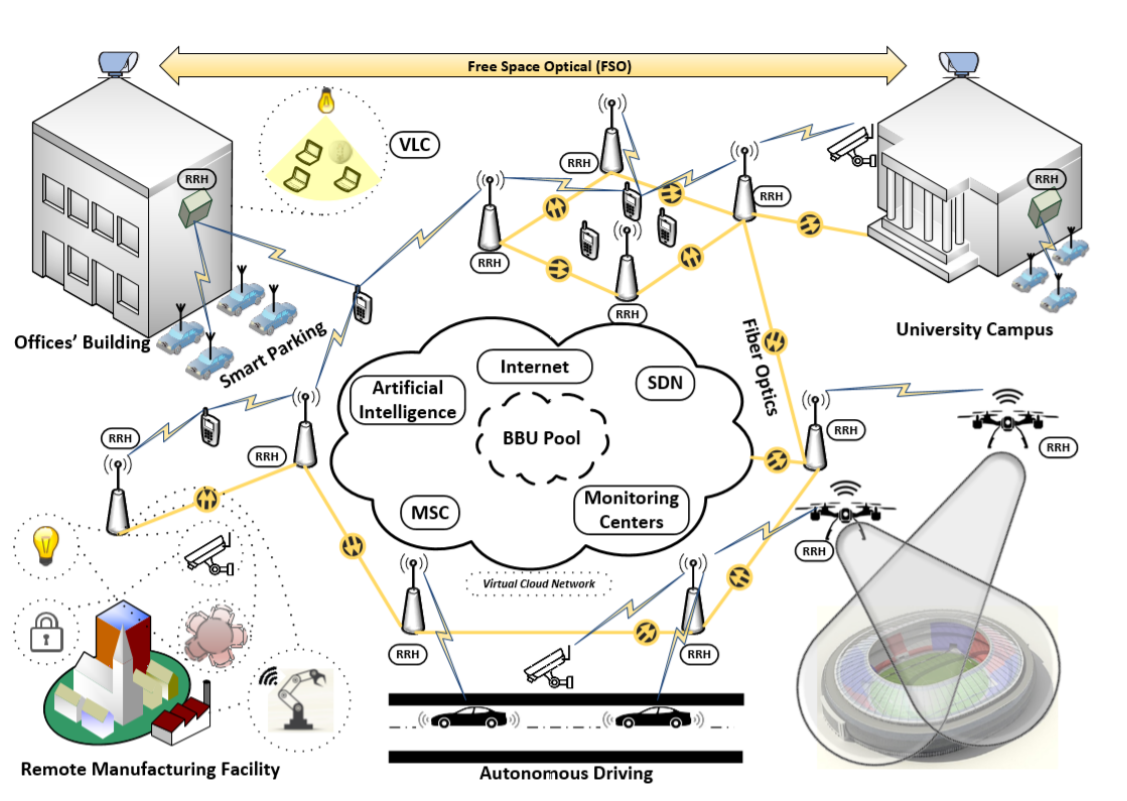
Fig. 1: 6G network architecture without cells.
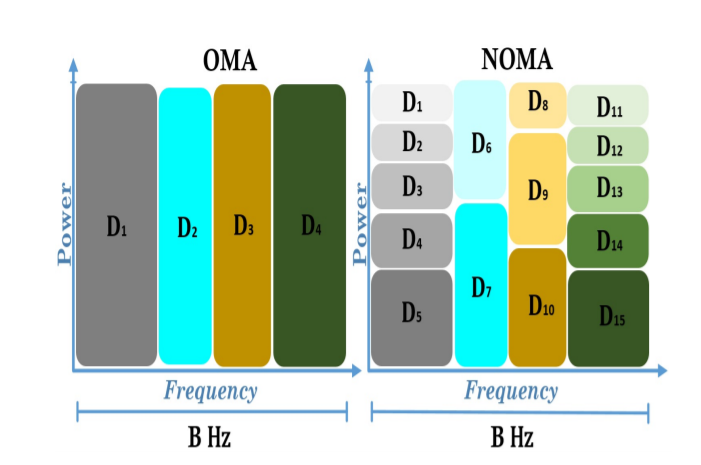
Fig. 2: The NOMA concept for serving multiple wireless devices on the same subband.
The end of the first part.
Friends, in the near future we will publish the continuation of the article, but for now, according to the established tradition, we are waiting for your comments and invite you to a practical course on the theory of network interaction from OTUS.
annotation- A new method of multiple access, namely delta-orthogonal multiple access (D-OMA - delta orthogonal multiple access), is presented for mass access in future 6G cellular networks. D-OMA is based on the concept of Distributed Large Coordinated Non-Orthogonal Multiple Access (NOMA) using partially overlapping subbands for NOMA clusters. The effectiveness of this scheme is demonstrated in terms of throughput for various degrees of overlap of the NOMA subbands. D-OMA can also be used to provide enhanced security in wireless access networks in both uplink and downlink. Practical implementation issues and open issues for DOMA optimization are also discussed.
Keywords - 5G (B5G) / 6G, wide wireless capabilities, coordinated reception / transmission, orthogonal and non-orthogonal multiple access, bandwidth, wireless security
1. Introduction
Each generation of cellular wireless systems is characterized by a new method of multiple access. In particular, the first generation (1G) systems were based on frequency division multiple access (FDMA), while the second, third and fourth generations were based on time division multiple access (TDMA) , Code Division Multiple Access (CDMA) and Orthogonal Frequency Division Multiple Access (OFDMA), respectively. Regarding 5th generation (5G) cellular communications, although many development and standardization efforts are still ongoing, it is clear that there will be no revolutionary multi-access technology. except for the use of an extremely wide spectrum range (up to 60 GHz) and the adoption of non-orthogonal multiple access schemes (NOMA) in addition to orthogonal frequency division multiple access (OFDMA) [1] - [3]. The adoption of higher frequency bands in the 5G radio interface, such as millimeter-wave (mm-wave) bands, will create serious propagation problems due to high path loss and beam directivity requirements. Here, ultra-dense deployment of access points (APs) can help a bit, which, in turn, requires complex coordination and cooperation between distributed APs to minimize the influence of co-channel interference arising from overlapping service areas of neighboring cells.
However, 5G is expected to provide three main unique services, namely: enhanced mobile broadband communication (eMBB - enhanced mobile broadband communication), ultra-reliable low-latency communications and machine-type mass communication (mMTC - massive machine type communication) [4 ]. The goal of eMBB is to provide operating modes with higher data rates and an extended coverage area (compared to LTE), while ultra-reliable, low-latency services will provide authenticated services for mission-critical applications such as autonomous driving and health monitoring devices. The role of mMTC is to control the flow of data to / from a huge number of wireless devices with a guaranteed level of performance.
While 5G cellular networks will include many distinctive improvements over 4G networks to provide increased transmission speeds with reduced latency, increased system reliability and performance, reduced size of terminal devices and energy-saving hardware and network designs, the advent of advanced technologies will stimulate its further development in the direction of 5G cellular networks (B5G - beyond 5G) or the so-called sixth generation (6G). The key goals for 6G cellular networks can be summarized as follows:
- Connected networks: with the spread of the Internet of Things (IoT) and mMTC services, each wireless device will be connected to one or more wireless access networks that will be served by multiple access points (APs) or base stations (BS), which in turn will be connected to a common a cloud network for access to cloud services (e.g., edge computing and caching services). Examples of such applications / services are virtual reality, autonomous driving, applications for smart cities and smart networks, industrial control and smart manufacturing, surveillance and security, as well as numerous health monitoring services. Wireless devices will also have a peer-to-peer connection through a single or multi-junction connection. Moreover, terrestrial cellular systems will be integrated with airborne (or non-terrestrial / air / unmanned) networks with mobile BS / APs. Accordingly, traditional models of cellular systems will not be enough to describe these new systems. In addition, these networks will be application and content networks, not just data networks. Consequently, new methods will be required in terms of network planning and optimization.
- Minimizing energy at the device and network level: since users, machines, APs / BSs, as well as other network nodes will need to use advanced signal processing methods and process more data (for example, for applications and services with artificial intelligence), the power consumption will increase significantly . In addition, the energy consumption in radio transmitters (for example, in power amplifiers, analog-to-digital and digital-to-analog converters) will need to be minimized at frequencies of millimeter and nanometer waves. With ultra-dense deployment of access points, as well as the widespread deployment of peripheral computing / caching servers in a wireless access network, this will create an urgent need for new concepts of energy saving, charging, collection and interaction between network nodes.
- Efficient use of the spectrum and / or its expansion: the new radio (NR) 5G extends the frequency range of 4G networks (0.6–6 GHz) to several higher frequency bands (millimeter waves in the range 30–300 GHz [mmW] and optical systems in free space [FSO - freespace optical]] in the range 200–385 THz). New technologies will need to be developed for wireless access and backhaul, as well as coexistence (in the case of unlicensed spectrum) in these new bands.
2. Cellular architecture for future wireless networks
Generally speaking, the concept of cellular network architecture will not be suitable for future wireless networks, especially in urban ultra-dense wireless access scenarios in which multiple wireless devices are served simultaneously using multipoint transmissions and multipoint user associations (Fig. 1). Using very fast feedback channels between different BS / APs, the entire network will look like a distributed system without massive distributed multiple inputs with multiple outputs (MIMO array) from the point of view of the end device. In particular, all access points will be aware of all active devices in their vicinity. APs can be considered as remote radio heads (RRH - remote radio heads), as in the case of cloud-based radio access networks (CRAN - cloud radio access networks) [5]. Each device can be served on more than RRH either by coordinating the transmission, or by multiplexing. It may be useful to consider this cell-free architecture as a generalized version of the well-known coordinated receive / transmit (CoMP), in which the interacting APs jointly serve all devices within their coverage area (devices at the cell boundary and cell center). This can be achieved by using very fast centralized processing units that allocate resources to various terminal devices, while data processing can be carried out in the so-called baseband unit pool (BBU), as in the case of CRAN.
Such a network architecture will have to connect millions of devices (for example, mMTC devices) for which automatic services should be provided without direct human interaction. Traditional orthogonal multiple access (OMA) schemes will not be sufficient, and pure non-orthogonal multiple access (NOMA) methods will not have the flexibility to support wireless connectivity for devices with different service requirements [6]. Therefore, it is necessary to develop new methods of multiple access / resource allocation and interference management for these networks without cells, given the limited spectrum resources. In the next section, we propose a new method of mass multiple access on a network that uses a cell-free 6G network architecture to support large-scale wireless connectivity.
3. Delta-Orthogonal Multiple Access (D-OMA)
This section first briefly discusses the basic NOMA principle compared to the OMA principle. It then discusses the potential use of massive in-band NOMA in the new cell-free network architecture. Finally, a new D-OMA scheme is discussed and evaluated.
A. OMA vs NOMA
OMA has been used for cellular generations from 1G to 4G. Due to the orthogonality between different carriers and the relatively high requirements for bandwidth separation among them, orthogonal frequency-division multiple access (OFDMA), which is used in 4G networks, may not provide an effective solution for future generation networks. Therefore, the NOMA technique was recently adopted by the 3GPP version 16 (5G) standards [7]. As a rule, NOMA uses the concept of superimposing many signals in the power domain within the same subband and using successive interference cancellation (SIC) on the receiver side to filter out unwanted interfering signals. Using NOMA,
In particular, in the M device / user of the NOMA cluster for downlink transmission, the AP will send x = PM m = 1 √ Pmsm so that PM m = 1 Pm ≤ Pt, where Pm is the transmit power allocated by the mth NOMA device, sm is the signal to be sent to the m-th device, and Pt is the maximum power budget assigned to the subband of a specific NOMA cluster. Then, the received signal on the mth device is defined as ym = hmx + wm, where hm is the complex channel gain between the AP and the mth device, wm is the additive white Gaussian noise (AWGN) plus the interference signal of other clusters. If the device channel gains within a particular cluster are ordered as h1 ≤. ,, ≤ hM, then the transmit power levels will be assigned to each device, so P1 ≥. ,, ≥ PM. On the receiver side, interfering signals from devices with higher received powers are removed by the SIC operation until the desired signal is decoded. Accordingly, the achievable speed on the m-th device within a certain NOMA cluster of size M is set as
Where
where Im and Nm represent intercluster interference (ICI) and AWGN powers at the input of the mth device, respectively. Typically, each subband will serve one NOMA cluster. Devices in a particular cluster will suffer from two types of interference, namely intra-NOMA interference (INI) caused by a residual unfiltered interference signal from NOMA, which is caused by other NOMA devices in the same cluster, and from inter-cluster interference (ICI) this is caused by using the same subband by other neighboring clusters. The size of the NOMA cluster can be considered as a design parameter to achieve a compromise between several factors, namely: the requirements for data transfer speed for devices / users, the level of complexity in NOMA receivers,Fig. 1: 6G network architecture without cells.
Fig. 2: The NOMA concept for serving multiple wireless devices on the same subband.
The end of the first part.
Friends, in the near future we will publish the continuation of the article, but for now, according to the established tradition, we are waiting for your comments and invite you to a practical course on the theory of network interaction from OTUS.