March 6, 2016 at 15:54
When the U.S. Air Force realized a flaw with averages
- Transfer
Excerpt from Todd Rose ’s book “ The End of Average ”
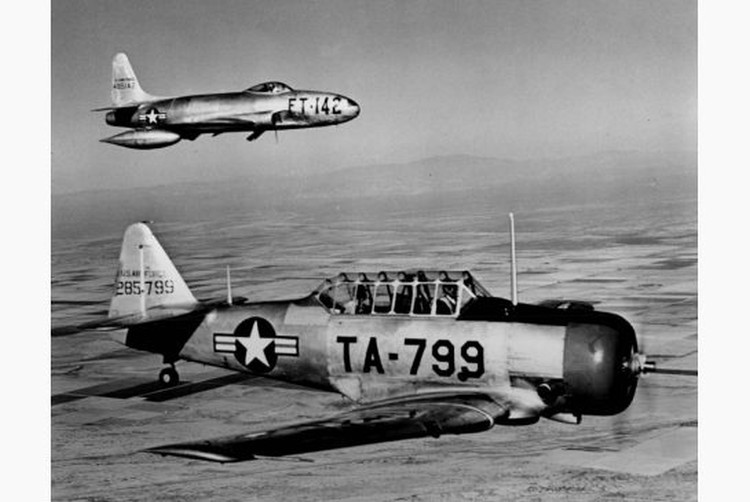
In the early 1950s, Americans measured the bodies of more than 4,000 pilots using 140 characteristics to design the ideal cockpit for the average pilot.
In the late 1940s, the US Air Force had a serious problem: pilots lost control over the aircraft. Then came the era of jet engines, so that aircraft became faster and more difficult to fly. But disasters happened so often on so many different planes that the US Air Force faced the real problem of saving lives. At worst, up to 17 pilots per day crashed.
There are two official designations for such non-combat accidents: accidents ( the Incidents ) and accidents ( accidents), and they ranged from unintentional diving and poor landing to fatal accidents and the destruction of an aircraft. Initially, the aviation authorities blamed the people in the cockpits, calling the “pilot error” the main reason in the accident reports. This assessment seemed reasonable, since technical malfunctions in the aircraft themselves were rare. Engineers confirmed this again and again, testing mechanics and electronics, where they did not find any defects. Pilots were also confused. One thing they knew for sure: that their piloting abilities were not the cause. If this is not a human or mechanical error, then what is it?
After numerous unanswered investigations, officials drew attention to the cabin design itself. Back in 1926, when the army designed the very first cockpit, engineers measured the physical parameters of hundreds of male pilots (no one seriously considered the possibility of controlling a woman’s aircraft), and used this data to standardize the size of the cockpit. Over the next three decades, the size and shape of the seat, the distance to the pedals and the helm, the height of the windshield, even the shape of the helmet corresponded to the average parameters of the 1926 pilot.
Now military engineers began to wonder if the pilots had grown since 1926. To obtain new values for the physical parameters of pilots, the Air Force initiated the largest pilot study ever conducted. In 1950, over 4,000 pilots were carefully measured at Wright Patterson Air Base in Ohio using 140 size parameters, including thumb length, height to the crotch and distance from the eye to the ear. As a result, they calculated the average value of each parameter. Everyone believed that a more thorough calculation of the parameters of the average pilot would lead to the creation of a more convenient cockpit and reduce the number of accidents. Or almost everything. One recently enlisted 23-year-old scientist had doubts.
Lieutenant Gilbert S. Daniels did not look like a typical character of air combat boiling from testosterone. He was thin and wore glasses. He liked flowers and landscaping, and in high school, Gilbert headed the club of the Botanical Garden. Before he was assigned to the aeromedical laboratory at Wright-Patterson Air Base right after university, he never flew an airplane. But that didn't matter. As a novice researcher, he was instructed to measure the limbs of pilots using a tape measure.
This was not the first time for Gilbert. The aeromedical laboratory took it because a student at Harvard specialized in physical anthropology, which studied human anatomy. In the first half of the 20th century, this area of science focused heavily on classifying human personalities into types of groups according to their average body shapes - a practice known as “typing”. For example, many physical anthropologists believed that a low and overweight figure corresponds to funny and funny people, and a high hairline and puffy lips reflect the "criminal personality type."
However, Daniels was not interested in typing. Instead, his thesis contained a rather time-consuming and painstaking comparison of the shape of the hands of 250 male Harvard students. All students were similar in ethnic and sociocultural status (that is, white and rich), but unexpectedly for anthropologists in their hands there was no similarity at all. Even more surprisingly, Daniels discovered, the average hand did not match any of the individual measurements! There was no such thing as a medium-sized hand. “When I left Harvard, it was clear to me that to design something for a particular human being, the average parameters are completely useless,” Daniels told me.
So when the army landed young Gilbert to measure pilots, he harbored a secret belief about medium sizes that ran counter to almost a century of military design philosophy. Sitting in the aeromedical laboratory, measuring arms, legs, waists and foreheads, he continued to ask himself the same question: How many pilots really have an average size?
Gilbert decided to find out. Using measurements from 4063 pilots, Daniels calculated an average of 10 physical characteristics that were considered the most important for the design, including height, chest circumference, and sleeve length. So he got the size of the "average pilot", which the researcher thought was such, whose parameters are included in the average 30% of the range of values for each parameter. So, for example, when after calculating the exact average height of 175 cm was obtained, Daniels determined the growth from 170 to 180 cm for the “average pilot”. Then he carefully, one after the other, compared each individual pilot with the average values.
Up to this point, it was generally accepted among fellow Air Force researchers that the vast majority of pilots would fit into the middle range for most parameters. In the end, the pilots initially underwent a preliminary selection to meet the average parameters. (For example, if your height is 200 cm, then you will never be accepted as a pilot in the first place). Scientists assumed that a significant number of pilots would correspond to the average range for all 10 parameters. But Gilbert Daniels was amazed when he determined the true number of such pilots.
Zero.
Out of 4063 pilots, not one person corresponded to the average range for all 10 parameters. One had arms longer than average and legs shorter than average, the other could have a wide chest, but small hips. More strikingly, Daniels found out that taking just three out of ten size parameters - for example, neck circumference, hip circumference and wrist circumference - less than 3.5% of the pilots met the average parameters for all three indicators. Daniels' conclusions were clear and irrefutable. there was no such thing as an average pilot . If you are designing a cabin for the average pilot, then in reality it will not be suitable for anyone.
Daniels' revelation was so significant that it could end the era of basic assumptions about individual traits and begin a new era. But even the most important ideas require a correct interpretation. We like to think that the facts speak for themselves, but in reality this is not so. In the end, Gilbert Daniels was not the first to discover the absence of an average person.
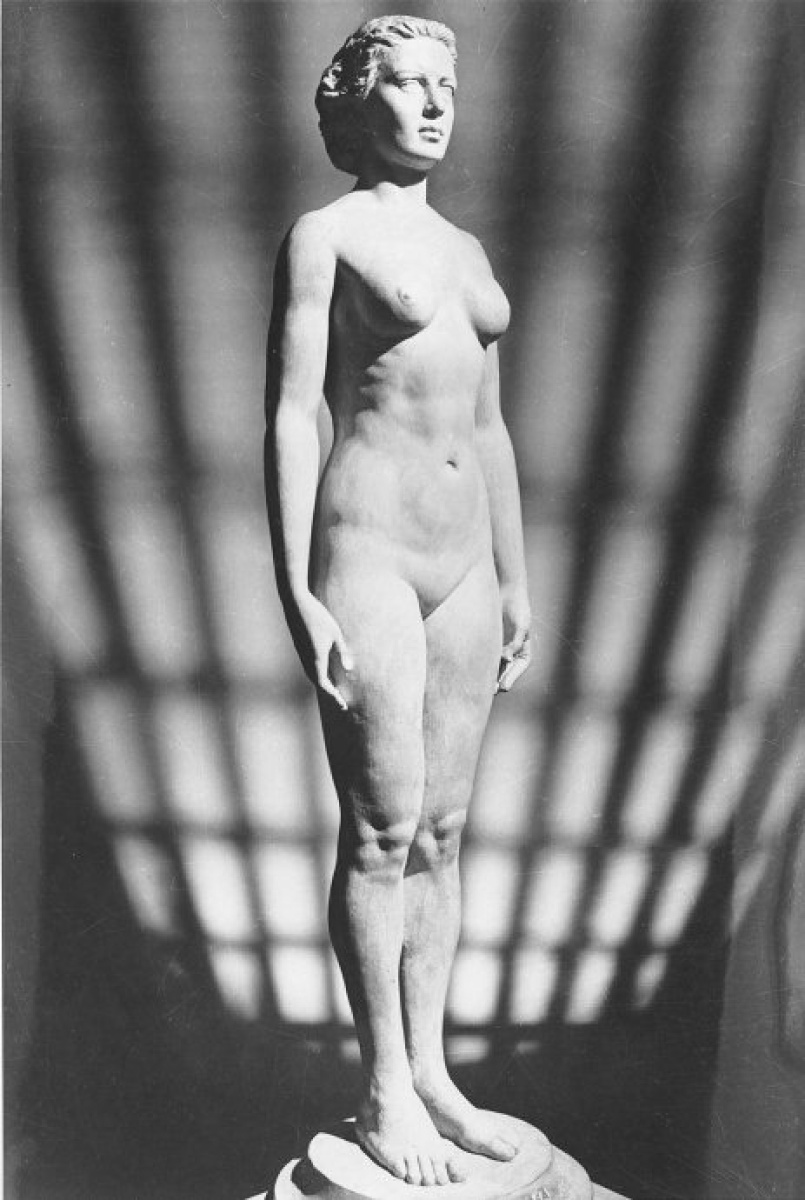
Norma was designed to demonstrate “ideal” female forms based on measurements of 15,000 young adult women. The statue, installed at the Cleveland Medical Museum, was created by gynecologist Dr. Robert L. Dickinson and his assistant, Abram Belskie.
Seven years earlier, Cleveland Plain Dealer announced a front page illustration contest, sponsored by the Cleveland Medical Museum, the Cleveland Medical Academy, the Cleveland School of Medicine and the Board of Education. The winners of the contest were promised military bonds for $ 100, $ 50 and $ 25, and ten more lucky girls could apply for military stamps with a face value of $ 10. Competition? The girls were asked to send the parameters of their body, which are closest to the parameters of a typical woman, Norma, who is immortalized in a statue from the Cleveland Medical Museum.
Norma was the creation of renowned gynecologist Robert L. Dickinson and his assistant Abram Belsky, who sculpted a figure based on measurements of 15,000 young adult women. Dr. Dickinson was an influential figure for his time: the head of the obstetrics and gynecology department at Brooklyn Hospital, the president of the American Society of Gynecologists and the chairman of obstetrics at the American Medical Association. He was also an artist - Rodin from obstetrics, as one colleague called him - and throughout his career he made sketches of women of various shapes and sizes, studying the relationship between body types and behavior.
Like many scholars of those days, Dickinson believed that truth can be determined by collecting and averaging large amounts of data. The "Norm" embodies such a truth. For Dickinson, collecting thousands of indicators of the size of the female body and calculating the average value gave an understanding of the typical female physique - someone normal.
Along with showing the statue, the Cleveland Medical Museum began selling miniature reproductions of Norma, touting it as “The Perfect Girl,” launching a real mania around Norma. One well-known physical anthropologist said Norma’s physique was “a kind of body-perfect”, artists proclaimed her beauty to be “an excellent standard,” and physical education teachers showed her how to demonstrate how a young girl shouldto look like. They prescribed to perform individual exercises on the basis of specific discrepancies of an individual student from the ideal. Norma was printed in Time magazine , she was in newspaper cartoons, and in the documentary series on CBS ( This American Look ) her parameters were read aloud so that every girl could check that she also had a normal body.
On November 23, 1945, Cleveland Plain Dealer announced the winner: a slender brunette, a theater cashier named Martha Skidmore. The newspaper wrote that Skidmore loves to dance, swim and play bowling - in other words, her tastes are as normal as her figure, which was considered the ideal of female forms.
Before the competition, the judges assumed that the parameters of the majority of the contestants would be quite close to the average, and that millimeters would have to be considered to identify the winner. In reality, there was nothing close. Less than 40 out of 3,864 contestants fell into the average size for only 5 out of 9 parameters, and not one contestant - not even Marta Skidmore - was close to the average for all 9 parameters. Just as the Daniels study determined the absence of such a concept as the average pilot, the competition for the role of Norma showed that a medium-sized woman also does not exist.
But although Daniels and the contest organizers got the same result, they drew completely different conclusions from this. Most doctors and scientists of that time did not at all consider that Norma was the wrong ideal. Quite the contrary: they concluded that most American women are unhealthy and do not maintain a normal shape. One such was Dr. Bruno Gebhard, director of the Cleveland Medical Museum: he lamented that post-war women were largely unsuitable for military service, and reproached them for mentioning poor physical condition, which made them “poor producers and poor consumers ".
Daniels' interpretation was exactly the opposite. “The tendency to think in terms of the“ average man ”is a trap that leads many to miscalculations,” he wrote in 1952. “It is practically impossible to find an average pilot, not because of some individual features of his group, but because of the wide variation in the parameters in body sizes for all people.”
Instead of inviting the pilots to make efforts to meet the artificial ideal of normality, Daniels’ analysis led him to a conclusion that seems to contradict common sense and is the cornerstone of his book: any system designed for the average person is doomed to failure . "
Daniels published his results in 1952 in an Air Force technical note entitled The "Average Man"?In it, he argued that if the army wants to increase the effectiveness of its soldiers, including pilots, then it must change the design of any environment in which the soldiers are supposed to work. Radical changes are recommended: the environment should correspond to individual parameters, not average.
Surprisingly, to the honor of the air force, they listened to the arguments of the scientist. “The old Air Force designs were all based on finding pilots similar to the average pilot,” Daniels explained to me. “But when we showed them that the average pilot is a useless concept, they found the strength to focus on designing cockpits individually for each pilot.” That's when the situation began to change for the better. ”
Having rejected the focus on average values, the Air Force initiated a revolution in the philosophy of military design, based on the main principle: individual fit. Instead of fitting a person to the norms of the system, the army began to tailor the system to an individual person. Immediately, the U.S. Air Force put forward new requirements for cockpits to fit all pilots whose sizes fit the distribution range between 5% and 95% for each characteristic.
When the aircraft manufacturers learned about the new requirements, they began to rest, insisting that the changes would be too expensive and take years to solve the related engineering problems. But the military refused a compromise, and then - to everyone’s surprise - the aviation engineers very quickly offered fairly cheap and easy to implement solutions. They designed adjustable seats - a technology that is now standard on all cars. They designed adjustable pedals. They designed adjustable helmet straps and flight suits.
After these and other design solutions were implemented, the effectiveness of the pilots increased. Soon, similar requirements were put forward for each type of troops in the American army that equipment and equipment should correspond to a large range of body parameters, rather than average.
Why did the military want to make such a radical change so quickly? Because changing the system was not an intellectual exercise — it was a practical solution to an urgent problem. When pilots at a supersonic speed need to perform a difficult maneuver using a complex array of controls, one cannot allow any sensor to be out of sight or it is difficult to reach the switch. When vital decisions are made in fractions of a second, the pilots were forced to make them in an environment already opposed to them.
In the early 1950s, Americans measured the bodies of more than 4,000 pilots using 140 characteristics to design the ideal cockpit for the average pilot.
In the late 1940s, the US Air Force had a serious problem: pilots lost control over the aircraft. Then came the era of jet engines, so that aircraft became faster and more difficult to fly. But disasters happened so often on so many different planes that the US Air Force faced the real problem of saving lives. At worst, up to 17 pilots per day crashed.
There are two official designations for such non-combat accidents: accidents ( the Incidents ) and accidents ( accidents), and they ranged from unintentional diving and poor landing to fatal accidents and the destruction of an aircraft. Initially, the aviation authorities blamed the people in the cockpits, calling the “pilot error” the main reason in the accident reports. This assessment seemed reasonable, since technical malfunctions in the aircraft themselves were rare. Engineers confirmed this again and again, testing mechanics and electronics, where they did not find any defects. Pilots were also confused. One thing they knew for sure: that their piloting abilities were not the cause. If this is not a human or mechanical error, then what is it?
After numerous unanswered investigations, officials drew attention to the cabin design itself. Back in 1926, when the army designed the very first cockpit, engineers measured the physical parameters of hundreds of male pilots (no one seriously considered the possibility of controlling a woman’s aircraft), and used this data to standardize the size of the cockpit. Over the next three decades, the size and shape of the seat, the distance to the pedals and the helm, the height of the windshield, even the shape of the helmet corresponded to the average parameters of the 1926 pilot.
Now military engineers began to wonder if the pilots had grown since 1926. To obtain new values for the physical parameters of pilots, the Air Force initiated the largest pilot study ever conducted. In 1950, over 4,000 pilots were carefully measured at Wright Patterson Air Base in Ohio using 140 size parameters, including thumb length, height to the crotch and distance from the eye to the ear. As a result, they calculated the average value of each parameter. Everyone believed that a more thorough calculation of the parameters of the average pilot would lead to the creation of a more convenient cockpit and reduce the number of accidents. Or almost everything. One recently enlisted 23-year-old scientist had doubts.
Lieutenant Gilbert S. Daniels did not look like a typical character of air combat boiling from testosterone. He was thin and wore glasses. He liked flowers and landscaping, and in high school, Gilbert headed the club of the Botanical Garden. Before he was assigned to the aeromedical laboratory at Wright-Patterson Air Base right after university, he never flew an airplane. But that didn't matter. As a novice researcher, he was instructed to measure the limbs of pilots using a tape measure.
This was not the first time for Gilbert. The aeromedical laboratory took it because a student at Harvard specialized in physical anthropology, which studied human anatomy. In the first half of the 20th century, this area of science focused heavily on classifying human personalities into types of groups according to their average body shapes - a practice known as “typing”. For example, many physical anthropologists believed that a low and overweight figure corresponds to funny and funny people, and a high hairline and puffy lips reflect the "criminal personality type."
However, Daniels was not interested in typing. Instead, his thesis contained a rather time-consuming and painstaking comparison of the shape of the hands of 250 male Harvard students. All students were similar in ethnic and sociocultural status (that is, white and rich), but unexpectedly for anthropologists in their hands there was no similarity at all. Even more surprisingly, Daniels discovered, the average hand did not match any of the individual measurements! There was no such thing as a medium-sized hand. “When I left Harvard, it was clear to me that to design something for a particular human being, the average parameters are completely useless,” Daniels told me.
So when the army landed young Gilbert to measure pilots, he harbored a secret belief about medium sizes that ran counter to almost a century of military design philosophy. Sitting in the aeromedical laboratory, measuring arms, legs, waists and foreheads, he continued to ask himself the same question: How many pilots really have an average size?
Gilbert decided to find out. Using measurements from 4063 pilots, Daniels calculated an average of 10 physical characteristics that were considered the most important for the design, including height, chest circumference, and sleeve length. So he got the size of the "average pilot", which the researcher thought was such, whose parameters are included in the average 30% of the range of values for each parameter. So, for example, when after calculating the exact average height of 175 cm was obtained, Daniels determined the growth from 170 to 180 cm for the “average pilot”. Then he carefully, one after the other, compared each individual pilot with the average values.
Up to this point, it was generally accepted among fellow Air Force researchers that the vast majority of pilots would fit into the middle range for most parameters. In the end, the pilots initially underwent a preliminary selection to meet the average parameters. (For example, if your height is 200 cm, then you will never be accepted as a pilot in the first place). Scientists assumed that a significant number of pilots would correspond to the average range for all 10 parameters. But Gilbert Daniels was amazed when he determined the true number of such pilots.
Zero.
Out of 4063 pilots, not one person corresponded to the average range for all 10 parameters. One had arms longer than average and legs shorter than average, the other could have a wide chest, but small hips. More strikingly, Daniels found out that taking just three out of ten size parameters - for example, neck circumference, hip circumference and wrist circumference - less than 3.5% of the pilots met the average parameters for all three indicators. Daniels' conclusions were clear and irrefutable. there was no such thing as an average pilot . If you are designing a cabin for the average pilot, then in reality it will not be suitable for anyone.
Daniels' revelation was so significant that it could end the era of basic assumptions about individual traits and begin a new era. But even the most important ideas require a correct interpretation. We like to think that the facts speak for themselves, but in reality this is not so. In the end, Gilbert Daniels was not the first to discover the absence of an average person.
Norma was designed to demonstrate “ideal” female forms based on measurements of 15,000 young adult women. The statue, installed at the Cleveland Medical Museum, was created by gynecologist Dr. Robert L. Dickinson and his assistant, Abram Belskie.
Wrong Ideal
Seven years earlier, Cleveland Plain Dealer announced a front page illustration contest, sponsored by the Cleveland Medical Museum, the Cleveland Medical Academy, the Cleveland School of Medicine and the Board of Education. The winners of the contest were promised military bonds for $ 100, $ 50 and $ 25, and ten more lucky girls could apply for military stamps with a face value of $ 10. Competition? The girls were asked to send the parameters of their body, which are closest to the parameters of a typical woman, Norma, who is immortalized in a statue from the Cleveland Medical Museum.
Norma was the creation of renowned gynecologist Robert L. Dickinson and his assistant Abram Belsky, who sculpted a figure based on measurements of 15,000 young adult women. Dr. Dickinson was an influential figure for his time: the head of the obstetrics and gynecology department at Brooklyn Hospital, the president of the American Society of Gynecologists and the chairman of obstetrics at the American Medical Association. He was also an artist - Rodin from obstetrics, as one colleague called him - and throughout his career he made sketches of women of various shapes and sizes, studying the relationship between body types and behavior.
Like many scholars of those days, Dickinson believed that truth can be determined by collecting and averaging large amounts of data. The "Norm" embodies such a truth. For Dickinson, collecting thousands of indicators of the size of the female body and calculating the average value gave an understanding of the typical female physique - someone normal.
Along with showing the statue, the Cleveland Medical Museum began selling miniature reproductions of Norma, touting it as “The Perfect Girl,” launching a real mania around Norma. One well-known physical anthropologist said Norma’s physique was “a kind of body-perfect”, artists proclaimed her beauty to be “an excellent standard,” and physical education teachers showed her how to demonstrate how a young girl shouldto look like. They prescribed to perform individual exercises on the basis of specific discrepancies of an individual student from the ideal. Norma was printed in Time magazine , she was in newspaper cartoons, and in the documentary series on CBS ( This American Look ) her parameters were read aloud so that every girl could check that she also had a normal body.
On November 23, 1945, Cleveland Plain Dealer announced the winner: a slender brunette, a theater cashier named Martha Skidmore. The newspaper wrote that Skidmore loves to dance, swim and play bowling - in other words, her tastes are as normal as her figure, which was considered the ideal of female forms.
Before the competition, the judges assumed that the parameters of the majority of the contestants would be quite close to the average, and that millimeters would have to be considered to identify the winner. In reality, there was nothing close. Less than 40 out of 3,864 contestants fell into the average size for only 5 out of 9 parameters, and not one contestant - not even Marta Skidmore - was close to the average for all 9 parameters. Just as the Daniels study determined the absence of such a concept as the average pilot, the competition for the role of Norma showed that a medium-sized woman also does not exist.
But although Daniels and the contest organizers got the same result, they drew completely different conclusions from this. Most doctors and scientists of that time did not at all consider that Norma was the wrong ideal. Quite the contrary: they concluded that most American women are unhealthy and do not maintain a normal shape. One such was Dr. Bruno Gebhard, director of the Cleveland Medical Museum: he lamented that post-war women were largely unsuitable for military service, and reproached them for mentioning poor physical condition, which made them “poor producers and poor consumers ".
Daniels' interpretation was exactly the opposite. “The tendency to think in terms of the“ average man ”is a trap that leads many to miscalculations,” he wrote in 1952. “It is practically impossible to find an average pilot, not because of some individual features of his group, but because of the wide variation in the parameters in body sizes for all people.”
Instead of inviting the pilots to make efforts to meet the artificial ideal of normality, Daniels’ analysis led him to a conclusion that seems to contradict common sense and is the cornerstone of his book: any system designed for the average person is doomed to failure . "
Daniels published his results in 1952 in an Air Force technical note entitled The "Average Man"?In it, he argued that if the army wants to increase the effectiveness of its soldiers, including pilots, then it must change the design of any environment in which the soldiers are supposed to work. Radical changes are recommended: the environment should correspond to individual parameters, not average.
Surprisingly, to the honor of the air force, they listened to the arguments of the scientist. “The old Air Force designs were all based on finding pilots similar to the average pilot,” Daniels explained to me. “But when we showed them that the average pilot is a useless concept, they found the strength to focus on designing cockpits individually for each pilot.” That's when the situation began to change for the better. ”
Having rejected the focus on average values, the Air Force initiated a revolution in the philosophy of military design, based on the main principle: individual fit. Instead of fitting a person to the norms of the system, the army began to tailor the system to an individual person. Immediately, the U.S. Air Force put forward new requirements for cockpits to fit all pilots whose sizes fit the distribution range between 5% and 95% for each characteristic.
When the aircraft manufacturers learned about the new requirements, they began to rest, insisting that the changes would be too expensive and take years to solve the related engineering problems. But the military refused a compromise, and then - to everyone’s surprise - the aviation engineers very quickly offered fairly cheap and easy to implement solutions. They designed adjustable seats - a technology that is now standard on all cars. They designed adjustable pedals. They designed adjustable helmet straps and flight suits.
After these and other design solutions were implemented, the effectiveness of the pilots increased. Soon, similar requirements were put forward for each type of troops in the American army that equipment and equipment should correspond to a large range of body parameters, rather than average.
Why did the military want to make such a radical change so quickly? Because changing the system was not an intellectual exercise — it was a practical solution to an urgent problem. When pilots at a supersonic speed need to perform a difficult maneuver using a complex array of controls, one cannot allow any sensor to be out of sight or it is difficult to reach the switch. When vital decisions are made in fractions of a second, the pilots were forced to make them in an environment already opposed to them.