Matter consists of void or 0, (9) = 1
Perhaps these electrons are
Worlds, where there are five continents,
Arts, knowledge, wars, thrones
And the memory of forty centuries!
Also, perhaps, each atom is the Universe, where there are one hundred planets;
There - everything that is here, in a volume compressed,
But also that which is not here.
Bryusov V.Ya.
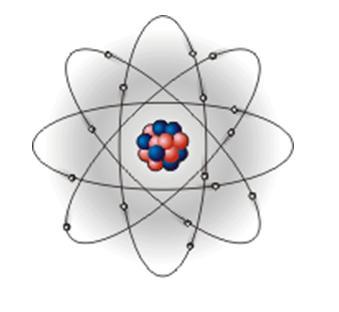
According to the theory of the infinite nesting of matter , an atom can be infinitely split into smaller parts. Let's try to calculate the size, energy or any other arbitrary metric of this very small part. Most likely, you expect that it will not be possible to calculate the specific value of this very small part, and the limit will be obtained in the answer, but I will try to show that this is not so.
We denote the infinitesimal part as “o”, it is equal to 1-0, (9). 0, (9) can be found on the basis of the formula for the infinite decreasing progression S = b / (1-q).
Let's practice finding infinite periodic fractions using the example 0, (8).
(I recall that in the school curriculum 0, (8) is described as 0.888888888 ... an infinite number of eights. That is, as the sum of an infinite sequence An = 8 * 0.1 ^ n)
S = 0.8 + 0.8 * 0, 1 + 0.8 * 0.1 * 0.1 ...
q = 0.1 b = 0.8
S = 0.8 / (1-0.1) = 0.8 / 0.9 = 8/9.
Indeed, on a calculator or manually, you can check that 8/9 = 0.8888888888888888888888888888888888888888888888888888888 (8) ...
Now we calculate 0, (9).
q = 0.1 b = 0.9
S = 0.9 / (1-0.1) = 0.9 / 0.9 = 1.
Total, 0, (9) = 1. The size of the smallest part is o = 1-0, (9) = 1-1 = 0. We got a specific number. According to the theory of the infinite nesting of matter (although it is more correct to call this a hypothesis, because it does not have rigorous scientific proof), matter is fragmented to infinity, and we calculated the size of the smallest particle in the universe. It is 0. This means that at some point in time the particle is crushed into a void, and then the void is also crushed into a void, and that the world is made up of void.

Believe it? In fact, I played you. If you have not found a logical error in your reasoning, I suggest a little thought about where the catch is.
Worlds, where there are five continents,
Arts, knowledge, wars, thrones
And the memory of forty centuries!
Also, perhaps, each atom is the Universe, where there are one hundred planets;
There - everything that is here, in a volume compressed,
But also that which is not here.
Bryusov V.Ya.
According to the theory of the infinite nesting of matter , an atom can be infinitely split into smaller parts. Let's try to calculate the size, energy or any other arbitrary metric of this very small part. Most likely, you expect that it will not be possible to calculate the specific value of this very small part, and the limit will be obtained in the answer, but I will try to show that this is not so.
Spoiler
This article is a practical joke or, more correctly, a puzzle. I suggest the reader to find the place in which a logical error was made. The article uses high school math grade 9.
We denote the infinitesimal part as “o”, it is equal to 1-0, (9). 0, (9) can be found on the basis of the formula for the infinite decreasing progression S = b / (1-q).
Let's practice finding infinite periodic fractions using the example 0, (8).
(I recall that in the school curriculum 0, (8) is described as 0.888888888 ... an infinite number of eights. That is, as the sum of an infinite sequence An = 8 * 0.1 ^ n)
S = 0.8 + 0.8 * 0, 1 + 0.8 * 0.1 * 0.1 ...
q = 0.1 b = 0.8
S = 0.8 / (1-0.1) = 0.8 / 0.9 = 8/9.
Indeed, on a calculator or manually, you can check that 8/9 = 0.8888888888888888888888888888888888888888888888888888888 (8) ...
Now we calculate 0, (9).
q = 0.1 b = 0.9
S = 0.9 / (1-0.1) = 0.9 / 0.9 = 1.
Total, 0, (9) = 1. The size of the smallest part is o = 1-0, (9) = 1-1 = 0. We got a specific number. According to the theory of the infinite nesting of matter (although it is more correct to call this a hypothesis, because it does not have rigorous scientific proof), matter is fragmented to infinity, and we calculated the size of the smallest particle in the universe. It is 0. This means that at some point in time the particle is crushed into a void, and then the void is also crushed into a void, and that the world is made up of void.
Believe it? In fact, I played you. If you have not found a logical error in your reasoning, I suggest a little thought about where the catch is.
What is really wrong
На самом деле, загвоздка кроется в формуле бесконечной убывающей геометрической прогрессии. Формула обычной, не убывающей, геометрической прогрессии равна S = b * (q^n — 1) / (q — 1). Полагая, что в случае бесконечной убывающей прогрессии 0<q<1, n — бесконечно, мы допускаем, что 0,1 «в степени бесконечность» равно 0, и получаем известную со школьного курса формулу S = b/(1-q). Мы допустили, что бесконечно малое число равно нулю, и в ходе дальнейших рассуждений пришли к тому, что бесконечно малое число равно нулю. Мы просто не получили противоречия. То, что мир не состоит из пустоты не было доказано, но и не было опровергнуто.
Решил более подробно описать почему 0,(9) не равно строго 1. При преобразовании периодической дроби в обыкновенную, используется формула суммы геометрической прогрессии. А эта формула может использоваться только для нахождения суммы последовательности. Вот эта формула: S = b * (q^n — 1) / (q — 1). В нашем случае n стремится к бесконечности, а q=0,1. И тут эта формула преобразуется в S = b * (0 — 1) / (q — 1). В математике нельзя просто так взять и беспричинно приравнять q^n к нулю. На самом деле тут берётся предел. Но поскольку на момент объяснения периодической дроби пределы не изучены, учитель говорит что то вроде «поверьте сейчас, а поймёте потом». И тут уже речь идёт о lim(b * (q^n — 1) / (q — 1))=b/(1-q) при n -> бесконечность.
И если дробь 0,(8) и в пределе равна 8/9, и строго равна 8/9, то дробь 0,(9) в пределе равна 1, но строго не равна 1. В пределах такое бывает. Например, lim(1/n) при n-> бесконечность в пределе равно 0, но 1/n не равно строго нулю.
Если в попытке доказать факт, мы вводим факт в аксиоматику, а потом на основе этой и других аксиом доказываем исходный факт, то это никакое не доказательство. Доказывается то, что не содержится в аксиомах. В данном же примере мы изначально ввели в аксиому, что 0,1 в степени бесконечность строго равно нулю. А потом это доказали, не говоря о том, что такая аксиома была введена. Вспомнить о том, что такая аксиома вводилась, можно лишь вспомнив как выводилась формула бесконечной убывающей геометрической прогрессии.
Решил более подробно описать почему 0,(9) не равно строго 1. При преобразовании периодической дроби в обыкновенную, используется формула суммы геометрической прогрессии. А эта формула может использоваться только для нахождения суммы последовательности. Вот эта формула: S = b * (q^n — 1) / (q — 1). В нашем случае n стремится к бесконечности, а q=0,1. И тут эта формула преобразуется в S = b * (0 — 1) / (q — 1). В математике нельзя просто так взять и беспричинно приравнять q^n к нулю. На самом деле тут берётся предел. Но поскольку на момент объяснения периодической дроби пределы не изучены, учитель говорит что то вроде «поверьте сейчас, а поймёте потом». И тут уже речь идёт о lim(b * (q^n — 1) / (q — 1))=b/(1-q) при n -> бесконечность.
И если дробь 0,(8) и в пределе равна 8/9, и строго равна 8/9, то дробь 0,(9) в пределе равна 1, но строго не равна 1. В пределах такое бывает. Например, lim(1/n) при n-> бесконечность в пределе равно 0, но 1/n не равно строго нулю.
Если в попытке доказать факт, мы вводим факт в аксиоматику, а потом на основе этой и других аксиом доказываем исходный факт, то это никакое не доказательство. Доказывается то, что не содержится в аксиомах. В данном же примере мы изначально ввели в аксиому, что 0,1 в степени бесконечность строго равно нулю. А потом это доказали, не говоря о том, что такая аксиома была введена. Вспомнить о том, что такая аксиома вводилась, можно лишь вспомнив как выводилась формула бесконечной убывающей геометрической прогрессии.
Only registered users can participate in the survey. Please come in.