April 22, 2015 at 21:26
Lucid dreams, REM phase and Remee mask - is it possible to control your dreams
Looking at the night, I will introduce you to the history of the study of lucid dreams, tell about the key figures in science who were at the origins of the discovery of the fast phase of sleep, or REM, and also briefly share my experience of “lucid dreams” with the Remee mask
Good evening!
Background The
dream is usually divided into two stages, one of which is paradoxical, non-synchronous, fast, or REM, the abbreviation for Rapid eye movement, and this stage has been “haunting” scientists since the middle of the last century.
The research, initiated by American professor Nathaniel Kleitman (Kleitman), continues to this day, and whole associations, expensive equipment and animals are involved in them. Yes, it’s worth saying that now scientists have all moved to cats, rats and monkeys in an attempt to explain the phenomenon.

Kleitman
In short, it all began in 1953, when Kleitman already taught graduate students. And one of them, as well as a mentor with Russian roots, Eugene (Eugene) Aserinski noticed a quick movement of his eyes, watching a sleeping man.

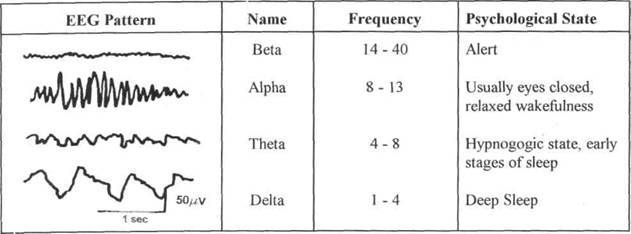
Electroencephalogram and REM sleep phase (underlined)
However, some Kleitman biographers believe that he was interested in the phases of sleep in his 1926 work, “Periodic Phenomena in a Child’s Dream,” which revealed the essence of the experiment on infants from 2 months to 2 years of age, and, in particular, referred to breathing, eyeball movement and overall activity in sleeping babies.
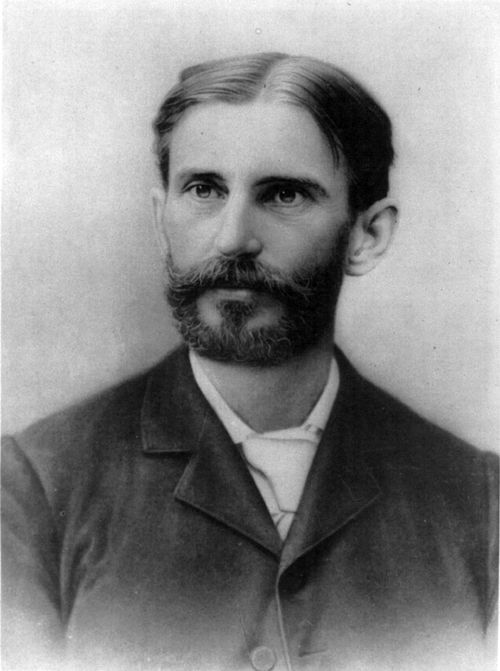
American researchers cite other “sources” of Kleitman’s discovery, in particular, in the collective work of Howard Roffarg, William Dement, Joseph Mutsio and Charles Fisher from 1962, the observation of George Trumbull Ladd, a famous psychologist of the 19th and early 20th centuries, is mentioned. It is believed that in 1892 he saw this phase of sleep, and also immediately suggested what the researchers are now concerned about. Ladd felt that dreams come precisely at the moment of REM! It seemed strange to him that his eyes were moving, but, in his opinion, they always looked somewhere.
Ladd
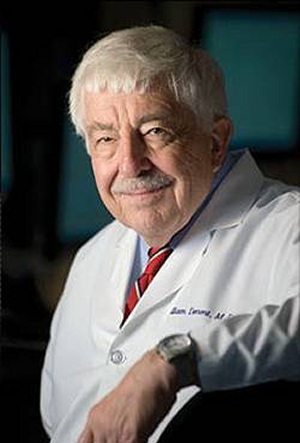
From Kleitman and Aserinski, the string leads to fellow student William Dement, who just insisted or continued Ladd’s point of view, linking the REM phase with the moment of dreams.
William Dement
It must be said right away that for a number of reasons it is completely impossible to prove, but the theory is widespread. In particular, a great attempt to explain this was made in 1997 by scientists V. Zhou and V. M. King. The work was devoted to eye movements and it was claimed, among other things, that saccades were not coordinated. That is, during sleep, a person can observe in different directions.

Eye movement during REM
The work of Dement was supported by Christian Guilleminault. He tried to find a connection with mental and physical disorders, to reveal patterns between the phases of sleep, human activity in sleep and respiratory diseases, cardiovascular disorders.
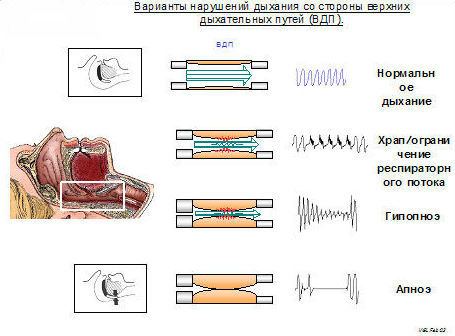
The collaboration between the two scientists resulted in the term “Obstructive Sleep Apnea Syndrome”, or breath holding in a dream, and the “Apnea Index - Hypopnea” was developed. One way or another, since then, psychology and philosophy have given way to “real” medicine, and sleep analytics has become an assistant in the diagnosis of serious diseases.
In parallel with research in the USA, work was carried out in other countries, and Michelle Jouvet (Juve) was recognized as the central figure in Europe in the study of sleep, whose early works were distinguished by increased “romance”. He tried to connect the need for dreaming with the existence of a person as a person. In 1959, he conducted his first experiment on cats, and today in Russia he is better known as the author of the novel "Castle of Dreams."
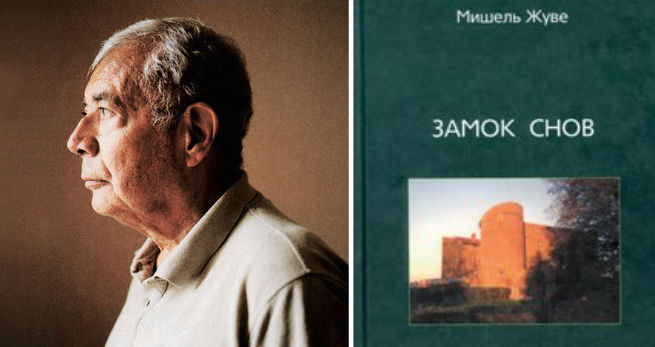
Jouvet
Many of those who stand at the source work today, Kleitman, having lived 104 years, died in 1999, having survived his graduate student for a year. By tragic accident, Eugene Aserinski died in 1998, presumably falling asleep at the wheel.
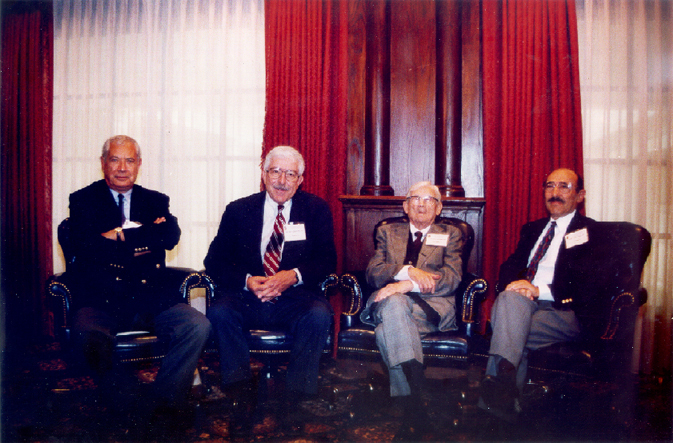
Michelle Juve, William Dement, Nathaniel Kleitman and Eugene Aserinski
Currently, research is ongoing and deepening, largely due to the development of technology. However, attempts by the brain to analyze the brain are still not successful. Nevertheless, judging by the headings of the articles, scientists are focusing on more specific problems, trying to examine individual parts of the brain, wave arcs, the angle of view of the eyes during the REM phase, etc.
From the academic journals, two journals devoted only to sleep problems come to mind: The Journal of Sleep Research and Dreams and Biological Rhythms, one of which is published by the European Society for Sleep Research, the second by the Japanese.

Magazine covers
Sleep for the body
Since childhood, I heard that sleeping is good, and the brain is resting in a dream. Now, having briefly got acquainted with some works, I understand that this is not entirely true. Particular attention is paid to where the REM sleep phase originates and how the phase occurs because the brain is very active at REM moments. In one of the works of 2005, M. Steriad even suggested that too much activity could develop into convulsions, probably related to the activation of the “theta waves” responsible for creativity, memory, and creativity. Such waves are responsible for “impulsivity”, and the REM phase is characterized by the fact that a person is little responsible for the activity of his muscles.
Wave bursts in the brain stem are especially noticeable in the visual cortex of the brain and provoke "Fast eye movement." According to studies, acetylcholine affects the amplitude of the waves, and therefore some scientists believe that depriving a person of the REM sleep phase can provoke Alzheimer's disease and memory loss. In some cases, doctors even resort to injections.
In general, the activity of neurons in the brain stem during sleep originates in the Blue Spot, which is “responsible” for norepinephrine, which suppresses REM.

The connection between the pros and cons neurons was proved by Robert McCarley and Allan Hobson, who actually claimed that the interaction of neurons is a pushing factor from one phase of sleep to another, and each of them is impossible separately.
This is confirmed by inhumane observations made on animals: when the blue spot is destroyed, the REM phase is suppressed, for example, in cats.
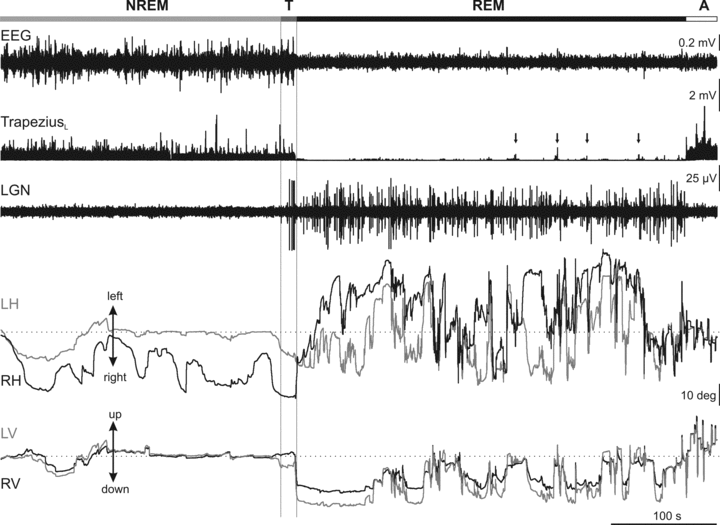
The movement of the cat's eyes during the phases of fast and slow sleep
A little later, Michel Jouvet expressed a similar idea about the “place of origin” of dreams, proving that acetylcholine during REM appears in a higher concentration than during wakefulness and “conflicts” with the Blue Spot.
Not only brain activity is seen as a sign of REM. It is noted that this phase may be accompanied by irregular heart rate, pressure, respiration, body temperature and a number of other characteristics.
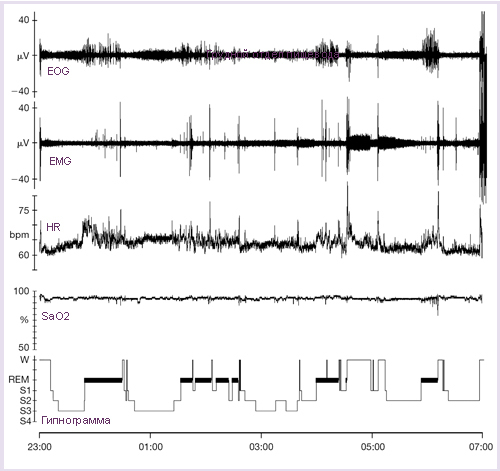
The phase can be accompanied by muscle atony, partial paralysis, while their normal work is connected with the sleep phase deeply, and it is in deep sleep that there are cases of sleepwalking.
The influence of the REM phase on the body is also considered through the prism of other areas of medicine, in particular psychology, as well as other sciences, such as philosophy, cultural studies.
More and more scientists endow REM with functions of stimulating memory and developing creative abilities, and a “right” dream with a “right amount of phase rotation” has a beneficial effect on the central nervous system. In this case, “true” should be understood in adults 25% REM, or 90 - 120 minutes per night, in children - 50%.
Lucid dreaming
As already mentioned, it is believed that it is the REM phase that is accompanied by dreams. This hypothesis is developed in our own by Mark Solms, arguing that people who were awakened during the REM phase more accurately retell their dreams, remember more details. This thought made it possible to talk about lucid dreams again, from a scientific point of view.
In fact, the origins of the concept of “lucid dream” should be sought in ancient times, and in particular in his 1987 book Hipnagogia, Andreas Mavromatis cites Aristotle.

Aristotle
The ancient perception of sleep is very dependent on beliefs, and the largest philosophers of that time tried to link the dream with the ability of the deity to prove himself, his will, which can be found in Homer's Odyssey and in Hesiod's Theogony. According to the latter, the sleep god Hypnos is the brother of Thanatos, and here the connection of death and sleep should be clearly understood. So one of the “functions” of sleep in ancient culture could be - an attempt to prove and explain life after death, in connection with which lucid dreams were of great importance, and people experiencing them ascended like prophets! Special respect was enjoyed by those who had out-of-body experience.
Whatever it was actually ... But Aristotle first made observations that dream visions arise due to sensory sensations. In the work "On Dreams," he clarifies that things perceived with the help of the senses remain in memory even when physically absent. And these images, in his opinion, are seen by a person in a dream. At the same time, a curious phrase sounds further: "What happens in such cases can be compared with moving particles," that is, it turns out that the REM phase of sleep and its inherent neural activity are described in ancient times in simpler terminology.
Aristotle considers the possibility of a person to be aware of his dreams, but in his aesthetics, a dream is a kind of “fantasy” that arises only with sensory experience, and therefore, according to the philosopher, some are completely deprived of the opportunity to dream, in particular, children, time, as with old age, night visions “progress”.
The term "Lucid Dream" was coined by the Dutchman Frederick van Eden. The psychiatrist who corresponded with Hesse and Kropotkin began as the attending physician of his alcoholic companion. At an early stage of his theoretical search, he was influenced by Hindu philosophy, from where he “reached out” to the concept of lucid dreaming. The concept is related to the states characteristic of Hinduism and Buddhism in which the yogis abide.
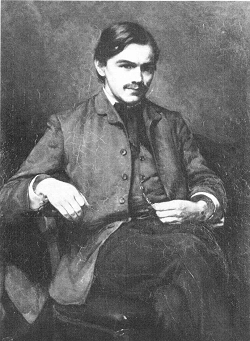
Eden
The experience of lucid dreaming is described in the cult Religion of the Doctor by Thomas Brown (1605 - 1682), where the dream itself is inextricably linked with an otherworldly and divine presence, and the author thanks God many times for beautiful dreams.
In the diaries of different people of that time, one can also find indications of getting some pleasure from participating in one’s own dream.

Brown
Continuing this tradition, many not only began to explore the possibility of lucid dreaming, but also began, as we would now call "coaches" on this issue. 20 years of experience in his sleep research was published in 1867 by Marie-Jean-Leon, Marquis d'Hervey de San Denis.
An outstanding Sinologist and translator of his time, probably having experienced the influence of oriental culture, became known as a researcher of dreams. Writing down his dreams from the age of 13, he convinces himself that he has learned to manage them and demonstrates how this happened in his personal experience.

San Denis
Currently, the possibility of lucid dreaming is considered skeptically, and a number of scientists, although they do not deny it, say that the only way to check is to simply believe in the awakening!
This point of view is held by the philosopher of the analytical direction Norman Malcolm, who paid great attention to the problems of memory and sleep in his writings. Skepticism is due to its methodology, in particular the point of view that any result that contradicts common sense is false.
There was criticism from the side of the “old school,” in particular, Dr. Hobson noted that everything that is commonly called lucid dreaming is more logical to attribute to a special version of meditation.

Hobson
After almost a decade, the pros and cons were analyzed by Celia Green, and she came to the conclusion that lucid dreams are very similar to the so-called “false awakenings”.
Ten years later, the British scientist Kate Hearn first conducted a scientific study of lucid dreams using technology, during which he confirmed in some way that: firstly, a person sees a dream, secondly, he can control it, and thirdly, signals that are supplied by the body inside, you can learn to control and respond to them.
The very signs of “Lucid Dreaming” were presented based on a generalization of experience by Paul Tolei, a German professor of psychology in 1980. Tolley began his study of dreams with attempts to prove that a person sees dreams in color.
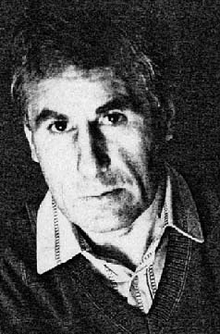
Tolley
Formulated signs of lucid dreaming today are:
Also, according to scientists, lucid dreams are associated with increased concentration of attention, and here is another plus in the karma of observing the REM phase.
Today, the key figure in the field of the study of lucid dreams is called Stephen Laberge (Laberge), a former physicist and now parapsychologist Stanford.
The study of lucid dreaming receives medical support for a number of reasons, but it is most often noted that this type of sleep would make it easier for people with nightmares to survive nightly stresses. As a result, in the opinion of scientists, this would allow avoiding in special cases of depression, suicidal tendencies, etc.

Laberge
Individual attempts to bring a person into a state of lucid sleep very clearly resemble hypnosis, and now this technique is actively used in various fields of psychological assistance, up to the treatment of alcohol and drug addiction.
Lyrical digression.
First of all, the significance of sleep in human life greatly excited philosophers, writers, poets, artists, and if not to say that sleep is a kind of “concept” in art, then it is definitely a powerful artistic device.
At school everyone wrote an essay on “The Dreams of Vera Pavlovna”, in Pushkin's “Bridegroom” a crime is revealed in a dream, “Life is a Dream” by Calderon are remembered by fans of Spanish literature, and “Midsummer Night's Dream” by English.
The writers so taught us that no matter how tragically the storyline develops, you can always “blame” everything for a dream and awaken the hero in the finale. Remember Dickens's “Christmas Carol” with the transformation of Scrooge in the finale? Sometimes, such as in Kafka’s novels, the hope of a dream is not justified, despite the absurdity and unreality of what is happening. And sometimes, in “Transformation”, everything begins with him: “Waking up one morning after a restless sleep, Gregor Zamza discovered ...”, etc. And Andersen’s Ole-Lukoye is almost a harbinger of Paul Tolei’s research.
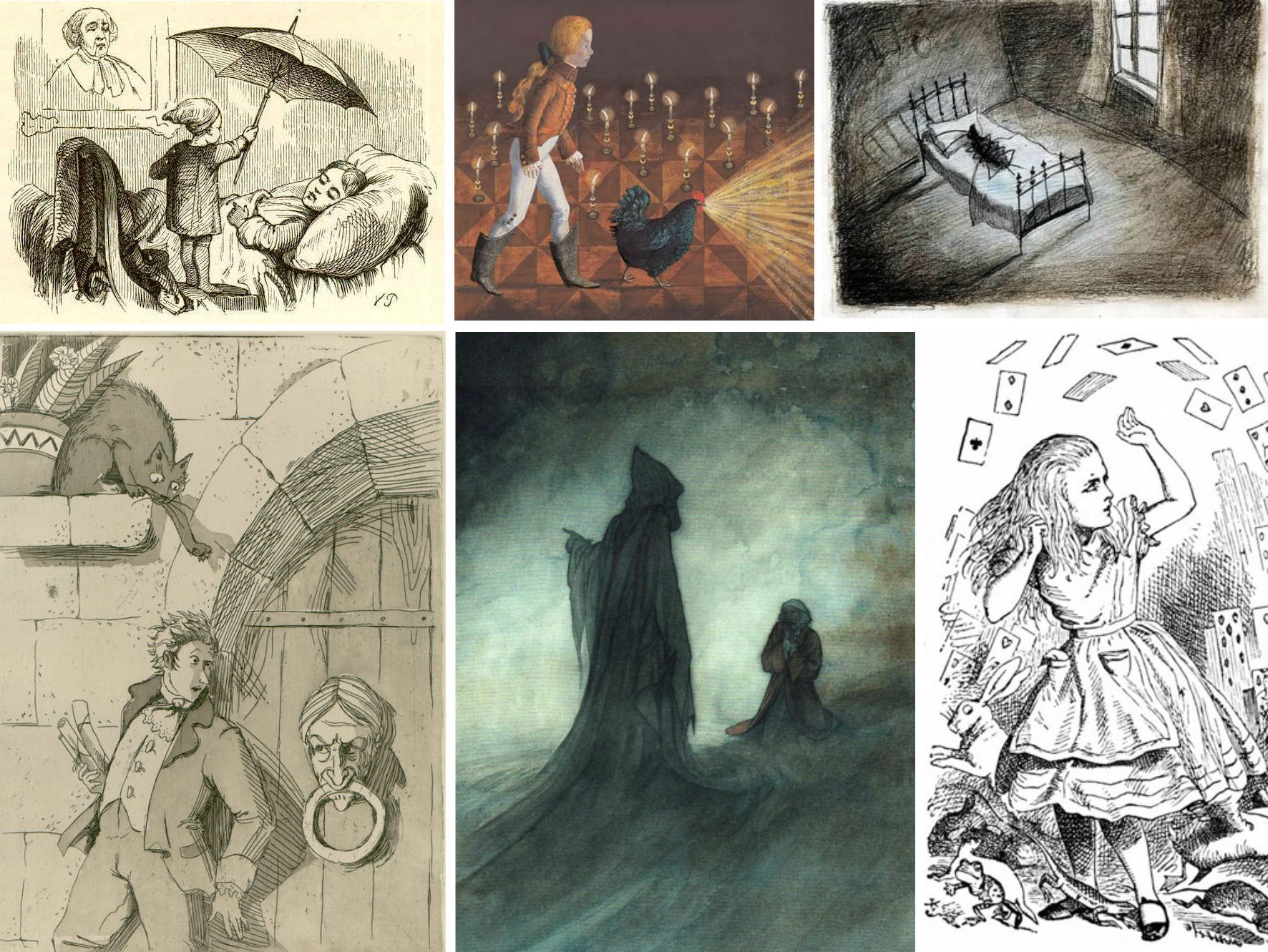
Ill: Andersen, Pogorelsky, Kafka, Hoffmann, Dickens, Carroll
The most recognizable “Sleep” technique in fiction became, it seems to me, after E.-T.-A. Hoffmann. The characteristic signs of his "dream" are defined in the "Golden Pot", when the hero seems to be dreaming, wakes up, but he retains some detail from the dream. Both student Anselm and Veronika reflect on this, recalling the eldest nightmare of a trip to the old woman. Or not a nightmare.
In Russian romanticism, one should call Pogorelsky with “The Black Chicken, or Underground Residents,” and if we talk about fairy tales in general, then, of course, “Alice in Wonderland” saw the most vivid dreams.
Remee
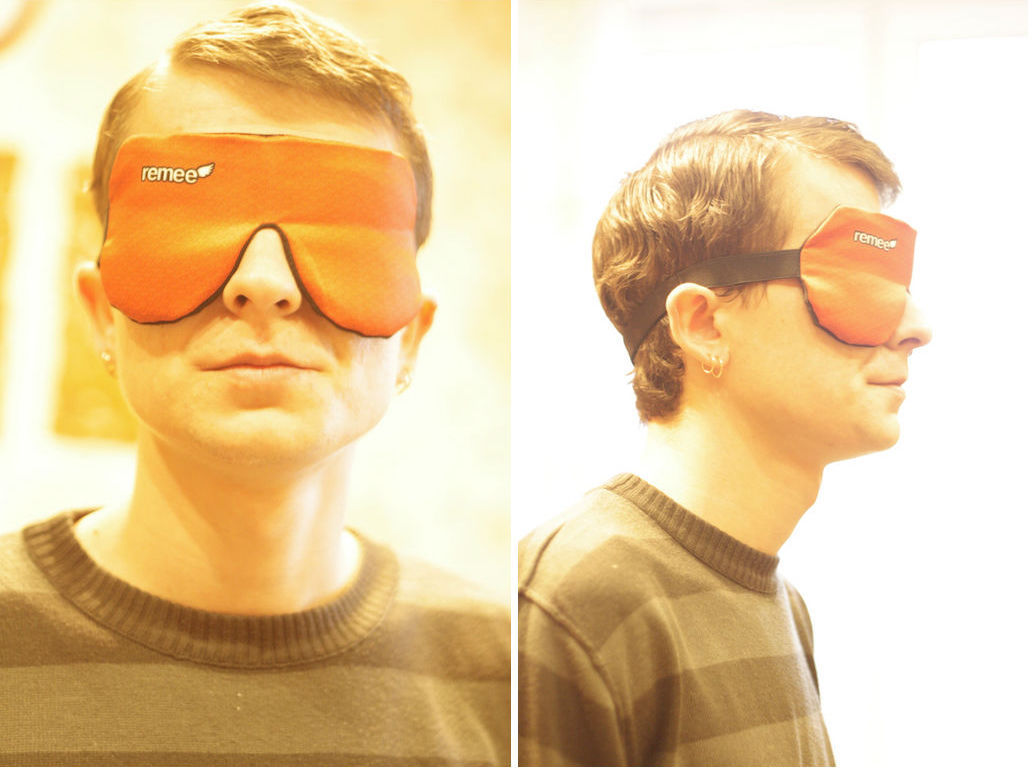
At this intersection of medicine and philosophy, the Remee mask arose in our time ., the name of which is derived from the designation REM phase of sleep. The “medical” component is that the mask understands what phase of sleep you are in, and is included in the period of REM sleep. The philosophical lies in the “magic” diodes that gently disturb you and allow you to control your lucid dream.
The Remee fundraising campaign started on Kickstarter and raised more than half a million dollars against the desired 35,000. The developers themselves are very creative in describing the product, they mention Aristotle, they say that they have been trying to solve puzzles of sleep for centuries, and just today there is an opportunity to get into a dream and experience indescribable impressions of a lucid dream. "
Among other things, the basic information contains a phase-division sleep pattern and refers to Laberge, which I talked about a little higher.
Thus, according to the creators, the flickering of the diodes should occur in the phase of REM sleep, the most likely period in which a person sees dreams, and with the help of signals, carefully and without waking up, transfer your consciousness from the “viewing” mode to the “control” mode .
Set The
mask "Remy" is sold in a very compact box and is completed with instructions in English. Of all that is written there, perhaps you should only know how it is turned on and what is needed to make changes to the settings.
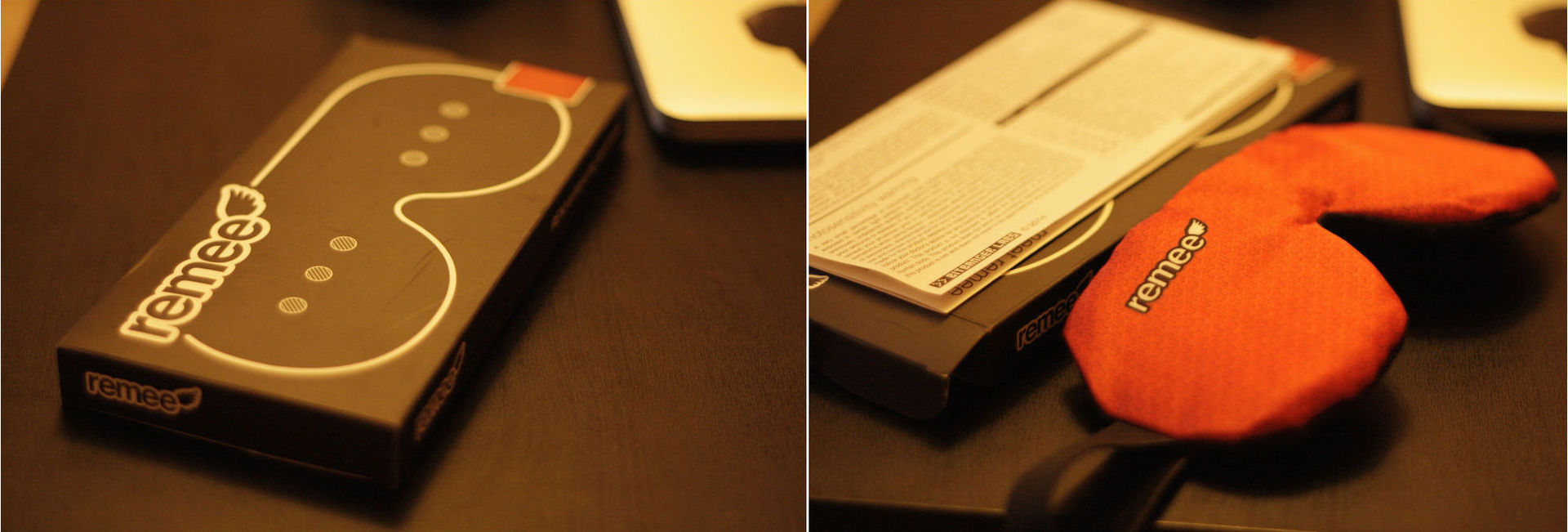
The form
The mask is made in a recognizable form and has dimensions that should suit any sleeping person. An adjustable strap allows you to fasten the mask on the head of any volume.

The strap itself is quite soft, but I had problems of this nature: the strap, sliding through my hair, “clung” to my ears and rubbed. Since he is in some kind of movement due to turning his head during sleep, this caused some trouble in the morning. Attempts to avoid this, for example, strengthen stronger, tighten, sometimes provoked a headache.
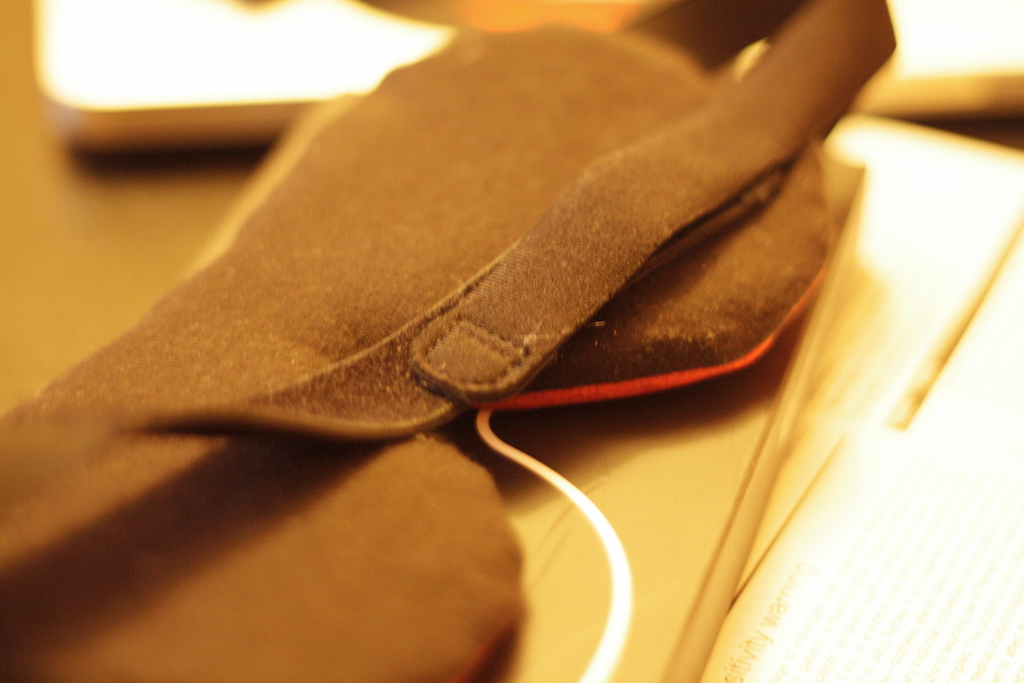
That is, it is important to carefully estimate how much you need to tighten Remee belts in your individual case, so as not to lose on the one hand, and not to cause discomfort to you on the other hand.
Content
The mask device seems to be straightforward: a pair of photosensors, a battery and two buttons: on / off and control. To translate Remee into programming, you need to hold the last one for several seconds until the diodes flicker on the left, and then a few more seconds, without stopping, until the flicker quickly. There, on the left.
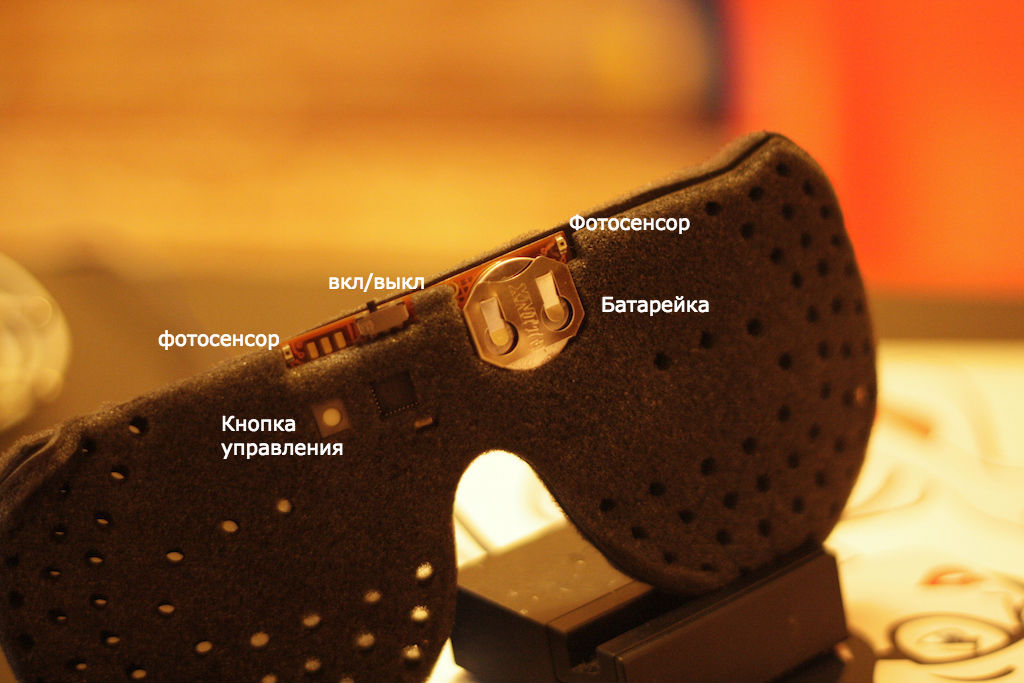
I would not say that the contents are extracted very easily, as described in other reviews, but this will have to be done at least once a month due to hygiene reasons.
On the reverse side, the inside, the whole secret is actually located: three diodes for each eye.
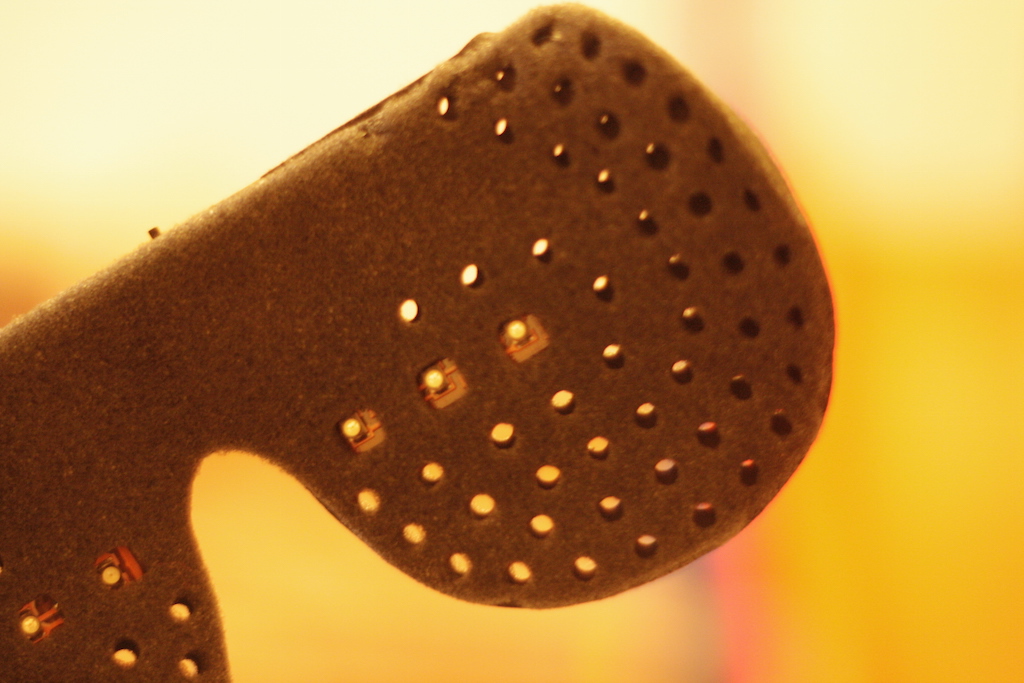
Programming
Programmable mask from the computer. Intuitive website interface, where you can set the signal delay and options "flicker", will help you find your option. You will have to work hard with the search.
It’s not possible to immediately find “your own” flicker, and some require from a week to a month, while others, judging by the reviews, perfectly manage their dreams with default settings.
On the settings page, you will see tips and examples, and the only clarification that is worth giving: change the factory battery, keep the mask closer to the monitor, and the brightness of the latter is at maximum.
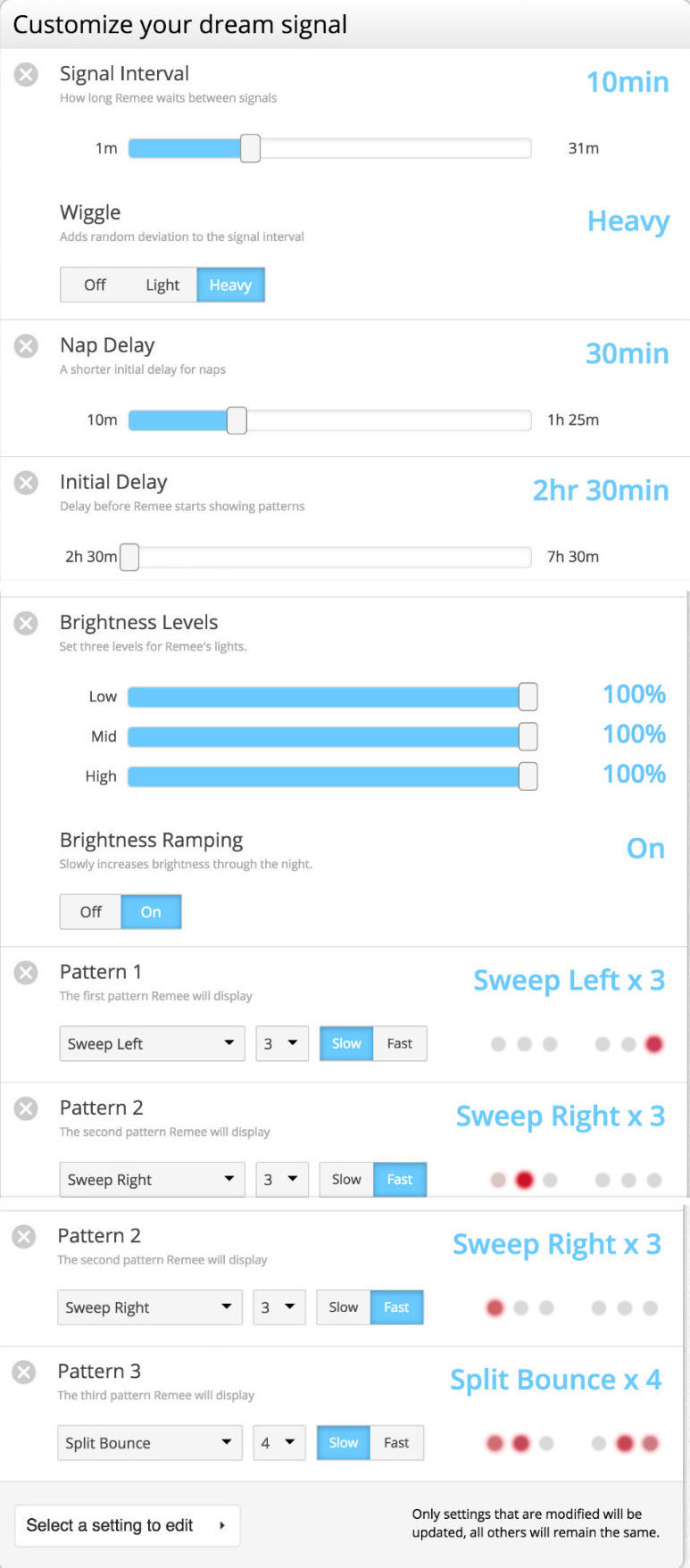
You can change all points as well as separately delay, flicker, brightness, and if time shows that the settings are successful, you can share them with friends.
The fact that the settings are remembered, you will learn from the signals on the mask.

In the process, you bring the mask close to the monitor and in front of you two rectangles flicker in black and white. During operation, the diodes on the mask should also respond.
All conventions are easy to read.
My experience
More precisely my sensations. I used Remee for more than a week, and for me it was rather important to try everything, all the settings, both at night and in the daytime. In general, the positive thing is that you can tell your wife and children that you went to work and go to bed, and I liked testing gadgets in a dream since Reston.
It felt like a mask "woke me up, preventing me from waking up." The signals that I distinguished did not relate to what I saw in a dream, but I understood that something was happening and my attention was somehow activated, I at least watched the dream more carefully.
Almost all the dreams that I saw in a week I can now retell with fairly high accuracy. A couple of times I chatted with friends on Facebook. Several times I had the opportunity to make a decision: go to the pharmacy for medicine when my wife got a headache in the theater or just go home.
I repeat that you have no reason to believe me. This is my feeling of working with a mask. I didn’t specially prepare for bed, only once I tried to "recreate the atmosphere" of rain with the help of such a thing .

During daytime sleep, I was able to react only 1 time out of 3. At the same time, I transferred the mask itself to the "Snooze" mode with an earlier option for signaling.
In the final, I add that despite the fact that the REM phase gave the name to the mask, it seems that it doesn’t react very well to eye movement. That is, the mega-sensitive sensor is not there : the main secret in the timer.
On this I say goodbye to you, have a good evening and good dreams!
Buy Remee mask
Good evening!
Background The
dream is usually divided into two stages, one of which is paradoxical, non-synchronous, fast, or REM, the abbreviation for Rapid eye movement, and this stage has been “haunting” scientists since the middle of the last century.
The research, initiated by American professor Nathaniel Kleitman (Kleitman), continues to this day, and whole associations, expensive equipment and animals are involved in them. Yes, it’s worth saying that now scientists have all moved to cats, rats and monkeys in an attempt to explain the phenomenon.
Kleitman
In short, it all began in 1953, when Kleitman already taught graduate students. And one of them, as well as a mentor with Russian roots, Eugene (Eugene) Aserinski noticed a quick movement of his eyes, watching a sleeping man.
Electroencephalogram and REM sleep phase (underlined)
However, some Kleitman biographers believe that he was interested in the phases of sleep in his 1926 work, “Periodic Phenomena in a Child’s Dream,” which revealed the essence of the experiment on infants from 2 months to 2 years of age, and, in particular, referred to breathing, eyeball movement and overall activity in sleeping babies.
American researchers cite other “sources” of Kleitman’s discovery, in particular, in the collective work of Howard Roffarg, William Dement, Joseph Mutsio and Charles Fisher from 1962, the observation of George Trumbull Ladd, a famous psychologist of the 19th and early 20th centuries, is mentioned. It is believed that in 1892 he saw this phase of sleep, and also immediately suggested what the researchers are now concerned about. Ladd felt that dreams come precisely at the moment of REM! It seemed strange to him that his eyes were moving, but, in his opinion, they always looked somewhere.
Ladd
From Kleitman and Aserinski, the string leads to fellow student William Dement, who just insisted or continued Ladd’s point of view, linking the REM phase with the moment of dreams.
William Dement
It must be said right away that for a number of reasons it is completely impossible to prove, but the theory is widespread. In particular, a great attempt to explain this was made in 1997 by scientists V. Zhou and V. M. King. The work was devoted to eye movements and it was claimed, among other things, that saccades were not coordinated. That is, during sleep, a person can observe in different directions.
Eye movement during REM
The work of Dement was supported by Christian Guilleminault. He tried to find a connection with mental and physical disorders, to reveal patterns between the phases of sleep, human activity in sleep and respiratory diseases, cardiovascular disorders.
The collaboration between the two scientists resulted in the term “Obstructive Sleep Apnea Syndrome”, or breath holding in a dream, and the “Apnea Index - Hypopnea” was developed. One way or another, since then, psychology and philosophy have given way to “real” medicine, and sleep analytics has become an assistant in the diagnosis of serious diseases.
In parallel with research in the USA, work was carried out in other countries, and Michelle Jouvet (Juve) was recognized as the central figure in Europe in the study of sleep, whose early works were distinguished by increased “romance”. He tried to connect the need for dreaming with the existence of a person as a person. In 1959, he conducted his first experiment on cats, and today in Russia he is better known as the author of the novel "Castle of Dreams."
Jouvet
Many of those who stand at the source work today, Kleitman, having lived 104 years, died in 1999, having survived his graduate student for a year. By tragic accident, Eugene Aserinski died in 1998, presumably falling asleep at the wheel.
Michelle Juve, William Dement, Nathaniel Kleitman and Eugene Aserinski
Currently, research is ongoing and deepening, largely due to the development of technology. However, attempts by the brain to analyze the brain are still not successful. Nevertheless, judging by the headings of the articles, scientists are focusing on more specific problems, trying to examine individual parts of the brain, wave arcs, the angle of view of the eyes during the REM phase, etc.
From the academic journals, two journals devoted only to sleep problems come to mind: The Journal of Sleep Research and Dreams and Biological Rhythms, one of which is published by the European Society for Sleep Research, the second by the Japanese.
Magazine covers
Sleep for the body
Since childhood, I heard that sleeping is good, and the brain is resting in a dream. Now, having briefly got acquainted with some works, I understand that this is not entirely true. Particular attention is paid to where the REM sleep phase originates and how the phase occurs because the brain is very active at REM moments. In one of the works of 2005, M. Steriad even suggested that too much activity could develop into convulsions, probably related to the activation of the “theta waves” responsible for creativity, memory, and creativity. Such waves are responsible for “impulsivity”, and the REM phase is characterized by the fact that a person is little responsible for the activity of his muscles.
Wave bursts in the brain stem are especially noticeable in the visual cortex of the brain and provoke "Fast eye movement." According to studies, acetylcholine affects the amplitude of the waves, and therefore some scientists believe that depriving a person of the REM sleep phase can provoke Alzheimer's disease and memory loss. In some cases, doctors even resort to injections.
In general, the activity of neurons in the brain stem during sleep originates in the Blue Spot, which is “responsible” for norepinephrine, which suppresses REM.
The connection between the pros and cons neurons was proved by Robert McCarley and Allan Hobson, who actually claimed that the interaction of neurons is a pushing factor from one phase of sleep to another, and each of them is impossible separately.
This is confirmed by inhumane observations made on animals: when the blue spot is destroyed, the REM phase is suppressed, for example, in cats.
The movement of the cat's eyes during the phases of fast and slow sleep
A little later, Michel Jouvet expressed a similar idea about the “place of origin” of dreams, proving that acetylcholine during REM appears in a higher concentration than during wakefulness and “conflicts” with the Blue Spot.
Not only brain activity is seen as a sign of REM. It is noted that this phase may be accompanied by irregular heart rate, pressure, respiration, body temperature and a number of other characteristics.
The phase can be accompanied by muscle atony, partial paralysis, while their normal work is connected with the sleep phase deeply, and it is in deep sleep that there are cases of sleepwalking.
The influence of the REM phase on the body is also considered through the prism of other areas of medicine, in particular psychology, as well as other sciences, such as philosophy, cultural studies.
More and more scientists endow REM with functions of stimulating memory and developing creative abilities, and a “right” dream with a “right amount of phase rotation” has a beneficial effect on the central nervous system. In this case, “true” should be understood in adults 25% REM, or 90 - 120 minutes per night, in children - 50%.
Lucid dreaming
As already mentioned, it is believed that it is the REM phase that is accompanied by dreams. This hypothesis is developed in our own by Mark Solms, arguing that people who were awakened during the REM phase more accurately retell their dreams, remember more details. This thought made it possible to talk about lucid dreams again, from a scientific point of view.
In fact, the origins of the concept of “lucid dream” should be sought in ancient times, and in particular in his 1987 book Hipnagogia, Andreas Mavromatis cites Aristotle.
Aristotle
The ancient perception of sleep is very dependent on beliefs, and the largest philosophers of that time tried to link the dream with the ability of the deity to prove himself, his will, which can be found in Homer's Odyssey and in Hesiod's Theogony. According to the latter, the sleep god Hypnos is the brother of Thanatos, and here the connection of death and sleep should be clearly understood. So one of the “functions” of sleep in ancient culture could be - an attempt to prove and explain life after death, in connection with which lucid dreams were of great importance, and people experiencing them ascended like prophets! Special respect was enjoyed by those who had out-of-body experience.
Whatever it was actually ... But Aristotle first made observations that dream visions arise due to sensory sensations. In the work "On Dreams," he clarifies that things perceived with the help of the senses remain in memory even when physically absent. And these images, in his opinion, are seen by a person in a dream. At the same time, a curious phrase sounds further: "What happens in such cases can be compared with moving particles," that is, it turns out that the REM phase of sleep and its inherent neural activity are described in ancient times in simpler terminology.
Aristotle considers the possibility of a person to be aware of his dreams, but in his aesthetics, a dream is a kind of “fantasy” that arises only with sensory experience, and therefore, according to the philosopher, some are completely deprived of the opportunity to dream, in particular, children, time, as with old age, night visions “progress”.
The term "Lucid Dream" was coined by the Dutchman Frederick van Eden. The psychiatrist who corresponded with Hesse and Kropotkin began as the attending physician of his alcoholic companion. At an early stage of his theoretical search, he was influenced by Hindu philosophy, from where he “reached out” to the concept of lucid dreaming. The concept is related to the states characteristic of Hinduism and Buddhism in which the yogis abide.
Eden
The experience of lucid dreaming is described in the cult Religion of the Doctor by Thomas Brown (1605 - 1682), where the dream itself is inextricably linked with an otherworldly and divine presence, and the author thanks God many times for beautiful dreams.
In the diaries of different people of that time, one can also find indications of getting some pleasure from participating in one’s own dream.
Brown
Continuing this tradition, many not only began to explore the possibility of lucid dreaming, but also began, as we would now call "coaches" on this issue. 20 years of experience in his sleep research was published in 1867 by Marie-Jean-Leon, Marquis d'Hervey de San Denis.
An outstanding Sinologist and translator of his time, probably having experienced the influence of oriental culture, became known as a researcher of dreams. Writing down his dreams from the age of 13, he convinces himself that he has learned to manage them and demonstrates how this happened in his personal experience.
San Denis
Currently, the possibility of lucid dreaming is considered skeptically, and a number of scientists, although they do not deny it, say that the only way to check is to simply believe in the awakening!
This point of view is held by the philosopher of the analytical direction Norman Malcolm, who paid great attention to the problems of memory and sleep in his writings. Skepticism is due to its methodology, in particular the point of view that any result that contradicts common sense is false.
There was criticism from the side of the “old school,” in particular, Dr. Hobson noted that everything that is commonly called lucid dreaming is more logical to attribute to a special version of meditation.
Hobson
After almost a decade, the pros and cons were analyzed by Celia Green, and she came to the conclusion that lucid dreams are very similar to the so-called “false awakenings”.
Ten years later, the British scientist Kate Hearn first conducted a scientific study of lucid dreams using technology, during which he confirmed in some way that: firstly, a person sees a dream, secondly, he can control it, and thirdly, signals that are supplied by the body inside, you can learn to control and respond to them.
The very signs of “Lucid Dreaming” were presented based on a generalization of experience by Paul Tolei, a German professor of psychology in 1980. Tolley began his study of dreams with attempts to prove that a person sees dreams in color.
Tolley
Formulated signs of lucid dreaming today are:
- A person understands that he is sleeping and everything will disappear upon awakening
- A person can make decisions in a dream
- A person can participate or observe
- A person remembers what is happening in a dream
- A man is aware of himself and his actions
- A person is aware of the world around him
Also, according to scientists, lucid dreams are associated with increased concentration of attention, and here is another plus in the karma of observing the REM phase.
Today, the key figure in the field of the study of lucid dreams is called Stephen Laberge (Laberge), a former physicist and now parapsychologist Stanford.
The study of lucid dreaming receives medical support for a number of reasons, but it is most often noted that this type of sleep would make it easier for people with nightmares to survive nightly stresses. As a result, in the opinion of scientists, this would allow avoiding in special cases of depression, suicidal tendencies, etc.
Laberge
Individual attempts to bring a person into a state of lucid sleep very clearly resemble hypnosis, and now this technique is actively used in various fields of psychological assistance, up to the treatment of alcohol and drug addiction.
Lyrical digression.
First of all, the significance of sleep in human life greatly excited philosophers, writers, poets, artists, and if not to say that sleep is a kind of “concept” in art, then it is definitely a powerful artistic device.
At school everyone wrote an essay on “The Dreams of Vera Pavlovna”, in Pushkin's “Bridegroom” a crime is revealed in a dream, “Life is a Dream” by Calderon are remembered by fans of Spanish literature, and “Midsummer Night's Dream” by English.
The writers so taught us that no matter how tragically the storyline develops, you can always “blame” everything for a dream and awaken the hero in the finale. Remember Dickens's “Christmas Carol” with the transformation of Scrooge in the finale? Sometimes, such as in Kafka’s novels, the hope of a dream is not justified, despite the absurdity and unreality of what is happening. And sometimes, in “Transformation”, everything begins with him: “Waking up one morning after a restless sleep, Gregor Zamza discovered ...”, etc. And Andersen’s Ole-Lukoye is almost a harbinger of Paul Tolei’s research.
Ill: Andersen, Pogorelsky, Kafka, Hoffmann, Dickens, Carroll
The most recognizable “Sleep” technique in fiction became, it seems to me, after E.-T.-A. Hoffmann. The characteristic signs of his "dream" are defined in the "Golden Pot", when the hero seems to be dreaming, wakes up, but he retains some detail from the dream. Both student Anselm and Veronika reflect on this, recalling the eldest nightmare of a trip to the old woman. Or not a nightmare.
In Russian romanticism, one should call Pogorelsky with “The Black Chicken, or Underground Residents,” and if we talk about fairy tales in general, then, of course, “Alice in Wonderland” saw the most vivid dreams.
Remee
At this intersection of medicine and philosophy, the Remee mask arose in our time ., the name of which is derived from the designation REM phase of sleep. The “medical” component is that the mask understands what phase of sleep you are in, and is included in the period of REM sleep. The philosophical lies in the “magic” diodes that gently disturb you and allow you to control your lucid dream.
The Remee fundraising campaign started on Kickstarter and raised more than half a million dollars against the desired 35,000. The developers themselves are very creative in describing the product, they mention Aristotle, they say that they have been trying to solve puzzles of sleep for centuries, and just today there is an opportunity to get into a dream and experience indescribable impressions of a lucid dream. "
Among other things, the basic information contains a phase-division sleep pattern and refers to Laberge, which I talked about a little higher.
Thus, according to the creators, the flickering of the diodes should occur in the phase of REM sleep, the most likely period in which a person sees dreams, and with the help of signals, carefully and without waking up, transfer your consciousness from the “viewing” mode to the “control” mode .
Set The
mask "Remy" is sold in a very compact box and is completed with instructions in English. Of all that is written there, perhaps you should only know how it is turned on and what is needed to make changes to the settings.
The form
The mask is made in a recognizable form and has dimensions that should suit any sleeping person. An adjustable strap allows you to fasten the mask on the head of any volume.
The strap itself is quite soft, but I had problems of this nature: the strap, sliding through my hair, “clung” to my ears and rubbed. Since he is in some kind of movement due to turning his head during sleep, this caused some trouble in the morning. Attempts to avoid this, for example, strengthen stronger, tighten, sometimes provoked a headache.
That is, it is important to carefully estimate how much you need to tighten Remee belts in your individual case, so as not to lose on the one hand, and not to cause discomfort to you on the other hand.
Content
The mask device seems to be straightforward: a pair of photosensors, a battery and two buttons: on / off and control. To translate Remee into programming, you need to hold the last one for several seconds until the diodes flicker on the left, and then a few more seconds, without stopping, until the flicker quickly. There, on the left.
I would not say that the contents are extracted very easily, as described in other reviews, but this will have to be done at least once a month due to hygiene reasons.
On the reverse side, the inside, the whole secret is actually located: three diodes for each eye.
Programming
Programmable mask from the computer. Intuitive website interface, where you can set the signal delay and options "flicker", will help you find your option. You will have to work hard with the search.
It’s not possible to immediately find “your own” flicker, and some require from a week to a month, while others, judging by the reviews, perfectly manage their dreams with default settings.
On the settings page, you will see tips and examples, and the only clarification that is worth giving: change the factory battery, keep the mask closer to the monitor, and the brightness of the latter is at maximum.
You can change all points as well as separately delay, flicker, brightness, and if time shows that the settings are successful, you can share them with friends.
The fact that the settings are remembered, you will learn from the signals on the mask.
In the process, you bring the mask close to the monitor and in front of you two rectangles flicker in black and white. During operation, the diodes on the mask should also respond.
All conventions are easy to read.
My experience
More precisely my sensations. I used Remee for more than a week, and for me it was rather important to try everything, all the settings, both at night and in the daytime. In general, the positive thing is that you can tell your wife and children that you went to work and go to bed, and I liked testing gadgets in a dream since Reston.
- By brightness, my option was medium.
- Flickering pulsating rather than smooth transitions.
- The start of signaling is most adequate from the default settings when it comes to night sleep
It felt like a mask "woke me up, preventing me from waking up." The signals that I distinguished did not relate to what I saw in a dream, but I understood that something was happening and my attention was somehow activated, I at least watched the dream more carefully.
Almost all the dreams that I saw in a week I can now retell with fairly high accuracy. A couple of times I chatted with friends on Facebook. Several times I had the opportunity to make a decision: go to the pharmacy for medicine when my wife got a headache in the theater or just go home.
I repeat that you have no reason to believe me. This is my feeling of working with a mask. I didn’t specially prepare for bed, only once I tried to "recreate the atmosphere" of rain with the help of such a thing .
During daytime sleep, I was able to react only 1 time out of 3. At the same time, I transferred the mask itself to the "Snooze" mode with an earlier option for signaling.
In the final, I add that despite the fact that the REM phase gave the name to the mask, it seems that it doesn’t react very well to eye movement. That is, the mega-sensitive sensor is not there : the main secret in the timer.
On this I say goodbye to you, have a good evening and good dreams!
Buy Remee mask