January 17, 2015 at 14:55
Looking back: BESM history
The history of computing goes back in time. Mankind has had to spend more than one century to create the first electronic computer (computer). Undoubtedly, this is one of the greatest discoveries of the 20th century, the start that allowed humanity to move forward in the world of information technology.
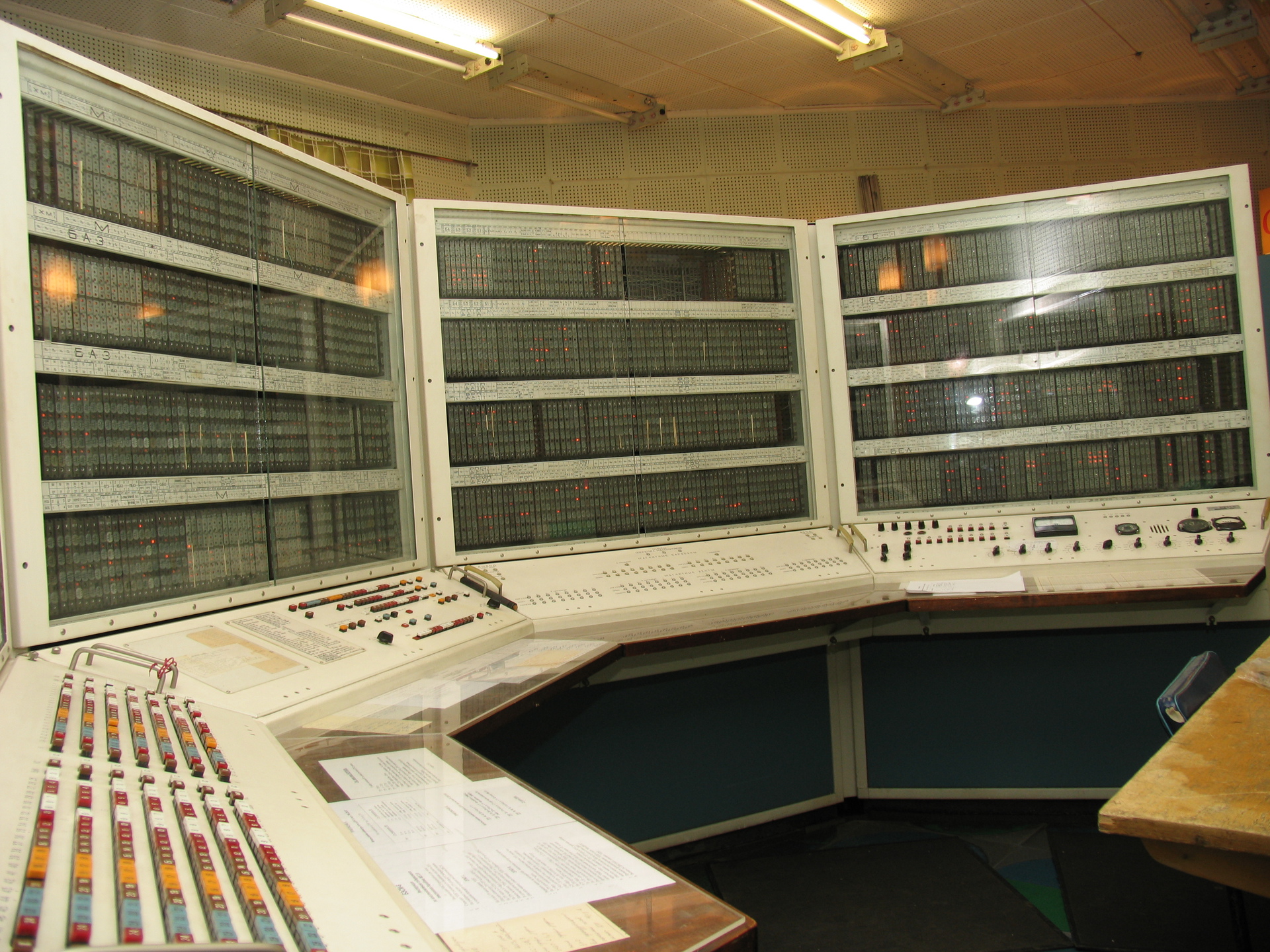
Until 1950, relay computers dominated, which were unreliable in computing and very large. The relay was replaced by vacuum and tube computers. By right, the first electronic computer can be called the American ENIAC. The machine had enormous data: 18,000 electronic tubes, an area of 90 × 15 m 2 , weighed 30 tons and consumed 150 kW. And if in America and Europe new computers were already actively created, in particular, with the Neim type of memory, then in the USSR the process was a little delayed.
So, in 1950, the first Soviet computer, MESM (small electronic calculating machine), was created in the Kiev laboratory of modeling and computer technology of the Institute of Electrical Engineering of the USSR Academy of Sciences under the guidance of academician S. A. Lebedev. It was a real breakthrough - Lebedev applied the principle of parallel word processing. Subsequently, the active structure of the first generation BESM-1 (a large electronic calculating machine) began.

The development of BESM-1 was completed in 1952. The machine had 2000 electron tubes and a speed of 8000 op / s. The system for representing numbers in a machine is binary, taking into account orders, in the form of floating point numbers. The range of numbers with which the machine operates is approximately 9 to 109. The machine command system includes 9 arithmetic operations, 8 code transfer operations, 6 logical operations, 9 control operations. The total amount of RAM was 1024 bit words. Power consumption - 35 kW.
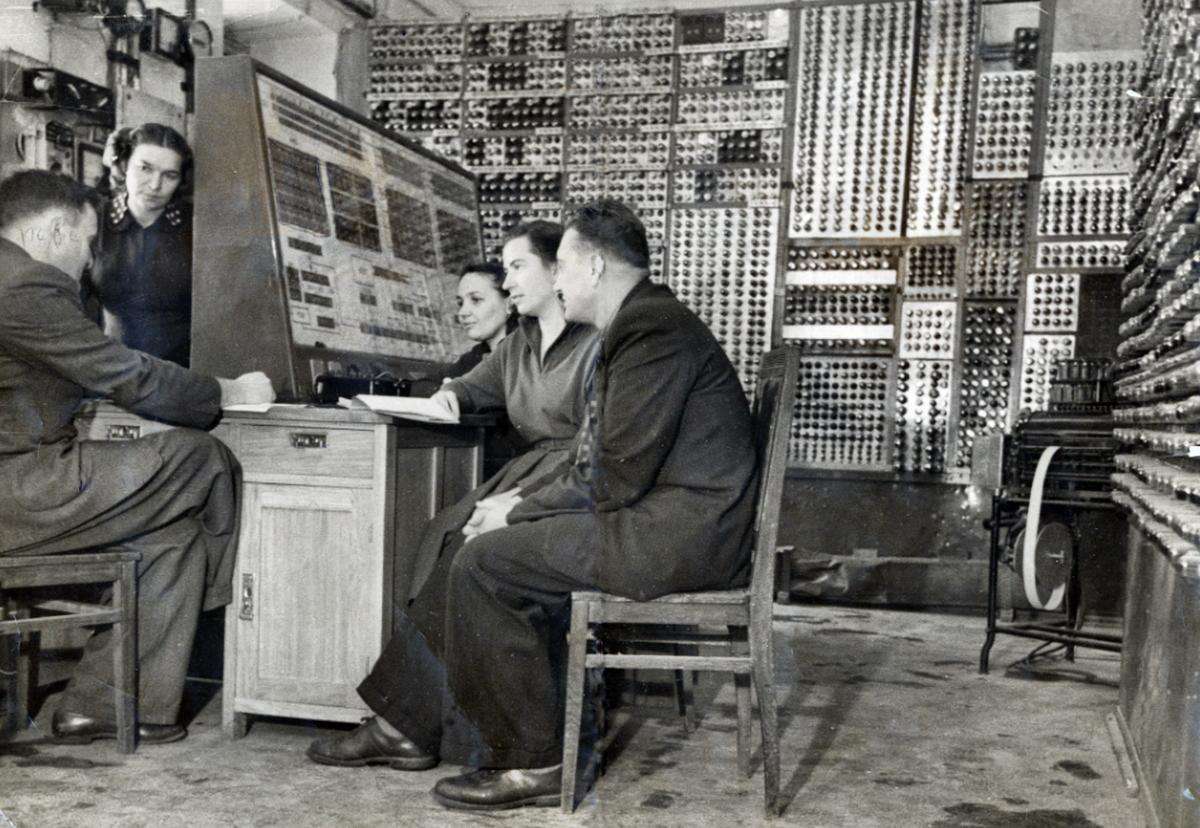
In 1953, the Soviet BESM-1 was the fastest computer in Europe, losing only to the American IBM 701, which, in particular, was a huge commercial success.
BESM-1 was a machine capable of solving complex mathematical problems, replacing thousands of calculations. The machine undoubtedly made a huge contribution to the development of nuclear energy and space exploration. In the 1950s, many more Soviet computers were created, such as Minsk, the Urals, the Dnieper, Mir, etc., but they were significantly inferior in performance to the BESM-1.
In the late 1950s, a boom in transistor computers began, which in their characteristics was significantly ahead of lamp ones. In England in 1958, a transistor computer - Elliot-803, in Germany - Simens-2002, in Japan - H-1 was released. In the USSR, the first transistor computer was Setun. As for the BESM series, for the first time transistors were used on the BESM-6, but more on that later. At the same time, the first programming languages, Algol and Fortran, were created to facilitate the use of the machine.
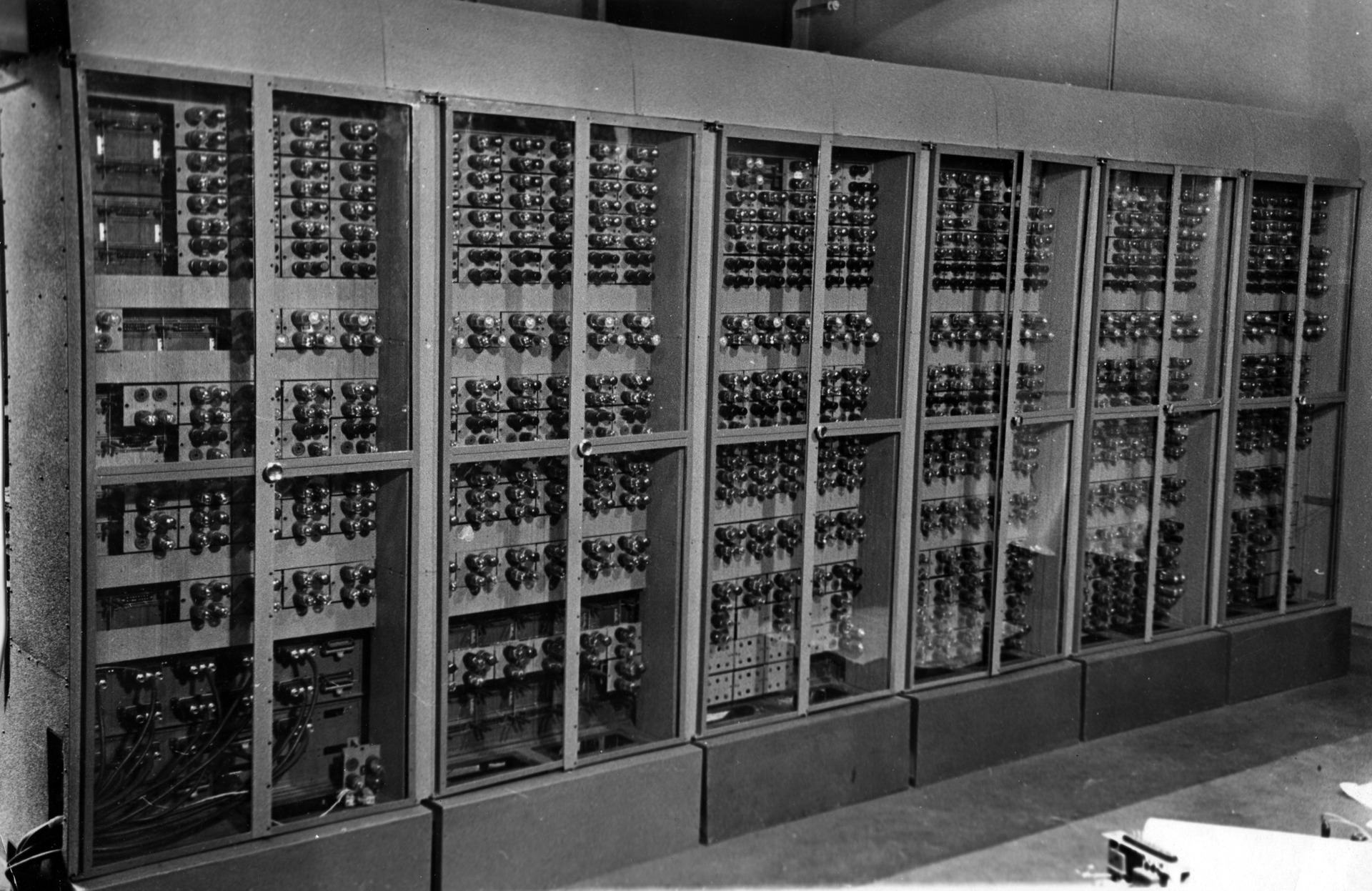
Following the success of BESM-1, it was decided to create an improved version for mass production. So, in 1958, BESM-2 was born. In total, 67 cars were produced between 1958 and 1962 under the leadership of the ITMiVT team and the Volodarsky plant. Based on reliable facts, with the help of BESM-2, the trajectory of the flight of an unmanned Soviet missile to the Moon was calculated.
The main characteristics of BESM-2 are similar to their predecessor. The machine had 4000 electronic lamps, and the speed was increased to 20,000 op./c., And RAM to 2024 bit words.

In addition to BESM-2 on the basis of BESM-1, a serial computer, the M-20, was created, which was serially developed from 1955 to 1958. At the time of development, the M-20 was the fastest computer in the world and had 20,000 op./s. A total of 64 cars were produced.
BESM-3M was designed by young and talented ITMiVT engineers. It was a small model that repeated the structure of the M-20 and later became the basis for the serial BESM-4.
If not for one cartoon, then BESM-4 could be called just a good computer. It was based on the element base - transistors and had good performance (up to 40,000 operations per second). Nevertheless, IBM at that time produced more worthy samples.
BESM-4 completely inherited the architecture of the M-20 and had RAM - 4156 bit words. The machine has been mass-produced since 1965, a total of 30 copies were produced. For BESM-4, there were at least 3 different compilers from the Algol-60 language, the Fortran compiler.

Probably someone heard about the cartoon "Kitty". It was very short, and it showed the movement of the silhouette of a cat. The whole point is that the movement was modeled by a system of differential equations of the second order on the BESM-4. The frames of the cartoon were created by printing BESM-4 characters on paper using ATsPU-128. Therefore, we can confidently say that BESM-4 is directly related to the creation of one of the first clips using computer animation.
The legendary BESM-6 certainly occupies a special place in domestic computer engineering. The principles laid down in its structural organization are still relevant. These computers are still used in research institutes to solve the most complex and important tasks.
BESM-6 was developed by a group of engineers under the guidance of S.A. Lebedev in 1965, entered production in 1968. A total of 367 models were released. BESM-6 is the first supercomputer designed on the basis of the second generation elemental base.

The main goal of BESM-6 was to create a high-speed, relatively inexpensive serial machine that could satisfy all modern automation and programming requirements. As the results show, the task was completed.
BESM-6 has decent technical indicators:
For BESM-6, there were many implementations of the programming languages popular at that time (for the Dubna monitor system), such as: Algol, Fortran, Pascal, nuclear submarines, Lisp, Plener, etc. character encoding in BESM-6 and the command system is as follows.
On the basis of BESM-6, well-known computers based on integrated circuits of the Elbrus series were created. In the second half of the 80s, a 64-bit BESM-6 (Elbrus-B) machine was developed, which included its own command system and two modes of compatibility with BESM.
Based on BESM-6, a test emulator was created .
Of course, the BESM series of computers served the development of the Soviet computer school. If you look at the history, we can say that in the 1950s - 1960s, the CCCP was on a par with America in all plans, including computerization. BESMs were worthy competitors to the American IBM, and who knows how events could turn out if it were not for the fatal mistake made in 1967 by the USSR government. According to many experts, that particular year was a turning point after the development of a series of EU computers began.

A full copy of IBM’s western technology has begun. So, in the second half of the 80s in Minsk, the production of personal EU computers (EU-1840, EU-45 and 55) began on processors such as Intel. However, the microprocessor technology did not allow to go beyond the level of Intel 286. After that, the Soviet computer industry went into decline. Many factories were closed, and teams of scientists were dispersed. But you can’t change the story, and at present BESM is very much appreciated among fans of Soviet computers.
Until 1950, relay computers dominated, which were unreliable in computing and very large. The relay was replaced by vacuum and tube computers. By right, the first electronic computer can be called the American ENIAC. The machine had enormous data: 18,000 electronic tubes, an area of 90 × 15 m 2 , weighed 30 tons and consumed 150 kW. And if in America and Europe new computers were already actively created, in particular, with the Neim type of memory, then in the USSR the process was a little delayed.
So, in 1950, the first Soviet computer, MESM (small electronic calculating machine), was created in the Kiev laboratory of modeling and computer technology of the Institute of Electrical Engineering of the USSR Academy of Sciences under the guidance of academician S. A. Lebedev. It was a real breakthrough - Lebedev applied the principle of parallel word processing. Subsequently, the active structure of the first generation BESM-1 (a large electronic calculating machine) began.
BESM-1
The development of BESM-1 was completed in 1952. The machine had 2000 electron tubes and a speed of 8000 op / s. The system for representing numbers in a machine is binary, taking into account orders, in the form of floating point numbers. The range of numbers with which the machine operates is approximately 9 to 109. The machine command system includes 9 arithmetic operations, 8 code transfer operations, 6 logical operations, 9 control operations. The total amount of RAM was 1024 bit words. Power consumption - 35 kW.
In 1953, the Soviet BESM-1 was the fastest computer in Europe, losing only to the American IBM 701, which, in particular, was a huge commercial success.
BESM-1 was a machine capable of solving complex mathematical problems, replacing thousands of calculations. The machine undoubtedly made a huge contribution to the development of nuclear energy and space exploration. In the 1950s, many more Soviet computers were created, such as Minsk, the Urals, the Dnieper, Mir, etc., but they were significantly inferior in performance to the BESM-1.
BESM-2 and BESM-3M
In the late 1950s, a boom in transistor computers began, which in their characteristics was significantly ahead of lamp ones. In England in 1958, a transistor computer - Elliot-803, in Germany - Simens-2002, in Japan - H-1 was released. In the USSR, the first transistor computer was Setun. As for the BESM series, for the first time transistors were used on the BESM-6, but more on that later. At the same time, the first programming languages, Algol and Fortran, were created to facilitate the use of the machine.
Following the success of BESM-1, it was decided to create an improved version for mass production. So, in 1958, BESM-2 was born. In total, 67 cars were produced between 1958 and 1962 under the leadership of the ITMiVT team and the Volodarsky plant. Based on reliable facts, with the help of BESM-2, the trajectory of the flight of an unmanned Soviet missile to the Moon was calculated.
The main characteristics of BESM-2 are similar to their predecessor. The machine had 4000 electronic lamps, and the speed was increased to 20,000 op./c., And RAM to 2024 bit words.
In addition to BESM-2 on the basis of BESM-1, a serial computer, the M-20, was created, which was serially developed from 1955 to 1958. At the time of development, the M-20 was the fastest computer in the world and had 20,000 op./s. A total of 64 cars were produced.
BESM-3M was designed by young and talented ITMiVT engineers. It was a small model that repeated the structure of the M-20 and later became the basis for the serial BESM-4.
BESM-4
If not for one cartoon, then BESM-4 could be called just a good computer. It was based on the element base - transistors and had good performance (up to 40,000 operations per second). Nevertheless, IBM at that time produced more worthy samples.
BESM-4 completely inherited the architecture of the M-20 and had RAM - 4156 bit words. The machine has been mass-produced since 1965, a total of 30 copies were produced. For BESM-4, there were at least 3 different compilers from the Algol-60 language, the Fortran compiler.
Probably someone heard about the cartoon "Kitty". It was very short, and it showed the movement of the silhouette of a cat. The whole point is that the movement was modeled by a system of differential equations of the second order on the BESM-4. The frames of the cartoon were created by printing BESM-4 characters on paper using ATsPU-128. Therefore, we can confidently say that BESM-4 is directly related to the creation of one of the first clips using computer animation.
BESM-6
The legendary BESM-6 certainly occupies a special place in domestic computer engineering. The principles laid down in its structural organization are still relevant. These computers are still used in research institutes to solve the most complex and important tasks.
BESM-6 was developed by a group of engineers under the guidance of S.A. Lebedev in 1965, entered production in 1968. A total of 367 models were released. BESM-6 is the first supercomputer designed on the basis of the second generation elemental base.
The main goal of BESM-6 was to create a high-speed, relatively inexpensive serial machine that could satisfy all modern automation and programming requirements. As the results show, the task was completed.
BESM-6 has decent technical indicators:
- performance - about 1 million operations / s .;
- the amount of RAM - from 32 to 128 thousand words;
- clock frequency - 9 MHz;
- element base - 60 thousand transistors;
- multiplication time - 1.9 μs;
- division time - 4.9 μs;
- execution time of logical bitwise operations - 0.5 μs.
For BESM-6, there were many implementations of the programming languages popular at that time (for the Dubna monitor system), such as: Algol, Fortran, Pascal, nuclear submarines, Lisp, Plener, etc. character encoding in BESM-6 and the command system is as follows.
On the basis of BESM-6, well-known computers based on integrated circuits of the Elbrus series were created. In the second half of the 80s, a 64-bit BESM-6 (Elbrus-B) machine was developed, which included its own command system and two modes of compatibility with BESM.
Based on BESM-6, a test emulator was created .
To summarize
Of course, the BESM series of computers served the development of the Soviet computer school. If you look at the history, we can say that in the 1950s - 1960s, the CCCP was on a par with America in all plans, including computerization. BESMs were worthy competitors to the American IBM, and who knows how events could turn out if it were not for the fatal mistake made in 1967 by the USSR government. According to many experts, that particular year was a turning point after the development of a series of EU computers began.
A full copy of IBM’s western technology has begun. So, in the second half of the 80s in Minsk, the production of personal EU computers (EU-1840, EU-45 and 55) began on processors such as Intel. However, the microprocessor technology did not allow to go beyond the level of Intel 286. After that, the Soviet computer industry went into decline. Many factories were closed, and teams of scientists were dispersed. But you can’t change the story, and at present BESM is very much appreciated among fans of Soviet computers.