Overview of Liquid Crystal HR Photopolymer 3D Printer

Hello! We talk about the properties of the Photocentric 3D printer - Liquid Crystal HR . This is a 3D desktop stereolithographic printer that prints bulk models with photopolymer resins .

We tested the printer, printed a lot of test samples and now we can share what we learned about it in practice.

At first glance The
printer looks standard for devices of this type, nothing new. Outwardly similar to Form 2 and other representatives of its class.
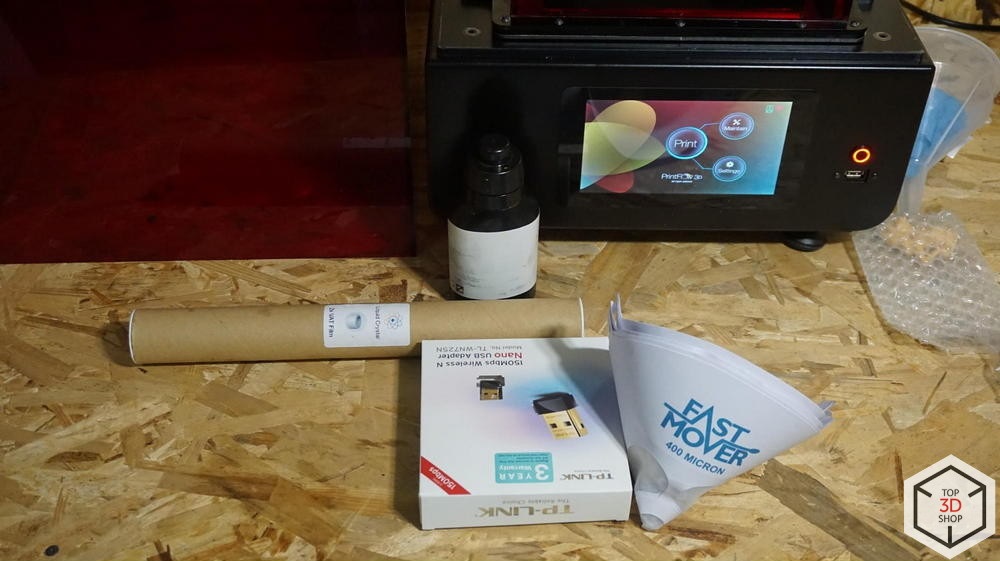
Included
- 2 replaceable films
- Wi-Fi - USB adapter
- Funnel for draining the polymer
- Power supply with replaceable connectors
- Bottle with polymer PhotoCentric Daylight
- Gloves
- Printed Test Model
Features Liquid Crystal HR
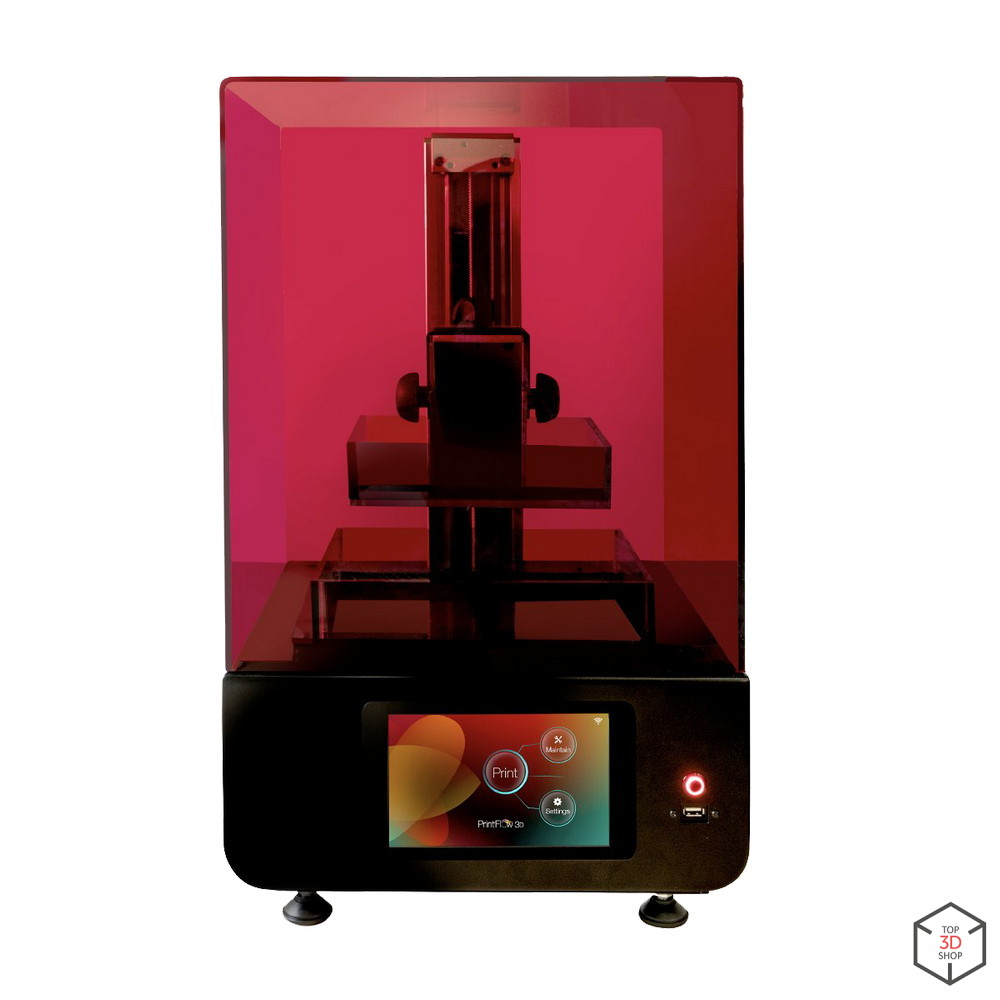
- Material: Daylight Photopolymer
- Printing Technology: LCD;
- Layer Thickness: 25, 50, 100 microns
- XY axis positioning accuracy: 0.097 mm;
- Work area: 200x150x200 mm;
- Connection Interface: USB, USB flash drive, Wi-Fi;
- Software: Creation Workshop, Printflow3D;
- Supported file formats: STL;
- Weight (without packaging): 15 kg;
- Dimensions (without packaging): 380x350x570 mm;
- Power supply: 100-240 V, 50-60 Hz, 1A;
- Country of Origin: UK
- Price: 265,000 rubles
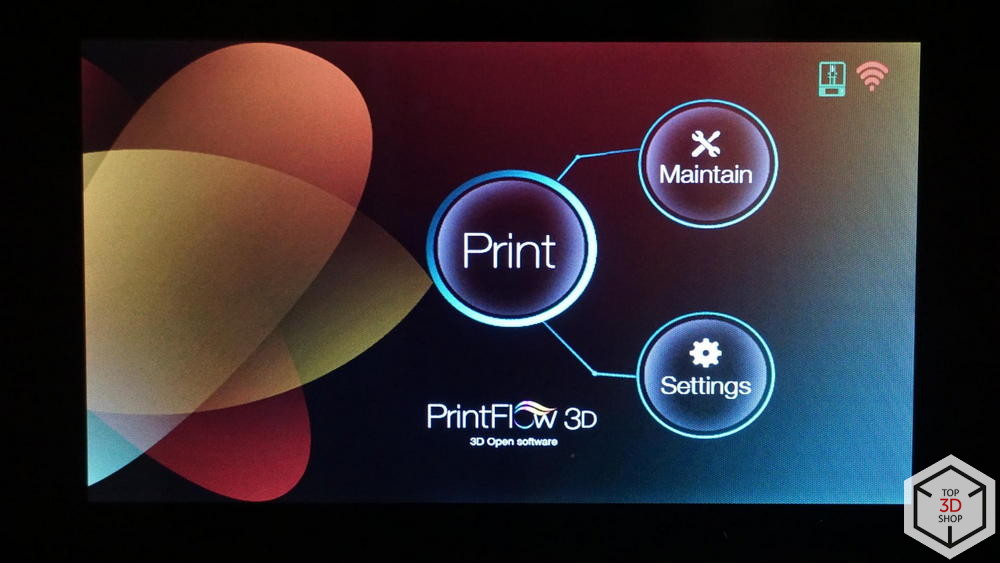
Governing bodies All governing bodies LCHR - the button of inclusion of the projecting display and the display with a touchscreen. The printer menu consists of 3 main sections: Print - selection of prepared files for printing, Settings - Wi-Fi connection and update settings, and Maintain - a menu for managing the printer itself.
The menu itself is quite simple, stylized.

In the Settings menu, you can configure a Wi-Fi connection, update the printer software and upload log information.
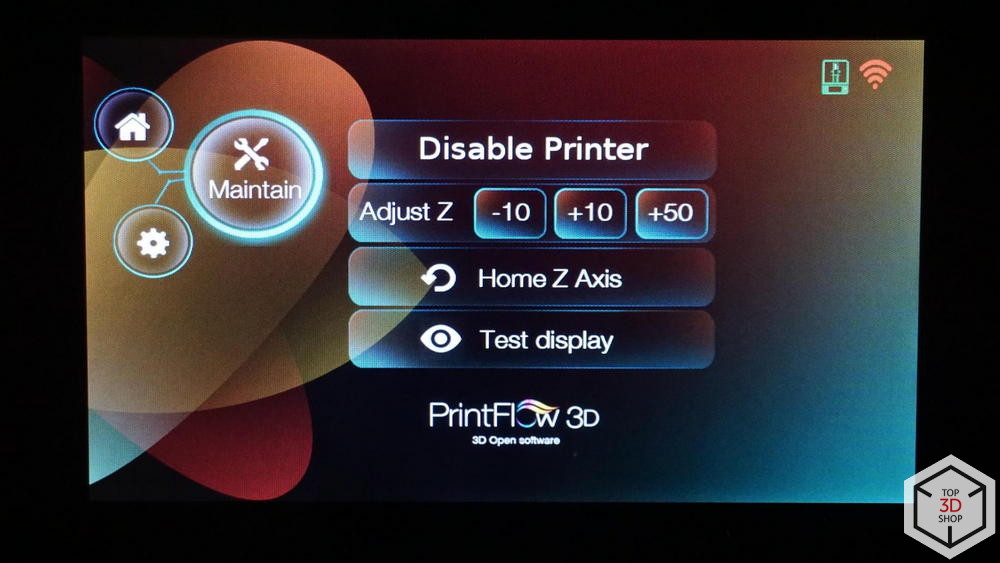
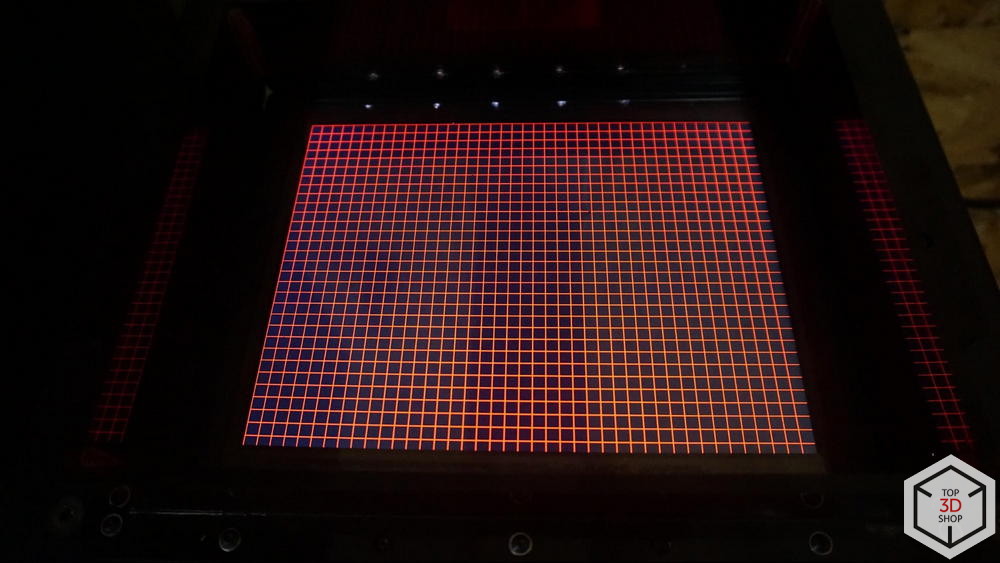
In the Maintain menu, you can restart the printer controller, raise / lower the platform by a predetermined amount, return the platform to its original position, and start the projection display test.
Compound
To receive project files, a wired Ethernet connection, Wi-Fi connection and the use of flash media are provided.
Device Overview The
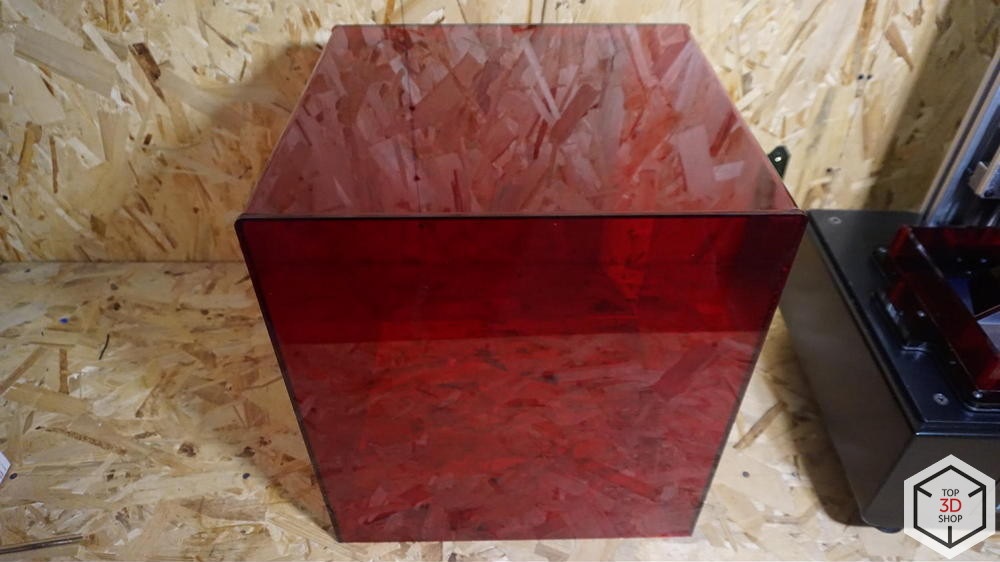
removable cap is made of 6mm red acrylic.

The build platform is fixed with 3 massive screws. The tray does not press against the printer, but is mounted on the guide pins. The decision is doubtful.
On the front side: a button to turn on and off the power of the display, an interactive display with touch control, a USB slot for a USB flash drive.

On the back of the printer: Ethernet connector, USB for connecting an external Wi-Fi-USB adapter, printer power button, power supply socket.
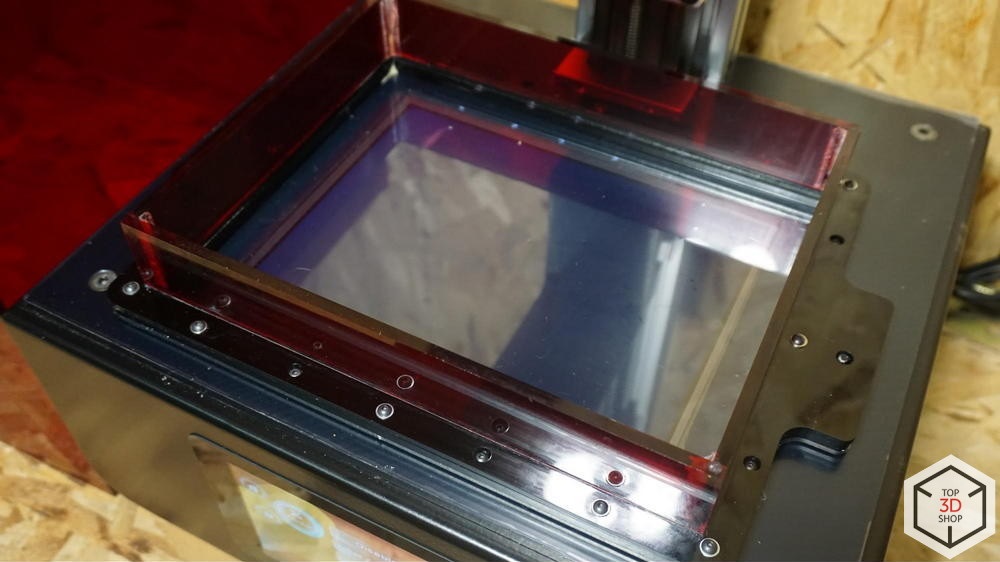
Three-layer bathtub, collapsible. You can install any sheet of film. Disassembling is much more convenient than on FlashForge Hunter, but you should take care of the cleanliness of the workplace, as there are no additional safety glasses in the bath - only one layer of the film - it is easily contaminated with dust.
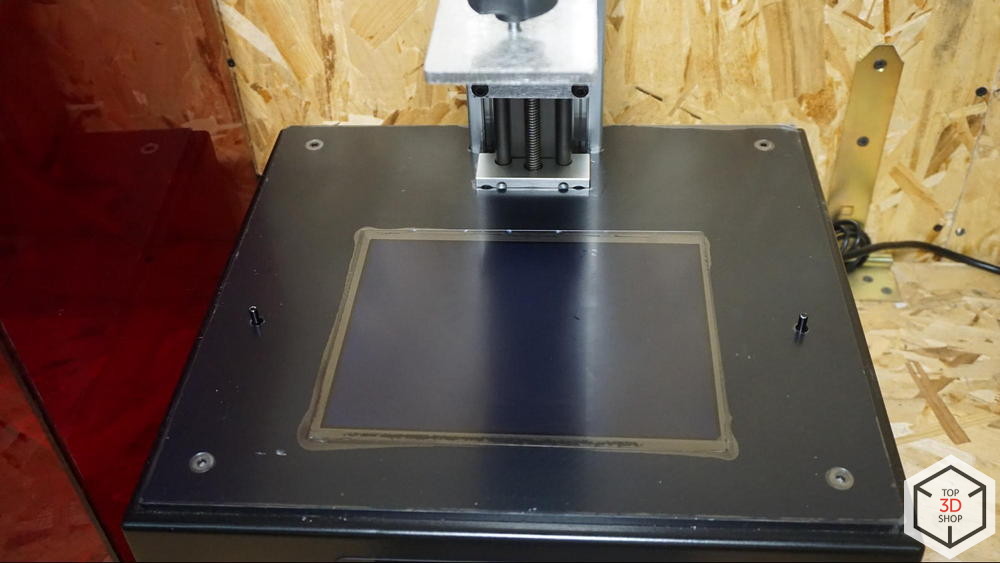
Under the bath is a huge sheet of thick film, which should protect the inside of the printer from spilling polymer. A very good solution.
A projection display is hidden under the film. The properties of this display are the main difference between LCHR and most other LCD printers. Photocentric specially developed “daytime” resins to work on a low-power light source. Standard polymers rated at 405 Nm will not work.
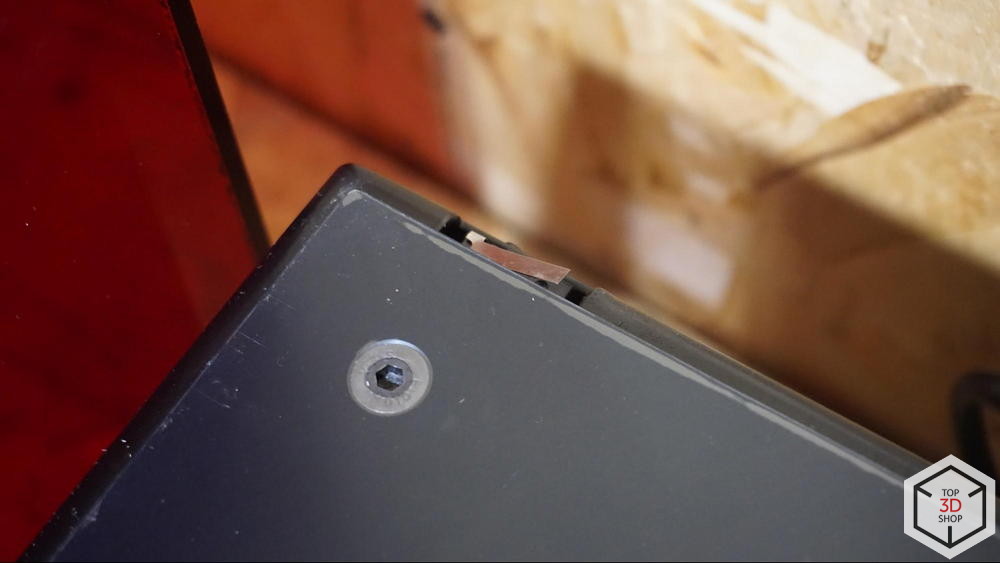
On the reverse side is a limit switch. It signals to the controller about the removal and installation of the printer cover. With the cap removed, the platform travel along the Z axis is blocked.

The Z axis guide does not play, runs smoothly, and is rigidly installed.
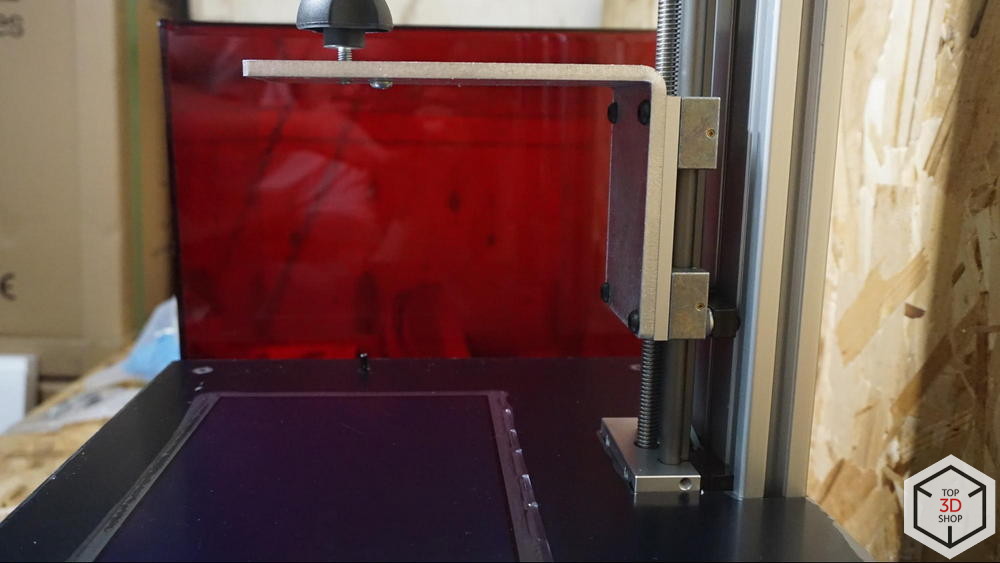
The platform arm is made of solid aluminum sheet with a thickness of 7 mm. Such an element is very difficult to bend or break.

The platform consists of an aluminum base and an acrylic edge. The solution is interesting, but ambiguous - the side takes away part of the volume of the working chamber when printing and reduces the maximum amount of polymer that can be poured into the tray.

But there are also advantages of such a structure - when removing the platform, you do not need to clean it from two sides, and two screws securing to the shoulder allow you to set the platform at an angle, which makes it possible to drain the polymer without unnecessary problems.

The tray consists of four elements: an acrylic board, an acrylic film preload contour and an aluminum contour for the final fixation of the structure. There will be no particular difficulties in replacing the film, juggling with the constituent parts is also not required.
Slicer Creation WorkShop
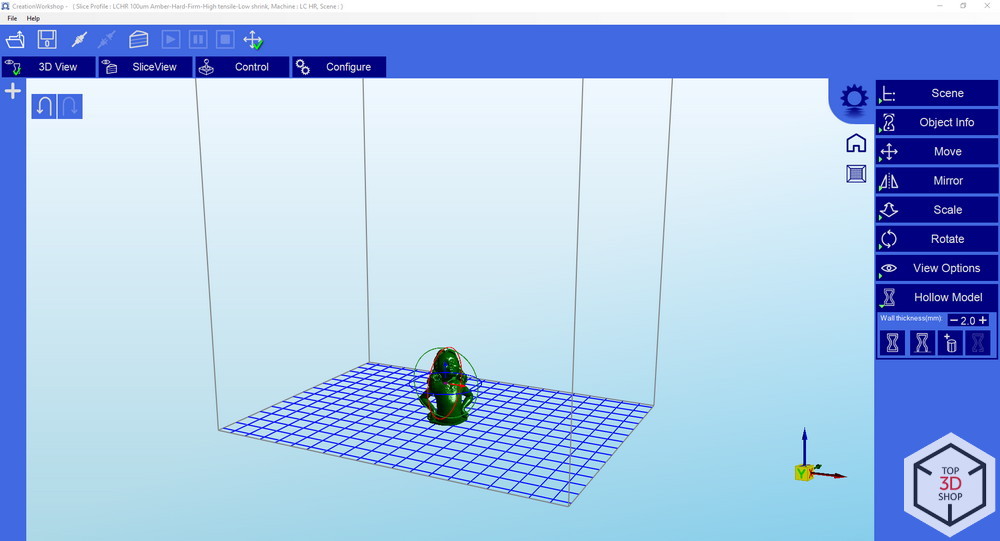
Almost all people involved in additive technologies are familiar with this slicer. Slicer is simple, functional. The Photocentric version has a more convenient positioning and rotation system, the function of setting the thickness of the object, to save polymer when printing, and modeling the interior of the object by adding columns of the base.

There are many manuals and recommendations for this slicer.
Let's go straight to the web-based interface of the 3D printer.
PrintFlow 3D
This plugin allows you to find your LCHR on the network and launch the web-based printer interface in a browser.
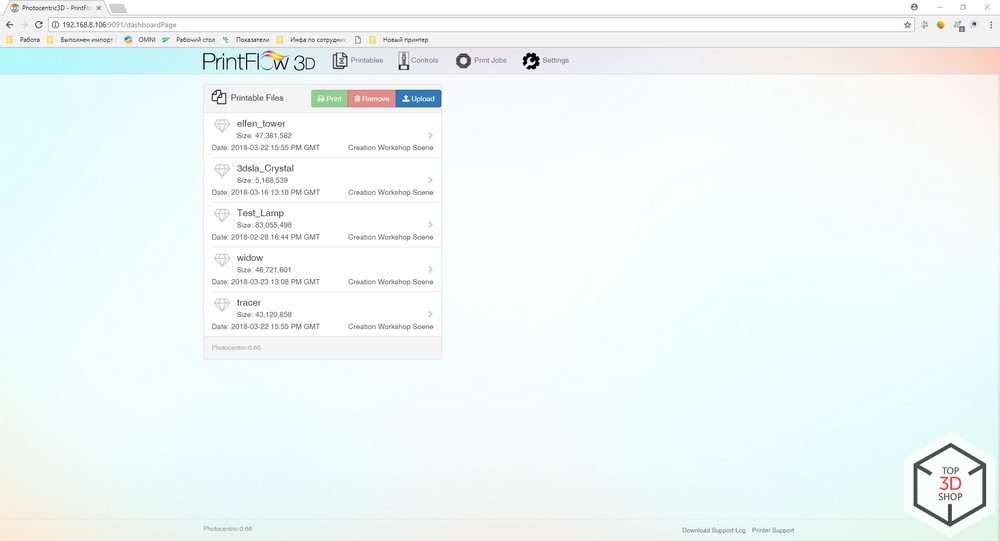
The web-based interface is simple and slightly extends the capabilities of managing a 3D printer.

In the “Printables” tab we can find out the statistics of the printing.

Customize the display of layers.
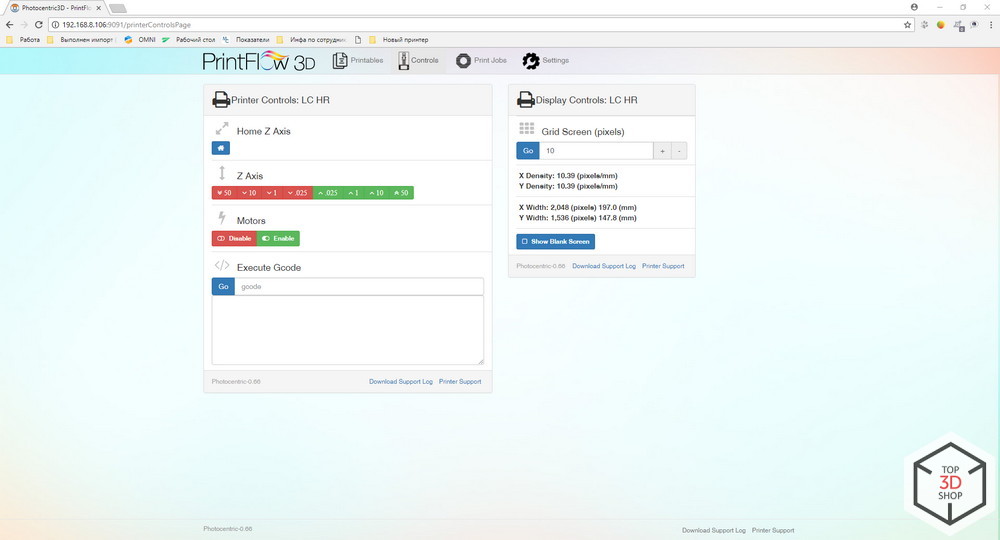
In the “Control” menu - remotely control the position of the platform, enter Gcode commands.

In the “Settings” tab, you can configure Wi-Fi and Ethernet connection to the printer.
Printing

process The printing process is no different from most photopolymer 3D printers. The printer does not have additional valves, as in Creator B9 and Form. Detachment occurs due to deformation of the film.
LCD technology is not perfect and measurements with a light meter will give different results in areas of the screen, but, as practice has shown, deviations are minimal and do not affect print quality. The printer does not have a stirrer, so try not to leave the polymer in the bath for a long time unattended, and if left, you need to mix it with a soft brush before printing.
Service
All maintenance for the Photocentric LCHR 3D printer comes down to adding polymer and replacing the film in the tray.
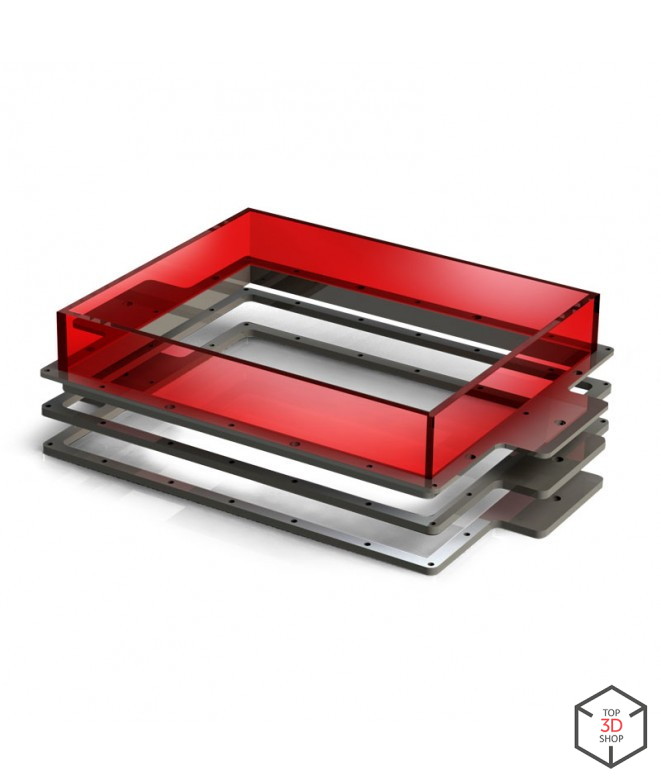
The process of replacing the film itself is quite simple. All you need is a clean workplace and straight arms.
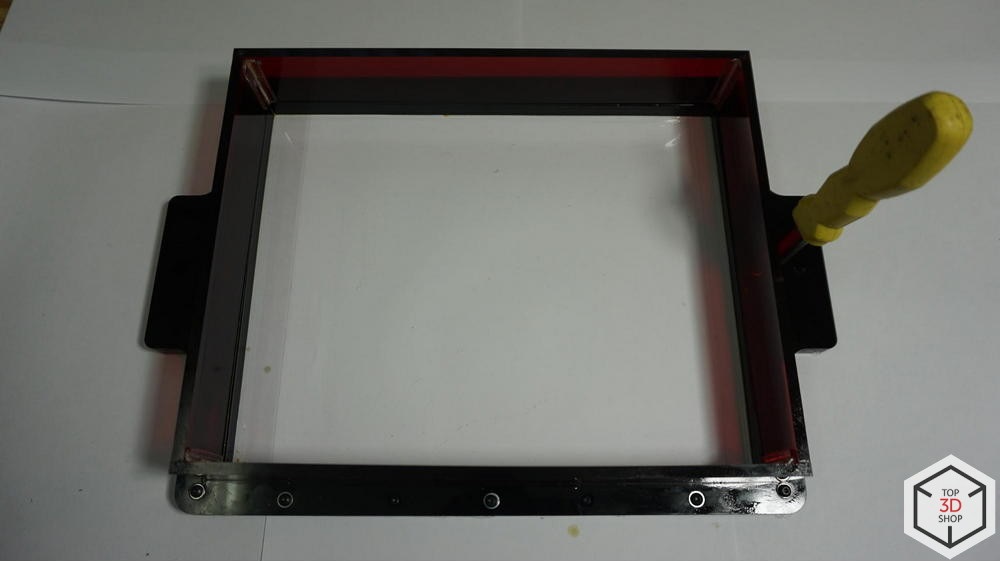
First, we unscrew all the screws along the contour that fix the upper part of the bath with the side.
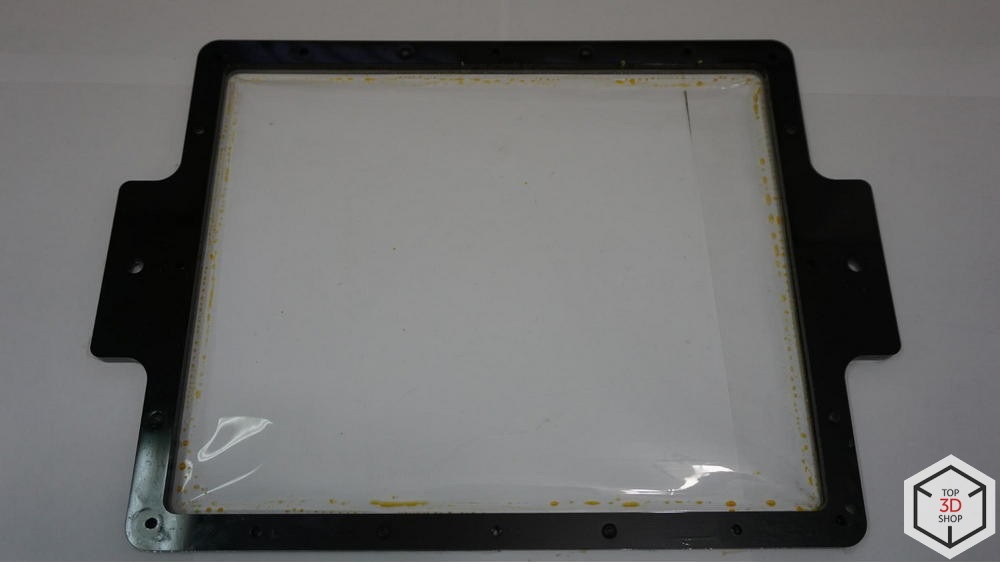
Having removed the upper part, we find a “sandwich” of acrylic and aluminum, which holds the sheet of the Fep film.

Discard the old film. The remaining fasteners are washed in warm water with soap.
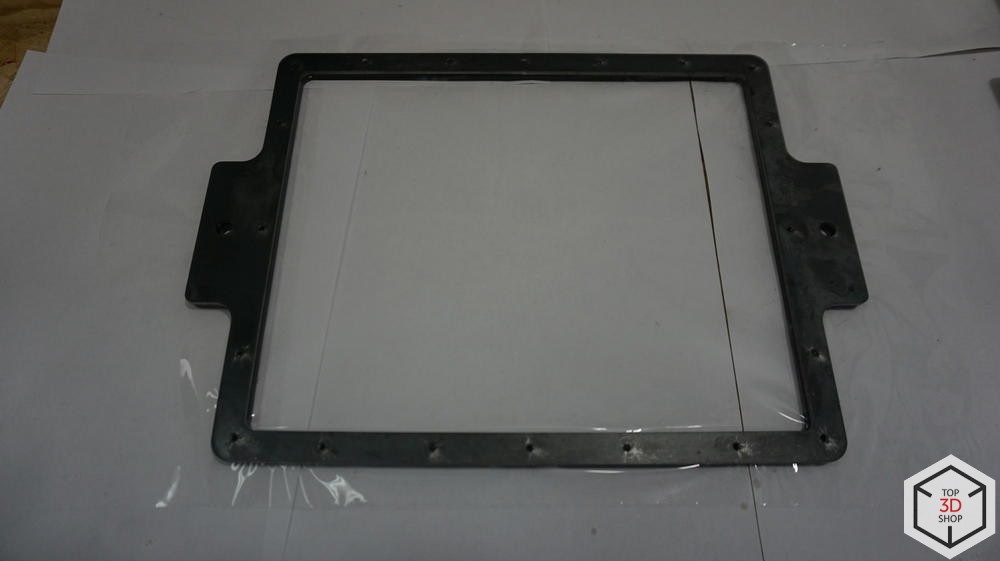
Putting it all in reverse order. A sheet of replaceable film goes beyond the dimensions of the bath and is cut off with a clerical knife without any problems.
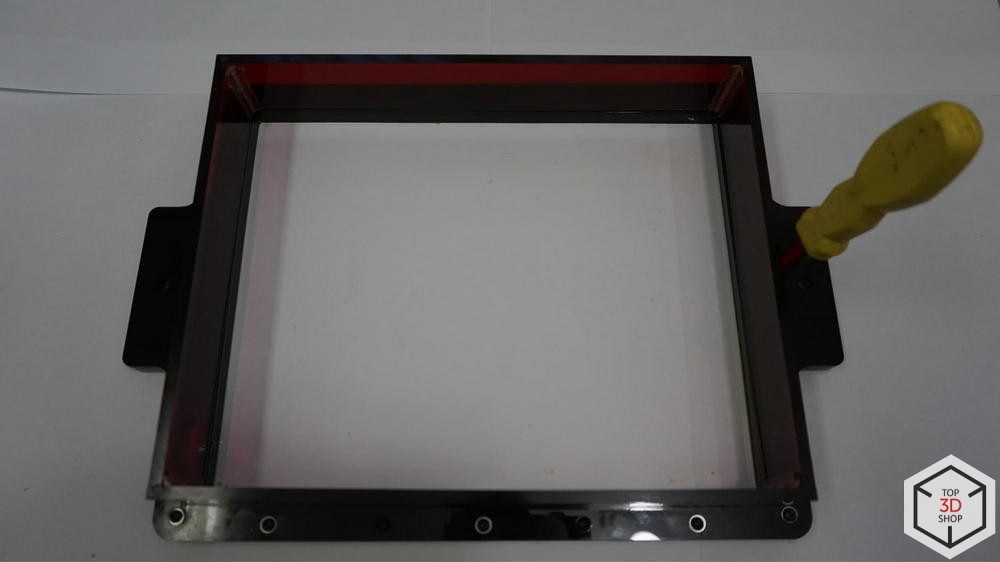
Done!
Materials
Testing was done with a single material: PhotoCentric Flexible Daylight .
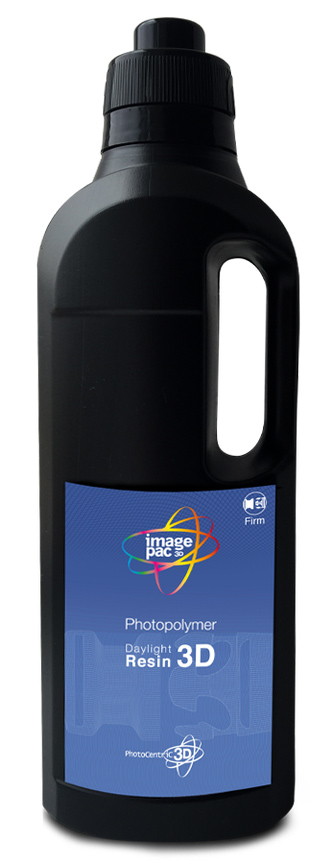
There are other materials for this printer — all that are labeled as Daylight — illuminated by a spectrum of daylight — will do. Standard resins for ultraviolet (UV) will not work.
Pros and cons A
3D printer showed itself diametrically opposite on both sides. On the one hand - undoubted advantages.
1. Not bad, in general, print quality
2. Large print area
3. Detailed customizable slicer
4. Rigid construction
5. Interesting management in the Web-interface and thoroughly thought-out profiles for printing with their polymers.
The main minus is that the Liquid Crystal HR 3D printer only works with its own polymers; it will not work to replace them with polymers from other manufacturers.
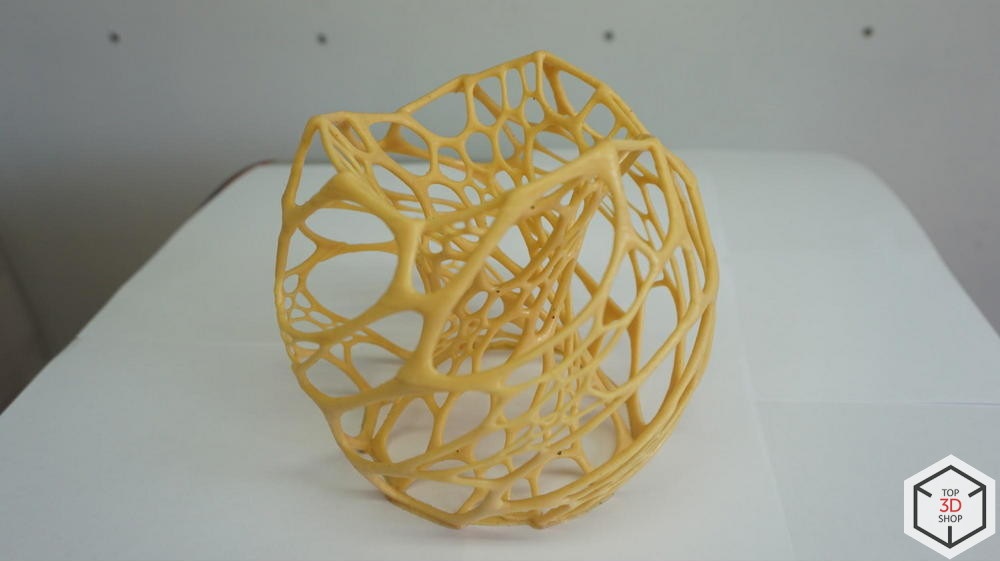
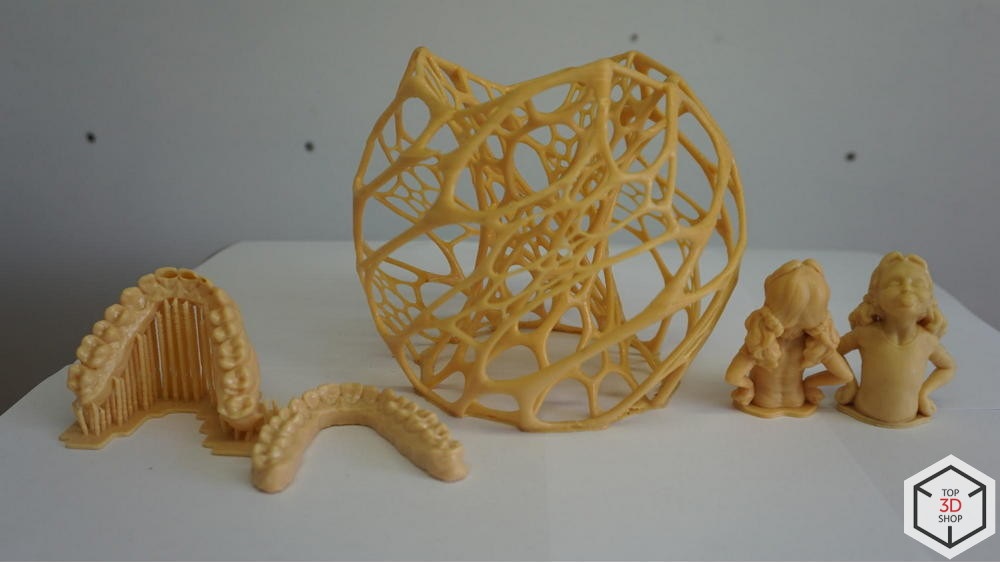
Samples
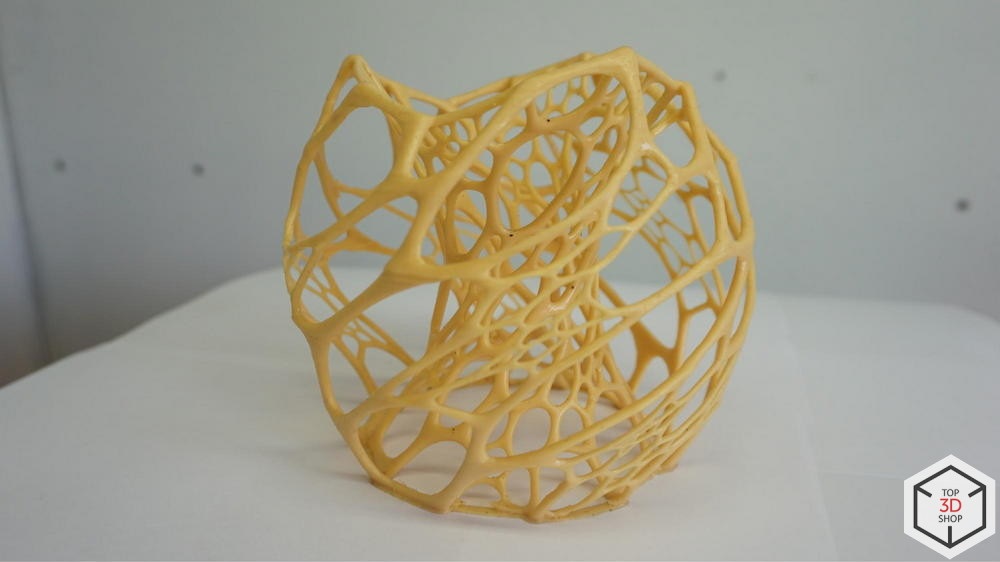
Photo of prints printed during the tests:



Total
We can recommend Liquid Crystal HR as a high-quality and reliable 3D printer, more convenient to use than, for example, Flashforge Hunter, and much more humane to your finances than Formlabs Form 2. The
printer will be useful makers, modelers and other users of the amateur segment, as well as small businesses - for making figures to order.
Buy the Liquid Crystal HR 3D printer at Top3DShop.ru and get free shipping and training.
Want more interesting news from the world of 3D technology?
Subscribe to us in the social. networks: