Ask Ethan: Is it true that the Earth has a second moon?
- Transfer
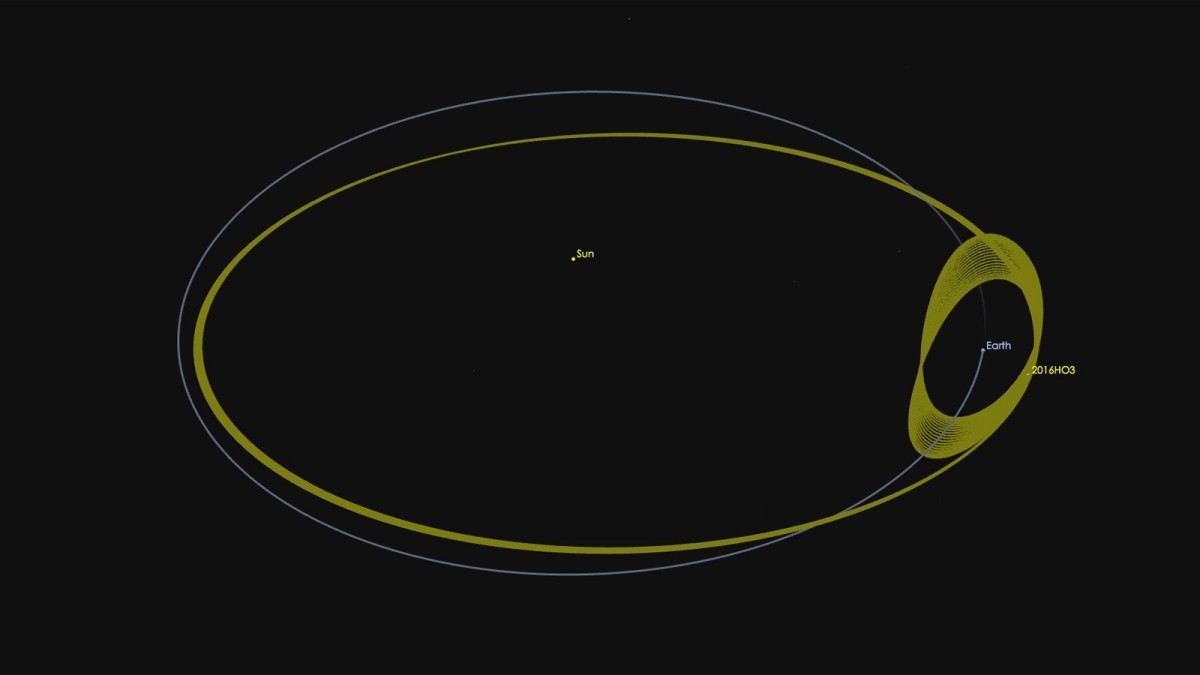
In ancient times, people looked at the moon and thought about where it came from, what place it occupies in the universe, and why we have only one. After the discovery of Jupiter, Saturn and other worlds with several moons - including our neighbor Mars, which has more than one - we wondered why we had one. But this assumption may not be true, since a 2016 study claims that we have a second moon! Is it true? Our reader asks :
I stumbled on the Internet news about Asteroid 2016 HO3 , and I wonder - is it true that what they say about him?
Indeed, there is a small object orbiting near the Earth, and a good observer with suitable equipment can detect it yourself!

A satellite can coexist with a planet in two ways. The first, most familiar to us - as in the case of the Moon - occurs when an object is connected to the main body. This means that he has a certain speed and orbit at a certain distance from the planet, allowing him to remain in orbit for an unlimited time. Such an orbit cannot be too large or too elliptical, otherwise the influence of other worlds and objects of the solar system will destroy the satellite or throw it out of the system. If we look at all the moons in the solar system, we will see that they all have such characteristics.
But in order to remain a natural satellite of the planet, it is not necessary to be directly attached to it. Just as planets move in stable orbits around the Sun, each orbital distance has its own set of stable or quasistable paths around the main body.
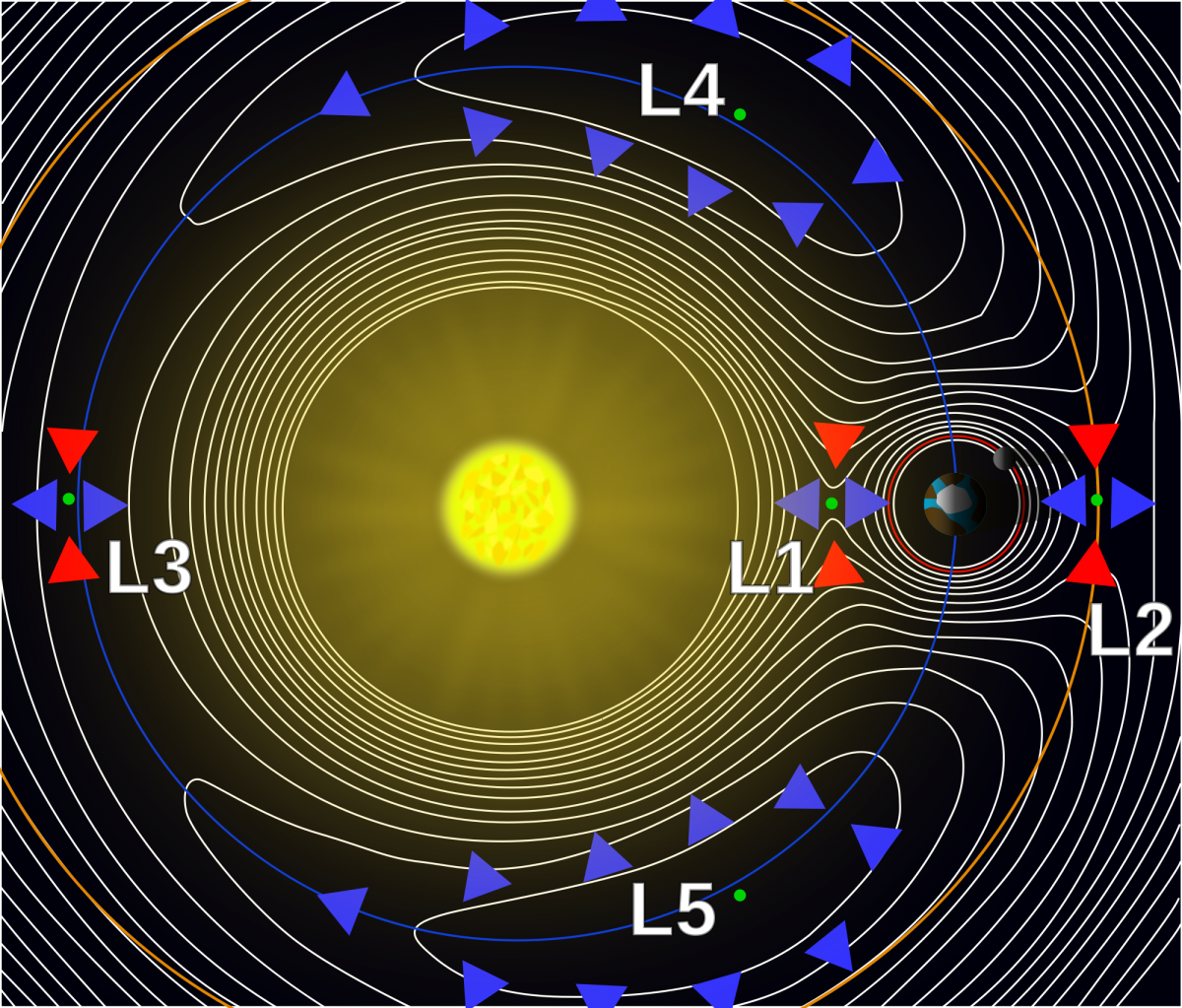
If you draw an equilateral triangle around the Sun, one of the vertices of which will be in the orbit of a planet (for example, the Earth) opposite this planet, then the other two vertices will be quasistable points, or Lagrange pointsL4 and L5. They are not completely attached to the Earth, and not completely stable, in contrast to the stability of our moon. But it will take many millions or even billions of years for a mass that falls into one of these points in a stable orbit around the Sun to be expelled from there by the gravitational effects of other bodies of the Solar System. Masses located near these points will also maintain quasistable orbits, either catching up or ahead of the planet in its orbit (or oscillating between two states) for a very long time.

Such classes of objects were first discovered in Jupiter, and they are known under the general name of Trojan asteroids. Initially, the group located at point L4 and the group located at point L5 were separated from each other, and some were called Greeks, while others were called Trojans, in honor of the factions from the Iliad . And for the first time in history, at least in the case of names, the Trojans won. But now it is already known that not only the gas giants have them - and a small number of them have been discovered by Mars. They can be tiny, and heaps surely swarm around every body of the solar system, but they cannot be seen with ordinary telescopes. These are not true moons, since they are only quasi-stable, and most of them will be thrown out of their positions within a few thousand years (and some, on the contrary, will remain there for billions of years!)
And so we come to the Earth. Are there any Trojan asteroids orbiting around the sun with us? It may surprise you, but the Asteroid 2016 HO3 is not even the first “second moon” of the known “moons” that exist near the Earth!
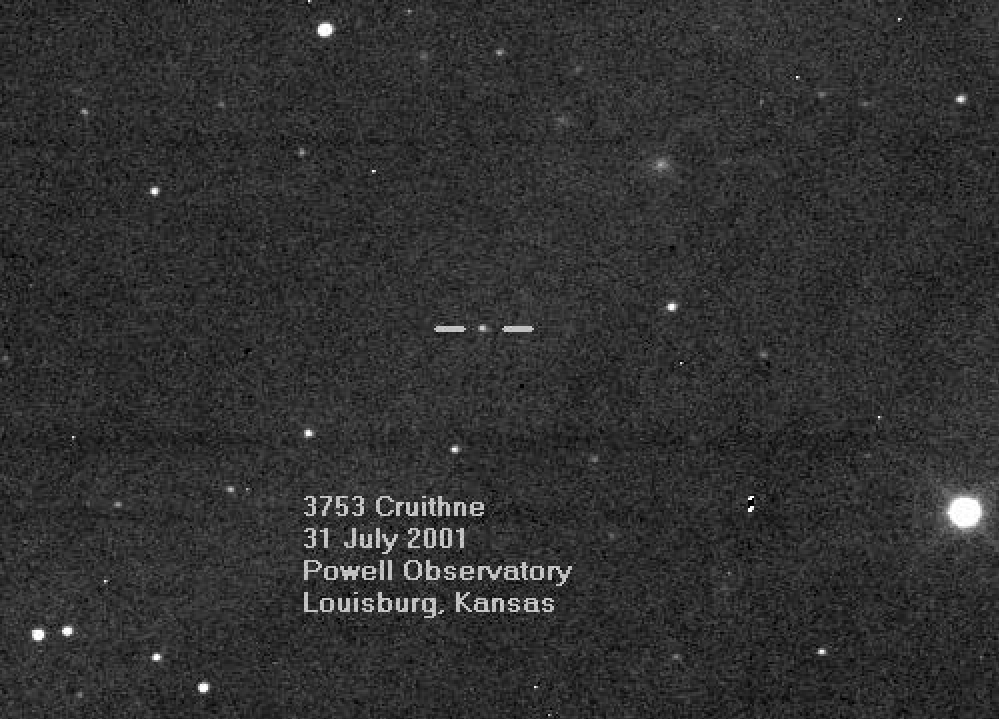
This honor belongs to the asteroid 3753 Cruitney , discovered back in 1986, which also revolves around the Sun near the Earth. Like most Trojan asteroids, it moves along a bean-shaped path (when viewed from Earth), but given the duration of its orbit of 365 days, its location can be reliably predicted for a fairly distant future. As far as we know, this asteroid will be a stable quasisatellite of the Earth for another thousand years.
As observations of large areas of the sky become more effective, we can detect objects at an increasing distance from the Earth. In 2006, the Catalan sky survey discovered another small quasisatellite of the Earth: 2006 RH120 . In 2010, the third object of this class,(419624) 2010 SO16 , was discovered by NASA's WISE mission . Therefore, the hype around the last discovered asteroid is unfounded. Yes, this is the newest, it was discovered in April 2016 by the Pan-STARRS 1 telescope from Hawaii, tracking asteroids. But still it is an asteroid no more than 100 m in diameter. The only thing that is interesting in it, and what distinguishes it from other quasi-satellites, is that it is not in Trojan orbit, and does not move around the Sun in synchronism with the Earth, but is directly attached to the Earth like the Moon!
And yet its orbit is very elliptical, it is attached to the Earth a thousand times weaker than the Moon, and most likely gravitational interactions will throw it out of orbit for centuries or millennia, and not millions of years. In fact, in a similar orbit there was already one asteroid, 2003 YN107 , but in 2006 he returned to a horseshoe-shaped orbit . The same thing will happen with a new asteroid in a few centuries. So, if you need a constant moon, these objects do not pull on it. The astronomical time scales are called so for good reason, and if you can trace their development during human life, they are very far from the title of a real moon!