May 8, 2017 at 23:43
Wikipedia is immune to IPFS network censorship
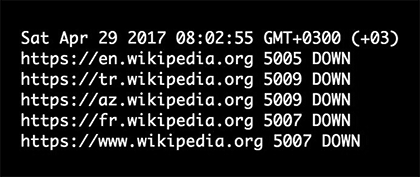 On August 24, 2015, Roskomnadzor ordered to block Wikipedia in Russia . Soon, officials changed their minds and reversed the decision. But it can be repeated at any time.
 On March 29, 2017, the Turkish authorities followed the example of the Russian brothers in mind. They also blocked Wikipedia . The Turks went to the end - and from 8:00 local time, all versions of Wikipedia were blocked in Turkey in accordance with the administrative decision No. 490.05.01.2017-182198 / 5651.
As John Perry Barlow once said, the Internet perceives censorship as a malfunction and tries to circumvent it. There are many standard ways to get around regular IP blocking. Two years ago, the Network spawned a conceptually new IPFS project(Inter-Planetary File System), which makes censorship of specific IP addresses on the Internet impossible in principle. Here, instead of addressing by location, content addressing is used . The peer-to-peer network does not have a single center that can be blocked. Copies are distributed from node to node. Even if you destroy all copies of the content except one, the information will again go over the network.
IPFS is a technology that is already working now, and it is fully ready to help out in a situation where officials of Roskomnadzor block content, trying to prevent citizens from receiving any information. The example of Turkey perfectly demonstrates this.
On May 3, 2017, IPFS Team activists decided to transfer Turkish Wikipedia to the IPFS peer-to-peer network. Residents of the country again got free access to content.
So far, tr.wikipedia.org has been transferred to the peer network(10 GB), they plan to add the Arabic, Kurdish and English versions soon. IPFS maintainers did this on their own initiative, without coordination with the Wikimedia Foundation or with the Wikipedia editors. Actually, such coordination is not required. The goal of the IPFS project is to counter censorship of any type, improving free access to information for citizens around the world. The activists of this project categorically oppose the censorship of history, news, free thoughts, and even less such a repository of valuable information like Wikipedia. Free access to any information is a vital necessity of a modern person, a free society and a prosperous culture. Therefore, they began work on a project to transfer Turkish Wikipedia as soon as they heard news about its blocking. There is no doubt
About "interplanetary file system" IPFS was already told on Habr. Dear ivan386 published instructions for hosting sites . So readers are familiar with the principles of addressing by content via multicash in a distributed P2P network. You can refresh your knowledge in this part of the video lecture or in this excellent article .

IPFS Benefits: Content on an IPFS network is harder to attack, it is cryptographically verified (and protected from falsification), in case of blocking one gate, you can use any other, IPFS does not need a DNS system, it works through Tor, IPFS sites do not rely on certificate authorities and therefore no certificate forgery threats - content is cryptographically confirmed, like blockchain. Content between nodes can be transferred to any media (for example, a USB flash drive) as a floppin .
A full static snapshot of https://tr.wikipedia.org was taken on April 30, 2017. It is available by the following unique identifier (cryptographic hash):
/ipfs/QmT5NvUtoM5nWFfrQdVrFtvGfKFmG7AHE8P34isapyhCxX/wiki/Anasayfa.html
This link leads to a specific snapshot dated April 30 and will always lead to it, because the hash is derived from the content itself.
To see the latest snapshot of the https://tr.wikipedia.org content , you need to use the IPNS link:
/ipns/QmVH1VzGBydSfmNG7rmdDjAeBZ71UVeEahVbNpFQtwZK8W/wiki/Anasayfa.html
Turkish Wikipedia is only the first last . In the future, it is planned to make copies of the entire Wikipedia in IPFS. At the first stage, these will be periodic snapshots of the content without the possibility of editing. For example, content can be updated once a week. A long-term goal is to develop technologies for a fully-fledged editable Wikipedia on top of IPFS. Of course, to create such a version will require close cooperation with Wikipedia.org.
At its core, IPFS is very similar to blockchain, and it is not surprising that many applications on the blockchain use IPFS, introducing static multicheshes with IPFS addresses in the transaction. Interestingly, IPFS developers even plan to release their Filecoin cryptocurrency . For its mining, you need not to count the blocks, but provide hosting sites in IPFS.