March 14, 2017 at 15:35
How to make identification difficult, trick video analytics and hide your face from cameras
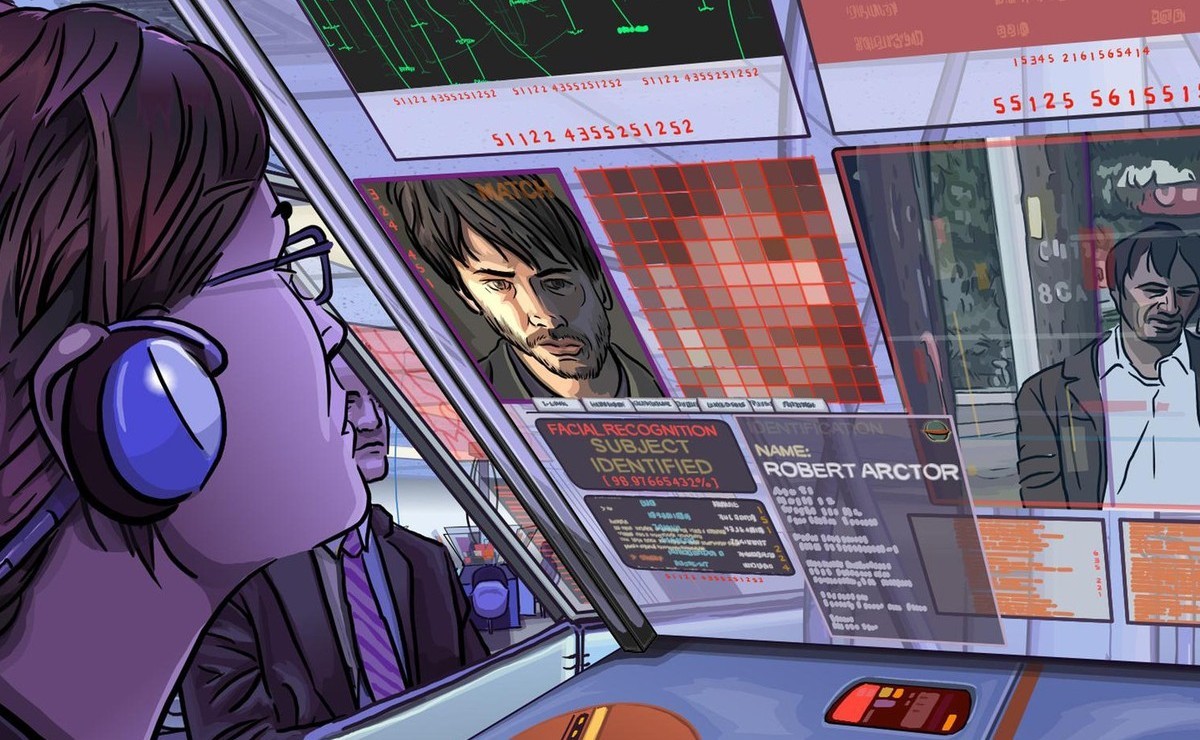
This person, whom we will call Fred, for such is the code name under which he communicates the information collected, while in a talker suit, cannot be identified by appearance or voice. It looks like a blurry spot and nothing more, is it, friends? “Turbidity,” Philip C. Dick.
Cameras do not surprise on the streets, in banks and shops. People put them to control the apartment, car, cottage, playground. Video surveillance is no longer a means of passive safety, the functions of face recognition and determination of emotions are added. The more cameras there are, the more often there are hacktivists offering various ways of “protecting” the person. Phobias in the field of video surveillance led to the fact that some began to stick a webcam in a laptop.
We decided to sort this out. If the world shows a trend for complete anonymity, then there must be reliable methods for those who do not want to give their data to surveillance cameras. Let's talk about ways to cheat video analytics.
The most functional accessory

The combined team of the Tokyo National Institute of Informatics and the Technological University of Tokyo in 2013 created glasses in which infrared LEDs are built. In the infrared range, camera LEDs turn a face into a blurry spot of light. More reliable, perhaps, to shine with a laser beam directly into the camera, but for this you need to clearly get into the lens.
In 2015, Privacy Visor glasses (in the photo on the left) became a more advanced solution . They are equipped with a sophisticated lens system that reflects, refracts and absorbs light. Technology does not allow the camera to focus, “blurs” the area around the eyes, showing it much brighter. The system identifies a person in ordinary sunglasses, but cannot identify the owner of Privacy Visor.
In 2016, a startup appeared, successfully collecting the amount necessary for the production of glasses on Kickstarter , which uses miniature LEDs and a mini-battery. Glasses cause certain suspicions if you wear them at night, but they are definitely safer than the laser method (nothing looks weirder than a person poking a pointer into the camera).
Clothing as a method of anonymity
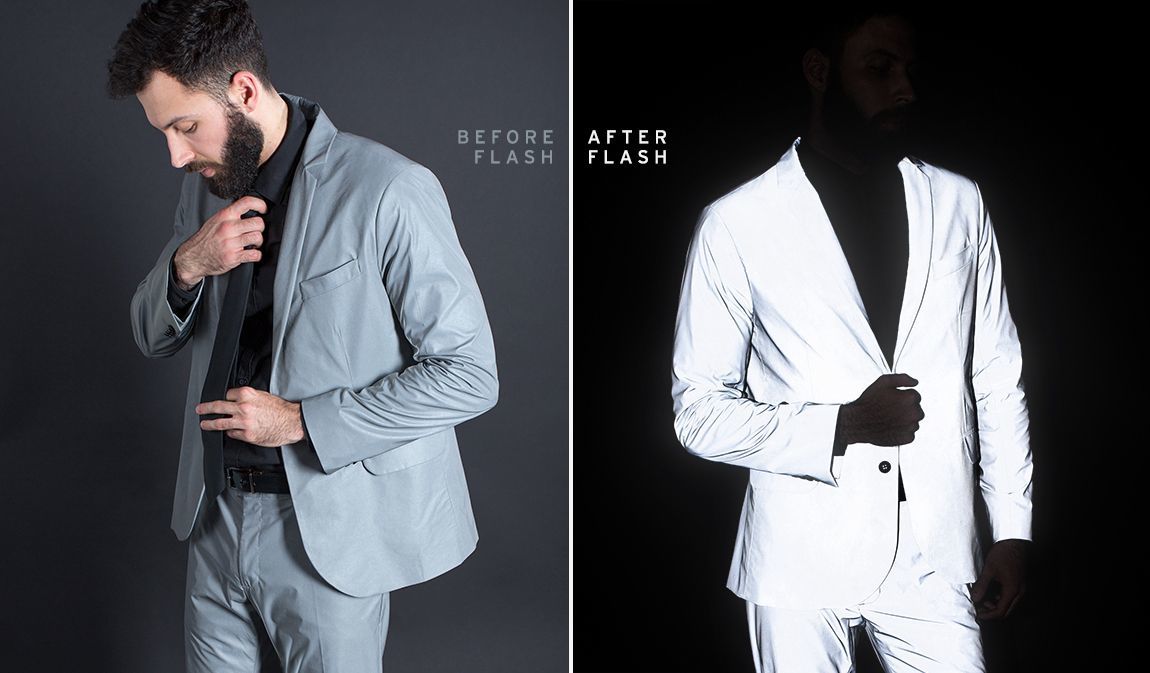
DJ Chris Holmes came up with special protection against paparazzi, with the modification of which you can get protection from cameras. The Flashback collection features clothing made from highly reflective material.

The material contains thousands of spherical pieces of glass, reflecting most of the light when photographing with flash. As a result, a bright jacket is visible in the photographs, and everything else remains beyond the sensitivity of the photomatrix.
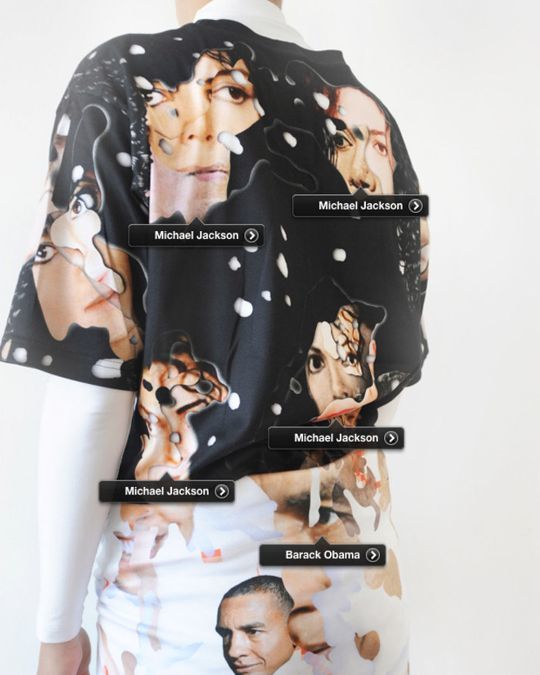
Designer Simon K. Nikil came up with REALFACE Glamoflage T-shirts that show the faces of famous people. To be honest, even in 2013 this method could outwit only the most primitive algorithms.
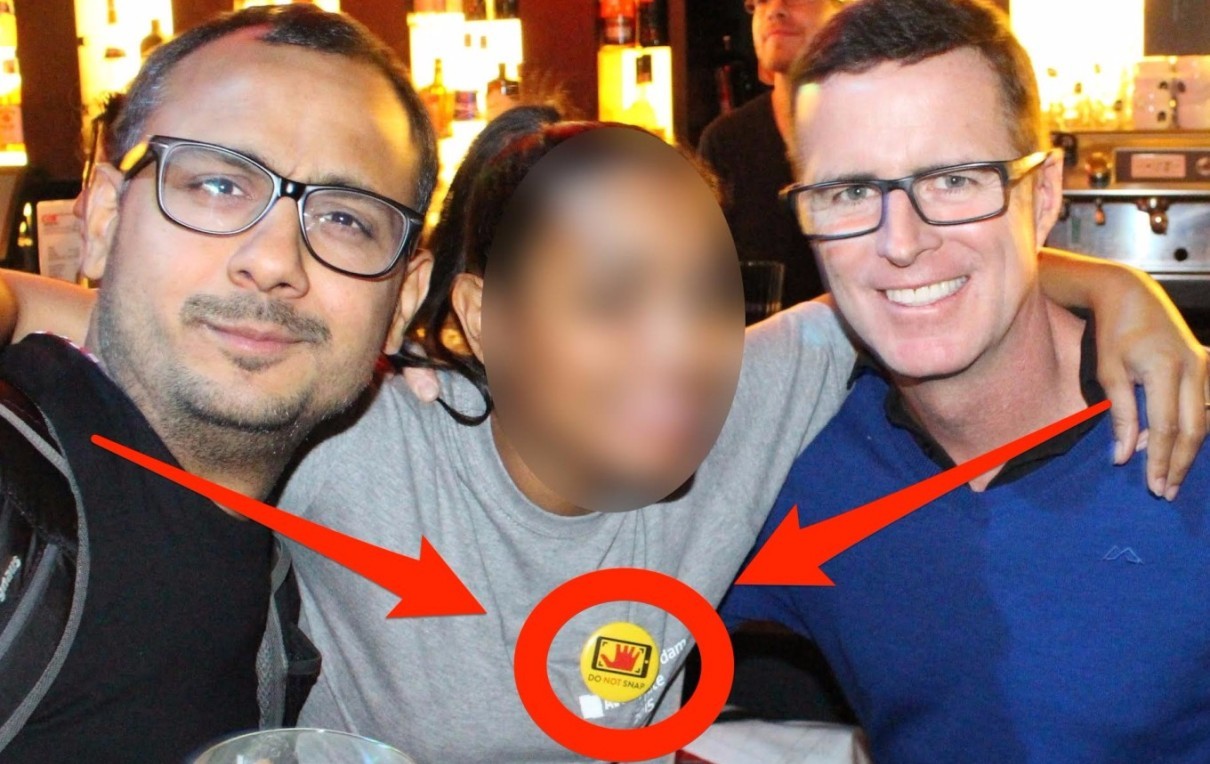
The company AVG Innovation Labs, which is engaged in the protection of personal data, came up with several solutions that make identification difficult. The icon with the graphic “Do Not Snap” is a kind of marker. When a person’s photo with the icon is uploaded to the network, AVG software reads the symbol and blurs the digitized face of the medium. However, for it to work, open source AVG code must be uploaded to the platform in advance (file sharing or social network).
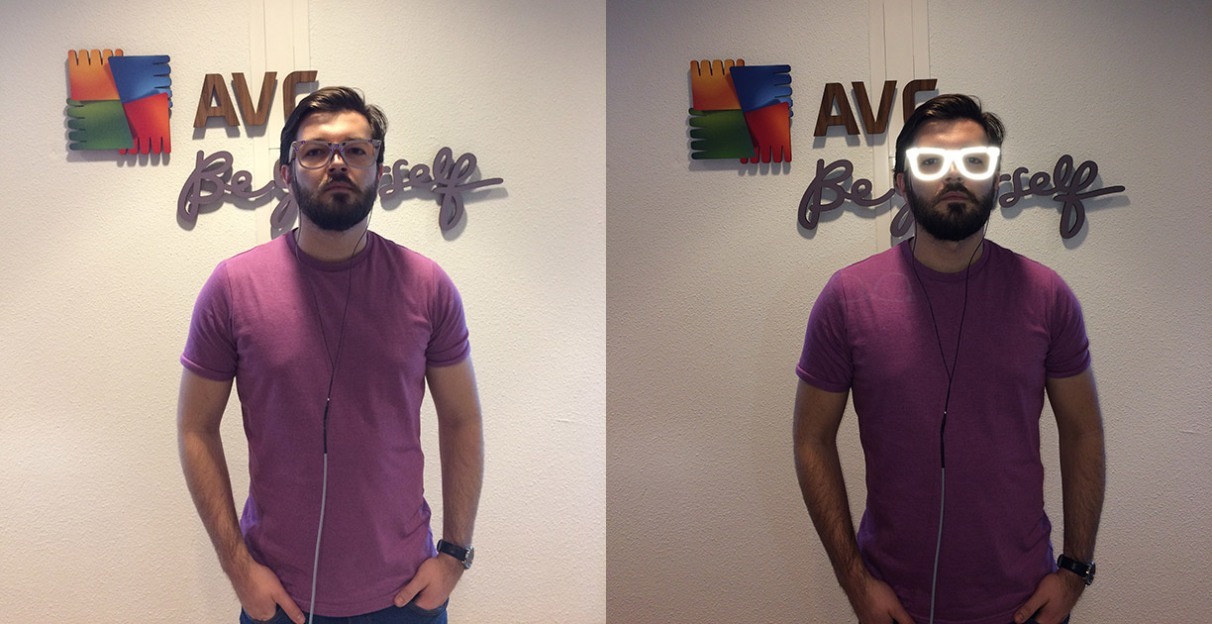
Another product of AVG Innovation Labs is traditional glasses, coated with reflective material, as in the clothes of Chris Holmes. They are additionally equipped with infrared emitters.
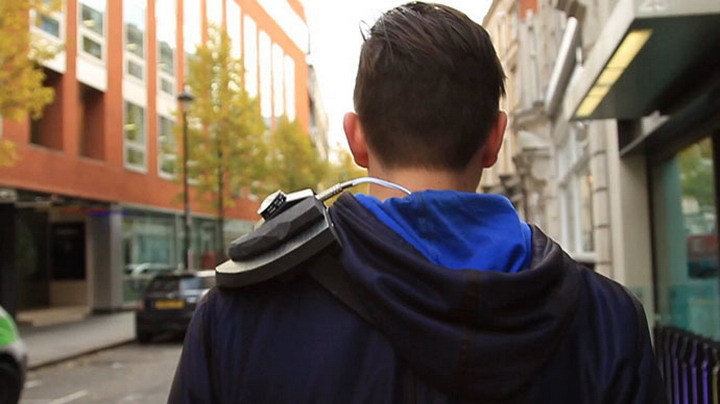
For those who doubt the reliability of the above methods, the English developer James Bridle proposed a device, signaling that cameras have entered the field of view. The sensor detects infrared radiation - after receiving a signal, it begins to vibrate. There is logic in this - you do not want your face to be recognized, do not shine in front of the camera at all. But for some reason, the device is implemented as a bulky shoulder pad.
Positioning error
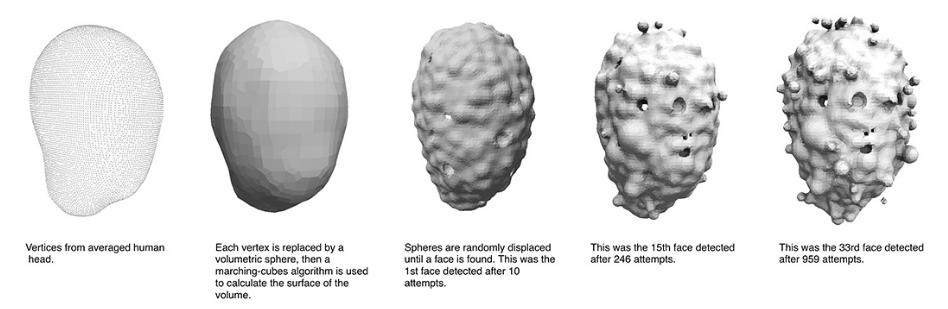
If someone is about to enter the secret SkyNet factory, where robots go to patrol instead of human guards, then he just needs to cross the random image generation algorithm with the pattern recognition system and print the result as a mask on a 3D printer. As a result, you will have a set of frozen specific signs that will be understandable to the computer vision program, but will remain meaningless for people.
Artist Sterling Crispin posted a collection of data masks created specifically for tricking face recognition algorithms into street surveillance cameras. This method allows you to deceive only the algorithm for which the mask was made, and is definitely useless against people.
Chameleon in the urban jungle

Designer Martin Bakes, working at the intersection of high technology and art, came up with balaclava with a pattern in the form of a pixelated image of the human head Pixelhead. The project has no practical benefit, but it helped inspire several creators.

Balaclava is noticeable in urban environments, so privacy activists choose an orthopedic face mask. This mask is of such a high quality that the chances of being identified on the street are pretty low until no one begins to look at you intently in the face. The camera will probably not notice that your lips are not moving.
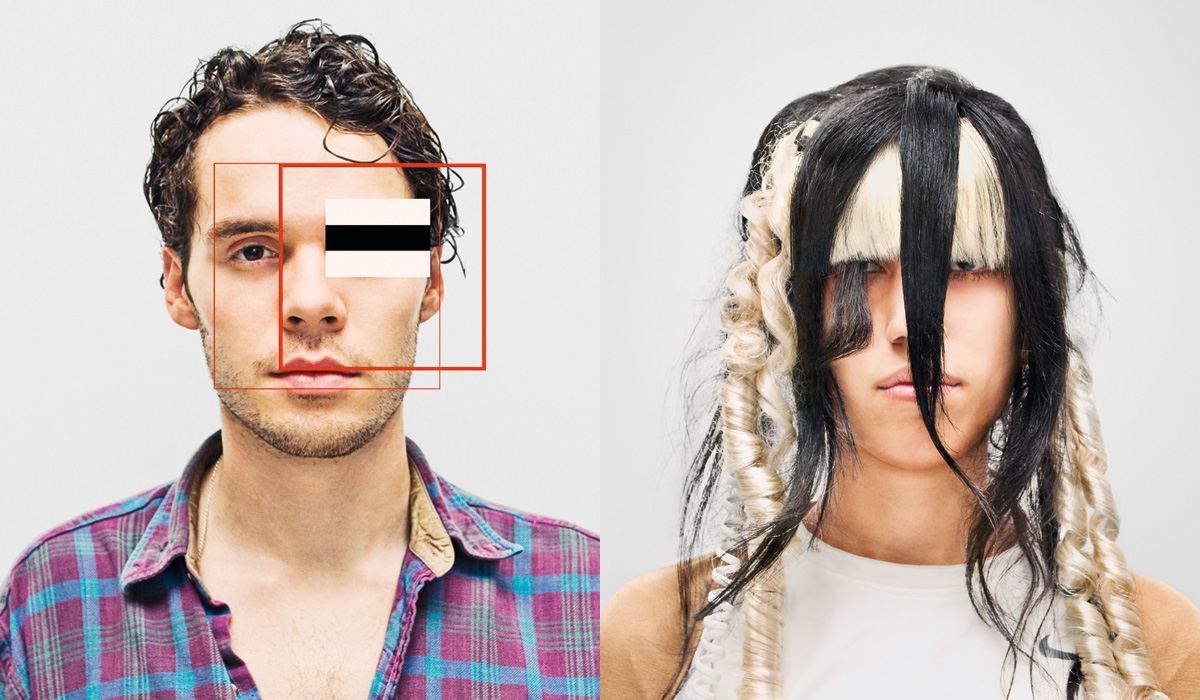
An irreconcilable fighter with the Adam Harvey system, using the OpenCV library and scripts in Java and Processing, selected hairstyle and makeup options that impede the work of face recognition algorithms. This chip worked a few years ago, but now the sharp contrasting lines and spots that create "false targets" do not deceive the algorithms.

Adam Harvey also introduced the Stealth Wear collection, which includes raincoats and wraps made from a material that does not allow thermal radiation. You can partially hide from infrared cameras.
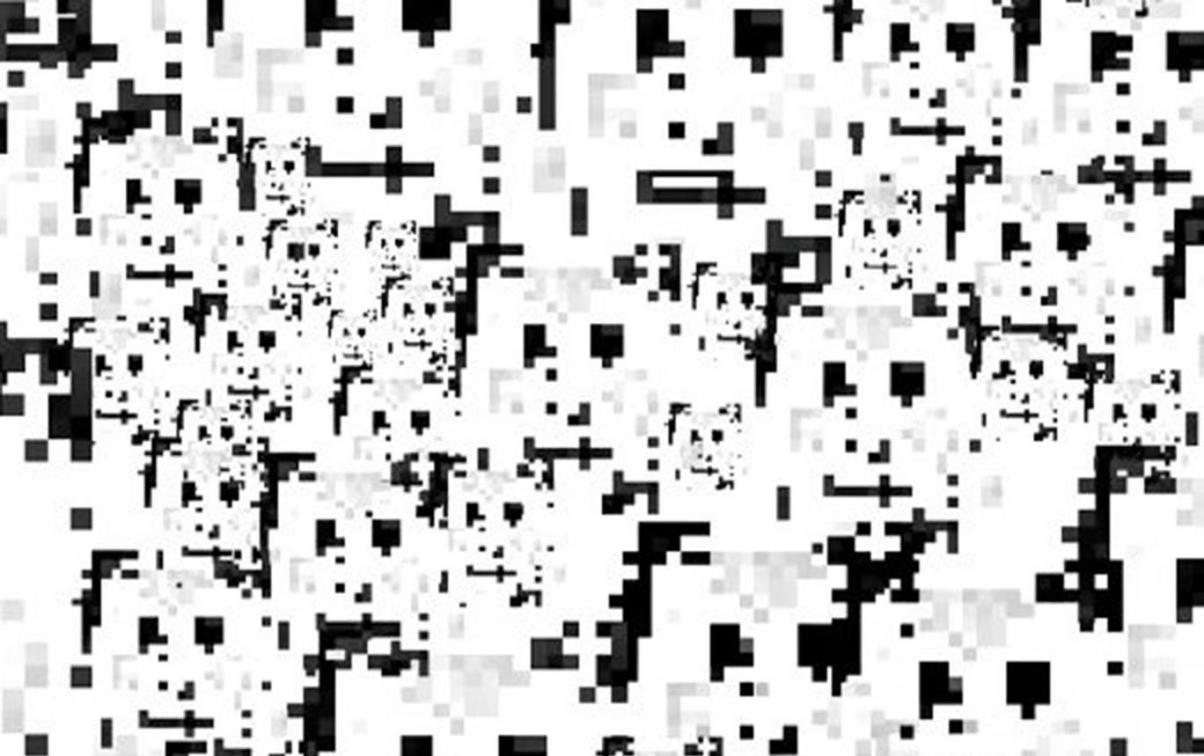
His next project was Hyperface - these are just patterns that imitate facial features for a computer. Patterns overload the algorithm with the data it is looking for, which leads to disruption. It is enough to apply camouflage on clothes to confuse surveillance cameras.
We play thimbles with a neural network
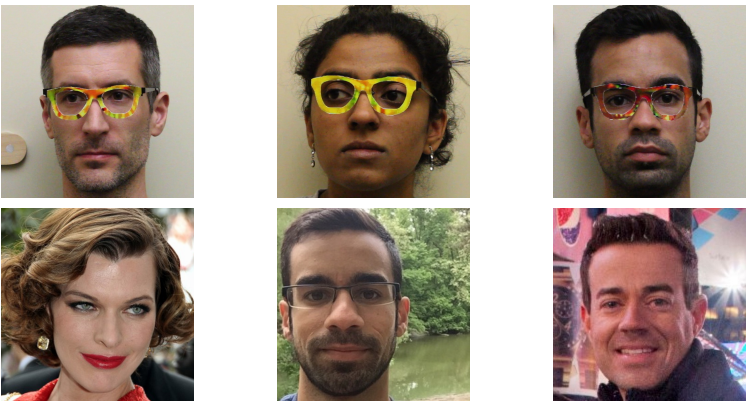
A group of researchers from Carnegie Mellon University found that ordinary glasses with a specially selected pattern negatively affect the face recognition neural network. Due to the comparison of the coloring of neighboring pixels on the faces around the eyes in systems using the Viola-Jones method , a simple colored overlay with a pattern confuses the grid. As a result, the computer “thinks” that you are not you, but someone else (maybe Milla Jovovich).
Counteraction
An almost reliable way to hide your face is to put on a hood and large black glasses. A ski mask wrapped around the head, a scarf or just a bag with holes for the eyes protect 100% from popular video analytics systems. With the same efficiency, they attract the attention of security guards and police.
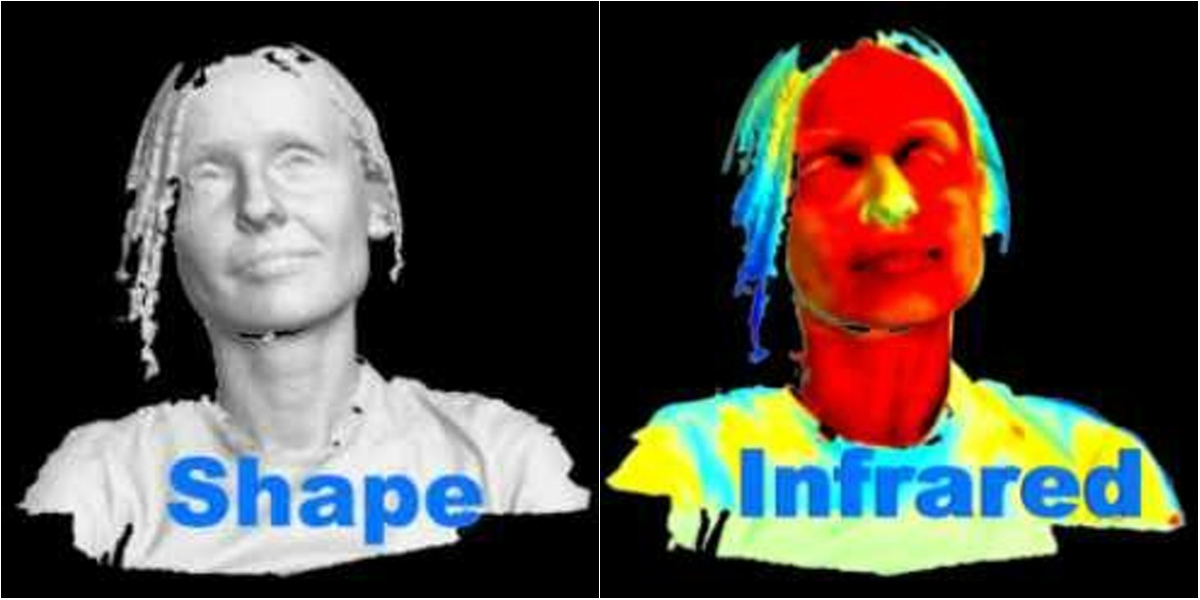
At the University of Houston, 10 years ago, they proposed a method that allows you to completely highlight facial features against the background of foreign objects. The URxD program takes a three-dimensional picture of a person using a conventional camera, 3D sensors and an infrared camera. The program creates a three-dimensional model of a person, then imposes a texture and data obtained by an infrared camera on it.
Almost all IR LED tips do not work. In some cases, LEDs are not something that does not hide the face, but slightly illuminate, providing a clearer picture - this is because to illuminate the face, you need to look directly into the camera. In most cases, for modern cameras, only LEDs are not enough to protect against IR illumination. For a long time already exists the HLC (High light compensation) mode. Our Nobelic cameras , for example, are able to do this: in the automatic mode, the point of bright flare is tracked and a second frame is taken , ignoring the data from the matrix cells in this place.
Who said cameras are required to view only faces? You can identify a person in a thousand other ways. Algorithms have been created that take into account clothing, environment, and gait. Surveillance cameras receive analytics for capturing biometric information, allowing you to actually “see” the heart rate using standard recording technology.
And in the end, all this is good. The new is suspicious and not everyone likes that every step can be recorded and analyzed. This is a natural process. Farmers in the Midwestern United States went on strike against expanding the rail network. Riders on horses harnessed by spans, gigs, carriages felt threatened in the first cars. Now in Russia, GMO products are being attacked.
Ultimately, the benefits of CCTV win. And for those who have doubts, we are ready to show the benefits ourselves. Currently, Ivideon is looking for volunteers for queue detector tests, as well as users of the STRIH-M system for testing a new cash register control system. Write to the mail if you want to know how video analytics can deal with the emergence of a queue in your enterprise or control potentially dangerous cash transactions. Thanks to those who have already written (they might not answer someone yet, but we will contact you soon).