July 7, 2016 at 11:28
Why interrupted sleep is a great time for creative work.
- Transfer
Once upon a time, people woke up in the middle of the night to think, make notes or make love. What did we lose falling asleep all night?
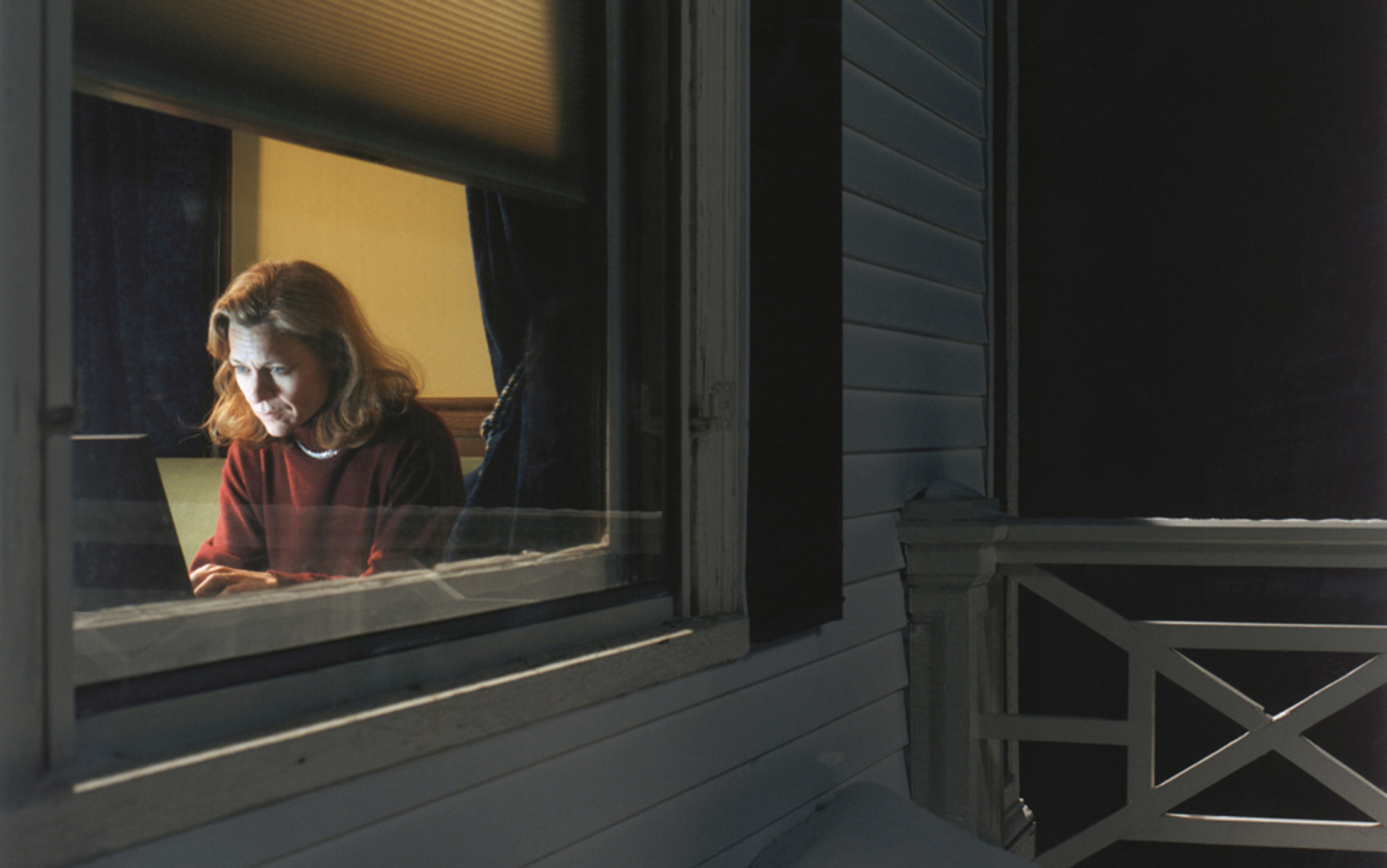
4:18 a.m. Firewood burned in the hearth, and only orange pieces remained, which would soon turn into ashes. Orion the hunter ascended the hill. The flickering “V” Taurus stands directly above her head and points to the Seven Sisters. Sirius, one of the dogs of Orion, flickers red, blue, purple - like a galactic disco ball. The night goes on, and the old dog will soon sit behind the hill.
4:18 in the morning, and I'm not sleeping. Such an early awakening is usually considered a violation, a malfunction in the natural rhythm of the body - a sign of depression, or agitation. Indeed, after waking up at 4 a.m. my head was buzzing. And although I am a positive person, but when I lie in the dark, excitement appears in my thoughts. It seems to me that it is better to get up than to lie in bed, balancing on the verge of sleepwalking.
If I write during these hours, black thoughts become clear and colorful. They are formed into words and sentences, one clings to the other - like a string of elephants holding their tails with their trunks. At this time of night, my brain works differently: I can write, but not edit. I can add, but not take away. For clarity, daily consciousness is needed. I work for several hours and then fall asleep again.
All humans, animals, insects, and birds have built-in clocks, biological devices controlled by genes, proteins, and molecular cascades. This internal clock depends on an infinite, but variable cycle of light and darkness, occurring due to the rotation and inclination of our planet. They control basic physiological, neurological, and behavioral systems according to an approximately 24-hour cycle, known as the circadian rhythm. It affects our mood, desires, appetite, sleep patterns and sense of time.
The Romans, Greeks, and Incas woke up without iPhones or digital clock radios. Their time was in charge of nature: sunrise, evening choir, the needs of field crops or livestock. Until the 14th century, the passage of time was marked by a sundial and an hourglass, and then the first mechanical clock appeared on monasteries and churches. By 1800, mechanical watches were already in full wear around the neck, wrists and lapels. It was possible to make appointments, time for eating and going to bed.
Societies built on industrialization and exact time have given rise to the concept of urgency and concepts such as “on time” or “loss of time”. The clock began to diverge more and more from natural time, but light and darkness still controlled the working hours and social structures. But everything changed in the 19th century.
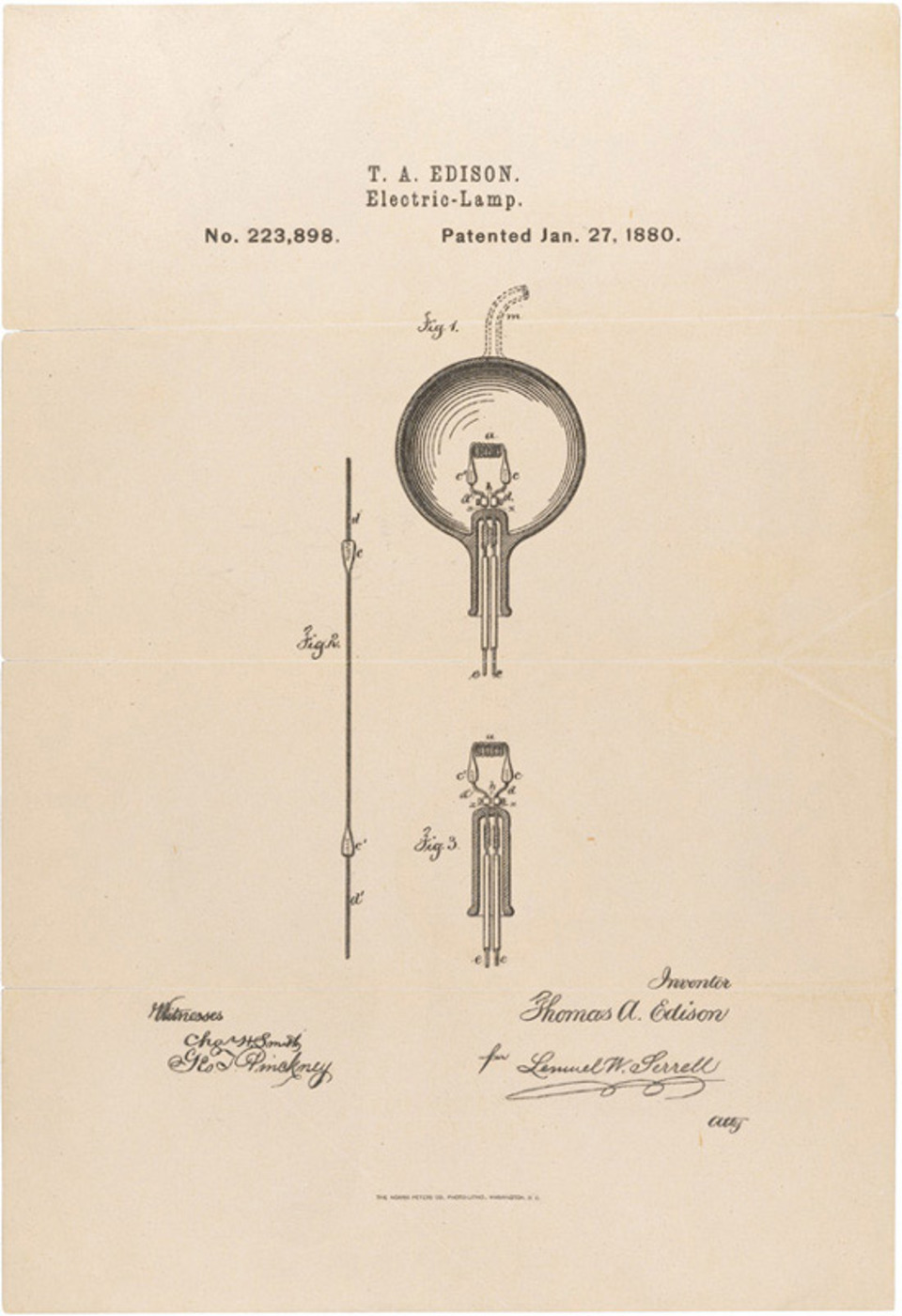
Edison's patent for a light bulb, 1879
The light turned on.
Modern electric lighting revolutionized nightlife and sleep. According to historian Roger Ekirch, author of At Day's Close: Night in Times Past (2005), before Edison's dream was divided into two different parts, separated by a period of wakefulness that lasted from one to several hours. This mode was called segmented sleep.
Sleep patterns of the past may surprise us today. It can be decided that circadian rhythms should raise us with the rising of the sun, but many animals and insects do not sleep in one continuous piece, but little by little, for several hours at a time, or in two separate doses. Ekirh believes that if people are left to sleep naturally, they too will not sleep in one continuous segment.
He bases his point of view on 16 years of research, during which he studied hundreds of historical documents, from antiquity to our times. They included diaries, court records, books on medicine, and fiction. He found an uncountable number of references to the "first" and "second" sleep in English. Other languages also describe this sleep pattern, for example, premier sommeil in French, primo sonno in Italian, primo somno in Latin. The way the divided dream was routinely described led Ekirha to the conclusion that such a regime was once a familiar and daily part of sleep and wakefulness.
Before the invention of electric lighting, night was associated with crime and fears - people did not leave their homes and went to bed early. The time of first sleep varied depending on the season and social class, but usually began a couple of hours after sunset and lasted three to four hours, and then, in the middle of the night, people woke up naturally. Before light bulbs in rich houses, other sources of artificial matchmaking — gas lamps, for example — were used and therefore went to bed there later. Interestingly, Ekirch found fewer references to separate sleep related to wealthy homes.
People sleeping in separate sleep used night wakefulness for reading, prayers and writing letters, debriefing, talking and making love. Ekirh points out that after a hard day's work, people were too tired for love pleasures before their first sleep (busy people of today will also appreciate it), but, having woken up at night, our ancestors were rested and ready for entertainment. After nightly activities, people again became sleepy, and fell asleep with a second dream (also for 3-4 hours), before meeting a new day. We can imagine how we go to bed in the winter at 9 o’clock in the evening, wake up at midnight, read and talk until 2 in the morning, and then sleep again until 6.
Ekirch discovered that references to double sleep almost disappeared at the beginning of the 20th century. Electricity increased the amount of light, and daytime activities spread to night time. Illuminated streets have become safer and it has become fashionable to use evenings for social activities. The retreat to sleep moved further, and night wakefulness, incompatible with the extended day, disappeared. Ekirch claims that with the loss of night wakefulness, we have lost its advantages.
He told me that night waking is different from day waking, at least according to the documents he found. The third US president, Thomas Jefferson, read books on moral philosophy before bedtime to “reflect on” them between two periods of sleep. 17th-century English poet Francis Quarls called darkness and silence help in contemplating inner reflection:
Let the end of thy first sleep raise thee from thy repose: then hath thy body the best temper, then hath thy soule the least incumbrance; then no noise shall disturbe thine ear; no object shall divert thine eye. [may the end of the first sleep of rest lift you; let the body receive the best mood, and the soul - the least interference, let the noise prevent the ear, and not distract any object of the eyes]
My own experience of nocturnal wakefulness confirms the difference between daytime and nighttime awakenings. The work of the night brain is more like a dream. In a dream, consciousness creates pictures from memories, hopes and fears. At night, the sleepy brain can trigger new ideas based on dreams and apply them to creative activities. In the essay “Lost Dream” (2001), Ekirch wrote that many people, waking up after the first dream, should have been in a sleepy state, “which, thus, facilitated the assimilation of visions before a person again plunges into an unconscious state. In the absence of sounds, illness and other discomfort, his condition was most likely relaxed, and his concentration was complete. ”
Ekirh's ideas about shared sleep are supported not only by old documents and archives - they find facts in their support in modern research. Psychiatrist Thomas Wehr of the U.S. Institute of Mental Health found that split sleep returns when artificial light is canceled. During a month-long experiment in the 1990s, subjects Vera had access to light for 10 hours a day, and not for 16 hours, as is usually the case now. And during this more natural cycle, Ver noted that "the duration of sleep increased, and was usually divided into two symmetrical times, lasting several hours, with an interval of wakefulness from 1 to 3 hours between them."
The works of Ekirh and Vera are used in sleep research. Ekirh's ideas were discussed at the annual Sleep 2013 conference of the North American professional sleep study community. One of the biggest consequences of the work is the fact that the most common variant of insomnia, “insomnia in the middle of the night,” is not a deviation, but an attempt to return to the natural form of sleep. This shift in perception greatly reduced my worries about waking at night.
It's 7:04 a.m. I wrote for almost three hours, and now I return to bed, to my second dream. Later in the afternoon I will work again. I can afford a divided dream because of the lifestyle that I have provided for myself (no children, I work for myself).
But I also had to adapt my sleep methods to the work schedule “from nine to five,” which is quite difficult to do. Few sounds scare more than the buzz of an alarm when you spent several hours of the night awake, and just fell asleep. The struggle of the "natural" sleep regimen with a rigid social structure - hours, industrialization, school hours, working hours - leads to the fact that a divided dream looks like a deviation, and not like a blessing.
Creative people find ways to live outside the framework of “from nine to five,” either because of the success of their books, drawings, and music, so they don’t need regular work, or because they are specifically looking for work with a flexible schedule, for example , freelance.
In the book, Daily Rituals: How Artists Work (2013), Mason Currey describes the habits of famous writers and artists, many of whom rose early, and some used a shared dream. Curry discovered that some had stumbled into shared sleep mode by accident. The architect Frank Lloyd Wright, for example, woke up at 4 in the morning, and could not sleep - so he worked for 3-4 hours, and then fell asleep again. The Nobel laureate, writer Knut Hamsun, often woke up, slept for a couple of hours, so he kept a pencil and paper next to the bed, and, according to him, "he began to write immediately in the dark if he felt the stream going through me." Psychologist B.F. Skinner was holding a tablet, paper and a pencil next to the bed to work during periods of night wakefulness,
Some of us love morning; others love evening; larks and owls. Curry says creative people working at night “use the optimal state of consciousness for their work,” driven by the natural rhythms of the person, not by choice.
Writer Nicholson Baker was the only friend Curry knew to practice split sleep. Curry told me that Baker knows about his writing habits, and loves to experiment with new writing rituals for each new book. Therefore, it seemed appropriate to allocate a couple of fruitful hours for work, creating two mornings in one day.
And when Baker wrote his “Box of Matches” (A Box of Matches (2003), a story about a writer who woke up at 4 in the morning, lit a fire and wrote while the whole family was sleeping, he himself also practiced this ritual, and then returned to bed for second dream.
“I found that by lighting and maintaining this early light, I began to concentrate better,” Baker told The Paris Review. “There is something simple and meditatively pleasant in starting a fire at four in the morning. I started writing of unrelated sentences, and writing passed easily. "
It was this sleepy th stream describes the creative work being done at night. Between dreams there is peace, no distractions and a strong connection with dreams.
Also at night, hormonal changes in the brain occur, suitable for creativity. Ver noted that pituitary gland secretes a lot of prolactin during nocturnal wakefulness. This hormone is associated with feelings of peace and sleepy visions that we experience when we go to sleep, or when we wake up. It stands out when we feel sexual satisfaction, when a nursing mother makes milk, and because of it, hens hatch eggs for a long time. He changes the state of mind.
Prolactin levels increase in a dream, but Ver found that (coupled with melatonin and cortisol) it is also released during “quiet wakefulness” between dreams under the influence of a natural change of day and night, and is not associated with sleep as such. Blissfully intoxicated with prolactin, our nocturnal brains allow ideas to appear and intertwine, as if in a dream.
Ver believes that the modern schedule not only changed our sleep patterns, but also stole from us the ancient connection between dreams and awakening, and “can explain at the physiological level why modern people have lost touch with an inexhaustible source of myths and fantasies.”
Ekirh agrees: “Turning night into day, modern technology blocked the path to the human soul, and, using the words of the 17th-century English poet Thomas Middleton,“ destroyed our first dream and tricked away our dreams and fantasies “.
Modern technology, perhaps, pollutes the channels connecting us with our dreams, encourages the desynchronization of people and the natural regime, but it can also lead us back. The industrial revolution has flooded us with light, and the digital one may turn out to be more favorable to a person using a shared dream.
Technology encourages the invention of new ways of organizing time. Homework, freelance work, and freelance work are becoming increasingly popular, as are the concepts of digital nomads, online, and remote workers. All of them can use more flexible modes, allowing people who are awake at night to find a balance between shared sleep and work. If we can take the time to wake up at night and think with our brains filled with prolactin, we may be able to regain the creativity and fantasies that our ancestors enjoyed. According to Ekirh, “they slept after the first dream to ponder over a kaleidoscope of partially crystallized visions, slightly blurred, but generally quite vivid pictures generated by their dreams.”