June 5, 2016 at 18:06
Harappan Dravidian civilization was the oldest on Earth
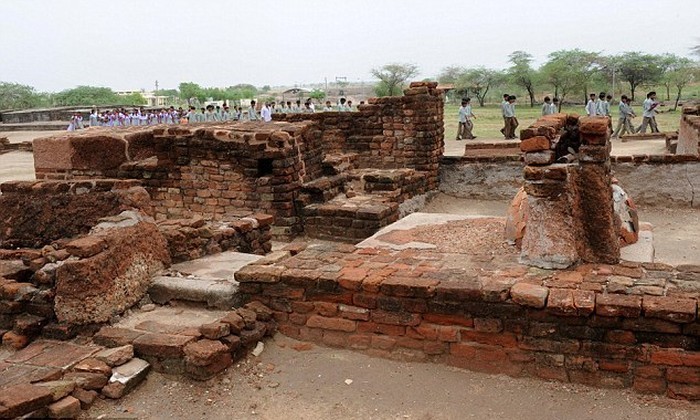
The most ancient civilizations on Earth, many consider Egypt and Mesopotamia. But thanks to the study of archaeological artifacts, it has now been possible to confirm that the Indian (Harappa) civilization actually formed around the 8th millennium BC. , that is, two and a half millennia earlier than previously thought.
Thus, the Harappan civilization was ahead of Egypt and Mesopotamia in its development. Cities with advanced sophisticated infrastructure were built there (the world's first public toilets and a city sewage system appeared here) and magnificent works of art were created. New archaeological finds also point to the reasons why the prosperous Dravidian civilization ceased to exist.
A team of researchers from the Archaeological Survey of India (ASI), the Institute of Archeology, the Deccan College Pune and the Indian Institute of Technology in Kharagpur conducted a radiocarbon analysis of ceramic fragments and animal bones in different archaeological layers in the ancient settlement of Birran in northern India. Analysis showed that this settlement can be considered the oldest in the Indian subcontinent.

In the study of artifacts, scientists also applied the method of optically stimulated luminescent dating (OSL dating) to determine the point in time when the mineral was last exposed to light. With it, archaeologists tried to determine the presence of abrupt climatic changes during the heyday of the Harappan civilization.

The heyday of the Harappan civilization occurred in 2600-1900 BC. Together with Ancient Egypt and Mesopotamia, it is considered one of the three early civilizations of the Ancient World and the largest in area among them. The borders of the empire stretched from the Arabian Sea to the Ganges, in the territories of modern India, Pakistan and Afghanistan. At its peak, civilization totaled about 5 million inhabitants, which amounted to approximately 10% of the world population. Among the unique heritage of the Harappan civilization are the first toilets on earth, complex stone scales, necklaces from gems drilled through and through, and exquisitely carved stone prints. These artifacts also contain inscriptions on unusual and complex writing, which researchers have not yet deciphered.
Fragments of ceramics and metal products found in the vicinity of Birran indicate a high level of skill of artisans and metallurgists who already knew how to work with copper, bronze, lead and tin, burn pots and control the flow and discharge of water.

Scheme of Birran’s residential neighborhoods (A) and approximate dating of various cultural layers (B)
In Birran, ordinary townspeople received water from shallow wells, and sewage flowed down the street. The richer houses had separate bathrooms and a second floor.
It was previously believed that the drought and drying out of the Indus River became the cause of the decline of the Harappan civilization. There were other theories. For example, the invasion of the Aryans, the ancestors of the present Iranians and Indians.
Scientists believe that climate change only indirectly affected the decline of the Harappan Empire. People continued to farm even after the onset of drought, but switched from wheat and barley to drought-resistant crops such as millet and rice. However, due to the lower productivity of these crops, large territories had to be sown and the process of deurbanization began.
The sunset of Indian civilization falls on the XVIII-XVII centuries BC. At this time, the bulk of the Dravidian population was shifting to the southeast of Hindustan and was losing its former level of development.

Anthropologically, the Dravids are very different from the rest of the Indian population. In the photo: South Indian actress Anushka Shetty, a Tulu-born descendant of the Dravids.
The work of Indian scientists is published in the journal.Scientific Reports (doi: 10.1038 / srep26555).