How Arslab acoustics are created and why High-End can be sold for Hi-Fi
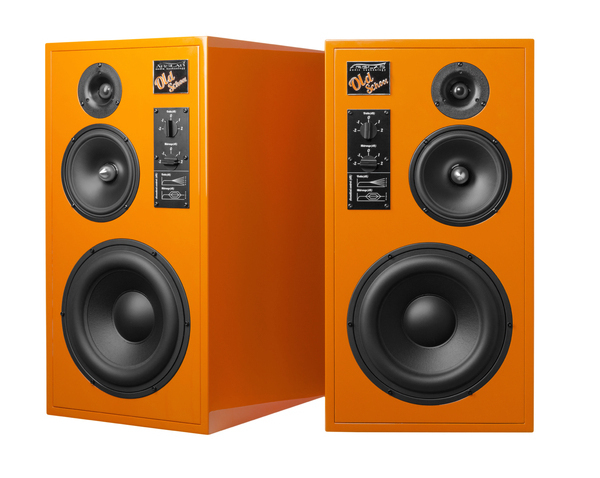
Shelf acoustics Arslab Old School Superb 90
In today's article, we will talk about how the Arslab brand speakers work and how we can “cut zero” on the high-end acoustics price tags.
But first, let's see how the audio market is structured: why are there so many brands that produce audio systems? It would seem that there is a basic theory of constructing linear systems, one approach to creating linear sound with the least distortion - is it enough to use it, and you can calmly capture the market? Not certainly in that way.
The fact is that engineers are important not only the sound "in itself", but also its perception by the listener, which depends on many factors: firstly, physiological and psychological - the curve of our perception of sound is non-linear, and secondly, a lot depends on , under what conditions, at what volume a particular music fan prefers to listen to recordings.
The perception of sound changes with age, depends on the environment, is distorted if a person is intoxicated (this, in part, explains the disappointment of those who feel that their beloved speakers do not give a sound “like at a rock concert”) - and all this affects the work of engineers.
In fact, the monolithic market of music lovers for the manufacturing company is divided into hundreds of subgroups: aging rockers with listening rooms in country houses, young electronic music lovers who often ride the subway, sports fans, classic fans living in small-sized apartments - all of them (and many others) perceive sound differently, and they all need different products.
How to create a product for so different people? Often, an engineer relates himself, his preferences and lifestyle to one of these groups and does what he likes, in the hope that someone else will like such a sound. He intentionally introduces his own elements, distorts the sound so that the system sounds especially good, say, at the volume that he (the engineer) considers optimal.
A complete dictatorship: however, this approach works - if you see the technique of a particular brand on the stand in the store, it means that it already has a circle of fans - people who listen to music in the conditions “under which” the engineer created this system.
The engineer whose development is the basis of the Arslab brand is Yuri Fomin (previously developed acoustic systems for the brands Jetbalance, Defender, AVE). Before starting to design speakers, Yuri Fomin worked as a studio and concert sound engineer, played the guitar - all this left its mark on the “sound philosophy” of Arslab:
Together with the second leading engineer, we made professional sound. We had a lot of studio work, we understand how everything sounds live. Yes, perhaps we both have a certain taste, inoculated with studios, which we are trying to recreate. But this taste is neutral. Ideally - no features inherent in the system at all
- Yuri Fomin
Of course, it’s impossible to accurately recreate all the nuances of sound that the sound engineer planned - for this you need to at least be present in the studio at the time of his work, but Arslab believes that focusing on stylistic “neutrality” can give acoustics a personality:
The approach “here the metal sounds worse and the classics sound better” is considered incorrect. Equipment should be able to play everything, let customers prioritize. This is our philosophy.
It is important for us that a person believes that his favorite music plays best on our systems. If he loves metal - let him say that it is intended for this genre. If the blues - well then, let the blues play the best. [...] We are still looking for [“our” sound], but they also tell us that “we will recognize your sound from afar”
- Yuri Fomin
Arslab speakers themselves have two non-trivial (for the speaker market in general) features: Russian engineers and (Russian) company Audiomania are behind its development, and it is produced under the slogan “High-End for Hi-Fi Price”. We will figure out how to achieve this.
From idea to plant
The idea to create his own brand producing acoustics came up with the founder of Audiomania Artyom Faermark after meeting Yuri Fomin and his company F-lab in 2000. Over the next eight years, future Arslab creators visited foreign factories, got acquainted with their owners and leading engineers, as well as how the production of equipment was organized and created experimental samples.
The production of speakers began in 2008 - it was based on the development of F-lab, the Taiwanese company TB Speakers (initially the speakers of this brand used Arslab speakers), and the manufacture of cases took place in China.
Very soon, the company realized that this was not a convenient format: Chinese plants prefer large orders and do not experience rebounds in offers - production is usually loaded “in full”, so to make a batch, you must wait your turn. And to control production in Chinese factories is not only difficult, but also expensive.
So the idea of creating our own production appeared, on which everything will be made - from “filling” to cases (the same period saw the beginning of cooperation between Artyom Faermark and Allan Isaksen, the founder of the European company-manufacturer of speakers Wavecor, whose Arslab systems are still equipped with products) .
They decided to place the production in Riga - there are still specialists who worked at the Soviet Radiotehnika factory and who have first-hand knowledge of the production of acoustics (the factory also has employees who have experience in producing acoustics in the Scandinavian countries).
Riga as a site for the plant was also chosen because this region provides quite a lot of freedom for the manufacturing business: on the one hand, it is close enough to Russia (while Arslab columns are produced mainly for Russian music lovers), on the other, there are fewer problems with import and “customs clearance” of imported components.
With the growth of production, the factory began to produce goods of other High-End brands. The most striking example is the acoustics of Penaudio, whose controlling interest in Audiomania was acquired not so long ago. Now Audiomania deals with everything related to the marketing and distribution of Penaudio speakers, and their creator Sami Penttil can devote all his time to developing new models and monitoring the production process - he visits the factory in Riga every month.
From the hulls ...
Production of cases for acoustics is carried out on a special German woodworking machine. The machine performs operations in a three-dimensional coordinate system - with its help you can create cabinets of a unique shape. Therefore, now, in addition to Arslab speakers, the factory in Riga also produces cases and, on request, for other companies.
They use materials from budgetary ones - for example, Latvian plywood (made entirely of birch), to classic oak, walnut, ash or cherry, and even exotic zebrano and expensive rosewood and Karelian birch. However, even for low-cost models, technologists are trying to select high-quality materials: for example, high-density MDF, which is used in most models, is imported from Germany.
For the manufacture of acoustic cabinets Penaudio uses a unique finish, which has become the "hallmark" of the company - the transverse layers of plywood. The Riga factory even managed to improve the technology of their creation compared to the original Finnish approach.
After the “cutting”, the workpiece goes through the stages of assembly, gluing, varnishing or painting and drying. Most of them are done strictly by hand. Then the finished case is equipped with speakers, crossovers, connector blocks and other “stuffing”. Moreover, product testing takes place at each stage of production - due to this, the percentage of defective products tends to zero.
The chief technologist of the plant Viktor Lagarpov notes: the finished acoustics are returned to the plant only if it was damaged in the store or showroom: the current approach can be avoided at the factory. There, at the factory, Yuri Fomin and a team of sound engineers conduct tests of new equipment in the laboratory: some copies later become serial Arslab models.
... before packing
It would seem - everything, the column went through the entire assembly phase, but it is also important to pack it correctly - this is the only way to guarantee the safety of goods during transportation. To do this, the Audiomania plant came up with several know-how .
When packing columns, employees use latex or vinyl gloves - they do not leave marks on a polished surface. The lacquered columns themselves are wrapped in a special non-woven packaging material that leaves no residue on the varnish. It is delivered to the factory from China - nowhere else do such packaging.
Victor Lagarpov emphasizes: if you pack the columns in ordinary cloth or film, the likelihood that they will be scratched increases sharply. In addition, non-woven material allows the columns to “breathe”.
The boxes in which the columns are packed (this applies primarily to the most expensive of the models produced) are made from a combination of plywood and durable cardboard. Such packaging is much stronger than conventional packaging cardboard, but more environmentally friendly than wooden boxes (similar options - wooden packaging - are also found on the market).
The fact is that plywood, firstly, is made from industrial wastes, and secondly, it does not require additional chemical processing (the latter is often insisted by sanitary and epidemiological surveillance in many countries when using wooden, rather than plywood, boxes).
After the column is wrapped in non-woven material and placed in a box, the remaining space is filled with special packaging foam, which rapidly increases and fills all the voids. This allows you to not use liners in the package (which must be changed depending on the model of acoustics and package size) and further increases its reliability.
Usually, a stapler is used to fix wooden-plywood boxes, but in this case, after unpacking, the wood or plywood is turned into waste. Audiomania came up with a method that allows you to use durable packaging material repeatedly: for this, in production, an individual employee fixes the boxes with screws. The combination of all these factors provides an almost one hundred percent guarantee of reliable transportation of goods - even if the boxes are stored in large stacks.
High-end for the price of Hi-Fi
Features of the production and development of audio technology in many respects explain the bold motto of Arslab, and why Audiomania was able to seriously reduce the price tag for “their” speakers.
For example, the decision to manufacture cases on our own equipment allowed Audiomania to exclude additional links from the production process that would otherwise lead to a rise in the cost of the product: and this is the payment for the work of a third-party manufacturer, and the costs of logistics, and losses due to the need to wait in line as is the case with Chinese case suppliers.
In the same way, the reduction in the final price is also affected by the fact that Audiomania itself develops and sells the acoustics of its own brand: the company does not need to pay extra for third-party R&D, and the wholesalers and distributors “leave” the chain linking the manufacturer and the buyer.
As for the components that still have to be purchased from third-party manufacturers, Audiomania tries to establish the most comfortable and efficient working conditions with them - and use this so as not to increase the price tag again.
For example, close collaboration between Audiomania and Wavecor speaker maker allows the company to purchase components in large quantities and consume them as needed. At the same time, Wavecor respects the requests of the Russian side to change certain parameters of their products in accordance with the ideas of engineers.
Does all this favor Arslab speakers? Only the listener can determine:
You can understand whether you like it or not, only by turning it on and listening. Each system is a product of the creative state of a development engineer. He puts his soul into work
- Yuri Fomin
PS More materials on the topic of audio - in our blog " World of Hi-Fi ."