May 25, 2016 at 02:06
The Myth of Cyberpsychosis and Intolerance for Cyborgs
Today, many people are concerned about the problem of Artificial Intelligence. Hawking, Musk, and other people spoke out on this subject ...
However, when concentrating on AI, people somehow lose sight of another likely outcome of the future: cyborgs. And the way they will interact with society.
I don’t mean cyborgs in the technical sense, “I have an RFID chip in my thumb - I’m already a cyborg” ... I mean cyborgs in the usual sense of the word - a person whose noticeable number of organs has been replaced, or improved with the help of technology. Artificial limbs, brain implants, to some extent even a partial load of consciousness.
All this can in theory raise the development of mankind as a civilization to unprecedented heights. But I have the opinion that before this, cyborgization will go through an extremely hectic, uneven and, frankly, shitty period ...

For starters, let's talk about the so-called "Cyberpsychosis."
During the development of desktop role-playing games for cyberpunk, a problem arose - players who actively install cyber implants for themselves could eventually become too strong, and break the whole gameplay balance to hell, leaving no hope for players without implants. The developers of the game thought, thought, and it was decided to introduce the concept of cyberpsychosis, postulating that the more metal in the character, the less this character is “human”, the less pleasant he is in communication and calm, until finally it breaks, and turns into crazy and an aggressive creature, a psychopath incapable of rational thinking. From the gameplay point of view, the solution solved the problem, the characters had a restriction that did not allow them to pump to the maximum and become boring-invincible. Such a game convention, like health points and experience levels.
If this all ended ... The term has spread, like a virus, outside of game convention. It would seem that those who like cyberpunk, those who like to play on such a setting, should be close to the ideas of transhumanism, well, or at least they should look sensibly at progress, right? However, a lot of people believe that cyberpsychosis is the real law of the universe, and that cyber implants are essentially harmful. They will cause madness, “because because”, or that “more effort” than organic will be spent on controlling mechanical limbs (which I didn’t mean by this person, I could not find out).
Before I continue, I want to note: of course, if you pull a brain out of a person and push him into a huge walking tank stuffed with various weapons, then naturally this will have certain changes in the psyche and will, in fact, be quite close to traumatic. Such a body provides a lot of opportunities for doing good and causing happiness to others, and almost completely deprives the possibility of constructive and safe activities (after all, even just going somewhere, you can stupidly step on someone accidentally).
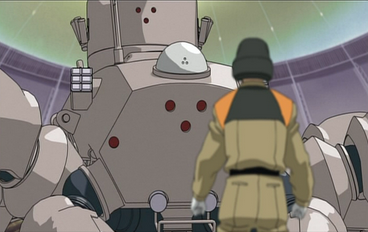
Something very similar happened in one of the episodes of the series Ghost In The Shell. Having woken up in the body of the robot, the human brain broke a considerable amount of firewood, although in fact it simply wanted to show off in front of the parents.
I am NOT talking about such cases. Everything is pretty obvious here, as well as the fact that if you give Vasya a T-90 tucked up and put into combat readiness from a neighboring entrance, then nothing good will come of it. We are talking about ordinary civilian cybernetics, without razor sharp tungsten carbide blades embedded in the elbow.
It seems that the concept of cyberpsychosis has fallen on fertile soil, previously fertilized as natural human xenophobia, including fear and subconscious hostility of everyone who differs from the usual and habitual idea of a person (including patients, people with disabilities, people with any defects). A person is ready to perceive any difference as a defect. This is mixed with luddic notions, the “Frankenstein effect”, which is diligently cultivated by games, films and some books, that science, and in particular technology, is something to be wary of, and you should not expect anything good from it. In addition, the “futuroshok” is also mixed- irrational fear of new opportunities and changes in the usual way of life. A person is even afraid of the thought that the society of the future will live according to some new laws that differ from the current ones. New = unknown, unknown = danger, and danger must be avoided or eliminated.
Meanwhile, there are already full cyborgs. At the moment, of course, the possibilities of cybernetics are modest, and cyber limbs can hardly make up even the basic functionality of a real hand. But remember, the first personal computers were also bulky and slow monsters, and the ability to display color pictures on the screen was presented as the spearhead of progress. I think that over the next 30 years maximum, cyber prostheses will lose the right to be called prostheses: they will no longer restore lost functionality, they will add a new one on top of the existing one. Some leg prostheses, for example, have already been recognized as giving an advantage over conventional legs.
Will cyber prosthetics change the psyche of people with cyber extremities? Of course. A very large number of things can change the human psyche. But these changes will not consist in the loss of humanity, spirituality, ability to feel emotions and other things that cyborgs usually demonize in such statements. If the brain and organs involved in it are not affected (for example, the glands secreting neurotransmitters), there should be no physiological effects on the psyche. They will think differently, yes. What do car owners think differently compared to pedestrians. As the townspeople compared with the villagers. How people who have a holster with a gun react to danger differently compared to an unarmed person. How the hell are programmers compared to accountants!
Around the same direction, intolerance towards AI is growing (with its memes of robo-apocalypse and Skynet), but this is a separate issue.
But the fact that the concept of cyberpsychosis has gone beyond the limits of game convention speaks volumes. Cyborgs in the future, in a transitional time when they will already appear, but there will not be too many of them, may face a very real problem of discrimination.
People with implants have already been attacked because of their, implants, presence - for example, Steve Mann was attacked at McDonald 's because the employee considered that Mann could not shoot video in a restaurant.
I don’t think that in the future there will be public places at the entrance of which there will be signs “We service baseline humans only”, as it was with blacks in the USA at the beginning of the last century. It is unlikely that mores are not the same.
But cyborgs will still have a bad time. It will not only be a matter of external physical forms that stimulate different phobic associations in people. At first, the attitude towards people who agreed to cut off their healthy arm to replace with a cyber prosthesis, as freaks, and even completely as mentally ill people, who should be avoided, is likely to be quite popular. There is still a problem arising directly from the consequences of progress: sooner or later, but the cyborg will be better than you. A brain implant with Internet access will significantly enhance and speed up access to knowledge, a person will be able to google what he does not know in seconds, without making personal gestures (In the book AccelerandoCharles Strauss, one of the main characters, has expanded his abilities so much with the help of external portable data storages and an implant with Internet access that he, in fact, switched to the pre-loaded borderline state: consciousness is still not even digitized, but a tangible part of memories and mental processes occurs already with the help of Internet bots that perform search queries, and programs executed on its implants and PDAs in a bag on the belt). A cyborg with eye implants will see better than someone with excellent vision. Mechanical hands will not get tired, shake, or maybe even be stronger than ordinary human hands.
Very soon, employers will understand this feature, and cyborgs will begin to receive priority when applying for many types of jobs. And this will serve as additional reasons for intolerance. Vaguely similar events alreadytook place in 2013 : local residents of Silicon Valley began to boycott, block, and even attack the buses of firms working there that take employees to work, because highly paid employees and the need created by companies like Google made prices in the region jump up significantly , bringing many locals non-IT related, in fact, below the poverty line. The situation has a chance to repeat itself, but with long-distance drivers .
It is easy to imagine that in the case of cybernetic implants, which began to spread widely, such crises can become global in nature. People will begin to see cyborgized competitors, and competitors who have received an “unfair advantage” (Why the hell didn’t they accept me, but he, he doesn’t code better, he just stuck the latest version of iMind, but really doesn’t know how!) .
The state may try to somehow resolve the growing division ... And it is unlikely that the cyborgs will get any better, because the government’s decisions are likely to regulate cyborgization and impose restrictions on the cyborgs themselves, most likely additional taxes on implantation.

Interesting fad, traditionally written in small-fine print. Comic bookDrugs and Wires .
But this, in fact, is only the tip of the iceberg. Much more unpleasant problems may arise, fueled by the schism mentioned above. Can a cyborg, most of which is already mechanical, be considered a person? Are human rights applicable to him?
But what if a person bought his augmentations on credit, or even leased them from a manufacturing corporation, and the corporation decided to revise the contract and require its property back, but a person cannot physiologically live without implants of vital organs?
The world of the near future will have to solve a huge number of new moral and ethical issues and problems, and while it will deal with them, those who touch upon these problems are unlikely to live a carefree life.
It seems to me that such a period is inevitable, but I hope that it will be at least relatively fleeting.
As for AI ... It is unlikely that they will appear in the arena before cyborgs with a high degree of cyborgization, which means that, perhaps, the bumps and bruises that society will fill during the integration of cyborgs in society will help to significantly alleviate similar problems that will arise when artificial digital personalities.
However, when concentrating on AI, people somehow lose sight of another likely outcome of the future: cyborgs. And the way they will interact with society.
I don’t mean cyborgs in the technical sense, “I have an RFID chip in my thumb - I’m already a cyborg” ... I mean cyborgs in the usual sense of the word - a person whose noticeable number of organs has been replaced, or improved with the help of technology. Artificial limbs, brain implants, to some extent even a partial load of consciousness.
All this can in theory raise the development of mankind as a civilization to unprecedented heights. But I have the opinion that before this, cyborgization will go through an extremely hectic, uneven and, frankly, shitty period ...
For starters, let's talk about the so-called "Cyberpsychosis."
During the development of desktop role-playing games for cyberpunk, a problem arose - players who actively install cyber implants for themselves could eventually become too strong, and break the whole gameplay balance to hell, leaving no hope for players without implants. The developers of the game thought, thought, and it was decided to introduce the concept of cyberpsychosis, postulating that the more metal in the character, the less this character is “human”, the less pleasant he is in communication and calm, until finally it breaks, and turns into crazy and an aggressive creature, a psychopath incapable of rational thinking. From the gameplay point of view, the solution solved the problem, the characters had a restriction that did not allow them to pump to the maximum and become boring-invincible. Such a game convention, like health points and experience levels.
If this all ended ... The term has spread, like a virus, outside of game convention. It would seem that those who like cyberpunk, those who like to play on such a setting, should be close to the ideas of transhumanism, well, or at least they should look sensibly at progress, right? However, a lot of people believe that cyberpsychosis is the real law of the universe, and that cyber implants are essentially harmful. They will cause madness, “because because”, or that “more effort” than organic will be spent on controlling mechanical limbs (which I didn’t mean by this person, I could not find out).
Before I continue, I want to note: of course, if you pull a brain out of a person and push him into a huge walking tank stuffed with various weapons, then naturally this will have certain changes in the psyche and will, in fact, be quite close to traumatic. Such a body provides a lot of opportunities for doing good and causing happiness to others, and almost completely deprives the possibility of constructive and safe activities (after all, even just going somewhere, you can stupidly step on someone accidentally).
Something very similar happened in one of the episodes of the series Ghost In The Shell. Having woken up in the body of the robot, the human brain broke a considerable amount of firewood, although in fact it simply wanted to show off in front of the parents.
I am NOT talking about such cases. Everything is pretty obvious here, as well as the fact that if you give Vasya a T-90 tucked up and put into combat readiness from a neighboring entrance, then nothing good will come of it. We are talking about ordinary civilian cybernetics, without razor sharp tungsten carbide blades embedded in the elbow.
It seems that the concept of cyberpsychosis has fallen on fertile soil, previously fertilized as natural human xenophobia, including fear and subconscious hostility of everyone who differs from the usual and habitual idea of a person (including patients, people with disabilities, people with any defects). A person is ready to perceive any difference as a defect. This is mixed with luddic notions, the “Frankenstein effect”, which is diligently cultivated by games, films and some books, that science, and in particular technology, is something to be wary of, and you should not expect anything good from it. In addition, the “futuroshok” is also mixed- irrational fear of new opportunities and changes in the usual way of life. A person is even afraid of the thought that the society of the future will live according to some new laws that differ from the current ones. New = unknown, unknown = danger, and danger must be avoided or eliminated.
Meanwhile, there are already full cyborgs. At the moment, of course, the possibilities of cybernetics are modest, and cyber limbs can hardly make up even the basic functionality of a real hand. But remember, the first personal computers were also bulky and slow monsters, and the ability to display color pictures on the screen was presented as the spearhead of progress. I think that over the next 30 years maximum, cyber prostheses will lose the right to be called prostheses: they will no longer restore lost functionality, they will add a new one on top of the existing one. Some leg prostheses, for example, have already been recognized as giving an advantage over conventional legs.
Will cyber prosthetics change the psyche of people with cyber extremities? Of course. A very large number of things can change the human psyche. But these changes will not consist in the loss of humanity, spirituality, ability to feel emotions and other things that cyborgs usually demonize in such statements. If the brain and organs involved in it are not affected (for example, the glands secreting neurotransmitters), there should be no physiological effects on the psyche. They will think differently, yes. What do car owners think differently compared to pedestrians. As the townspeople compared with the villagers. How people who have a holster with a gun react to danger differently compared to an unarmed person. How the hell are programmers compared to accountants!
Around the same direction, intolerance towards AI is growing (with its memes of robo-apocalypse and Skynet), but this is a separate issue.
But the fact that the concept of cyberpsychosis has gone beyond the limits of game convention speaks volumes. Cyborgs in the future, in a transitional time when they will already appear, but there will not be too many of them, may face a very real problem of discrimination.
People with implants have already been attacked because of their, implants, presence - for example, Steve Mann was attacked at McDonald 's because the employee considered that Mann could not shoot video in a restaurant.
I don’t think that in the future there will be public places at the entrance of which there will be signs “We service baseline humans only”, as it was with blacks in the USA at the beginning of the last century. It is unlikely that mores are not the same.
But cyborgs will still have a bad time. It will not only be a matter of external physical forms that stimulate different phobic associations in people. At first, the attitude towards people who agreed to cut off their healthy arm to replace with a cyber prosthesis, as freaks, and even completely as mentally ill people, who should be avoided, is likely to be quite popular. There is still a problem arising directly from the consequences of progress: sooner or later, but the cyborg will be better than you. A brain implant with Internet access will significantly enhance and speed up access to knowledge, a person will be able to google what he does not know in seconds, without making personal gestures (In the book AccelerandoCharles Strauss, one of the main characters, has expanded his abilities so much with the help of external portable data storages and an implant with Internet access that he, in fact, switched to the pre-loaded borderline state: consciousness is still not even digitized, but a tangible part of memories and mental processes occurs already with the help of Internet bots that perform search queries, and programs executed on its implants and PDAs in a bag on the belt). A cyborg with eye implants will see better than someone with excellent vision. Mechanical hands will not get tired, shake, or maybe even be stronger than ordinary human hands.
Very soon, employers will understand this feature, and cyborgs will begin to receive priority when applying for many types of jobs. And this will serve as additional reasons for intolerance. Vaguely similar events alreadytook place in 2013 : local residents of Silicon Valley began to boycott, block, and even attack the buses of firms working there that take employees to work, because highly paid employees and the need created by companies like Google made prices in the region jump up significantly , bringing many locals non-IT related, in fact, below the poverty line. The situation has a chance to repeat itself, but with long-distance drivers .
It is easy to imagine that in the case of cybernetic implants, which began to spread widely, such crises can become global in nature. People will begin to see cyborgized competitors, and competitors who have received an “unfair advantage” (Why the hell didn’t they accept me, but he, he doesn’t code better, he just stuck the latest version of iMind, but really doesn’t know how!) .
The state may try to somehow resolve the growing division ... And it is unlikely that the cyborgs will get any better, because the government’s decisions are likely to regulate cyborgization and impose restrictions on the cyborgs themselves, most likely additional taxes on implantation.
Interesting fad, traditionally written in small-fine print. Comic bookDrugs and Wires .
But this, in fact, is only the tip of the iceberg. Much more unpleasant problems may arise, fueled by the schism mentioned above. Can a cyborg, most of which is already mechanical, be considered a person? Are human rights applicable to him?
But what if a person bought his augmentations on credit, or even leased them from a manufacturing corporation, and the corporation decided to revise the contract and require its property back, but a person cannot physiologically live without implants of vital organs?
The world of the near future will have to solve a huge number of new moral and ethical issues and problems, and while it will deal with them, those who touch upon these problems are unlikely to live a carefree life.
It seems to me that such a period is inevitable, but I hope that it will be at least relatively fleeting.
As for AI ... It is unlikely that they will appear in the arena before cyborgs with a high degree of cyborgization, which means that, perhaps, the bumps and bruises that society will fill during the integration of cyborgs in society will help to significantly alleviate similar problems that will arise when artificial digital personalities.