Barcode - strips that conquered the whole world

Barcode birthday is celebrated tomorrow. On April 3, 1973, IBM introduced a universal bar coding technology that has spread throughout the world. Projects for individual labeling of goods appeared several decades earlier. The journey from the original idea to implementation took nearly 40 years. The thoughts of inventors stumbled on the imperfection of technology. For many years, society did not pay attention to their work. But they still managed to change the world.
The first steps

It all started in 1932. Student Wallace Flint in his research work described the model of the supermarket of the future. According to his idea, buyers had to choose products on the trading floor, in a certain way piercing the punched card. A checkout device was installed at the checkout, which collected information from cards, and the conveyor belt brought the selected purchases. Wallace offered this idea to several businessmen, but in those years the American economy was at the peak of the Great Depression, and there was simply no money. An ambitious idea remained on paper.
Morse code and seashore
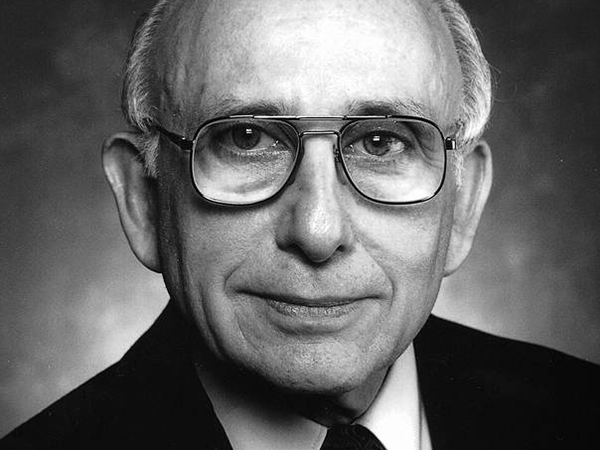
1948 year. Solar Philadelphia. The dean of the University of Drexel communicates in his office with a long-time acquaintance - the owner of a supermarket chain. Friendly conversation flowed into business. The businessman fired up ideas for developing a system for automatic accounting of goods and suggested that a friend engage in its development at the university. Bernard Silver, a graduate student of the university, walked past the office and accidentally overheard the conversation. The idea seemed revolutionary to him.
Bob decided to take up this business. He came to his friend, also a graduate student, Norman Woodland, and infected him with ideas for developing an automation system. Of course, friends filled more than one bump. Their first achievements were insanely far from any real embodiment. At first, innovators wanted to label products with special inks that glow under ultraviolet light. The project turned out to be expensive, and its payback was not possible. After the failure of the idea, friends drew attention to the Morse code. It seemed to them that in the brilliant simplicity of the morse code lies the key to their riddle.

After another sleepless night, Woodland came to the ocean to meet the dawn. Thinking over the project, he drew signs of Morse code on the sand - dots and dashes. The wind intensified, and the tongues of water were getting closer and closer to his drawings. At one point, the water turned the dashes into long vertical stripes. Soon, friends have patented their labeling system.
Norman was taken aback. This shape was great for labeling! But it's too early to rejoice. Without a device capable of reading characters, all this remained useless. For a whole year they thought about the device and came up with a device that vaguely resembles modern barcode scanners .
First success

Two years later, Norman Woodland got a job at IBM. In his spare time, Norman continued to work on a barcode scanner. He managed to assemble a more or less suitable device.
It definitely could not be called compact - in terms of dimensions, the scanner resembled a large desk, which, moreover, needed to be covered with dense material during scanning. Extraneous light interfered with the process.
In addition, the scanner turned out to be quite dangerous - a powerful 500-watt lamp burned hands and melted the label with a barcode. Hand burns did not stop the inventor. Looking at them, Norman assured himself that everything was not in vain. Over and over again, he raised the screen and continued scanning. He painfully brought the mechanism to mind. And once it all worked out. The barcode was read! The photomultiplier absorbed the reflected light and displayed it on the oscilloscope screen in the form of a graph. But the triumph was still far ahead.
Silver and Woodland assembled a reader, came up with an encoding, but a system capable of decrypting it did not exist. Computers were in their infancy then - computers could not cope with such a task. Friends are ahead of progress. Technology grew to their ideas only in the sixties.
Patent redemption and oblivion

In 1952, Norman and Bernard turned to the board of directors of IBM. They asked to buy a patent and to fund research. They were refused. The patent went to RCA. Several years of hard and dedicated work were in vain.
As a result, the idea of a barcode was forgotten for almost twenty years ...
Second wind

Years passed. A graduate of the Massachusetts Institute of Technology, David Collins, came to work for the Sylvania Company railway company. The company's engineers assembled a computer and thought how to facilitate the workflow with its help. The newcomer Collins proposed the creation of an automatic metering system for wagons that were often lost on American railroads.
He came up with the marking readable on electronic devices. Information was sent to a computer and stored in it. At any time, dispatchers could track the position of the cars.
As the basis of the reader, Collins took the diagram of the tube apparatus of Woodland and Silver. He strengthened it with a new technology - a laser. The device worked quickly and could even read damaged barcodes.
Further development

In 1966, a conference of retail chain owners was held in the United States. Retailers have agreed to work closely on barcode labeling. The RCA company, which owned the Silver and Woodland patent, after learning about the decision of the store owners, was puzzled by creating the optimal bar coding system.
The company has proposed a new solution - a round Bullseye barcode. At the next conference, retailers RCA staged an interesting performance - businessmen were invited to play the lottery. The rally consisted of distributing barcode badges to congress guests. Guests approached the scanner, and if their barcode turned out to be winning, the winner received a prize - the exclusive right to supply such barcode systems to US retail chains.
The IBM management also caught on. Norman Woodland, one of the authors of the concept of bar coding, still worked for the company. He was appointed the main new branch. The company has developed a linear bar coding technology, which in the end has become more widespread.
Unfortunately, Norman's faithful ally Bernard Silver, who pushed him to research, did not live to see the triumph of their offspring. He died ten years before the adoption of a direct barcode as a global standard for labeling products.
Barcoding won
In June 1974, the cashier scanned the world's first commercial barcode in a store in the American town of Troy, Ohio. A significant purchase was the packaging of Wrigley's Juicy Fruit chewing gum. Now this pack can be seen at the Smithsonian Institution's National Museum of American History.
Over the years, barcodes have spread around the world. They have acquired different forms, more and more information can be written in them, but one thing remains unchanged - bar coding systems make our life much easier.
You come to the store, and the seller at the checkout scans your every purchase. The read code is transferred to the computer, and among the many thousands of goods base the cash register finds information about the very package of milk that you put in your basket.