Billing systems of the future, and how they are changing the communications market
Cellular operators have been at a crossroads for several years. Voice and SMS services are quickly becoming obsolete. Traditional business is losing profitability. The main goal was the search for new products and services that will help to stay on the cutting edge of progress and business. Operators abandon the name "mobile provider" and come to the proud "provider of digital services" or even "lifestyle enabler". Analysts write that this is one of the manifestations of global processes that are characteristic of many sectors of the economy. We will approach this from the applied side and explain why telecom is doing it so briskly and what else will come ahead.
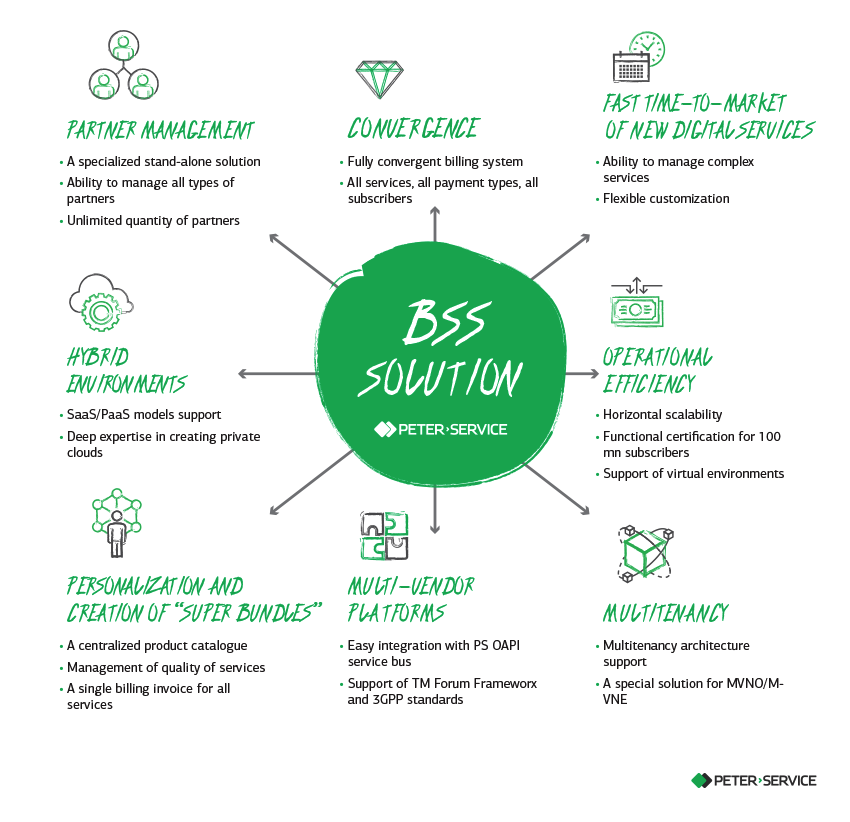
The core of the carrier’s activity is BSS (Business Support System) - a comprehensive solution for servicing business business processes, the software heart of the carrier business. Among the tasks of BSS is to recognize, charge, calculate the customer, provide him services, invoice, accept payment and make it so that everyone would be happy. Even this list already looks impressive. And now, with the development of the operator business, BSS are constantly becoming more complex and take on new tasks. Once it was sending service SMS and the formation of permissible negative limits, and now, for example, also advanced advising, tips for new tariffs, individual offers of new services.
At the same time, from an engineering point of view, systems tend to simplify. Operators are interested in the cost of supporting BSS not growing as fast as its functionality. In an ideal picture of the world, the vendor offers the operator maximum functionality with minimal complexity of the solution. Good BSS give the operator the opportunity to reduce operating costs, prevent staff from sacralizing, easily change individual functional blocks and increase business opportunities through updates.
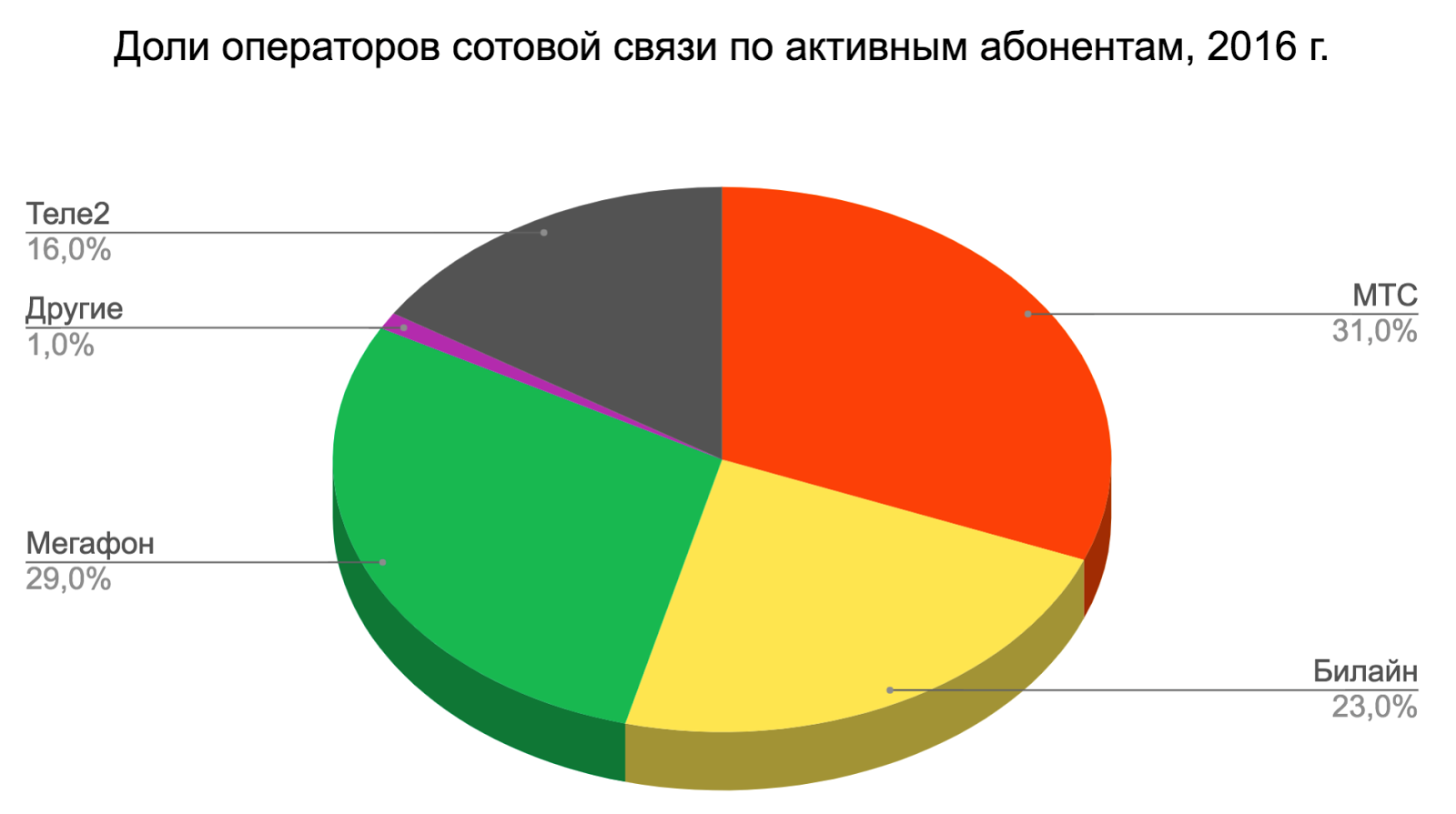
According to J'son & Partners Consulting
And most importantly, they allow you to quickly respond to the actions of competitors and bring new integrated services to the market. By renting a BSS, a bank or a large online trading platform can, without significant costs, enter the market at any time as a virtual operator (MVNO) and entice an audience of old players.
What should be BSS systems to meet all the needs of operators today? Let's imagine the stage of development that they are going through at the moment.
So, recently the telecom industry has been actively developing, new technologies are appearing, marketers are introducing new offers to the market, partners are offering joint promotion. Further, the fork is as follows: if BSS supports a new business, it is developed; if not, it is substantially changed or completely replaced. This is how everything looks ideal.
Now go down to the earth. Are there many happy and carefree telecom operators? They are constantly in motion - mergers, acquisitions, periods of explosive growth, a slowdown in this growth, the development of new directions. There is no resources left for the systematic and in-depth development of BSS in such conditions. As a result, a whole baggage of problems is going to be collected: difficult integration, redundant NSI, functional failures and a large number of custom code.
What does the operator want to get after all these shocks? A comprehensive platform where you can quickly build end-to-end processes. Many years have been talking about the transformation of classic billing systems into digital platforms, and now the requirements are starting to take shape. First of all, among the mastheads, convergence, horizontal scalability, support for cloud and hybrid deployment models are mentioned. A separate unit is the requirements for the “fronts”: it is vital for the operator to communicate with his client wherever he is — in social networks, via SMS, through instant messengers, personal account, mobile application, etc.
Among the important business requirements, the possibility of creating superbundles and tight integration with partner platforms were also put forward. Partners are as important for the operator as customers are - they form the assortment ecosystem of the operator and give him an additional opportunity to earn. Finally, the most important requirement for BSS is an improvement in TTM (time-to-market).
All this should be assembled in a transparent, easily integrable and configurable “box”, which will provide the operator with adaptation to actively changing business requirements while maintaining a low TCO.
The needs of the operators are understandable, but there are disagreements with the technical implementation of BSS. The main one is the issue of the “absolute catalog”. At the expense of whether the catalog should be absolute, there is no consensus among vendors and operators. So far, a multilevel system of directories and quasi-directories looks preferable:
Is it possible to merge these directories into one super directory? Theoretically, yes. But will this lead to significant improvements?
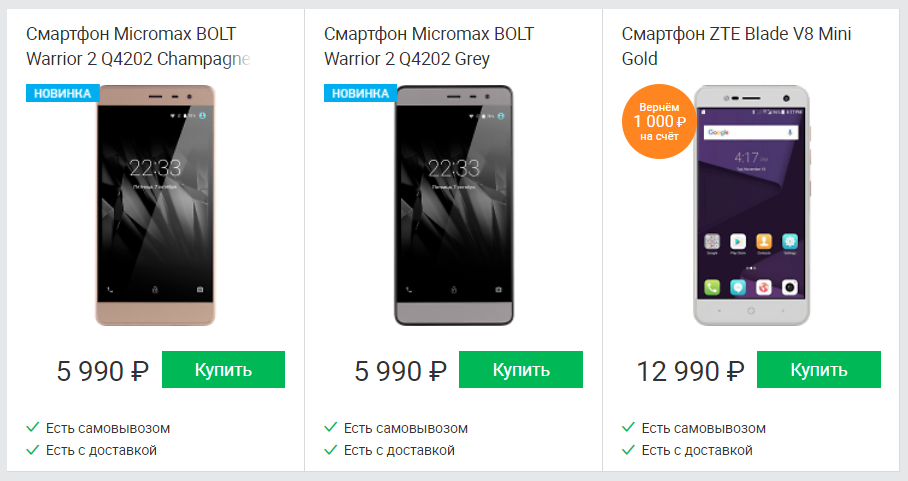
When solving the directory problem, you need to consider many issues. The most difficult of these are bundling issues. They are solved with the help of a large pool of rules on the availability and appointment of products, stocks, partner and integrated services to the subscriber, as well as special pricing when collecting bundles. For example, an operator sells a smartphone at a price of 10 thousand rubles. And separately - a tariff plan for 1 thousand rubles per month. Having bought a smartphone and a tariff together, the buyer will pay 9 thousand and will receive a 5 GB traffic packet as a gift for three months. And if you still buy wireless headphones for 5 thousand, you will get a beautiful ball. And last month, the operator for the headphones gave a pot without honey. And in the next one he will give, say, a scow full of mullet. No matter what, it’s important thatthe rules were applied automatically, at a given time and according to the regular algorithm of interaction with OMS and the accrual module . With such important functionality, the catalog becomes the main tool in the issue of TTM reduction. So, having solved the question of an ideal catalog, the vendor solves the main task of the operator.
What will determine the development of BSS in the near future? The client himself. And from the technical side - various technologies for collecting and analyzing data about it. Here is the place for such sensational things as big data, machine learning, IoT. BSS will not be able to passively hide behind serving traditional communications. Without broad analytical and predictive opportunities for personalization, the system will not be able to service the operator’s digital tasks.

Working with personal preferences of customers will lead to the distribution of individual offers on the structure of bundles and prices. Then begins the general era of cross-selling - campaigns that are surprising by today's standards. For example, the operator, Russian Railways and the content provider will make a joint action for passengers of Peregrine Falcons and other high-speed trains. Or it turns out that a person has been a subscriber to the operator and a customer of the Crossroads for 10 years. For such an anniversary, a present is put on a joint loyalty program: for boys - a supercode for World of Tanks from the operator, for girls - a cookbook from Jamie Oliver from the hypermarket.
Entering the official space of remote healthcare systems will surely pamper us with vivid campaigns of operators and clinics such as “Check your back - get an invite to telemedicine!”. This also includes insurance, banking, entertainment services - in short, everything that will allow the telecom operator to be called lifestyle enabler.
BSS, which grew out of simple billing, is expanding in all directions, following the market and often anticipating it. It will reflect all the significant stages of progress - digitalization, IoT, 5G ... Sooner or later, telecom developers will not just create billing systems, but be responsible for the back-end of a huge piece of the consumer market.
Materials for publication were provided by Peter-Service chief analyst Tatyana Atanova and Alexey Semenyuta, chief systems architect for corporate solutions.
The core of the carrier’s activity is BSS (Business Support System) - a comprehensive solution for servicing business business processes, the software heart of the carrier business. Among the tasks of BSS is to recognize, charge, calculate the customer, provide him services, invoice, accept payment and make it so that everyone would be happy. Even this list already looks impressive. And now, with the development of the operator business, BSS are constantly becoming more complex and take on new tasks. Once it was sending service SMS and the formation of permissible negative limits, and now, for example, also advanced advising, tips for new tariffs, individual offers of new services.
At the same time, from an engineering point of view, systems tend to simplify. Operators are interested in the cost of supporting BSS not growing as fast as its functionality. In an ideal picture of the world, the vendor offers the operator maximum functionality with minimal complexity of the solution. Good BSS give the operator the opportunity to reduce operating costs, prevent staff from sacralizing, easily change individual functional blocks and increase business opportunities through updates.
According to J'son & Partners Consulting
And most importantly, they allow you to quickly respond to the actions of competitors and bring new integrated services to the market. By renting a BSS, a bank or a large online trading platform can, without significant costs, enter the market at any time as a virtual operator (MVNO) and entice an audience of old players.
BSS Systems and Digital Transformation
What should be BSS systems to meet all the needs of operators today? Let's imagine the stage of development that they are going through at the moment.
So, recently the telecom industry has been actively developing, new technologies are appearing, marketers are introducing new offers to the market, partners are offering joint promotion. Further, the fork is as follows: if BSS supports a new business, it is developed; if not, it is substantially changed or completely replaced. This is how everything looks ideal.
Now go down to the earth. Are there many happy and carefree telecom operators? They are constantly in motion - mergers, acquisitions, periods of explosive growth, a slowdown in this growth, the development of new directions. There is no resources left for the systematic and in-depth development of BSS in such conditions. As a result, a whole baggage of problems is going to be collected: difficult integration, redundant NSI, functional failures and a large number of custom code.
What does the operator want to get after all these shocks? A comprehensive platform where you can quickly build end-to-end processes. Many years have been talking about the transformation of classic billing systems into digital platforms, and now the requirements are starting to take shape. First of all, among the mastheads, convergence, horizontal scalability, support for cloud and hybrid deployment models are mentioned. A separate unit is the requirements for the “fronts”: it is vital for the operator to communicate with his client wherever he is — in social networks, via SMS, through instant messengers, personal account, mobile application, etc.
Among the important business requirements, the possibility of creating superbundles and tight integration with partner platforms were also put forward. Partners are as important for the operator as customers are - they form the assortment ecosystem of the operator and give him an additional opportunity to earn. Finally, the most important requirement for BSS is an improvement in TTM (time-to-market).
All this should be assembled in a transparent, easily integrable and configurable “box”, which will provide the operator with adaptation to actively changing business requirements while maintaining a low TCO.
Developer's view
The needs of the operators are understandable, but there are disagreements with the technical implementation of BSS. The main one is the issue of the “absolute catalog”. At the expense of whether the catalog should be absolute, there is no consensus among vendors and operators. So far, a multilevel system of directories and quasi-directories looks preferable:
- technical, in conjunction with the contour of charges and billing,
- catalog in the order structure
- product, working in the e-commerce layer with access to retail sites and marketplaces.
Is it possible to merge these directories into one super directory? Theoretically, yes. But will this lead to significant improvements?
When solving the directory problem, you need to consider many issues. The most difficult of these are bundling issues. They are solved with the help of a large pool of rules on the availability and appointment of products, stocks, partner and integrated services to the subscriber, as well as special pricing when collecting bundles. For example, an operator sells a smartphone at a price of 10 thousand rubles. And separately - a tariff plan for 1 thousand rubles per month. Having bought a smartphone and a tariff together, the buyer will pay 9 thousand and will receive a 5 GB traffic packet as a gift for three months. And if you still buy wireless headphones for 5 thousand, you will get a beautiful ball. And last month, the operator for the headphones gave a pot without honey. And in the next one he will give, say, a scow full of mullet. No matter what, it’s important thatthe rules were applied automatically, at a given time and according to the regular algorithm of interaction with OMS and the accrual module . With such important functionality, the catalog becomes the main tool in the issue of TTM reduction. So, having solved the question of an ideal catalog, the vendor solves the main task of the operator.
The future of BSS
What will determine the development of BSS in the near future? The client himself. And from the technical side - various technologies for collecting and analyzing data about it. Here is the place for such sensational things as big data, machine learning, IoT. BSS will not be able to passively hide behind serving traditional communications. Without broad analytical and predictive opportunities for personalization, the system will not be able to service the operator’s digital tasks.
Working with personal preferences of customers will lead to the distribution of individual offers on the structure of bundles and prices. Then begins the general era of cross-selling - campaigns that are surprising by today's standards. For example, the operator, Russian Railways and the content provider will make a joint action for passengers of Peregrine Falcons and other high-speed trains. Or it turns out that a person has been a subscriber to the operator and a customer of the Crossroads for 10 years. For such an anniversary, a present is put on a joint loyalty program: for boys - a supercode for World of Tanks from the operator, for girls - a cookbook from Jamie Oliver from the hypermarket.
Entering the official space of remote healthcare systems will surely pamper us with vivid campaigns of operators and clinics such as “Check your back - get an invite to telemedicine!”. This also includes insurance, banking, entertainment services - in short, everything that will allow the telecom operator to be called lifestyle enabler.
BSS, which grew out of simple billing, is expanding in all directions, following the market and often anticipating it. It will reflect all the significant stages of progress - digitalization, IoT, 5G ... Sooner or later, telecom developers will not just create billing systems, but be responsible for the back-end of a huge piece of the consumer market.
Materials for publication were provided by Peter-Service chief analyst Tatyana Atanova and Alexey Semenyuta, chief systems architect for corporate solutions.