December 4, 2017 at 15:50
PLATO: the story of the world's first e-learning system
At that time , when Steve Jobs traveled to India, and Mark Zuckerberg is still not born , there was an e-learning system PLATO. She anticipated how people would interact with computers for many years to come. Engineers developed the world's first plasma displays , and programmers created chat rooms, multiplayer games, and emoticons.
This year, entrepreneur Brian Dear published the book The Friendly Orange Glow , which described how PLATO influenced technology. Deer writesthat the appearance of this system can be compared to the invention of the aircraft decades before the Wright brothers: when future creators of the Internet giants were still enjoying their youth, an online community already existed at the University of Illinois.
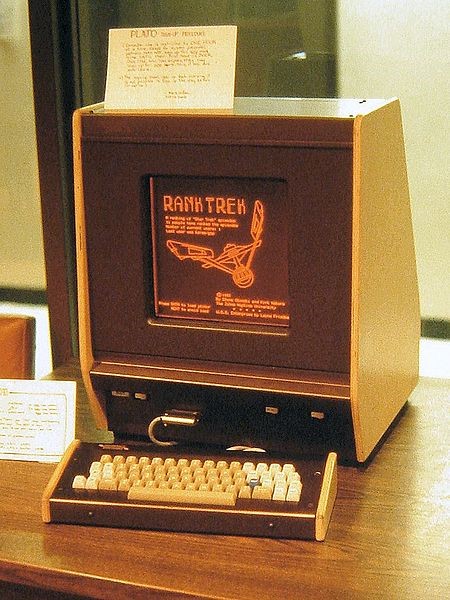
Teachers and students, developers and engineers chatted, chatted online and read the world's first online newspaper. A unique PLATO culture reigned at the university and on campus. We will tell about the history of this revolutionary electronic system further. / The Flickr / Marcin Wichary / CC
Project leader Donald Bitzer ( of Donald Bitzer ) developed the PLATO (Programmed Logic for Automatic Teaching Operations ), when he was 26 years old - in 1960. Initially, the goal of the project was to create a computer that could educate students.
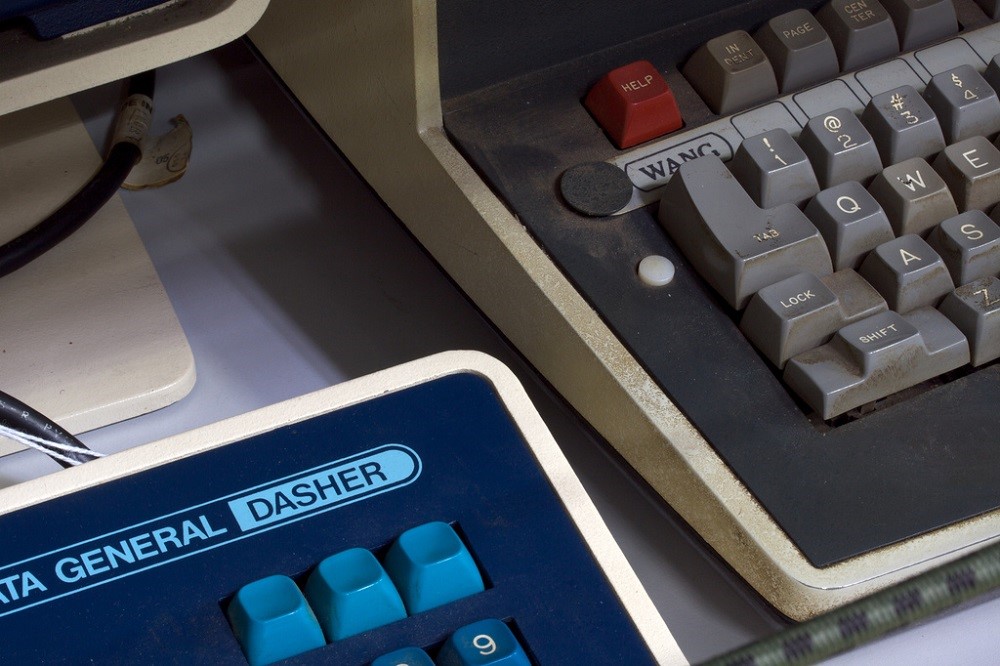
Pupils interacted with PLATO through terminals connected to a common network and connected to the mainframe. Students answered questions and immediately received feedback from the system. A TV was used as a display , and a special keyboard was offered for navigation.
On the keyboard PLATO was only 16 keys. For example, the Next button changedinformation on the screen. The Help key called an assistant to solve various problems, and Aha closed it. But to provide students with several different training courses, 16 keys was not enough. Therefore, the system keyboard was highlighted in two colors: white and purple. Buttons changed functions depending on the active color.
It took ten years for PLATO to reach its full potential. Part of the system components was developed from scratch, and all that the team had was an idea, passion and ILLIAC I computer , which performed arithmetic operations, analyzed, stored and transmitted information. Using ILLIAC I, the University also simulated atomic explosions, calculated the load on materials for the construction of motor bridges, and even wrote music.
In 1961, PLATO II was developed, which made it possible for two users to work simultaneously, but the developers realized that the capacity of ILLIAC I was not enough to support the system. Therefore, the university’s laboratory decided to purchase its own computer. The purchase of the machine was discussed with IBM, NCR Corporation and Control Data Corporation (CDC). Thanks to the efforts of the computer sales representative CDC 1604-C , which has developed Seymour Cray ( Seymour the Cray ), became the basis of the new version - PLATO III.
All "applications" for PLATO were sharpened for ILLIAC, so the developers had to writeSIMILLIAC is an emulator program to run them on 1604-C. The system worked with 20 common ports distributed on 72 terminals. By that time, PLATO III students had thirty courses from different fields of knowledge and 5 thousand hours of training material at their disposal. The PLATO III version was so successful that it continued to be used even after the release of PLATO IV.
PLATO IV was released in 1972. Among the updates, Bitzer's orange plasma panel stood out. She knew howquickly draw vector lines and work with raster graphics. A touch panel also appeared, with the help of which students could answer questions by pointing the correct option with their finger, and auxiliary peripherals. For example, a Gooch Synthetic Woodwind device capable of synthesizing 4 voices. She helped develop the students' ears and measure their progress with the help of musical dictations.
Later, a new version of the synthesizer was developed, which processed 16 voices, connecting and separating them to form complex sounds. The curriculum using PLATO's audio capabilities was used as part of the PLATO Music project at the University of Illinois College of Music.
In the 1970s, Control Data Corporation entered into a series of agreements with the University of Illinois to market PLATO. As a result, the system " spread " around the world.
In 1973, Bitzer invited high school students from several local schools to work on the project. This was unusual for that time: the laboratories were under lock and key, and only scientists got access there.
Versions of the system from III to V worked in a special programming language TUTOR . Its flexibility combined with the power of PLATO made it possible to write entertainment programs: card games, simulators, and so on.
Over the year, students added everything that they can imagine to the system: chats, instant messengers, forums, games, email. So the system began to be used not only for education, but also for communication and dating. Brian Deere, for example, “met” his wife in a PLATO chat.
/ Flickr / kevin / CC
In 1976, the PLATO IV system supported work with 950 terminals and provided access to 12 thousand hours of training materials.
Later, a new version of the PLATO V system appeared. Bitzer notes that for the most part it was the PLATO IV on more powerful equipment. However, there was an innovation - the system reminded users of the holidays and important events. Long before Google started doing this on the start page.
In 1989, CDC sold the PLATO trademark and part of the marketing rights to the new The Roach Organization (TRO). Perhaps if the CDC didn’t “go in cycles ””On the educational focus of the project, PLATO was waiting for a different fate. In 2000, TRO changed its name to PLATO Learning and began selling courses for the PC.
In August 2004, a free software emulator of original CDC equipment called Desktop Cyber became available on Cyber1 . On the site you can learn about the original PLATO lessons and play the legendary Avatar and Empire games . You can learn more about PLATO games here and here .
Since 2012, PLATO Learning has been releasing Edmentum training solutions . But after 50 years, the legacy of PLATO still lives on.in many familiar systems: MOOC, social networks, chat rooms and emoticons .
PS Other posts from our corporate blog:
This year, entrepreneur Brian Dear published the book The Friendly Orange Glow , which described how PLATO influenced technology. Deer writesthat the appearance of this system can be compared to the invention of the aircraft decades before the Wright brothers: when future creators of the Internet giants were still enjoying their youth, an online community already existed at the University of Illinois.
Teachers and students, developers and engineers chatted, chatted online and read the world's first online newspaper. A unique PLATO culture reigned at the university and on campus. We will tell about the history of this revolutionary electronic system further. / The Flickr / Marcin Wichary / CC
The beginning of PLATO
Project leader Donald Bitzer ( of Donald Bitzer ) developed the PLATO (Programmed Logic for Automatic Teaching Operations ), when he was 26 years old - in 1960. Initially, the goal of the project was to create a computer that could educate students.
Pupils interacted with PLATO through terminals connected to a common network and connected to the mainframe. Students answered questions and immediately received feedback from the system. A TV was used as a display , and a special keyboard was offered for navigation.
On the keyboard PLATO was only 16 keys. For example, the Next button changedinformation on the screen. The Help key called an assistant to solve various problems, and Aha closed it. But to provide students with several different training courses, 16 keys was not enough. Therefore, the system keyboard was highlighted in two colors: white and purple. Buttons changed functions depending on the active color.
It took ten years for PLATO to reach its full potential. Part of the system components was developed from scratch, and all that the team had was an idea, passion and ILLIAC I computer , which performed arithmetic operations, analyzed, stored and transmitted information. Using ILLIAC I, the University also simulated atomic explosions, calculated the load on materials for the construction of motor bridges, and even wrote music.
In 1961, PLATO II was developed, which made it possible for two users to work simultaneously, but the developers realized that the capacity of ILLIAC I was not enough to support the system. Therefore, the university’s laboratory decided to purchase its own computer. The purchase of the machine was discussed with IBM, NCR Corporation and Control Data Corporation (CDC). Thanks to the efforts of the computer sales representative CDC 1604-C , which has developed Seymour Cray ( Seymour the Cray ), became the basis of the new version - PLATO III.
All "applications" for PLATO were sharpened for ILLIAC, so the developers had to writeSIMILLIAC is an emulator program to run them on 1604-C. The system worked with 20 common ports distributed on 72 terminals. By that time, PLATO III students had thirty courses from different fields of knowledge and 5 thousand hours of training material at their disposal. The PLATO III version was so successful that it continued to be used even after the release of PLATO IV.
PLATO IV was released in 1972. Among the updates, Bitzer's orange plasma panel stood out. She knew howquickly draw vector lines and work with raster graphics. A touch panel also appeared, with the help of which students could answer questions by pointing the correct option with their finger, and auxiliary peripherals. For example, a Gooch Synthetic Woodwind device capable of synthesizing 4 voices. She helped develop the students' ears and measure their progress with the help of musical dictations.
Later, a new version of the synthesizer was developed, which processed 16 voices, connecting and separating them to form complex sounds. The curriculum using PLATO's audio capabilities was used as part of the PLATO Music project at the University of Illinois College of Music.
PLATO Market Entry
In the 1970s, Control Data Corporation entered into a series of agreements with the University of Illinois to market PLATO. As a result, the system " spread " around the world.
In 1973, Bitzer invited high school students from several local schools to work on the project. This was unusual for that time: the laboratories were under lock and key, and only scientists got access there.
Versions of the system from III to V worked in a special programming language TUTOR . Its flexibility combined with the power of PLATO made it possible to write entertainment programs: card games, simulators, and so on.
Over the year, students added everything that they can imagine to the system: chats, instant messengers, forums, games, email. So the system began to be used not only for education, but also for communication and dating. Brian Deere, for example, “met” his wife in a PLATO chat.
/ Flickr / kevin / CC
In 1976, the PLATO IV system supported work with 950 terminals and provided access to 12 thousand hours of training materials.
Later, a new version of the PLATO V system appeared. Bitzer notes that for the most part it was the PLATO IV on more powerful equipment. However, there was an innovation - the system reminded users of the holidays and important events. Long before Google started doing this on the start page.
In 1989, CDC sold the PLATO trademark and part of the marketing rights to the new The Roach Organization (TRO). Perhaps if the CDC didn’t “go in cycles ””On the educational focus of the project, PLATO was waiting for a different fate. In 2000, TRO changed its name to PLATO Learning and began selling courses for the PC.
In August 2004, a free software emulator of original CDC equipment called Desktop Cyber became available on Cyber1 . On the site you can learn about the original PLATO lessons and play the legendary Avatar and Empire games . You can learn more about PLATO games here and here .
Since 2012, PLATO Learning has been releasing Edmentum training solutions . But after 50 years, the legacy of PLATO still lives on.in many familiar systems: MOOC, social networks, chat rooms and emoticons .
PS Other posts from our corporate blog: