October 14, 2017 at 00:17
Microsoft has demonstrated a working data center powered by fuel cells
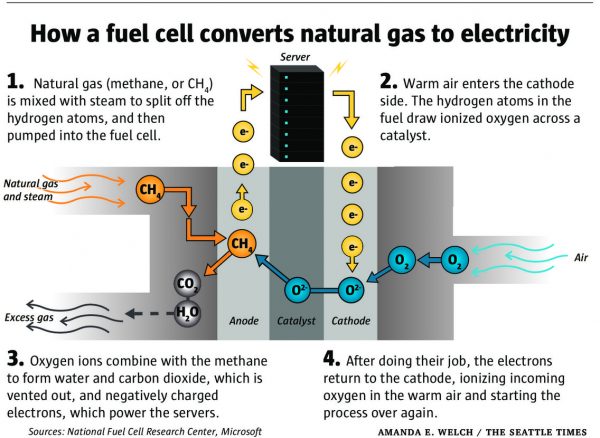
Microsoft has introduced several original data center concepts over the years. Here, both open-source data centers and underwater data centers, plus data centers, which are supplied with electricity through fuel cells. As for the latter, the company has built a ready data center that really receives energy from fuel cells that generate electricity through natural gas.
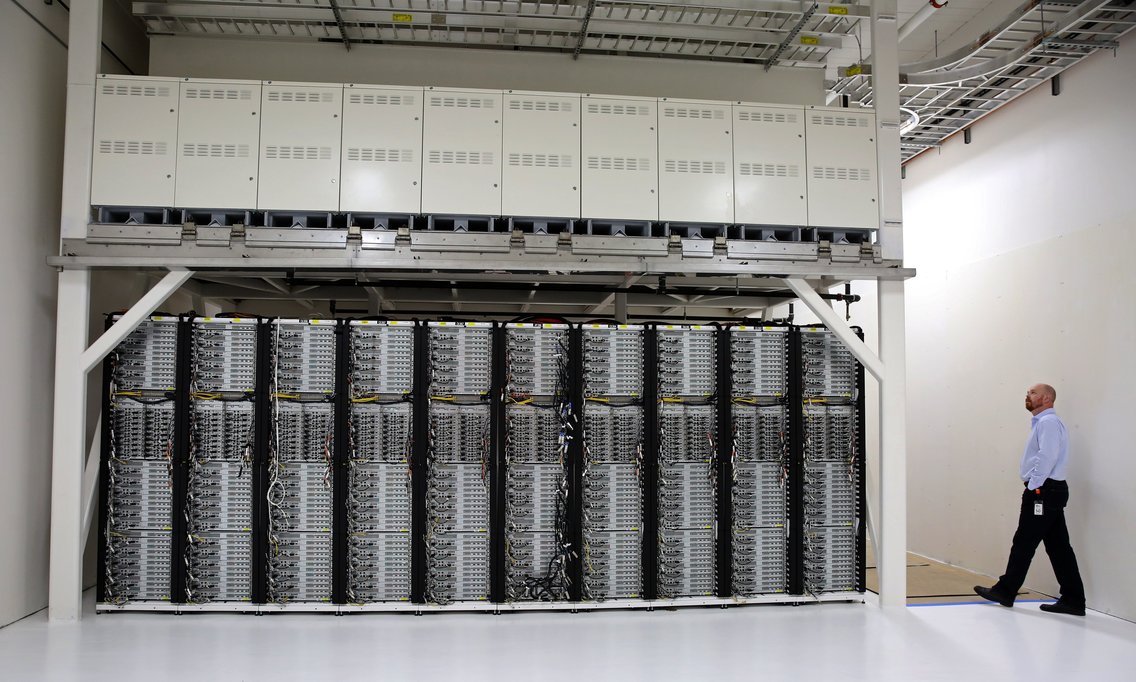
These fuel cells are located in a special room, in their own racks. The data center itself is located in a building near the Microsoft office in Seattle, USA.
Microsoft engineer Sean James leads the team, he believesthat in the future, data centers will be able to operate without connecting an external electricity channel. Of course, such a system is far from needed everywhere, but in hard-to-reach regions where there are no reliable energy lines, such a project can be very useful.
A plus of this idea is the minimal energy loss when transferring it from a remote power station. By the way, servers and other equipment are located in close proximity to racks with fuel cells. According to representatives of Microsoft, such an energy infrastructure allows companies to reduce their environmental impact and save money. So far, the cost of fuel cells is quite high. On the other hand, it is not as high as it was several years ago, and is gradually decreasing, as more and more companies are engaged in the production of such batteries.
The cheaper the items, the more the company can save. Corporate calculations show that, if luck would have it, the savings could amount to several hundred million dollars over a period of several years.
Large telecommunications companies spend huge amounts of money on energy. In order to reduce their costs associated with the operation of their mega-data centers, Amazon, Microsoft, Google and other companies are ready to use the most original infrastructure solutions that allow saving.
Large data centers occupy large areas, and the entire infrastructure can consist of several buildings, plus many smaller objects scattered throughout the DC. In order to provide the data center with energy, its own substations are built, dedicated power lines for connecting to the central network. From substations, electricity goes to transformers and power distribution devices that can convert incoming electric current, reducing its voltage, and then “ready-to-use” electricity is supplied to various departments of the DC.
Most DCs also have backup batteries, which allow the facility to hold out in the event of a power outage or “jump”. In addition to uninterruptible power supplies, diesel generators are also installed, which turn on when the affairs with the supply of energy are already very bad.
It is understood that all these precautions and equipment are needed. But the concept of Microsoft, according to its authors, allows you to remove most of all these systems. That is, generators, batteries, transformers and hundreds of kilometers of power cables are not needed.
The corporation did not suddenly create its fuel centers - work on this project, as mentioned above, has been ongoing for a long time. A few years ago, an experimental DC was built in Wyoming, USA, the city of Cheyenne. The building of the data center is located next to the water treatment plant. What for? And in order to use the methane emitted at the station, without the need to transport this gas from somewhere. Actually, we are talking more about biogas - a mixture of several gases released during biochemical processes in organics, where methane predominates.
Previously, fuel cells were only an auxiliary part of the energy infrastructure. If the electricity was turned off, then the elements came into operation.
But now all this can work as the main source of energy. So far, the DC, which is supplied with biogas electricity, is not very large, but after a series of experiments the company can also build a larger facility. Perhaps in the near future the corporation will build its own data center, where fuel cells will serve (for now) as an alternative to electricity from the main source. But neither generators nor batteries will be here.
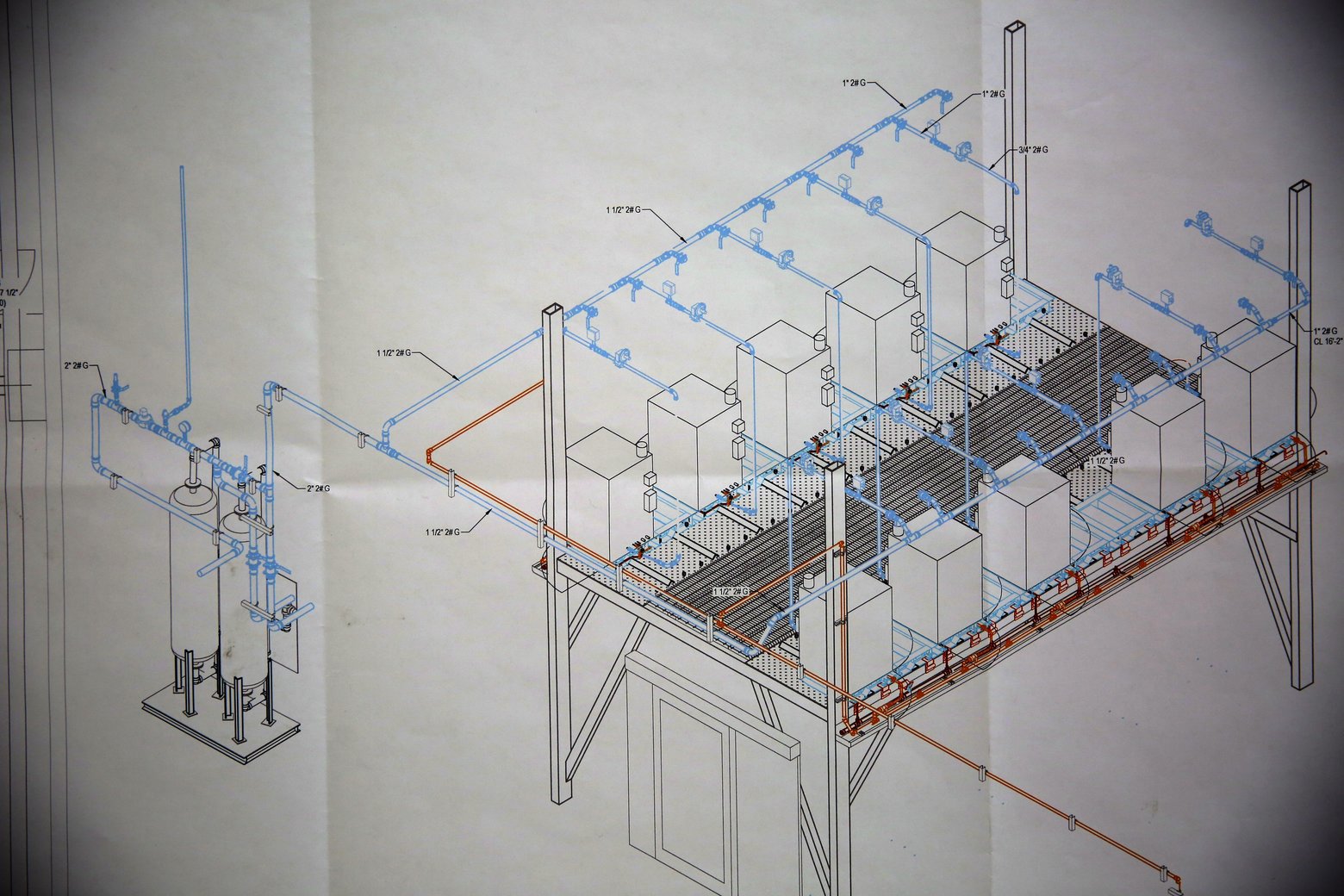
Advantages of a methane-based data center compared to traditional DCs:
- reduction in the likelihood of equipment failure due to power outages. Since in this case the data center is its own energy company, no loads / failures of the general energy system of the region will lead to a failure of autonomous equipment;
- reduction of infrastructure costs. This was already mentioned above - since there are no uninterruptible power supply units, transformers, and other power equipment, the cost of creating an energy infrastructure for a data center is significantly reduced;
- improving the energy efficiency of equipment. This is not just about PUE. The overall energy efficiency of the system, according to the authors of the project, is doubled;
- a data center can be built almost anywhere where there is methane, away from the extensive energy infrastructure of the city / region. In addition to methane, you can use "solar" energy, wind energy and other alternative energy sources.
It is worth noting that not only Microsoft works with methane fuel cells. Earlier, similar projects were announced by eBay, Apple and some others. The positive side here is that there are no special wastes. Biogas produces electricity, heat and water. Electricity and water can be used in cooling / heating systems of the DC.
“The main difference between our project and the traditional power supply scheme is the production of energy inside the data center, instead of connecting the data center to the energy infrastructure of any region. A fairly large amount of energy is now lost in the energy infrastructure of data centers, which entails financial losses, increased operating and capital costs. But we show how the introduction of a small power source into the network infrastructure element of the data center allows reducing the complexity of the energy distribution project between the elements of the entire system, ”the project team members say.
These fuel cells are located in a special room, in their own racks. The data center itself is located in a building near the Microsoft office in Seattle, USA.
Microsoft engineer Sean James leads the team, he believesthat in the future, data centers will be able to operate without connecting an external electricity channel. Of course, such a system is far from needed everywhere, but in hard-to-reach regions where there are no reliable energy lines, such a project can be very useful.
A plus of this idea is the minimal energy loss when transferring it from a remote power station. By the way, servers and other equipment are located in close proximity to racks with fuel cells. According to representatives of Microsoft, such an energy infrastructure allows companies to reduce their environmental impact and save money. So far, the cost of fuel cells is quite high. On the other hand, it is not as high as it was several years ago, and is gradually decreasing, as more and more companies are engaged in the production of such batteries.
The cheaper the items, the more the company can save. Corporate calculations show that, if luck would have it, the savings could amount to several hundred million dollars over a period of several years.
Large telecommunications companies spend huge amounts of money on energy. In order to reduce their costs associated with the operation of their mega-data centers, Amazon, Microsoft, Google and other companies are ready to use the most original infrastructure solutions that allow saving.
Large data centers occupy large areas, and the entire infrastructure can consist of several buildings, plus many smaller objects scattered throughout the DC. In order to provide the data center with energy, its own substations are built, dedicated power lines for connecting to the central network. From substations, electricity goes to transformers and power distribution devices that can convert incoming electric current, reducing its voltage, and then “ready-to-use” electricity is supplied to various departments of the DC.
Most DCs also have backup batteries, which allow the facility to hold out in the event of a power outage or “jump”. In addition to uninterruptible power supplies, diesel generators are also installed, which turn on when the affairs with the supply of energy are already very bad.
It is understood that all these precautions and equipment are needed. But the concept of Microsoft, according to its authors, allows you to remove most of all these systems. That is, generators, batteries, transformers and hundreds of kilometers of power cables are not needed.
The corporation did not suddenly create its fuel centers - work on this project, as mentioned above, has been ongoing for a long time. A few years ago, an experimental DC was built in Wyoming, USA, the city of Cheyenne. The building of the data center is located next to the water treatment plant. What for? And in order to use the methane emitted at the station, without the need to transport this gas from somewhere. Actually, we are talking more about biogas - a mixture of several gases released during biochemical processes in organics, where methane predominates.
Previously, fuel cells were only an auxiliary part of the energy infrastructure. If the electricity was turned off, then the elements came into operation.
But now all this can work as the main source of energy. So far, the DC, which is supplied with biogas electricity, is not very large, but after a series of experiments the company can also build a larger facility. Perhaps in the near future the corporation will build its own data center, where fuel cells will serve (for now) as an alternative to electricity from the main source. But neither generators nor batteries will be here.
Advantages of a methane-based data center compared to traditional DCs:
- reduction in the likelihood of equipment failure due to power outages. Since in this case the data center is its own energy company, no loads / failures of the general energy system of the region will lead to a failure of autonomous equipment;
- reduction of infrastructure costs. This was already mentioned above - since there are no uninterruptible power supply units, transformers, and other power equipment, the cost of creating an energy infrastructure for a data center is significantly reduced;
- improving the energy efficiency of equipment. This is not just about PUE. The overall energy efficiency of the system, according to the authors of the project, is doubled;
- a data center can be built almost anywhere where there is methane, away from the extensive energy infrastructure of the city / region. In addition to methane, you can use "solar" energy, wind energy and other alternative energy sources.
It is worth noting that not only Microsoft works with methane fuel cells. Earlier, similar projects were announced by eBay, Apple and some others. The positive side here is that there are no special wastes. Biogas produces electricity, heat and water. Electricity and water can be used in cooling / heating systems of the DC.
“The main difference between our project and the traditional power supply scheme is the production of energy inside the data center, instead of connecting the data center to the energy infrastructure of any region. A fairly large amount of energy is now lost in the energy infrastructure of data centers, which entails financial losses, increased operating and capital costs. But we show how the introduction of a small power source into the network infrastructure element of the data center allows reducing the complexity of the energy distribution project between the elements of the entire system, ”the project team members say.