
 March 5, 2017 at 17:11
Trunk projects of telecommunication giants and maps of submarine communication channels
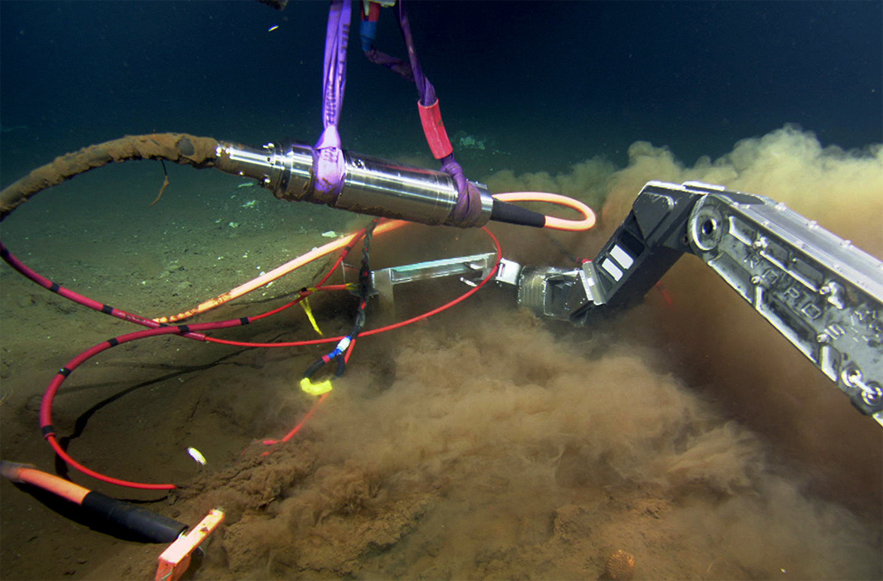
The amount of human-generated data is growing every year. Accordingly, the volume of traffic transmitted via Internet channels around the world is also increasing. Most information is transmitted and received by telecommunication giants like Google, Microsoft, Facebook, Amazon. These companies no longer have the current bandwidth of most communication channels, so they invest in the creation of new highways, often underwater.
Since projects of this kind are quite complex and expensive, the companies are merging. Actually, the reason for the partnership is often not even in money, but because a number of companies need a reliable channel for receiving and transmitting traffic to the same regions. The most recent example of such a partnership is a joint project between Facebook and Google. The companies initiated the creation of an underwater highway connecting Los Angeles and Hong Kong.
For Facebook, this is the second such project. Last May, the social network joined forces with Microsoft to create a backbone linking ground stations in Virginia Beach, Virginia, USA, and Bilbao, Spain. The system is called MAREA, the operator is Telefonica, a Spanish telecommunications company.
As for the communication channel that connects Los Angeles and Hong Kong, thisone of the most important highways for the telecommunications sector, which provides the ability to transfer significant amounts of data across the ocean. The channel capacity is 120 Tbps.
Telecommunications giants are laying submarine routes along with companies from Asia. Examples of such projects include the New Cross Pacific Cable System (the main investors are Microsoft and a group of Asian companies) as well as the FASTER system, where Google was the initiator.
Last year, Amazon, Amazon Web Services, began work on its first backbone project and a division of Amazon. As part of this project, dubbed the Hawaiki Submarine Cable, AWS decided to build a trunk connecting points in the US, Australia and New Zealand.
Telecommunications giants, realizing that technology is developing very fast, make their highways universal. The equipment here is unified, it can be replaced with a newer and more efficient one. “This means the possibility of updating equipment as
technology for the production of fiber-optic elements and devices improves, without being tied to a certain type of hardware for ground stations,” a Facebook spokesman said in 2016.
Now many highways that telecommunications companies have announced earlier are already operating. More new communication channels are planned to be created. Below are the maps of highways that were created thanks to the companies indicated above and which are already working (source - Telegeography ):
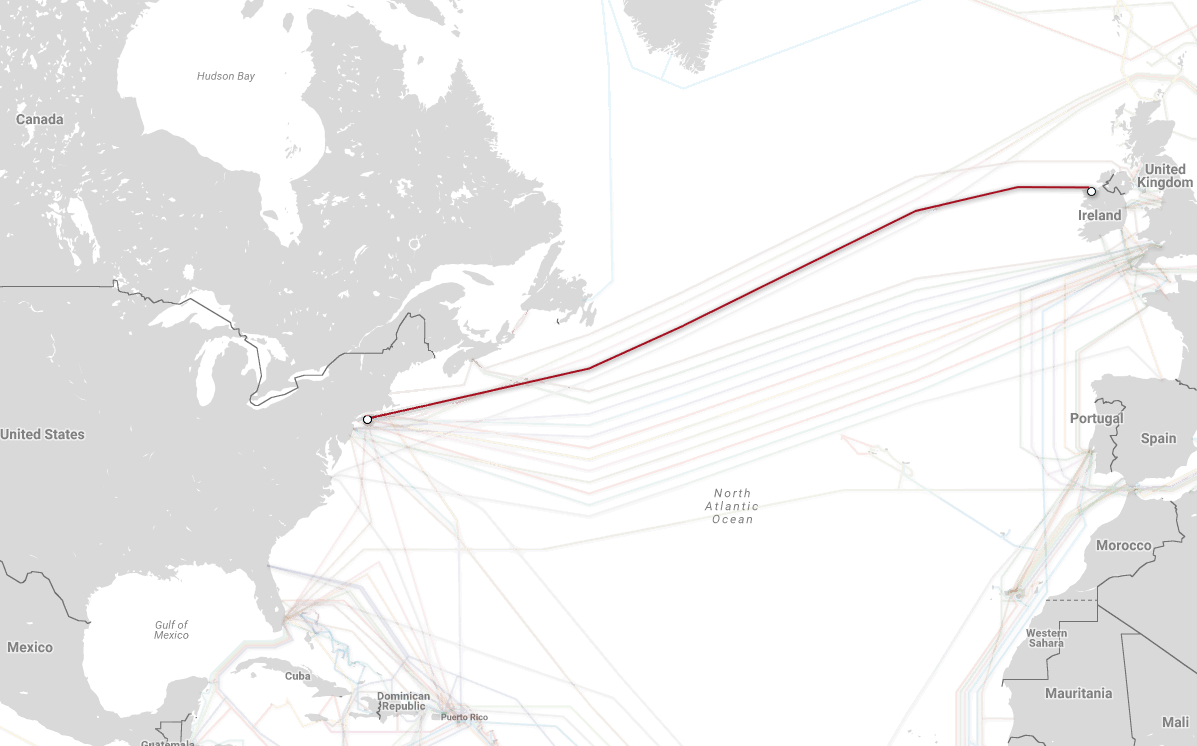
Name: AEConnect (AEC) Lead
Partner: Microsoft
Commissioning: January 2016
Length: 5.536 km
Waypoints:
- Killala, Ireland;
- Shirley, New York, USA.
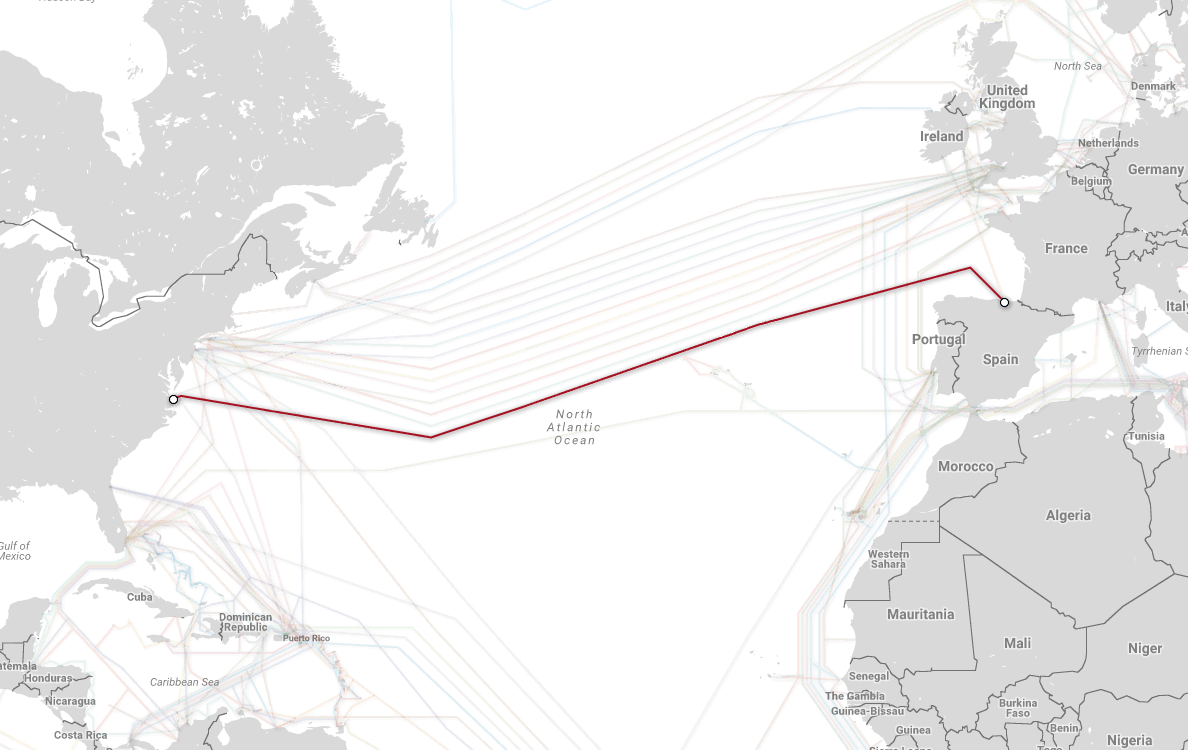
Name: MAREA
Main partner: Microsoft, Facebook
Commissioning: 1st quarter of 2018
Length: 6,600 km
Exit points:
- Bilbao, Spain;
- Virginia Beach, USA.
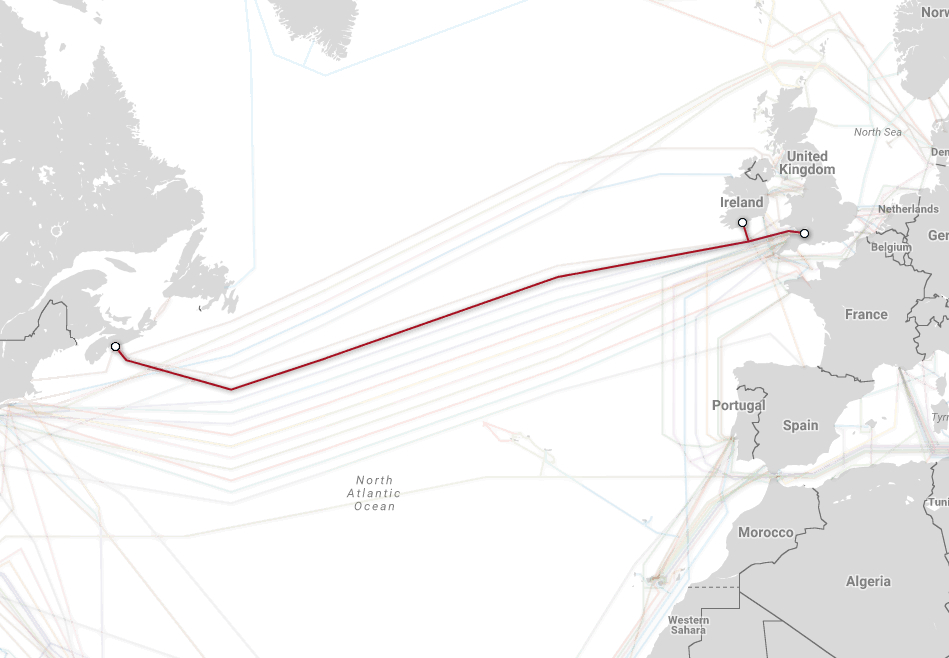
Name: GTT Express (formerly Hibernia Express)
Lead Partner: Microsoft
Commissioning: September 2015
Length: 4,600 km
Exit Points:
- Bren, UK;
- Cork, Ireland;
- Halifax, Canada.
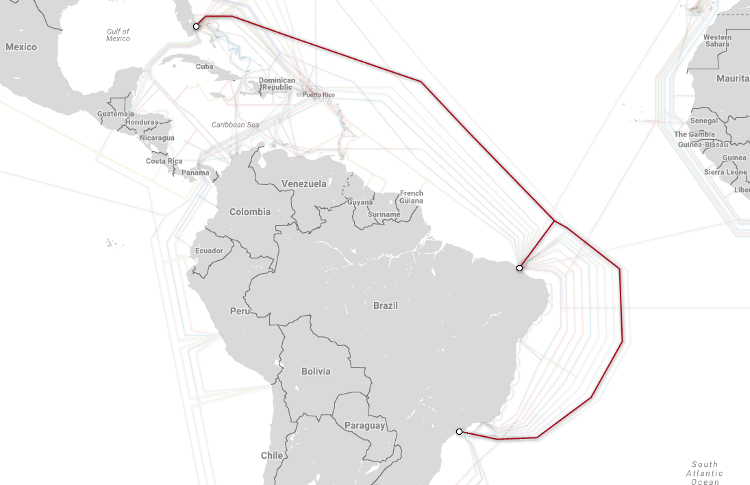
Name: Monet
Main partner: Google
Commissioning: Q3 2017
Length: 10.556 km
Exit points:
- Boca Raton, Florida, USA;
- Fortaleza, Brazil;
- Santos, Brazil.
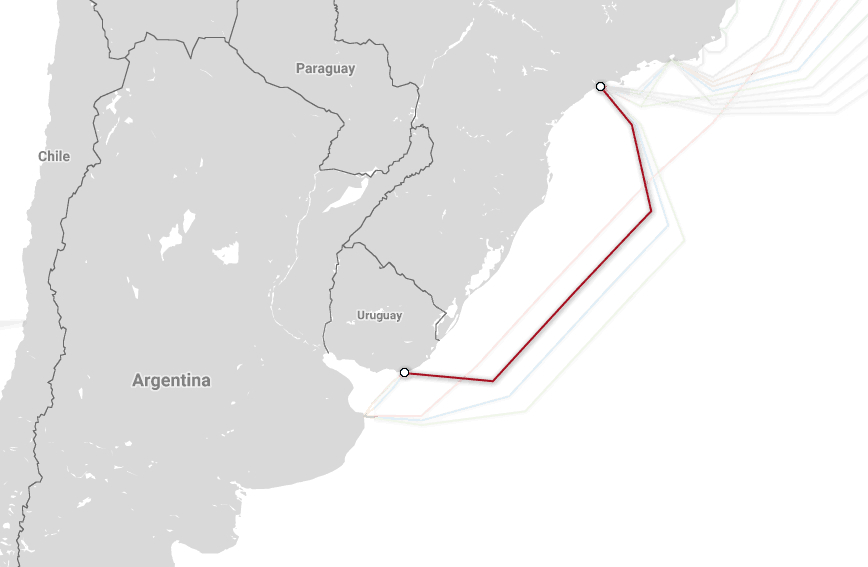
Name: Tannat
Main partner: Google
Commissioning: Q4 2017
Length: 2000 km
- Exit points:
- Maldonado, Uruguay;
- Santos, Brazil.
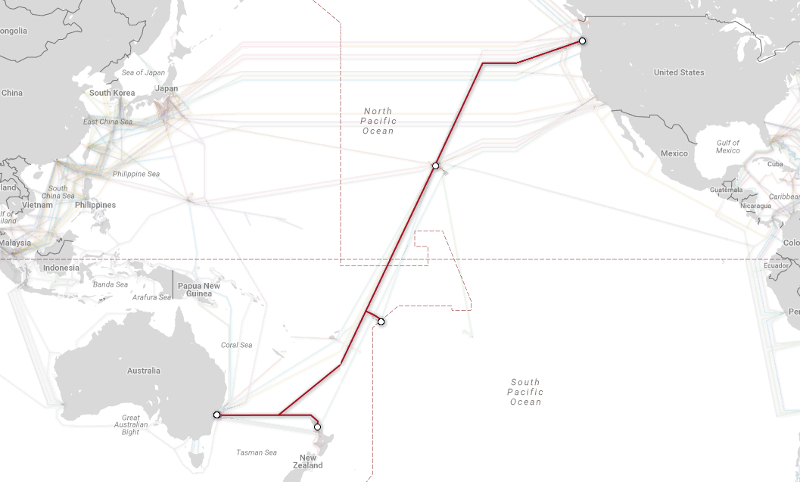
Name: Hawaiki Cable Lead
Partner: Amazon Web Services
Commissioning: June 2018
Length: 10,200 km
Exit Points:
- Capolei, USA;
- Mangawai, New Zealand;
- Pacific City, USA;
- Pago Pago, American Samoa;
- Sydney, Australia.
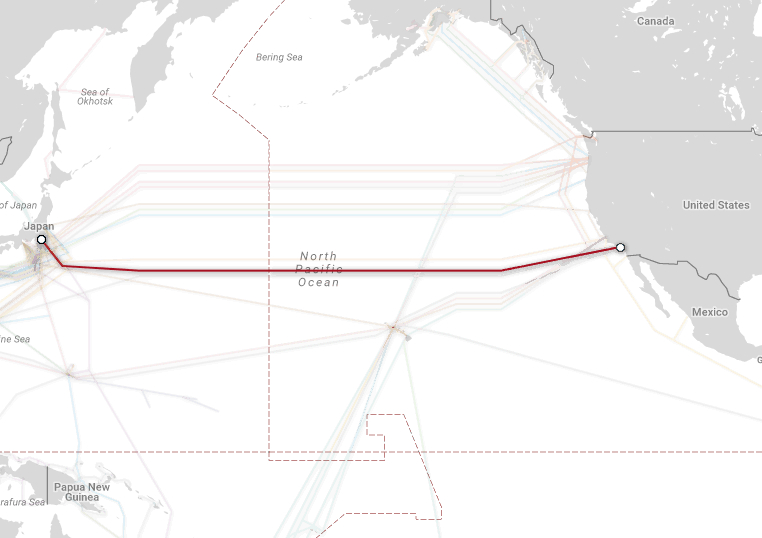
Name: Unity / EAC-Pacific
Main partner: Google
Commissioning: March 2010
Length: 9620 km
Exit points:
- Chikura, Japan;
- Redondo Beach, USA.
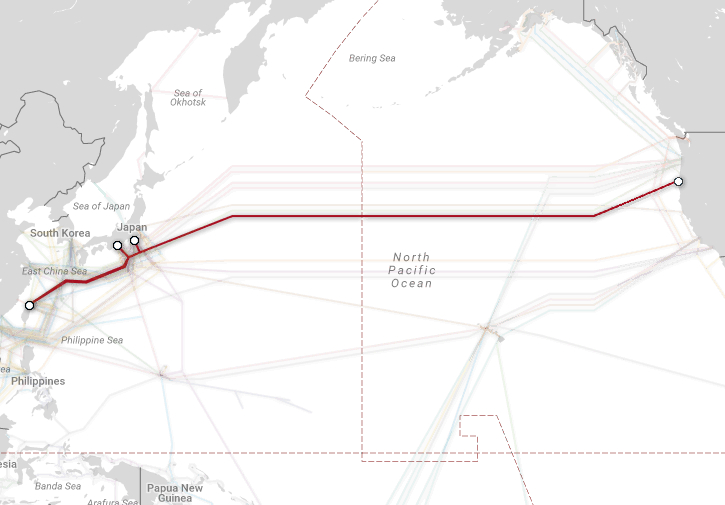
Name: FASTER
Main partner: Google
Commissioning: June 2016
Length: 11,629 km
Exit points:
- Bandon, Oregon, USA;
- Chikura, Japan;
- Tangshui, Taiwan.
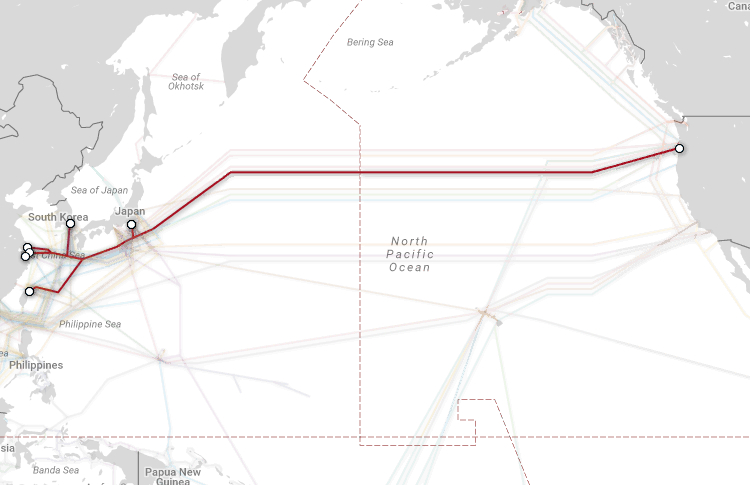
Name: New Cross Pacific (NCP) Cable System Lead
Partner: Microsoft
Commissioning: June 2016
Length: 13618 km
Exit Points:
- Chongming, China;
- Lingang, China;
- Maruyama, Japan;
- Nanhui, China;
- Pacific City, USA;
- Busan, Korea;
- Tocheng, Taiwan.
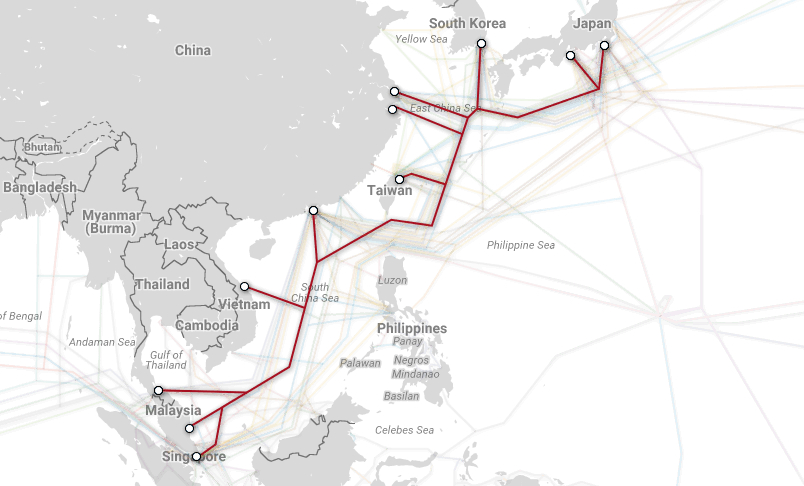
Name: Asia Pacific Gateway (APG)
Main partner: Facebook
Commissioning: November 2016
Length: 10,400 km
Exit points:
- Chongming, China;
- Danang, Vietnam;
- Kuantan, Malaysia;
- Maruyama, Japan;
- Nanhui, China;
- Busan, Korea;
- Tocheng, Taiwan;
- Shima, Japan;
- Songkla, Thailand;
- Tanah Merah, Singapore;
- Chengkuanhou New Town, Hong Kong.
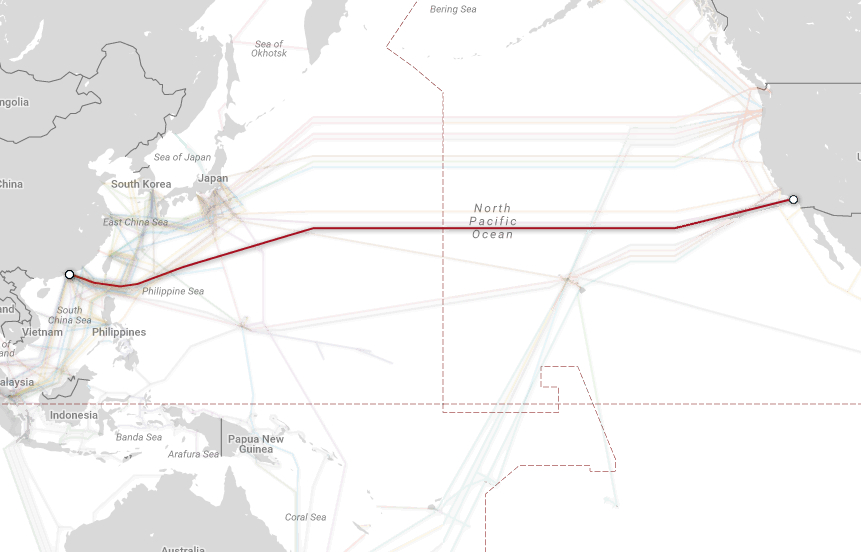
Name: Pacific Light Cable Network (PLCN)
Main partner: Google, Facebook
Commissioning: May 2018
Length: 12,800 km
Exit points:
- Manhattan Beach, USA;
- Chengkuanhou New Town, Hong Kong.
In general, large telecommunication companies successfully solve their own tasks of transmitting and receiving increasing volumes of traffic in various regions. Gradually, there are more communication channels, and this opens up new business opportunities, which allows the telecommunications sector to grow.
And finally: in order to test our channels, we prepared a special page of the network test on our website . Choose the desired location: USA (New York, California), the Netherlands or Russia. After that, you can issue a free test of any service for up to 30 days for free, but this is relevant so far only for corporate customers.
