February 13, 2017 at 11:27
Zeigarnik effect in practice
- Transfer
The Zeigarn Effect can help boost your performance. First I will explain what the idea is, and then I will give practical advice on how to apply it in training.
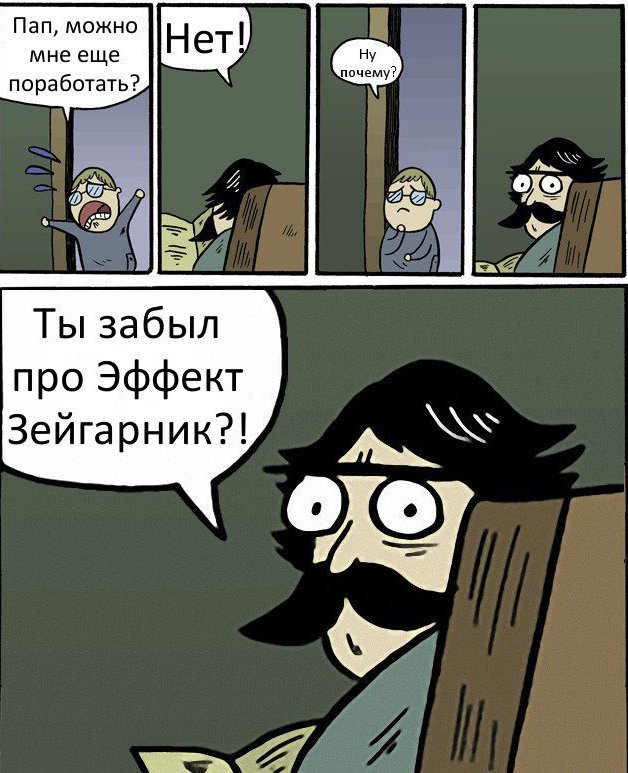
Imagine it is 9:00 p.m. You are learning JavaScript. Sit at the table. Open your laptop and start the code editor. You are working, say, on a project from the freeCodeCamp resource - Wikipedia Viewer .
Work for a while, then get distracted, open a browser to read an article on the Mozilla Developer Network website on resource sharing between different sources ( CORS ), because you want to deal with cross-domain Ajax requests.
Everything is going well. The longer you read the CORS article, the better you understand it. It's getting late, it's time to round off.
What will you do next?
A) Leave the article unread to return to it the next morning?
Or
B) Bring the matter to a victorious end and finish reading?
The Zeigarnik effect recommends that you choose option A and not stop reading when a break is planned. Why?
Because according to the Zeigarnik effect, “ interrupted tasks are remembered better than completed ones”.
People are so arranged that they feel a craving for the completion of an action, which is activated when any task remains unfulfilled. Remember how mysteries in detective stories are gradually resolved, or how you feel when you hang up and never finish arguing with your loved one. This feeling of tension arises precisely due to the notorious craving for completion of what has begun, which effectively helps us remember unfinished tasks.
So, if you are an entrepreneurial developer, then you can very well apply this effect when learning new tools or developing your skills. Because - with equal time costs for studying the material - the Zeigarnik effect can help you remember the development concepts better and more efficiently.
And here is one idea how to use this phenomenon when learning to write code.
Professional life hack: Leave a piece of code unfinished when the “job rushing” and return to it later.
Here you are working on one of the algorithms. You got the gist of the problem. They sketched some notes and a pseudo-code on a piece of paper, made up a high-class plan for how to write this very algorithm.
Then you start translating your thoughts into code. Then more and more. The work is arguing, and you begin to feel a rush of dopamine from the thought that soon the task will be completed and freeCodeCamp will give you a reward - an encouraging message:
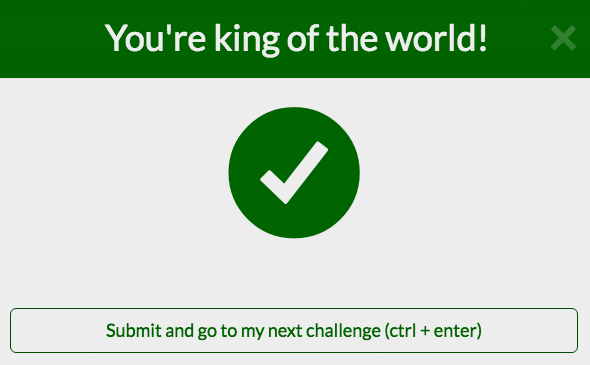
Now stop. Before you complete this task. Stop. Make an informed decision to stop the process. Get away from the computer and do something else.
“But I'm almost done!” - you say.
The idea is that when you interrupt yourself in the middle of the process, you not only better remember what you are practicing - you also strengthen your motivation to continue working.
The craving for completion will be so strong that you will not be able to withstand a long separation from your computer. And when you finally return, you will surely come off completely.
So, using the notorious Zeigarnik effect, you:
And with renewed energy. Double use.
I have been reading Roald Dahl's books and short stories lately because he is an amazing writer. And in one of his interviews, he described a strategy that suggests thoughts of the Zeigarnik effect:
You can listen to the full interview of Roald Dahl here.
Writing a novel and code is much closer than you think. Both that, and another - saturated creative processes. If such stops during a successful process helped two legendary writers create works that the whole world admires, then they can also help you pump your abilities and create a useful product.
If you have any ideas how else you could use the Zeigarnik effect to improve your programming skills, we will be glad to see them in the comments. Thanks for attention!
What is the Zeigarn Effect?
Imagine it is 9:00 p.m. You are learning JavaScript. Sit at the table. Open your laptop and start the code editor. You are working, say, on a project from the freeCodeCamp resource - Wikipedia Viewer .
Work for a while, then get distracted, open a browser to read an article on the Mozilla Developer Network website on resource sharing between different sources ( CORS ), because you want to deal with cross-domain Ajax requests.
Everything is going well. The longer you read the CORS article, the better you understand it. It's getting late, it's time to round off.
What will you do next?
A) Leave the article unread to return to it the next morning?
Or
B) Bring the matter to a victorious end and finish reading?
The Zeigarnik effect recommends that you choose option A and not stop reading when a break is planned. Why?
Because according to the Zeigarnik effect, “ interrupted tasks are remembered better than completed ones”.
People are so arranged that they feel a craving for the completion of an action, which is activated when any task remains unfulfilled. Remember how mysteries in detective stories are gradually resolved, or how you feel when you hang up and never finish arguing with your loved one. This feeling of tension arises precisely due to the notorious craving for completion of what has begun, which effectively helps us remember unfinished tasks.
So, if you are an entrepreneurial developer, then you can very well apply this effect when learning new tools or developing your skills. Because - with equal time costs for studying the material - the Zeigarnik effect can help you remember the development concepts better and more efficiently.
And here is one idea how to use this phenomenon when learning to write code.
Professional life hack: Leave a piece of code unfinished when the “job rushing” and return to it later.
Here you are working on one of the algorithms. You got the gist of the problem. They sketched some notes and a pseudo-code on a piece of paper, made up a high-class plan for how to write this very algorithm.
Then you start translating your thoughts into code. Then more and more. The work is arguing, and you begin to feel a rush of dopamine from the thought that soon the task will be completed and freeCodeCamp will give you a reward - an encouraging message:
Now stop. Before you complete this task. Stop. Make an informed decision to stop the process. Get away from the computer and do something else.
“But I'm almost done!” - you say.
The idea is that when you interrupt yourself in the middle of the process, you not only better remember what you are practicing - you also strengthen your motivation to continue working.
The craving for completion will be so strong that you will not be able to withstand a long separation from your computer. And when you finally return, you will surely come off completely.
So, using the notorious Zeigarnik effect, you:
- You better remember the concepts that were touched upon in the assignment.
- Give yourself an incentive to get back to work.
And with renewed energy. Double use.
Zeigarnik effect in action
I have been reading Roald Dahl's books and short stories lately because he is an amazing writer. And in one of his interviews, he described a strategy that suggests thoughts of the Zeigarnik effect:
I never go back to a blank page, I always add up to about half. Faced with a blank page is not very good. But Hemingway, a great American writer, taught me a great trick that is indispensable when working on a long book. He put it this way: "When it works well, stop writing . "
This means that if everything goes like clockwork, and you know exactly what will happen at the end of the chapter and what the characters will do, you should not continue to write until you get to the end. Otherwise, you have to wonder what to do next. And you get up and leave, and then you don’t want to go back to work at all, because you just don’t know how to continue.
But if you stop when everything is going fine, as Hemingway said ... then you will know what you want to say next. You need to force yourself to stop, set aside a pencil and everything else and just step back. And then you will have itchy hands to get back to work as soon as possible, because you already know what will happen next, and that’s fine, and you need to do it. And so every time, every day for a year.
If you stop when you're stuck, then you will be in trouble!
You can listen to the full interview of Roald Dahl here.
Writing a novel and code is much closer than you think. Both that, and another - saturated creative processes. If such stops during a successful process helped two legendary writers create works that the whole world admires, then they can also help you pump your abilities and create a useful product.
If you have any ideas how else you could use the Zeigarnik effect to improve your programming skills, we will be glad to see them in the comments. Thanks for attention!