How to test DGU in the data center
In the operation of data centers, we pay much attention to testing engineering systems and equipment. One of the most important tests is the launch of diesel generator sets (DGU). These tests help test the performance of several engineering systems at once.
DGUs are responsible for guaranteed power supply. In the event of interruptions in urban nutrition, they bear the entire load of the data center. Power supply from a diesel generator set is usually called standby, but it should be regarded as the main one: we can only manage this type of power supply. This is another reason why DGU tests are so needed.
At all sites, we have a total of 30 diesel generators with a capacity of 1200 to 1750 kW. Today we will tell how we test DGU in our data centers and what we pay attention to in the process. We hope that our experience will be useful to owners of small server rooms.
Before reading, we recommend that you go over our previous article and refresh your knowledge about the power supply device in data centers.
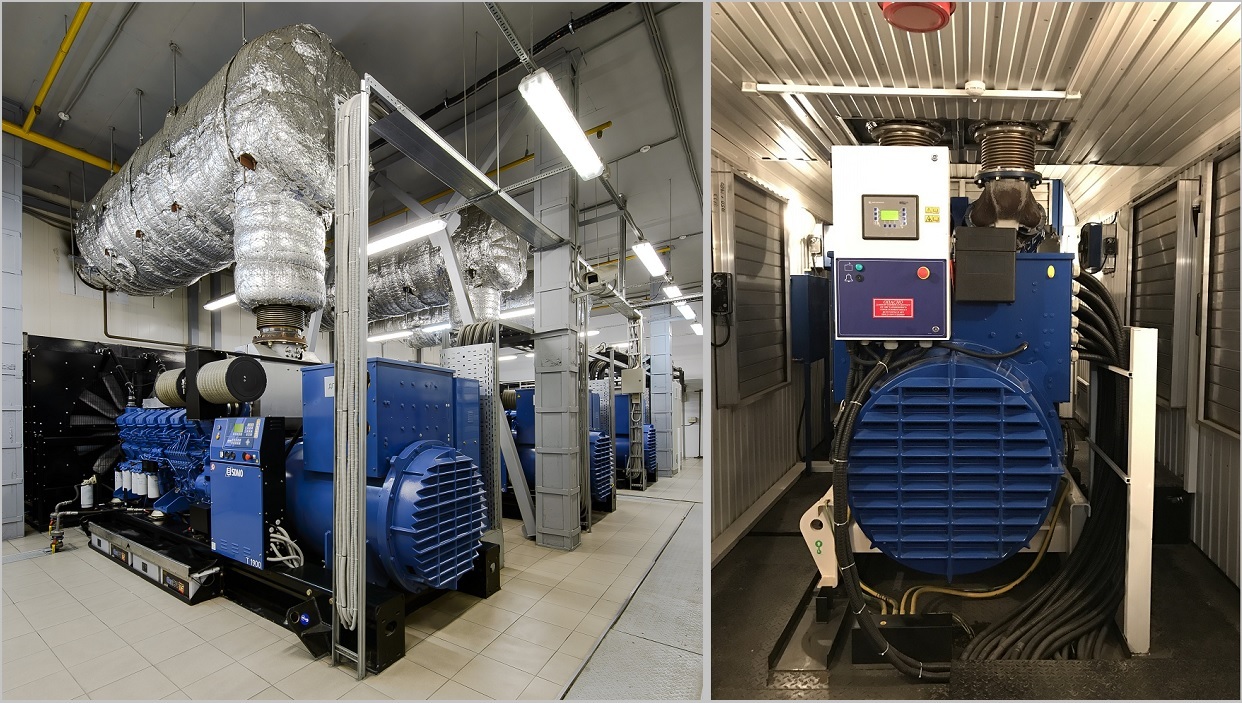
DGU indoors and in container execution.
You need to test the diesel generator set under load. At idle, you will not check how the diesel generator sets handle the load and synchronize if there are several. Such tests are like a test drive during which you just started the car, but did not drive a meter.
There are two ways to test DGU under load:
To test DGU under load, you need to disconnect from at least one input of city power. Briefly recall how this happens. Switching to power from the DGU is controlled by the automatic reserve input (ATS): it gives a signal to turn on the DGU. While the DGUs are starting up, the UPS batteries hold the load. As soon as the DGU entered the operating mode and synchronized, the ATS transfers the load of the data center to them. Here's how it happens approximately:
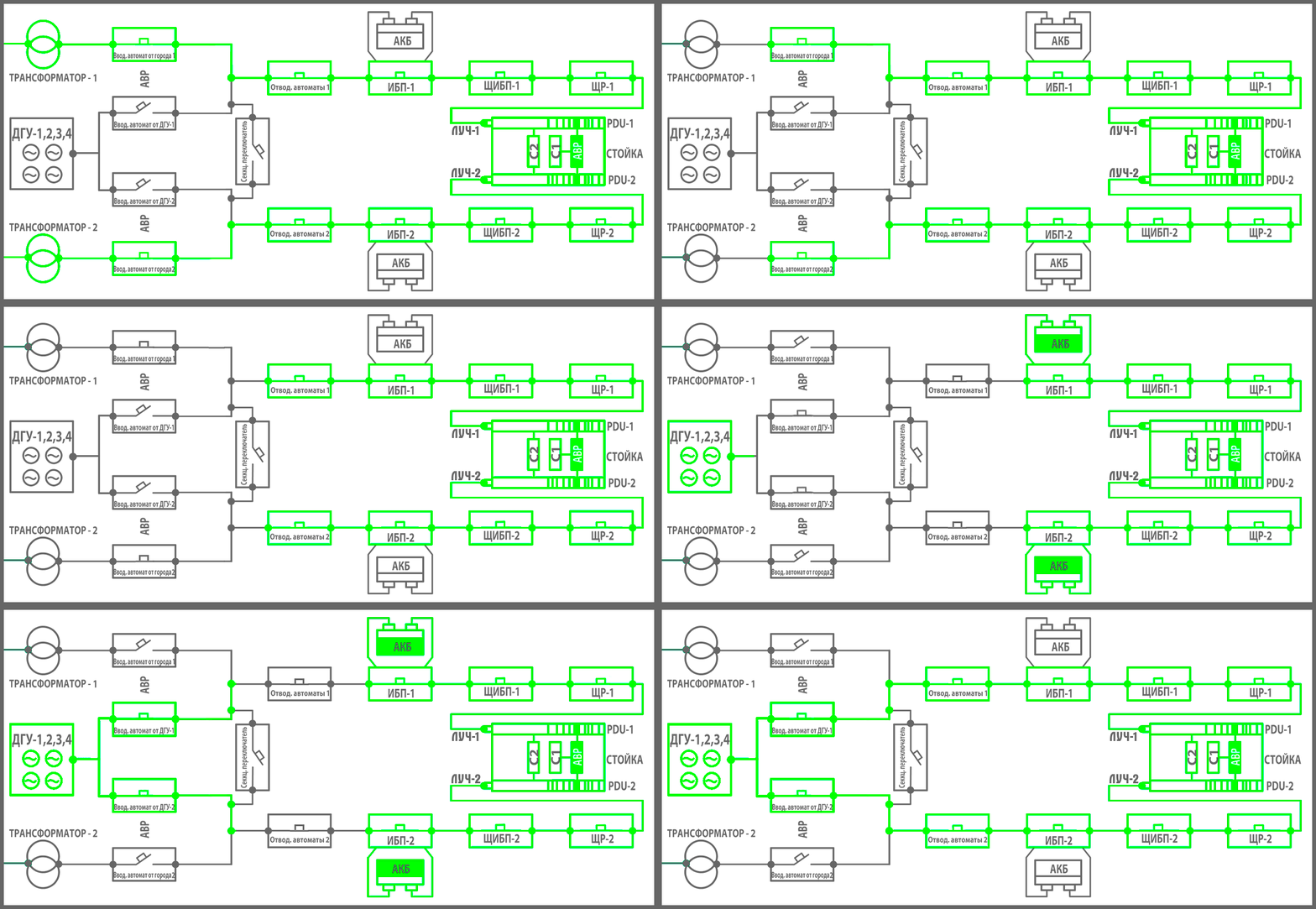
During the start-up of the diesel generator set, the entire system of guaranteed and uninterrupted power supply is activated. Therefore, in addition to the work of the DGU itself, we also check the work of these systems:
Along the way, we are testing a monitoring system: does it correctly display the status of the power supply system and equipment. We check the clarity of the regulations and the work of engineers on them.
Equipment that is not connected to uninterruptible power supply will also be tested. As soon as the city power supply disappears, this equipment will turn off, and will turn on only after starting the diesel generator set. The same thing will happen when we return from DGU to city food. Such exercises are additional tests for equipment. Therefore, after each off / on. Check the display for errors. In our case, air conditioners belong to such equipment: only half are powered through the UPS.
In this matter, it is not the frequency of test launches that matters, but their regularity: you need to develop a clear testing schedule that you will follow. You think that it’s enough to check DGU once a quarter, great. The main thing is to strictly adhere to this schedule and not freebies.
In addition to the planned tests, it is necessary to conduct tests after any maintenance and repairs in
order to check:
Alert. In the test regulations, you need to prescribe in advance who needs to be notified and for how long. This list may vary depending on internal requirements and processes. Here's what a list of stakeholders might look like:
In the notification letter, we leave the contacts of the person responsible for the test run, so that in case of questions, you can contact him.
Inspection DGU. In order not to go for testing with obviously faulty equipment, the following indicators are taken before the test:
Visual inspection is carried out:
Checking the power supply system equipment. The same procedure is carried out with the rest of the equipment of guaranteed and uninterrupted power supply systems. The display is checked for errors and the external condition. Engineers take readings from current analyzers on the main switchboard, check the UPS indication, the correctly set time.
1. Disable the phase monitoring relay in the main switchboard, i.e. imitate the disappearance of urban nutrition in one of the rays.
2. The UPS detects the loss of power at the input and instantly switches to self-contained battery power.
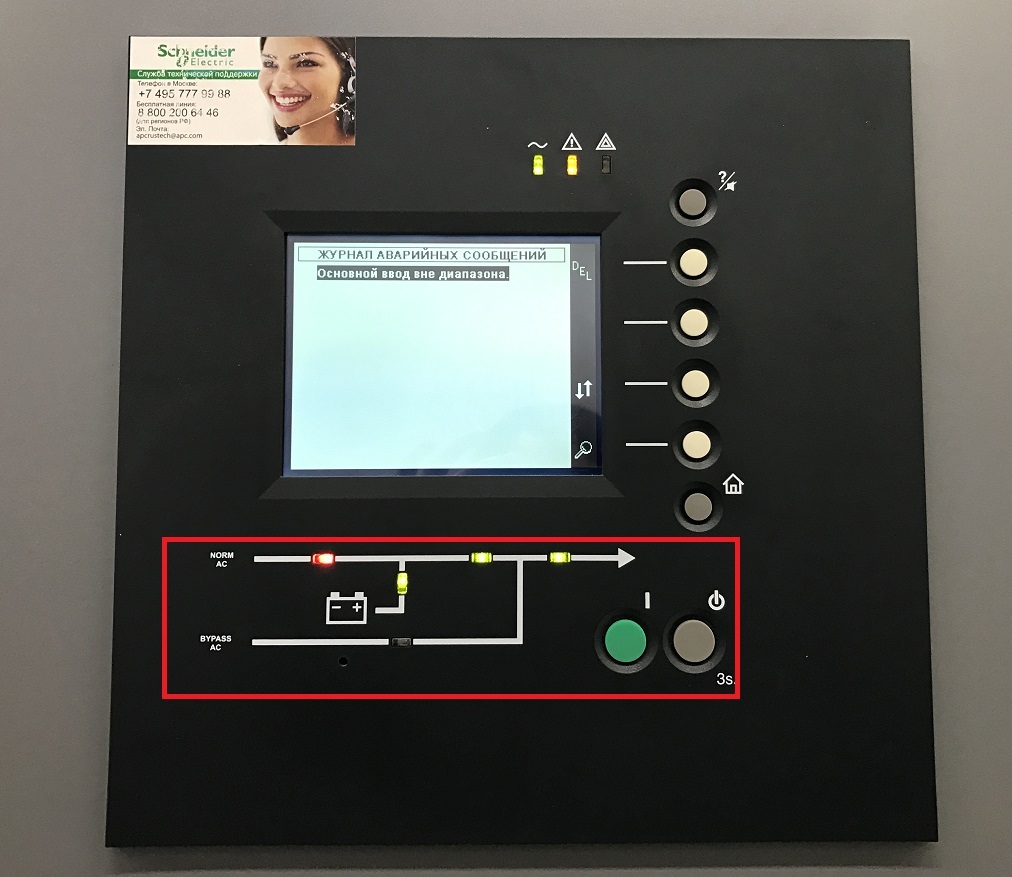
UPS display. The indication shows that the power supply is turned off and the data center is powered by batteries.
3. At the same time, an automatic reserve input (ABP) in the main switchboard fixes an interruption with city power. ATS waits 5 seconds and sends a signal to start the diesel generator. In operating mode, this delay eliminates the need to start the diesel generator on a false alarm. If the city food just “blinked” and recovered again in these 5 seconds, then there will be no command to launch the diesel engine.
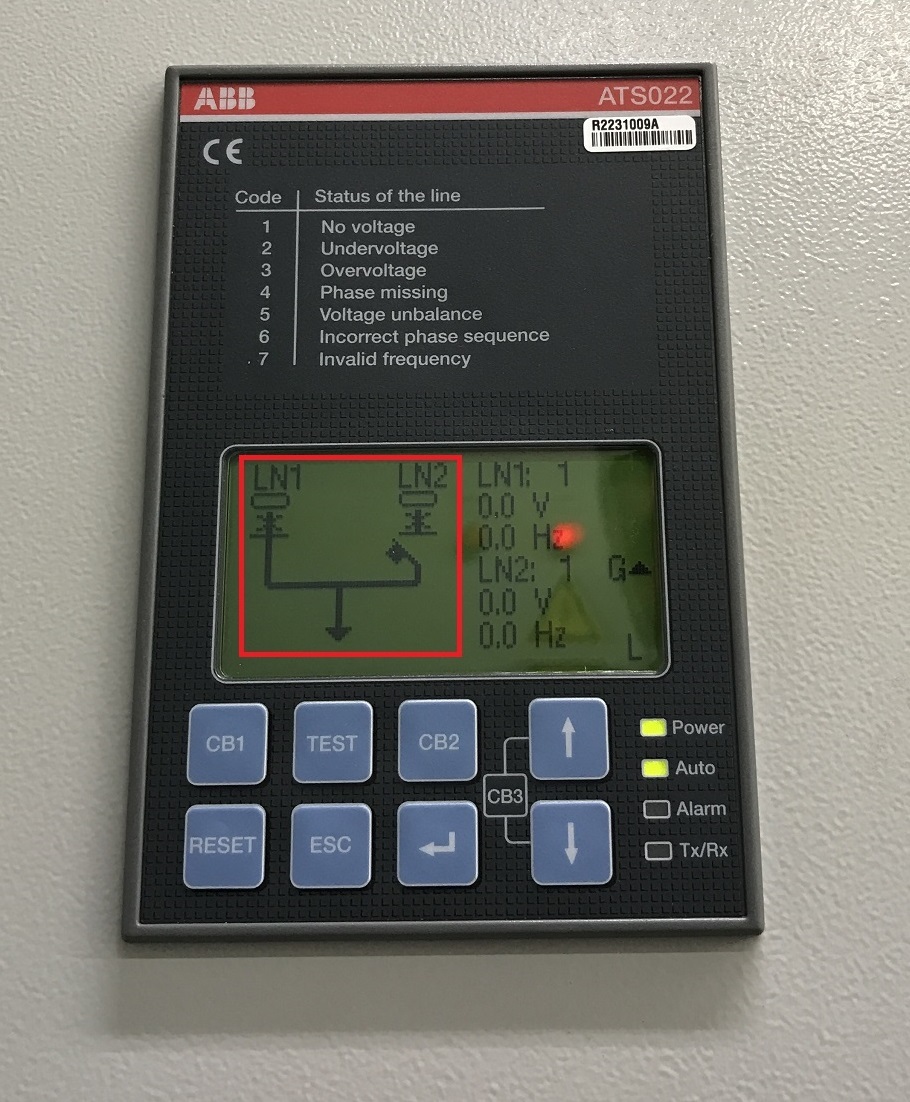
Display ABP main switchboard. LN1 denotes food from a city that has “disappeared” (white oval). LN2 - powered by DGU.
4. DGUs are launched, enter the operating mode of 1,500 rpm and synchronize with each other in 10–20 seconds.
5. When power from the DGU appears on the backup line, the ATS opens the circuit breaker of the main line of the city power supply.
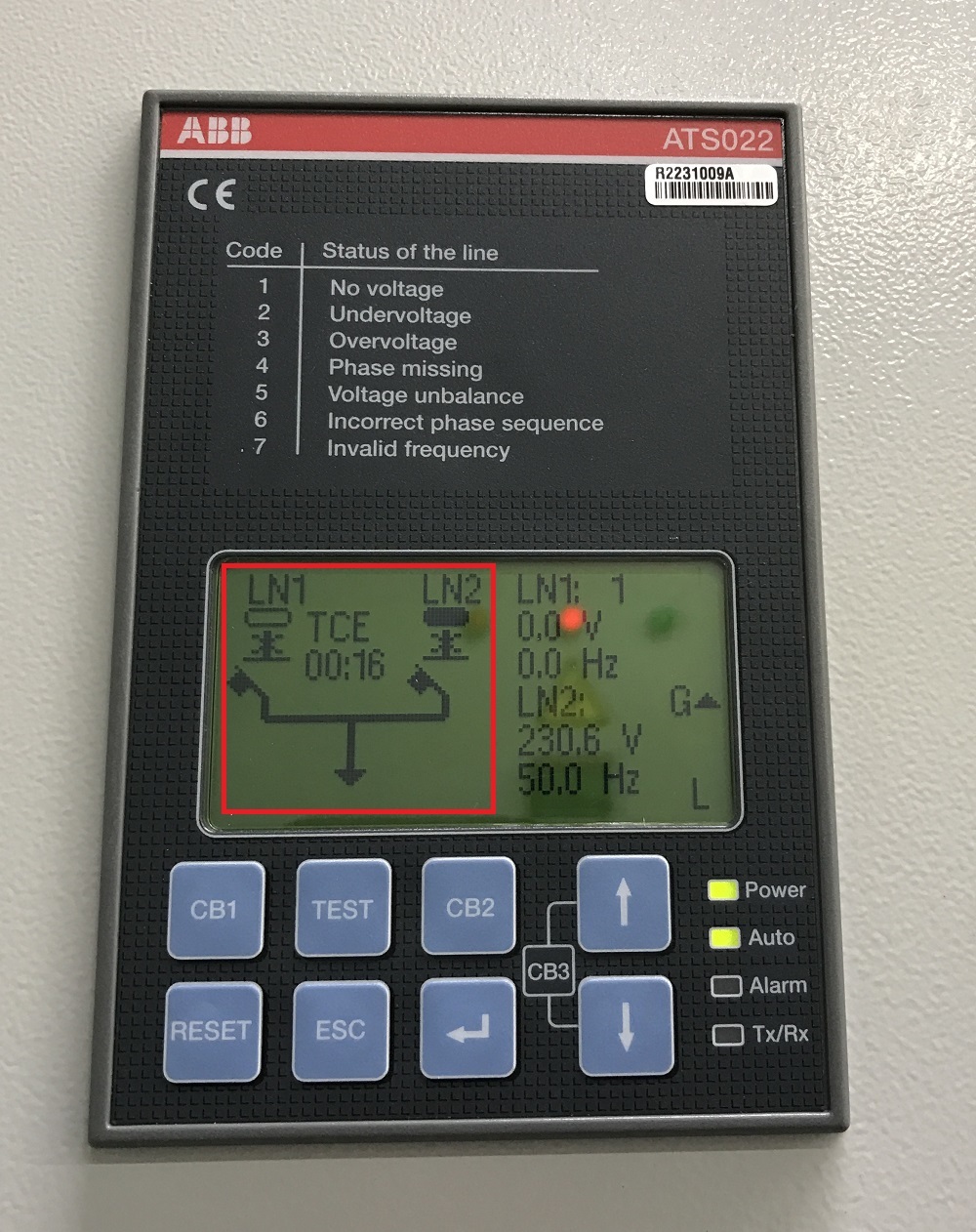
The black oval next to LN2 indicates that the voltage from the DGU began to flow to the bus. An automatic power line from the city is open. The stopwatch counts the time after which the load will be transferred to the diesel generator set.
6. After 30–35 seconds from the moment of the start command, the automatic transfer switch closes the backup line circuit breaker. Now the data center is powered by DGU.
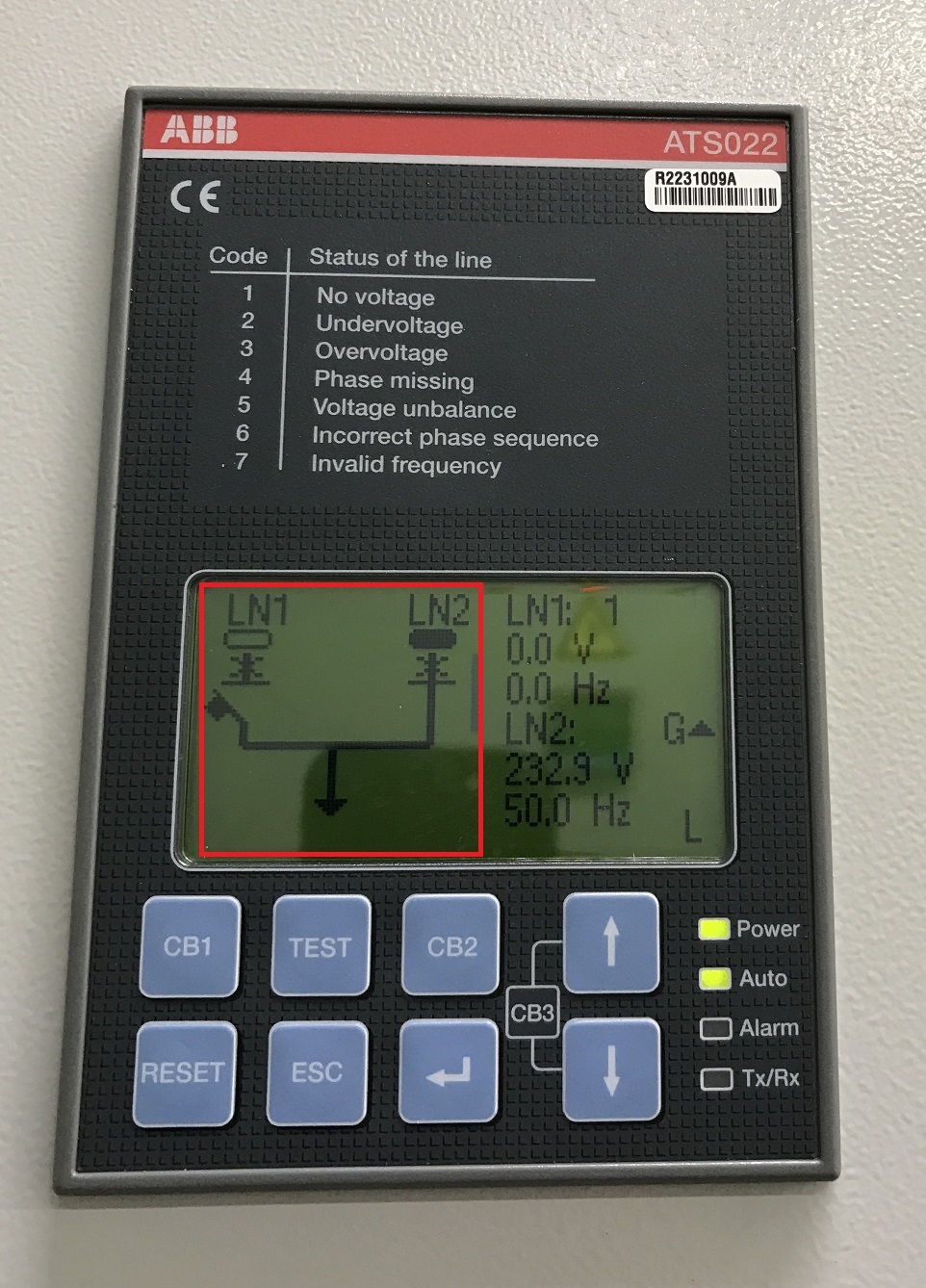
7. The UPS sees power recovery at the input and returns to standard mode.
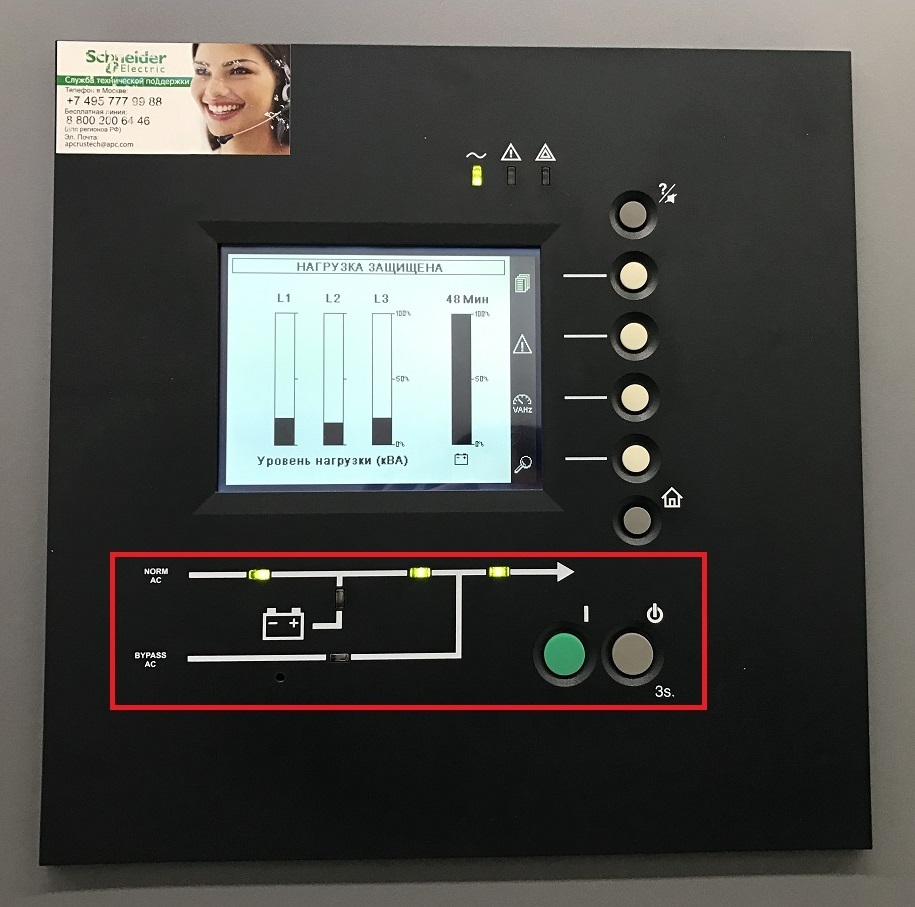
To make sure that everything works correctly, it is better to “stand” on diesel engines for at least 40-60 minutes. Our experience shows that the main errors appear either at startup, or in the period of 40-60 minutes. During this time, without haste, you can check all the basic parameters of diesel generators:
In our case, if the load on each DGU is less than 30%, then DGU one by one begin to go into reserve. In the event of a malfunction at the working DGU, he will quickly return to duty. At least two DGUs always remain in operation, so that N + 1 redundancy is observed.
While DGUs are working, engineers also check infrastructure facilities that were turned off during the transition to power from diesel generators.
The data center is back powered by the city as follows:
After returning to city power, the engineer again checks the indication of the UPS, measures the currents at both inputs, the fuel in the diesel generator set, and the engineering equipment that turned off.
The entire preparatory process, timing, equipment readings during and after the test, as well as comments are recorded in the report.
That's all for today. Test your DGU. And let them not let you down.
DGUs are responsible for guaranteed power supply. In the event of interruptions in urban nutrition, they bear the entire load of the data center. Power supply from a diesel generator set is usually called standby, but it should be regarded as the main one: we can only manage this type of power supply. This is another reason why DGU tests are so needed.
At all sites, we have a total of 30 diesel generators with a capacity of 1200 to 1750 kW. Today we will tell how we test DGU in our data centers and what we pay attention to in the process. We hope that our experience will be useful to owners of small server rooms.
Before reading, we recommend that you go over our previous article and refresh your knowledge about the power supply device in data centers.
DGU indoors and in container execution.
What are we testing and how
You need to test the diesel generator set under load. At idle, you will not check how the diesel generator sets handle the load and synchronize if there are several. Such tests are like a test drive during which you just started the car, but did not drive a meter.
There are two ways to test DGU under load:
- under equivalent load, i.e. the load is created artificially, for example, by connecting heat guns. This option is suitable for acceptance tests when there is no IT load.
- under load (IT equipment + infrastructure). Further, we will focus on this type of testing.
To test DGU under load, you need to disconnect from at least one input of city power. Briefly recall how this happens. Switching to power from the DGU is controlled by the automatic reserve input (ATS): it gives a signal to turn on the DGU. While the DGUs are starting up, the UPS batteries hold the load. As soon as the DGU entered the operating mode and synchronized, the ATS transfers the load of the data center to them. Here's how it happens approximately:
During the start-up of the diesel generator set, the entire system of guaranteed and uninterrupted power supply is activated. Therefore, in addition to the work of the DGU itself, we also check the work of these systems:
- automation: automatic reserve input (ABP);
- UPS and battery status (battery);
- DGU.
Along the way, we are testing a monitoring system: does it correctly display the status of the power supply system and equipment. We check the clarity of the regulations and the work of engineers on them.
Equipment that is not connected to uninterruptible power supply will also be tested. As soon as the city power supply disappears, this equipment will turn off, and will turn on only after starting the diesel generator set. The same thing will happen when we return from DGU to city food. Such exercises are additional tests for equipment. Therefore, after each off / on. Check the display for errors. In our case, air conditioners belong to such equipment: only half are powered through the UPS.
When we test
In this matter, it is not the frequency of test launches that matters, but their regularity: you need to develop a clear testing schedule that you will follow. You think that it’s enough to check DGU once a quarter, great. The main thing is to strictly adhere to this schedule and not freebies.
In addition to the planned tests, it is necessary to conduct tests after any maintenance and repairs in
order to check:
- Are all faults resolved?
- whether new mistakes were made;
- are there any changes in the logic of work after maintenance.
Test preparation
Alert. In the test regulations, you need to prescribe in advance who needs to be notified and for how long. This list may vary depending on internal requirements and processes. Here's what a list of stakeholders might look like:
- external and internal customers;
- colleagues responsible for related systems (air conditioning, UPS, monitoring, etc.);
- DGU maintenance contractor, if the contract does not stipulate mandatory participation in testing.
- company employees. If the office is powered from the same sources as the server one, then colleagues may temporarily lose light, and computers will restart. Warn them in advance.
In the notification letter, we leave the contacts of the person responsible for the test run, so that in case of questions, you can contact him.
Inspection DGU. In order not to go for testing with obviously faulty equipment, the following indicators are taken before the test:
- battery charge voltage;
- fuel and oil level;
Visual inspection is carried out:
- whether engine heating is on;
- for malfunctions
- for errors in the display
- for the presence of drips of various liquids (oil, antifreeze).
Checking the power supply system equipment. The same procedure is carried out with the rest of the equipment of guaranteed and uninterrupted power supply systems. The display is checked for errors and the external condition. Engineers take readings from current analyzers on the main switchboard, check the UPS indication, the correctly set time.
Switching to power from the DGU
1. Disable the phase monitoring relay in the main switchboard, i.e. imitate the disappearance of urban nutrition in one of the rays.
2. The UPS detects the loss of power at the input and instantly switches to self-contained battery power.
UPS display. The indication shows that the power supply is turned off and the data center is powered by batteries.
3. At the same time, an automatic reserve input (ABP) in the main switchboard fixes an interruption with city power. ATS waits 5 seconds and sends a signal to start the diesel generator. In operating mode, this delay eliminates the need to start the diesel generator on a false alarm. If the city food just “blinked” and recovered again in these 5 seconds, then there will be no command to launch the diesel engine.
Display ABP main switchboard. LN1 denotes food from a city that has “disappeared” (white oval). LN2 - powered by DGU.
4. DGUs are launched, enter the operating mode of 1,500 rpm and synchronize with each other in 10–20 seconds.
5. When power from the DGU appears on the backup line, the ATS opens the circuit breaker of the main line of the city power supply.
The black oval next to LN2 indicates that the voltage from the DGU began to flow to the bus. An automatic power line from the city is open. The stopwatch counts the time after which the load will be transferred to the diesel generator set.
6. After 30–35 seconds from the moment of the start command, the automatic transfer switch closes the backup line circuit breaker. Now the data center is powered by DGU.
7. The UPS sees power recovery at the input and returns to standard mode.
What we check when the DGU are working
To make sure that everything works correctly, it is better to “stand” on diesel engines for at least 40-60 minutes. Our experience shows that the main errors appear either at startup, or in the period of 40-60 minutes. During this time, without haste, you can check all the basic parameters of diesel generators:
- pressure;
- battery charge voltage;
- coolant temperature;
- uniform distribution of load over phases;
- operation of inlet and outlet louvers of the ventilation system.
In our case, if the load on each DGU is less than 30%, then DGU one by one begin to go into reserve. In the event of a malfunction at the working DGU, he will quickly return to duty. At least two DGUs always remain in operation, so that N + 1 redundancy is observed.
While DGUs are working, engineers also check infrastructure facilities that were turned off during the transition to power from diesel generators.
Return to city power supply
The data center is back powered by the city as follows:
- Turn on the phase control relay.
- ATS after 5 seconds gives a signal to open the backup line switch.
- The UPS transfers to battery power.
- After 5 seconds, the ABP closes the switch on the main line of the city power supply.
- The UPS returns to standard mode.
- ATS waits 60 seconds, after which it gives a command to stop the diesel generator.
After returning to city power, the engineer again checks the indication of the UPS, measures the currents at both inputs, the fuel in the diesel generator set, and the engineering equipment that turned off.
According to the test results
The entire preparatory process, timing, equipment readings during and after the test, as well as comments are recorded in the report.
That's all for today. Test your DGU. And let them not let you down.