October 6, 2016 at 11:07
Creating plugins for vSphere using the HTML Client SDK Fling
According to Lewis Carroll, "If you don’t know where to go, you will wander in circles." However, if your direction is to use the new HTML- based vSphere Client, and you also need to create plugins for it, then your path is to HTML Client SDK Fling, a product announced in August this year. 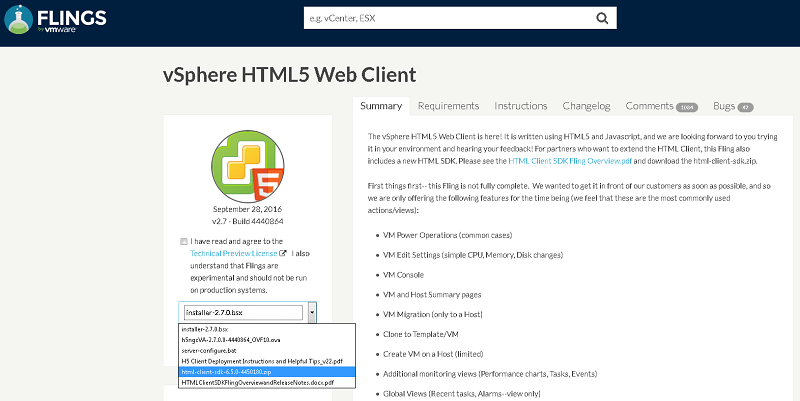
HTML Fling SDKs are libraries, sample plugins, documentation, and various tools to help you design and create extensions compatible with vSphere Client (HTML5) and vSphere Web Client (Flex).
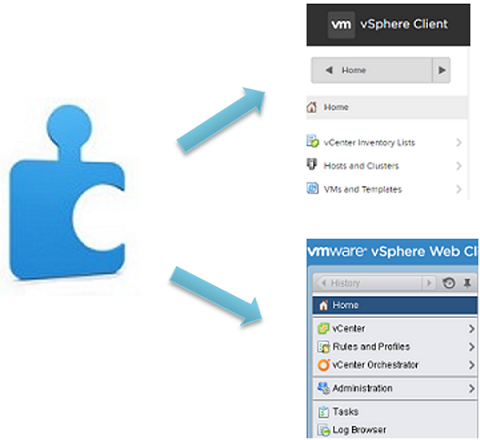
HTML Client SDK Fling relies on the existing HTML Bridge API , which allows you to fully support the functionality of HTML Bridge in the new vSphere Client (HTML5). You can use the HTML Client SDK Fling to extend existing HTML Bridge plugins or create HTML5 plugins from scratch and test them in vSphere Client (HTML5).
Since the HTML Client SDK supports both the old version of vSphere Flex and the new version of HTML vSphere client, there is no reason not to start creating your own vSphere HTML plug-in right now or to not convert your existing 
Fling Documentation
A detailed manual “Getting Started with HTML Client SDK Fling” was created for the HTML SDK Fling, which can be found in the SDK Docs folder.
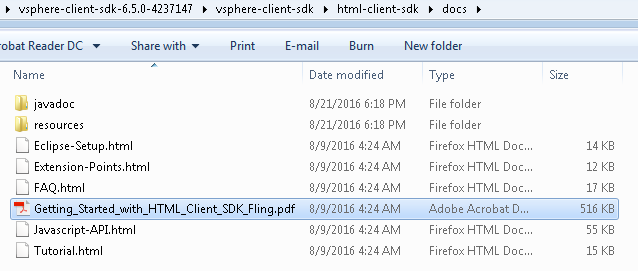
This document contains requirements and instructions for quickly setting up the HTML SDK, instructions for registering vCenter Server, creating and running samples, and many more details that will help you create vSphere HTML Client Plugin plugins. If you already have a plug-in created based on the existing HTML Bridge API, you should pay particular attention to the compatibility indicators of HTML plug-ins.
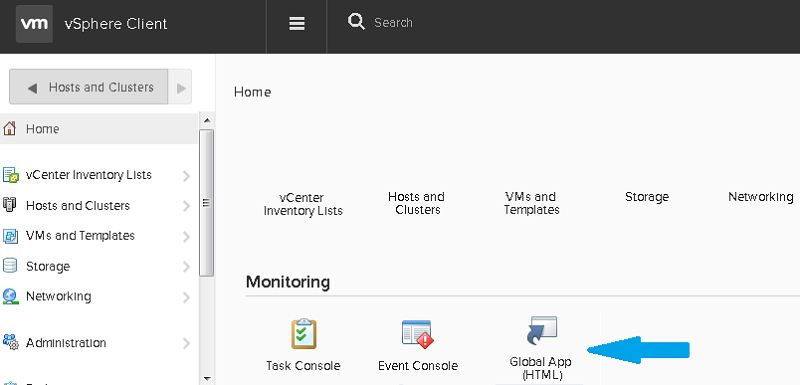
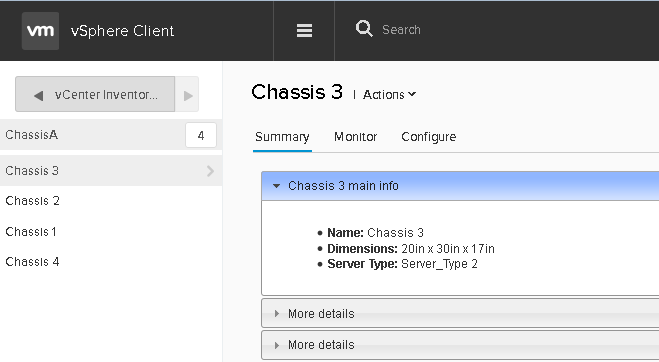
Running HTML templates on HTML Client Fling
The sample folder contains

Other tools
There are several scripts for creating template projects from the command line. Scripts are available with ... \
Instead of a conclusion
Since no changes to the API are planned in the near future, the HTML SDK team plans to continue to create various tools, manuals, and templates. The Fling release guarantees the necessary interactivity right up to the release of the HTML SDK as part of the existing vSphere Web Client SDK.