December 16, 2015 at 11:52
Nokia: from paper to cartography, from energy to smartphones
The Finnish company Nokia originates in 1865. For one hundred and fifty years of its existence, the company generated electricity, produced paper and gas masks, sold computers and telecommunication equipment for telephone exchanges. It is one of the most recognizable mobile phone brands, although the company has already sold Microsoft's mobile division.
In 1895, engineer Frederick Idestam founded a paper mill in southwestern Finland, which was renamed Nokia Ab in 1871. The co-founder of the company was the politician and statesman Leopold Mechelin. Mechelin planned to take up power generation and cable production, but Idestam resisted this until 1896, when he left the leadership. Then the politician pushed the idea to the company's shareholders, and in 1902, one of the main activities of Nokia Ab was the generation of electricity.
Founded in 1898, Finnish Rubber Works, a rubber manufacturing company, gained control of Nokia Ab in 1922 and Finnish Cable Works, founded in 1912, and in 1967 all three companies merged into one - the smallest of them Nokia Ab. The new company produced rubber products, cables, and electronics, processed wood, and generated electricity. At different times, the company produced shoes, televisions, computers, electric generators, robotics, gas masks, chemicals, including for the needs of the army.
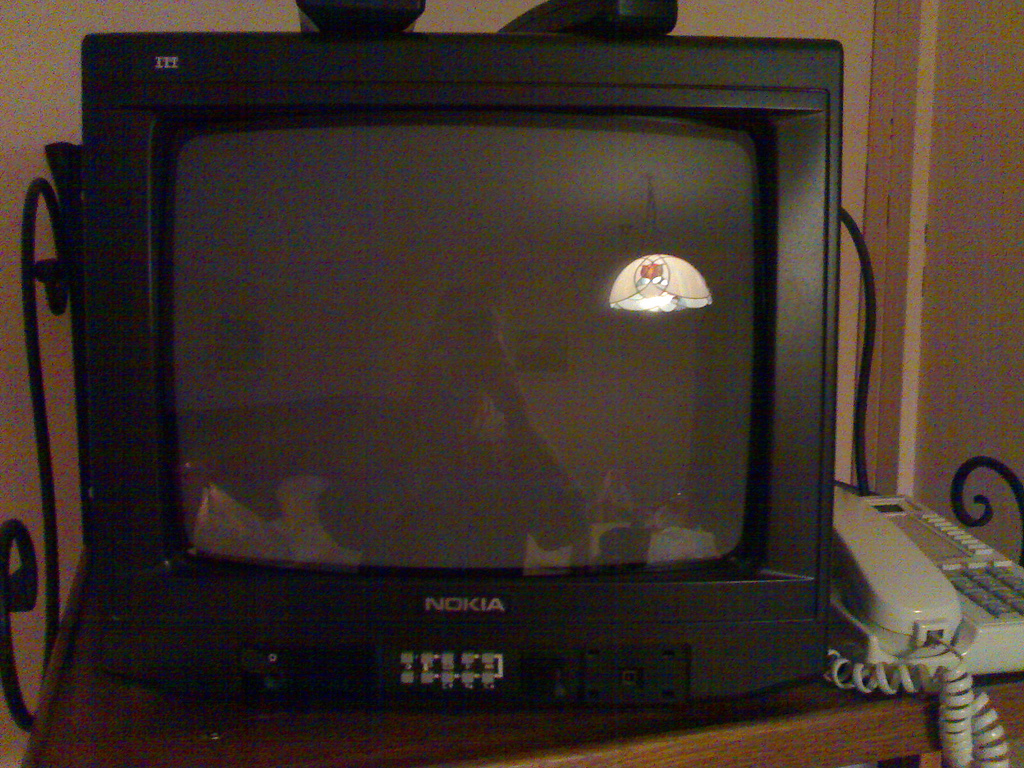
The company's first electronics department was founded in 1960 under the leadership of the president of Nokia Corporation. In the early 1980s, the company bought several electronic companies, and by 1987, consumer electronics had become Nokia's main business. Nokia was the third largest TV manufacturer in Europe.
In 1969, Nokia became the first company to make a switch based on pulse-code modulation, and the first company to start selling PCM equipment that meets the standards of the international advisory committee for telephony and telegraphy. So the company entered the telecommunications market.
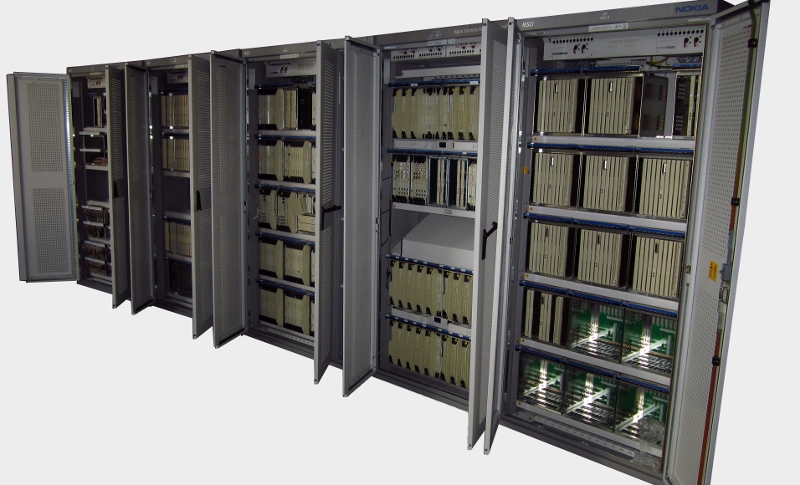
PABX Nokia DX200
In the late 1980s, during the recession of the global economy, the company was in crisis and was forced to abandon most activities. Then she focused on telecommunications equipment, highlighting Nokian Renkaat as a separate independent business.
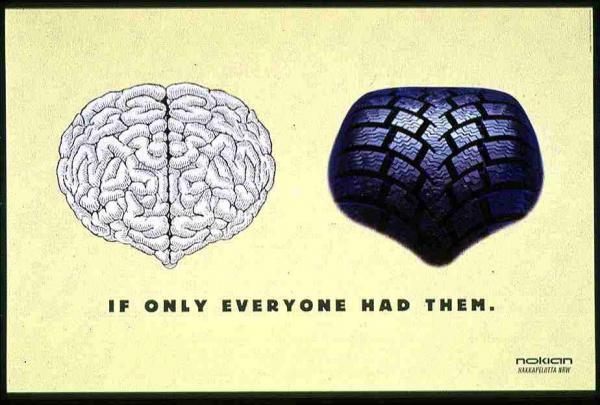
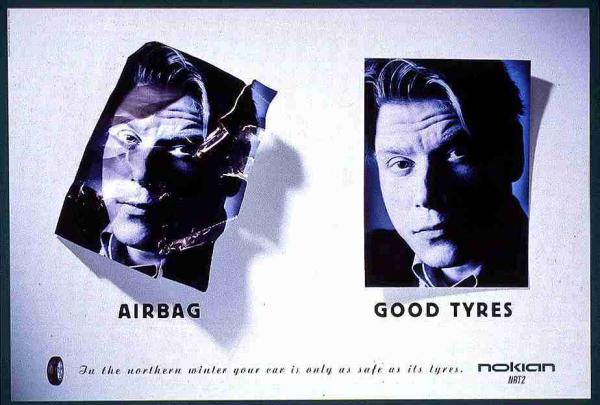
Nokian Tire Advertising
In the 1960s, the company worked on its predecessor, GSM - ARP technology, which was one of the first cellular standards. Nokia worked with Salora Oy, the joint venture was named Mobira Oy. In 1981, Mobira launched the first fully automated first-generation cellular communications network, and in 1982 introduced the Mobira Senator car phone, powered by NMT-450 networks. In 1984, Nokia bought Salora Oy and renamed it Nokia-Mobira.
Nokia came to Russia in 1989 by creating AMT, a joint venture with MGTS, to provide Moscow with mobile and paging communications. Nokia later sold its stake to MGTS. In 2000, a company representative office was opened in Russia. In 2010, Russia became the fourth largest revenue market for Nokia.
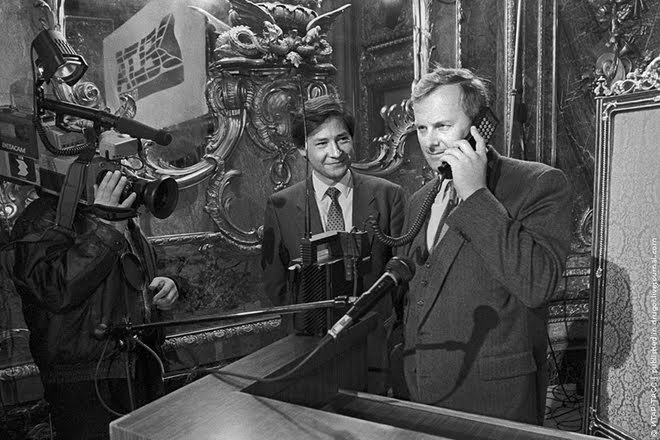
On September 9, 1991, the first cell phone call in Russia took place. The mayor of St. Petersburg, Anatoly Sobchak, while in the House of Architect, scored his colleague - the mayor of Seattle. In the hands of Sobchak - Mobira MD 59 NB2 manufactured by Nokia. The company began to conquer the mobile phone market, and then smartphones.
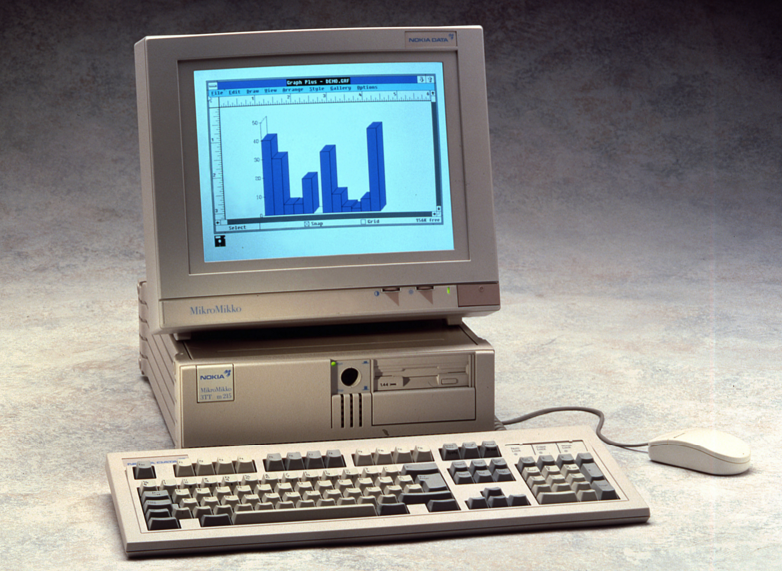
In the 1980s, Nokia had a division of Nokia Data, which produced personal computers MikroMikko. In 1991, the unit was bought by the British company International Computers Limited, and then Fujitsu. Fujitsu has promoted MikroMikko computers under the ErgoPro brand.
In 1992, Nokia’s director Jorma Ollila made a key decision in terms of the company's strategy: Nokia focused solely on the telecommunications business. So Nokia by 2009 became the largest manufacturer of cell phones.
In 2013 in Russia, Nokia overtook Samsungby the number of handsets sold - smartphones and ordinary phones. But winning by the piece, the company could not achieve results in money. Later, in 2014, Nokia’s mobile division was sold to Microsoft, which in 2015 laid off 7.8 thousand employees and wrote off Nokia’s assets .
But Nokia continues to work and, moreover, is increasing momentum. In 2015, the main profit of the company came from the Nokia Networks division. For the 3 quarters of this year, profit from this unit amounted to 8.28 billion euros. It’s too early to write off the company in terms of smartphone business: the company buys Alcatel-Lucent for 15.6 billion euros. Although the company under the Nokia brand will not be able to produce phones until 2023 under an agreement with Microsoft, Alcatel-Lucent similar obligations end in 2015. Therefore, in 2016 we can safely expect the entry into the market of a new (or old) player.
In 1895, engineer Frederick Idestam founded a paper mill in southwestern Finland, which was renamed Nokia Ab in 1871. The co-founder of the company was the politician and statesman Leopold Mechelin. Mechelin planned to take up power generation and cable production, but Idestam resisted this until 1896, when he left the leadership. Then the politician pushed the idea to the company's shareholders, and in 1902, one of the main activities of Nokia Ab was the generation of electricity.
Founded in 1898, Finnish Rubber Works, a rubber manufacturing company, gained control of Nokia Ab in 1922 and Finnish Cable Works, founded in 1912, and in 1967 all three companies merged into one - the smallest of them Nokia Ab. The new company produced rubber products, cables, and electronics, processed wood, and generated electricity. At different times, the company produced shoes, televisions, computers, electric generators, robotics, gas masks, chemicals, including for the needs of the army.
The company's first electronics department was founded in 1960 under the leadership of the president of Nokia Corporation. In the early 1980s, the company bought several electronic companies, and by 1987, consumer electronics had become Nokia's main business. Nokia was the third largest TV manufacturer in Europe.
In 1969, Nokia became the first company to make a switch based on pulse-code modulation, and the first company to start selling PCM equipment that meets the standards of the international advisory committee for telephony and telegraphy. So the company entered the telecommunications market.
PABX Nokia DX200
In the late 1980s, during the recession of the global economy, the company was in crisis and was forced to abandon most activities. Then she focused on telecommunications equipment, highlighting Nokian Renkaat as a separate independent business.
Nokian Tire Advertising
In the 1960s, the company worked on its predecessor, GSM - ARP technology, which was one of the first cellular standards. Nokia worked with Salora Oy, the joint venture was named Mobira Oy. In 1981, Mobira launched the first fully automated first-generation cellular communications network, and in 1982 introduced the Mobira Senator car phone, powered by NMT-450 networks. In 1984, Nokia bought Salora Oy and renamed it Nokia-Mobira.
Nokia came to Russia in 1989 by creating AMT, a joint venture with MGTS, to provide Moscow with mobile and paging communications. Nokia later sold its stake to MGTS. In 2000, a company representative office was opened in Russia. In 2010, Russia became the fourth largest revenue market for Nokia.
On September 9, 1991, the first cell phone call in Russia took place. The mayor of St. Petersburg, Anatoly Sobchak, while in the House of Architect, scored his colleague - the mayor of Seattle. In the hands of Sobchak - Mobira MD 59 NB2 manufactured by Nokia. The company began to conquer the mobile phone market, and then smartphones.
In the 1980s, Nokia had a division of Nokia Data, which produced personal computers MikroMikko. In 1991, the unit was bought by the British company International Computers Limited, and then Fujitsu. Fujitsu has promoted MikroMikko computers under the ErgoPro brand.
In 1992, Nokia’s director Jorma Ollila made a key decision in terms of the company's strategy: Nokia focused solely on the telecommunications business. So Nokia by 2009 became the largest manufacturer of cell phones.
In 2013 in Russia, Nokia overtook Samsungby the number of handsets sold - smartphones and ordinary phones. But winning by the piece, the company could not achieve results in money. Later, in 2014, Nokia’s mobile division was sold to Microsoft, which in 2015 laid off 7.8 thousand employees and wrote off Nokia’s assets .
But Nokia continues to work and, moreover, is increasing momentum. In 2015, the main profit of the company came from the Nokia Networks division. For the 3 quarters of this year, profit from this unit amounted to 8.28 billion euros. It’s too early to write off the company in terms of smartphone business: the company buys Alcatel-Lucent for 15.6 billion euros. Although the company under the Nokia brand will not be able to produce phones until 2023 under an agreement with Microsoft, Alcatel-Lucent similar obligations end in 2015. Therefore, in 2016 we can safely expect the entry into the market of a new (or old) player.