March 11, 2015 at 21:38
The combination of NXP and Freescale in terms of patenting
The announced combination of NXP and Freescale has already been discussed in terms of marketing, and from a management point of view, and from a technical point of view. I propose to look at this event from one more side - in the prospect of combining patent assets. If the transaction is approved and the merger takes place in the second half of 2015, this will also lead to the emergence of one of the largest patent portfolios - 8,200 patents plus 1,860 patent applications in different countries.
Most patents relate to the United States. In particular, Freescale owns 6,000 US patents, and NXP owns 3,800 US patents. In turn, NXP has more Chinese and European patents. To visualize their similarities and differences Chipworksprepared a patent landscape with overlay patent portfolios, including US patents and patent applications of these companies. Each patent document is represented by a dot, and the dots are grouped by similarity of texts (based on frequency analysis). Three topographic terms are defined for topographic heights, which are most often found in texts that form these heights of patent documents and give an idea of technical areas (technology concepts).

The automatic patent classification of the expert system that shaped this landscape shows that most patents on the right side relate to crystal manufacturing and packaging processes. Patent documents related to circuitry prevail in the upper left, and system engineering in the lower left.
The illustration clearly shows that the distribution of patent documents by technical area between NXP and Freescale is very similar. In none of the areas is there any noticeable dominance of any of the companies. What then can be the benefit of combining from a patent point of view and what changes in patent policy can be predicted?
Firstly, if you take a broader look - in terms of patent coverage of the final product, then NXP and Freescale complement each other quite well.
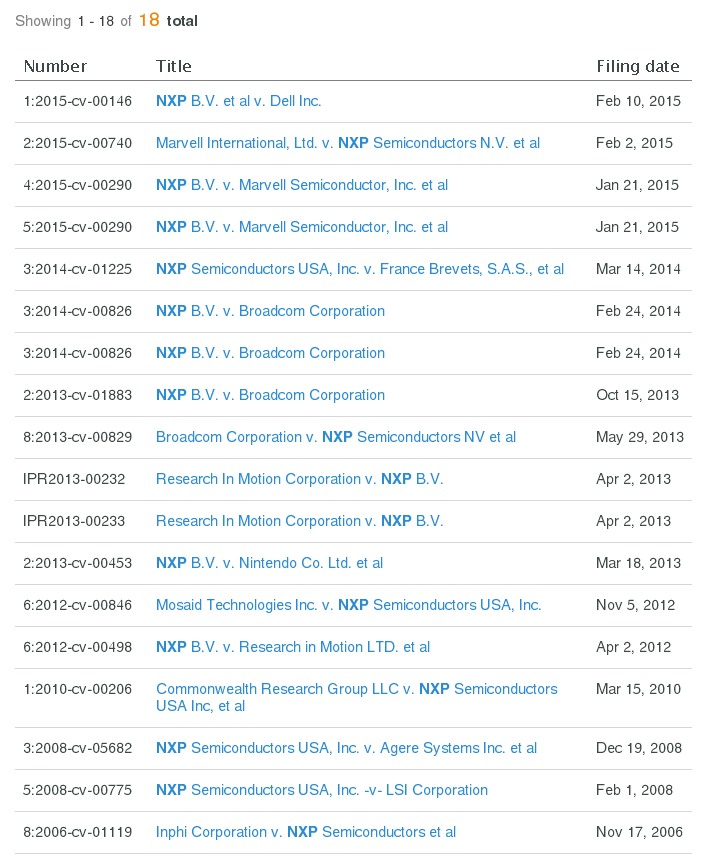
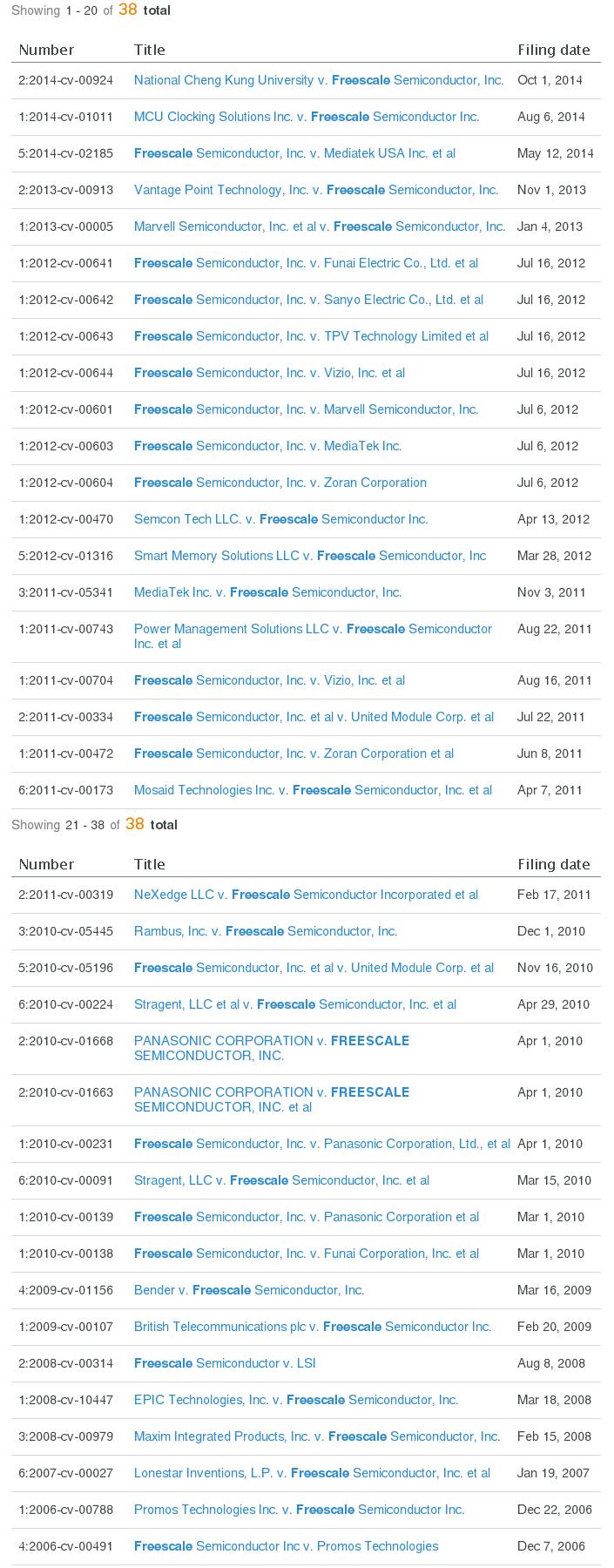
Secondly, both companies have been quite active in patent litigation in recent years, acting both as plaintiffs and as defendants. According to Patexia , in the US alone , NXP has been involved in 18 patent litigations since 2006, with 14 of them launched in the past three years. Freescale was noted in 38 disputes in the United States, of which over the past three years accounted for more than half.
Undoubtedly, enlargement and, most importantly, geographical diversification of the patent portfolio will help strengthen the position of the combined company in patent disputes.
Thirdly, it can be assumed that duplicating efforts can be coordinated in order to free up resources for patenting priority technologies. This, in particular, is indicated by the NXP’s intention mentioned in the press to sell its high-performance RF unit.
In general, it seems that the patent departments of Intel, Qualcomm and Texas Instruments will have to worry a lot.
Most patents relate to the United States. In particular, Freescale owns 6,000 US patents, and NXP owns 3,800 US patents. In turn, NXP has more Chinese and European patents. To visualize their similarities and differences Chipworksprepared a patent landscape with overlay patent portfolios, including US patents and patent applications of these companies. Each patent document is represented by a dot, and the dots are grouped by similarity of texts (based on frequency analysis). Three topographic terms are defined for topographic heights, which are most often found in texts that form these heights of patent documents and give an idea of technical areas (technology concepts).
The automatic patent classification of the expert system that shaped this landscape shows that most patents on the right side relate to crystal manufacturing and packaging processes. Patent documents related to circuitry prevail in the upper left, and system engineering in the lower left.
The illustration clearly shows that the distribution of patent documents by technical area between NXP and Freescale is very similar. In none of the areas is there any noticeable dominance of any of the companies. What then can be the benefit of combining from a patent point of view and what changes in patent policy can be predicted?
Firstly, if you take a broader look - in terms of patent coverage of the final product, then NXP and Freescale complement each other quite well.
Secondly, both companies have been quite active in patent litigation in recent years, acting both as plaintiffs and as defendants. According to Patexia , in the US alone , NXP has been involved in 18 patent litigations since 2006, with 14 of them launched in the past three years. Freescale was noted in 38 disputes in the United States, of which over the past three years accounted for more than half.
Undoubtedly, enlargement and, most importantly, geographical diversification of the patent portfolio will help strengthen the position of the combined company in patent disputes.
Thirdly, it can be assumed that duplicating efforts can be coordinated in order to free up resources for patenting priority technologies. This, in particular, is indicated by the NXP’s intention mentioned in the press to sell its high-performance RF unit.
In general, it seems that the patent departments of Intel, Qualcomm and Texas Instruments will have to worry a lot.