December 22, 2015 at 13:05
HPE Offers Composable Infrastructure
In early December, in London at its European Discover conference, HPE presented the first results of the Synergy project to create solutions for building a “composable” IT infrastructure in which you can quickly (in a few minutes) deploy as traditional server applications (ERP systems) , databases, MS Exchange email servers, etc.), as well as new applications specially written for working in the cloud. The Synergy project is the next step in the evolution of converged infrastructure that the HP Enterprise Products Division has been using for several years in its integrated systems.
HPE's composable infrastructure is based on three key elements:
- Flexible resource pools: computing, data storage and network, - providing a single infrastructure for the deployment of various workloads: physical, virtual and containers;
- Software-defined logic based on the use of templates;
- Unified APIs that provide easy and convenient integration of HPE Link Infrastructure with any management and cloud service platform.
The composable infrastructure concept is implemented in the HPE Synergy system, which is scheduled to begin shipping in the second quarter of next year. Synergy beta testing will be held in the first quarter of 2016, and participants in London's Discover were able to see this system in the forum demo zone. Racks with HPE Synergy.
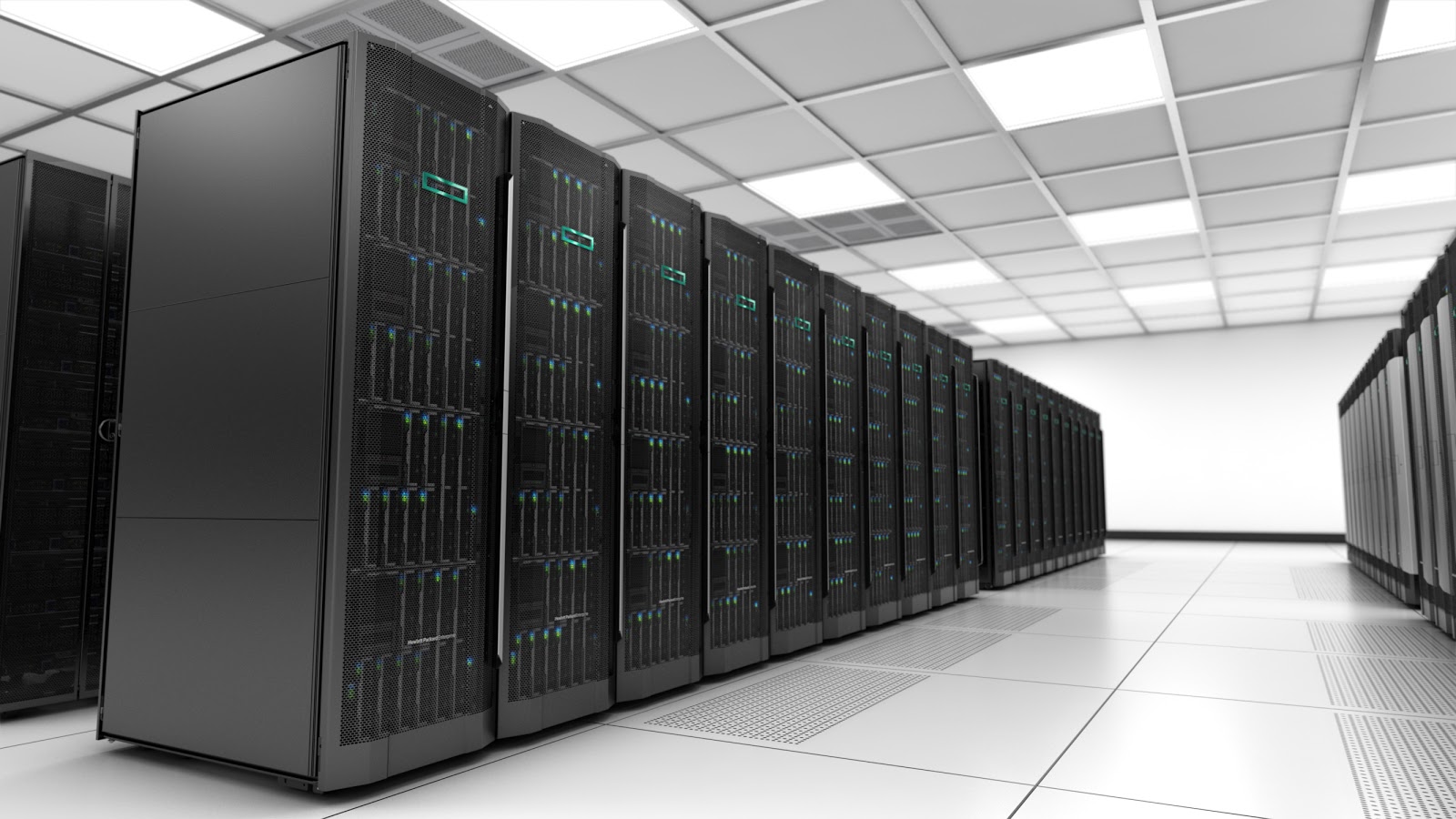
The main building block of the HPE Synergy system is the Frame 12000 10-unit rack chassis, which houses the compute and storage modules that make up the flexible resource pool for the composable infrastructure. One standard server rack accommodates four of these chassis. Compute Module 480 G9 and 660 G9 computing modules using the 9th generation ProLiant technologies are blades with two and four processor sockets of half and full height (up to 12 480 modules or six 660 G9 modules can be installed in one Frame 12000 chassis). Compute Module 620 G9 and 680 G9 computing modules for two and four sockets are designed for servicing critical applications, occupying one and two full-height compartments in the chassis, respectively.

Chassis Synergy Frame 12000 with storage module and computing modules 480, 660, 620 and 680 Compute Modules.
The Storage Module D3940, which occupies two half-height bays in the Frame 12000 chassis, accommodates forty 2.5-inch hot-swappable 12Gb SAS, 6GB SATA, or SSD drives that are shared between the compute modules in the chassis and connected to them through Synergy 12 Gb SAS Connection Module. You can install up to five D3940 modules in one chassis and connect up to 100 disks to HPE Synergy 480 Gen9 computers.
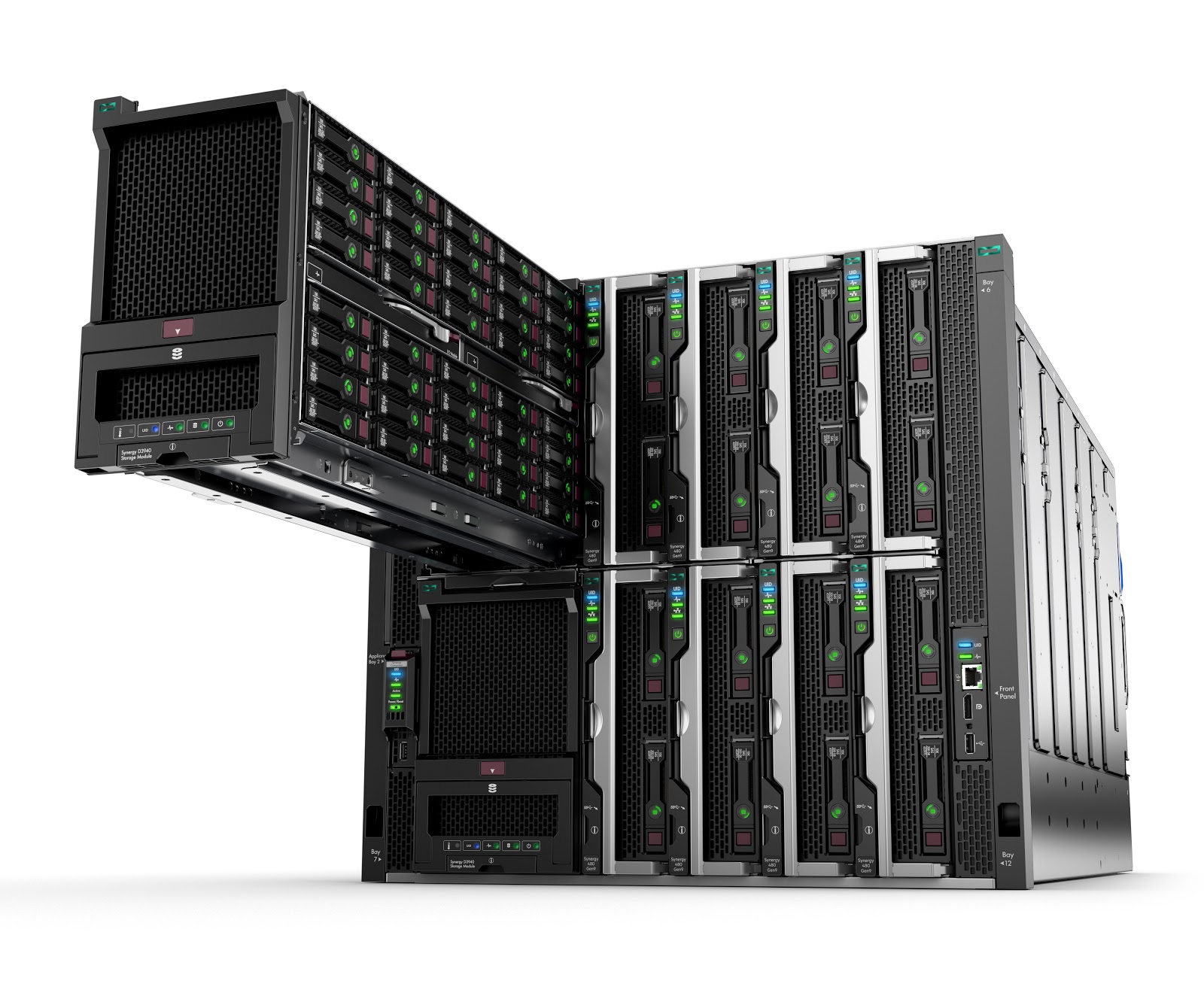
Chassis Synergy Frame 12000 with extended storage module.
For connection to Ethernet networks, incl. convergent, they use high-speed HPE Virtual Connect modules, which allow combining up to 5 Frame 12000 chassis into a single domain, thus eliminating the need for Top-of-the-Rack switches and greatly simplifying the management of server connections.
HPE Synergy is compatible with all modern storage systems, while deep integration and automatic provisioning is provided for HPE 3PAR. To connect to SANs, either Virtual Connect modules or "classic" Fiber Channel switches are used.
The HPE Synergy infrastructure is managed by dedicated Composer servers for which there are two special slots in the Frame 12000 chassis. One pair of Composers (primary and backup modules) manage five racks (20 chassis) as a single system; chassis connected to each other using the Fabric Link Module, the control network is physically separated from production networks.
Composer uses HPE OneView technology and implements a template-based management concept: configures calculators, configures connections to external and embedded storage systems, performs driver and firmware updates, both through the web interface and through universal APIs upon requests from external applications and platforms.
The Image Streamer module complements the capabilities of Composer and allows you to quickly create images of operating systems with the necessary applications and immediately upload them to computers. The preparation of such an image takes only 15 seconds.

Chassis Synergy Frame 12000 with extended Composer module .
Accurately rebuilding resources to meet application needs with Composer enables more efficient use of computing power and disk capacity, reducing costs due to running idle or at the limit of your hardware capabilities. HPE Synergy implements a single universal interface for resource discovery, search, accounting, configuration, provision, updating and diagnostics. This API is already integrated with VMware vCenter, Microsoft System Center, Chef, Schneider Electric, OpenStack, Docker, HPE Helion, and Arista, and plans to integrate it with Emerson, Eaton, and F5 in the future.
HPE Synergy’s unified infrastructure simplifies the use of traditional server applications and makes it easy to deploy cloud applications and services. In this tunable infrastructure, using a single interface, you can quickly compute computing resources, storage resources and network resources into any configuration necessary for a specific application.
HPE's composable infrastructure is based on three key elements:
- Flexible resource pools: computing, data storage and network, - providing a single infrastructure for the deployment of various workloads: physical, virtual and containers;
- Software-defined logic based on the use of templates;
- Unified APIs that provide easy and convenient integration of HPE Link Infrastructure with any management and cloud service platform.
The composable infrastructure concept is implemented in the HPE Synergy system, which is scheduled to begin shipping in the second quarter of next year. Synergy beta testing will be held in the first quarter of 2016, and participants in London's Discover were able to see this system in the forum demo zone. Racks with HPE Synergy.
The main building block of the HPE Synergy system is the Frame 12000 10-unit rack chassis, which houses the compute and storage modules that make up the flexible resource pool for the composable infrastructure. One standard server rack accommodates four of these chassis. Compute Module 480 G9 and 660 G9 computing modules using the 9th generation ProLiant technologies are blades with two and four processor sockets of half and full height (up to 12 480 modules or six 660 G9 modules can be installed in one Frame 12000 chassis). Compute Module 620 G9 and 680 G9 computing modules for two and four sockets are designed for servicing critical applications, occupying one and two full-height compartments in the chassis, respectively.
Chassis Synergy Frame 12000 with storage module and computing modules 480, 660, 620 and 680 Compute Modules.
The Storage Module D3940, which occupies two half-height bays in the Frame 12000 chassis, accommodates forty 2.5-inch hot-swappable 12Gb SAS, 6GB SATA, or SSD drives that are shared between the compute modules in the chassis and connected to them through Synergy 12 Gb SAS Connection Module. You can install up to five D3940 modules in one chassis and connect up to 100 disks to HPE Synergy 480 Gen9 computers.
Chassis Synergy Frame 12000 with extended storage module.
For connection to Ethernet networks, incl. convergent, they use high-speed HPE Virtual Connect modules, which allow combining up to 5 Frame 12000 chassis into a single domain, thus eliminating the need for Top-of-the-Rack switches and greatly simplifying the management of server connections.
HPE Synergy is compatible with all modern storage systems, while deep integration and automatic provisioning is provided for HPE 3PAR. To connect to SANs, either Virtual Connect modules or "classic" Fiber Channel switches are used.
The HPE Synergy infrastructure is managed by dedicated Composer servers for which there are two special slots in the Frame 12000 chassis. One pair of Composers (primary and backup modules) manage five racks (20 chassis) as a single system; chassis connected to each other using the Fabric Link Module, the control network is physically separated from production networks.
Composer uses HPE OneView technology and implements a template-based management concept: configures calculators, configures connections to external and embedded storage systems, performs driver and firmware updates, both through the web interface and through universal APIs upon requests from external applications and platforms.
The Image Streamer module complements the capabilities of Composer and allows you to quickly create images of operating systems with the necessary applications and immediately upload them to computers. The preparation of such an image takes only 15 seconds.
Chassis Synergy Frame 12000 with extended Composer module .
Accurately rebuilding resources to meet application needs with Composer enables more efficient use of computing power and disk capacity, reducing costs due to running idle or at the limit of your hardware capabilities. HPE Synergy implements a single universal interface for resource discovery, search, accounting, configuration, provision, updating and diagnostics. This API is already integrated with VMware vCenter, Microsoft System Center, Chef, Schneider Electric, OpenStack, Docker, HPE Helion, and Arista, and plans to integrate it with Emerson, Eaton, and F5 in the future.
HPE Synergy’s unified infrastructure simplifies the use of traditional server applications and makes it easy to deploy cloud applications and services. In this tunable infrastructure, using a single interface, you can quickly compute computing resources, storage resources and network resources into any configuration necessary for a specific application.