# China's New National Power Bank Safety Standard
China is introducing the first mandatory national GB/T safety standard for portable batteries. The document was developed with input from 30 IT giants, including Huawei, Xiaomi, Oppo, Lenovo, CATL, Anker, and Ugreen. The standard tightens requirements for thermal resistance, mechanical strength, and disposal of lithium-ion cells. Producing new power banks that don't comply with the standard will be prohibited.
The requirements cover the full lifecycle: from manufacturing to use. Manufacturers must eliminate refurbished cells, impose strict chemical limits, and update labeling. Analysts predict device prices will rise by up to 30%.
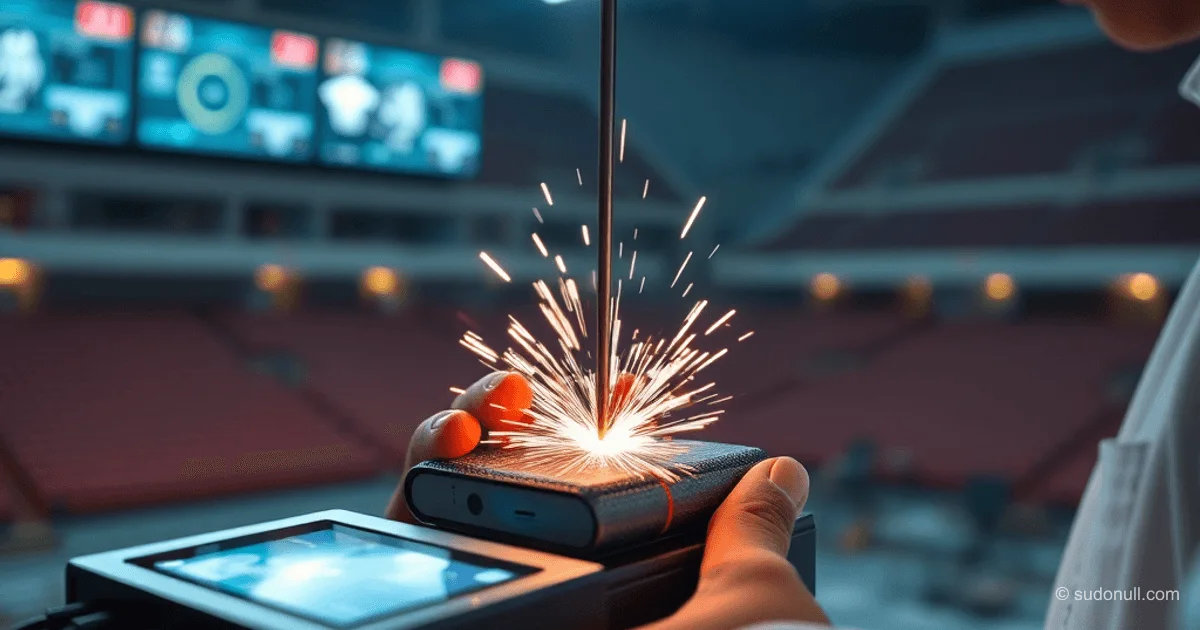
Nail Penetration Test: Key Safety Barrier
The core test involves piercing a fully charged battery at its center with a 4 mm diameter steel needle. Parameters:
- Insertion speed: 20 mm/s.
- Needle dwell time: 5 minutes.
The battery must not catch fire or leak electrolyte. This test simulates extreme damage typical of accidents or mishandling.
Additional mechanical tests include:
- Drop tests from height.
- Compression with specified force.
- Impact resistance per standardized protocols.
Thermal Resistance and Electrical Loads
Batteries undergo thermal cycling:
- Heating to 135°C for 1 hour without degradation.
- Overcharge to 1.4 times nominal voltage—without short circuit or swelling.
Chemical limits minimize thermal runaway risks:
- Electrolyte water content: <20 ppm.
- Hydrogen fluoride (HF) level: ≤100 ppm.
Banning secondary or refurbished cells ensures supply chain integrity.
Labeling and Compliance
The power bank casing must include:
- Safe service life.
- OEM manufacturer details.
- Exact battery material composition.
This simplifies traceability and market oversight. Manufacturers are already adapting: Anker has released models A1116 (45W fast charging) and A110Z (intelligent battery management).
Impact on Market and Development
The standard will take effect in phases, culminating in a full ban on non-compliant devices. For developers, this means redesigning PCB layouts, sourcing certified cells, and validating firmware for new BMS protocols (Battery Management System).
Key changes compared to prior standards:
| Parameter | Old standard | New standard |
|-----------------|------------------|--------------------|
| Penetration | Not required | Ø4mm, 20mm/s, 5min |
| Temperature | Up to 130°C | 135°C, 1h |
| Overcharge | 1.2x | 1.4x |
| Cells | Refurbished allowed | Full ban |
The transition will boost reliability but increase CAPEX by 20–30% due to premium components.
Key Points
- Mandatory: All new power banks in China must meet the GB/T standard—no exceptions.
- Extreme Tests: Nail penetration, 135°C heating, 1.4x overcharge—without fire or leaks.
- Chemistry and Assembly: <20 ppm H2O, ≤100 ppm HF, ban on refurbished cells.
- Labeling: Service life, OEM, battery composition on the casing.
- Market Impact: Prices up 30%, models like Anker A1116/A110Z already compliant.
— Editorial Team










No comments yet.