Accurate Soil Moisture Measurement: Technologies and Challenges for IoT Systems
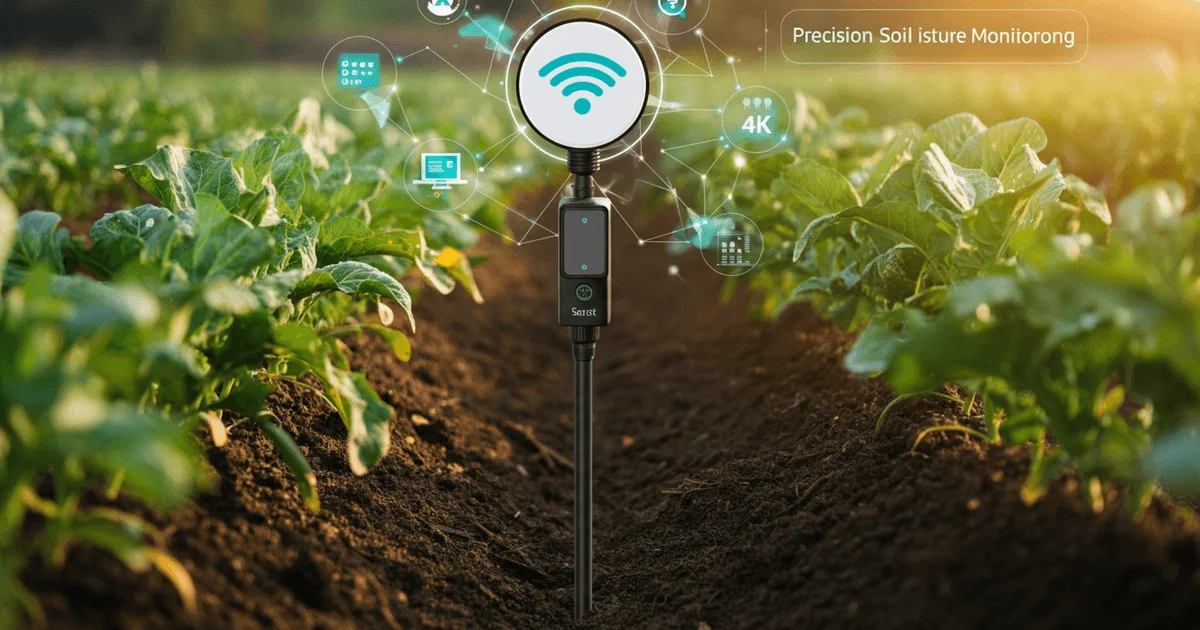
For developers and engineers working with environmental monitoring systems or smart agriculture, accurate soil moisture measurement is critically important, yet it comes with numerous technical nuances. The seemingly simple concept of "measuring moisture" conceals complex physics of water-soil substrate interaction, alongside the limitations of modern sensor technologies. Understanding these aspects is essential for creating reliable and calibrated solutions that can provide trustworthy data for automation and real-time decision-making. In this article, we will explore the primary methods for measuring soil moisture, from laboratory benchmarks to integration into IoT systems, and identify key engineering challenges and approaches to solving them.
Soil as a Measurement Subject: The Complexity of the Medium
In everyday language, the terms "soil" and "earth" are often used interchangeably; however, in scientific and engineering disciplines, their meanings are strictly differentiated. Soil is a dynamic, multi-component system, representing the upper fertile layer of the lithosphere, rich in organic matter, microorganisms, and minerals. Its formation occurs over millennia under the influence of climate, biological processes, and parent rock. Soil possesses a complex horizontally layered structure and is the key substrate providing plants with nutrients, aeration, and, most importantly for our topic, moisture.
Water in soil is not merely a liquid filling voids; it is the primary medium for soil biota activity and a crucial factor for plant growth. Plants absorb nutrients exclusively as aqueous solutions of chemical compounds. Two main categories of soil moisture are critically important for understanding the measurement process:
- Volumetric Water Content (VWC): Defined as the ratio of the volume of water in the soil to the total volume of the soil sample. It is expressed as a percentage or m³/m³. Most electronic moisture sensors measure this parameter.
- Plant Available Water (PAW): Represents the portion of total moisture that is actually accessible to plants for their vital functions. It is calculated as the difference between the actual volumetric water content and the permanent wilting point (PWP) — the minimum moisture level at which plants can no longer absorb water and begin to irreversibly wilt. Understanding plant available water is particularly important for irrigation systems and agronomic monitoring.
Soil always contains some amount of water, including chemically bound water, which cannot be extracted by plants and is only removed at extreme temperatures. The engineer's task is not merely to measure the presence of water but also to determine its availability for target processes.
The Gold Standard for Accuracy: The Gravimetric Method
The classic and most accurate method for determining soil volumetric water content is the gravimetric method. It serves as the "gold standard" and benchmark for calibrating all other, more rapid measurement techniques. The procedure includes the following steps:
- Sample Collection: A sample of moist soil is taken, and its mass is precisely measured (m_moist).
- Drying: The sample is placed in an oven and dried at a temperature above 105°C (for most soils) until a constant mass is achieved, indicating the complete evaporation of free water. For gypsiferous soils, the temperature is lower (80°C).
- Re-weighing: After cooling, the sample is quickly weighed to determine the mass of the dry soil (m_dry).
- Calculation: Volumetric water content (W) is calculated using the formula: W = ((m_moist - m_dry) / m_dry) * 100%.
The accuracy of this method critically depends on strict adherence to sample preparation and measurement procedures, regulated by standards such as GOST 28268-89. Key requirements for sample preparation include:
- Thorough mixing and analytical sample selection using the quartering method, where the initial sample is divided into four parts, and two opposite parts are taken for analysis. This ensures sample representativeness.
- Strict adherence to temperature regimes and drying times (e.g., 5 hours for non-gypsiferous soils).
Despite its high accuracy, the gravimetric method is destructive, labor-intensive, time-consuming, and unsuitable for continuous field monitoring. Its primary application is laboratory analysis and the calibration of instrumental sensors.
From Simple to Advanced: The Evolution of Electronic Sensors
For practical applications, especially in the context of IoT and automated systems, non-destructive, rapid, and cost-effective soil moisture measurement methods are required. Electronic sensors represent a compromise between accuracy and applicability.
1. Resistive Sensors: These are the simplest and cheapest devices, operating on the principle of measuring electrical resistance between two electrodes immersed in the soil. Water contained in the soil acts as an electrolyte. The more moisture present, the lower the resistance. However, these sensors have several significant drawbacks:
- High Inaccuracy: Dependence on temperature, soil salinity, soil type, and compaction degree leads to unstable and incorrect readings.
- Electrode Corrosion: Constant contact with moist soil and current flow cause electrochemical corrosion, quickly rendering the sensors inoperable.
- Hysteresis: Different readings when the soil is wetting versus drying.
Due to these limitations, resistive sensors are only suitable for the most basic, non-critical tasks, such as demonstration projects on platforms like Arduino.
2. Capacitive Sensors: These sensors utilize the dielectric properties of water. Soil containing water acts as a dielectric between the plates of a capacitor. Since water has a significantly higher dielectric constant compared to dry soil and air, changes in soil moisture lead to changes in the capacitor's capacitance. This change is then converted into a measurable electrical signal. Advantages of capacitive sensors:
- Less Susceptible to Corrosion: Electrodes are typically covered with a protective layer or designed for non-contact measurement, extending their lifespan.
- Better Stability and Repeatability: Less dependence on salinity compared to resistive sensors.
However, they also have drawbacks:
- Small Measurement Volume: Many budget capacitive sensors measure moisture in a very small volume (0.5-1 cm³), making them sensitive to localized soil heterogeneities.
- Sensitivity to Air Gaps: Poor contact between the sensor and the soil can significantly distort readings.
- Lack of Moisture Protection: Inexpensive models often lack adequate moisture protection, leading to electronic degradation.
3. Advanced Capacitive (Industrial) Sensors: These devices are significantly refined versions of capacitive sensors, designed for long-term, reliable operation. They often feature a multi-contact configuration (e.g., three contacts, where two outer ones share a potential, and the central one is for measurement), which allows for an increased sample volume. Key features include:
- Moisture-Resistant Enclosure (IP67 and above): Ensures durability in aggressive soil conditions.
- Materials: Stainless steel contacts, electronics potted with compound.
- Built-in Compensation: Some models include temperature compensation to enhance accuracy.
- Wider Measurement Range: Ability to operate in the microwave frequency range for more stable readings.
Recommendations for using industrial soil moisture sensors include:
- ensuring the cleanliness of measurement elements before installation;
- fully immersing the sensor into the soil along the entire length of its measurement elements;
- installing the sensor in soil free of large roots, stones, or debris;
- avoiding rocking the sensor to ensure the soil tightly surrounds the measurement probes without air gaps;
- observing an exposure time (5-10 minutes) for readings to stabilize after installation.
It is important to consider that soil moisture is highly uneven. Differences of 10-15% can be observed within just a few tens of centimeters. Therefore, obtaining representative data in field conditions requires installing multiple sensors and averaging their readings.
Engineering Challenges and System Development Approaches
Developing reliable soil moisture monitoring systems for IoT applications is a complex engineering task requiring a comprehensive approach. Beyond selecting the appropriate sensor, several factors must be considered:
- Calibration: Each sensor, especially in industrial solutions, must be calibrated for the specific soil type and operating conditions. Universal calibrations often introduce significant errors. The gravimetric method is used for precise calibration.
- Influence of External Factors: Sensor readings can be affected by soil salinity, density, organic matter content, and temperature. Developing algorithms to compensate for these influences is a key element for accuracy.
- Power Consumption: For autonomous IoT devices, low power consumption of sensors and control electronics is critical, especially when collecting data in remote locations.
- Data Transmission: The choice of wireless communication protocol (LoRaWAN, NB-IoT, Zigbee, Wi-Fi) depends on the required range, data transmission frequency, and energy efficiency.
- Platform Integration: Collected data must be efficiently transmitted to a cloud platform for storage, analysis, visualization, and integration with decision-making systems (e.g., for automated irrigation control).
- Standardization: When designing and manufacturing measurement equipment, it is crucial to adhere to industry standards, such as GOST 15.301-2016, which regulate the stages of development and production launch for scientific and technical products. This ensures reliability, repeatability, and compliance with regulatory requirements.
Creating an effective soil moisture monitoring system requires deep knowledge in electronics, programming, agronomy, and data analysis. The correct selection and integration of sensors, along with adequate data processing, can significantly optimize water resource usage, increase crop yields, and reduce environmental impact.
Key Takeaways
- Soil is a Complex Medium: Accurate moisture measurement requires considering its physicochemical properties and the distinction between volumetric and plant available water.
- Gravimetric Method is the Gold Standard: It provides maximum accuracy and is used for calibrating electronic sensors but is unsuitable for field monitoring.
- Electronic Sensors Have Limitations: Resistive sensors are unreliable; capacitive sensors are better but require attention to measurement volume, calibration, and moisture protection.
- Industrial Sensors Offer a Compromise: Advanced capacitive sensors with protection and compensation provide the necessary reliability for IoT but require proper installation and consideration of soil heterogeneity.
- Systemic Approach in IoT: Developing effective soil moisture monitoring systems requires calibration, consideration of external factors, power consumption optimization, and adherence to design standards.
— Editorial Team










No comments yet.