Modeling Consciousness Qualia Using SQL Data Structures
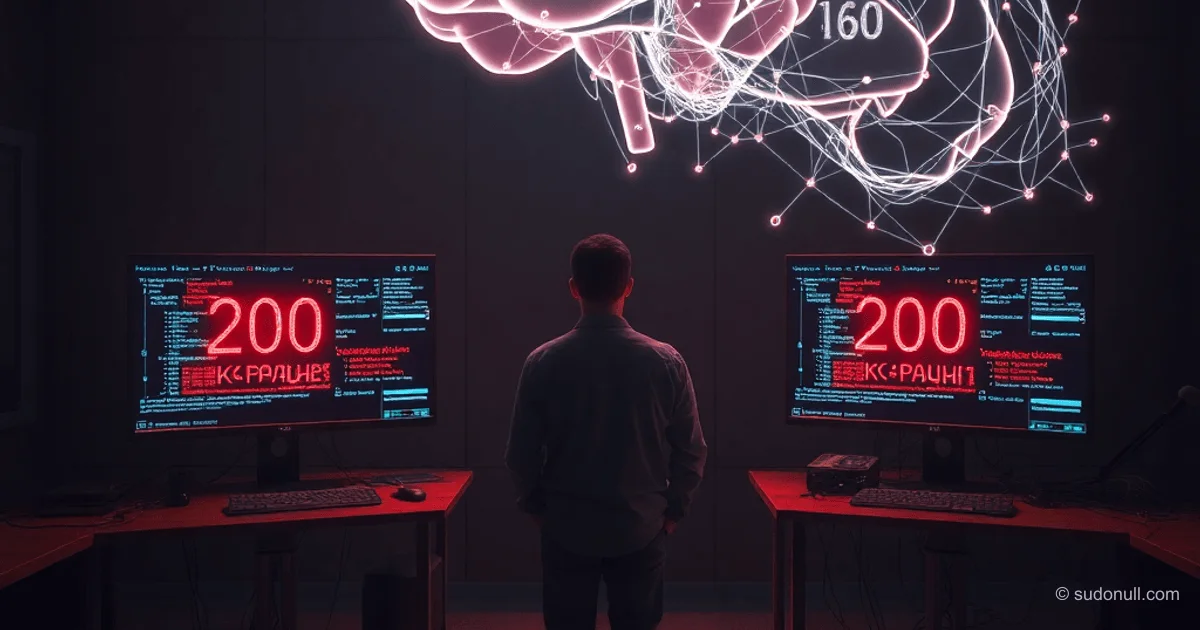
Qualia represent the phenomenal qualitative characteristics of conscious experience. To demonstrate their formation, we use a model consisting of two identical PCs with DBMS, color and sound sensors, and signal processing software. The goal is to show how raw data transforms into associative structures, similar to processes in the brain.
We start with a primary light color log table. The sensor converts an analog signal into a digital value (0–255) via an ADC.
CREATE TABLE log_light_color (color INT);
INSERT INTO log_light_color VALUES (200);
The value 200 is recorded in the PC's long-term memory in binary code, considering hardware and software stack specifics. Even at this stage, uniqueness arises: differences in hardware, OS, and DBMS lead to different physical records even for logically identical data.
Raw logs are aggregated into a table of unique colors with an internal identifier.
CREATE TABLE all_colors (MyID int PRIMARY KEY AUTO_INCREMENT, color INT);
INSERT INTO all_colors (color) SELECT DISTINCT log_light_color.color FROM log_light_color WHERE NOT EXISTS (SELECT color FROM all_colors WHERE log_light_color.color = all_colors.color);
Integrating Audio Data and Timestamps
To link color with words, we introduce a sound input log.
CREATE TABLE log_sound_word (word CHAR(255));
INSERT INTO log_sound_word VALUES ('red');
Similarly, we create a table for unique words.
CREATE TABLE all_words (MyID int PRIMARY KEY AUTO_INCREMENT, word CHAR(255));
INSERT INTO all_words (word) SELECT DISTINCT log_sound_word.word FROM log_sound_word WHERE NOT EXISTS (SELECT word FROM all_words WHERE log_sound_word.word = all_words.word);
Qualia arise not from isolated data, but from associations. We add timestamps and an attention flag:
ALTER TABLE log_light_color ADD my_local_time_start TIMESTAMP, my_local_time_stop TIMESTAMP, attention INT;
ALTER TABLE log_sound_word ADD my_local_time_start TIMESTAMP, my_local_time_stop TIMESTAMP, attention INT;
Forming Associations
The associations table stores links between color and word identifiers with a match counter.
CREATE TABLE associations (myid_color INT, myid_word INT, matches INT);The software algorithm searches for time intersections with a lag (±50 ms), considering attention, with a minimum of 3 repetitions. Once the threshold is reached, the association is fixed.
Example procedure for the color red (200):
DECLARE @tmp_ID_color INT; SET @tmp_ID_color = (SELECT myID FROM all_colors WHERE color=200);
DECLARE @tmp_ID_word INT;
DECLARE @lag1 INT; SET @lag1=50;
DECLARE @min_double INT; SET @min_double=3;
DECLARE @k_v1 INT; SET @k_v1=10;
DECLARE @counter1, @counter2, @counter3, @counter4 INT; DECLARE @word1 CHAR(255);

CREATE TEMPORARY TABLE temp_table (id INT IDENTITY(1,1), word CHAR(255), attention INT);
INSERT INTO temp_table (word, attention)
SELECT log_sound_word.word, log_light_color.attention
FROM log_light_color
INNER JOIN log_sound_word
ON log_sound_word.my_local_time_start >= log_light_color.my_local_time_start - INTERVAL @lag1 SECOND
AND log_sound_word.my_local_time_stop <= log_light_color.my_local_time_stop + INTERVAL @lag1 SECOND
WHERE log_light_color.color = 200 AND log_light_color.attention > 0;- Record Uniqueness: Differences in ADCs, memory, and controllers create unique physical data representations.
- Aggregation: DISTINCT in permanent tables normalizes data, discarding duplicates.
- Temporal Correlation: JOIN by timestamp with a lag simulates attention and repetitions.
- Fixation: After N matches, the association moves to long-term storage.
- Scalability: The model extends to other modalities (sound, tactile data).
This scheme reflects the ontogenesis of qualia: from raw sensory logs to stable internal representations through reiteration and attention.
Key Takeaways
- Qualia form not from the stimuli themselves, but from their internal codes with unique physical embodiments in memory.
- Associations are built on time correlations considering attention; a minimum of 3–5 repetitions is required for fixation.
- Normalization (DISTINCT, PRIMARY KEY) prevents duplicates, creating canonical identifiers.
- The model applies to AI: similar structures in vector DBs or knowledge graphs can simulate phenomenal experience.
— Editorial Team










No comments yet.