Search Articles — Sudonull
Search Results
Trending Now

What Are the Ethical Concerns in Artificial Intelligence?
Learn what are the ethical concerns in artificial intelligence, from bias to job loss. Backed by research, this guide offers a practical framework for evaluation.

How Does Retrieval Augmented Generation Work? RAG Guide
Learn how does retrieval augmented generation work: RAG reduces AI hallucinations, grounds responses in real data, and transforms LLMs into trustworthy systems. Start now.
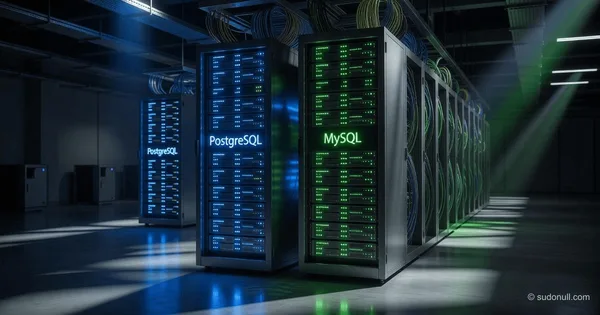
PostgreSQL vs MySQL: Which One to Choose?
PostgreSQL vs MySQL which one to choose? Compare features, performance, scalability, and use cases. Make an informed decision for your project with this data-driven guide.

How to Monitor Kubernetes with Grafana and Prometheus
Learn how to monitor Kubernetes with Grafana and Prometheus using the kube-prometheus-stack. Step-by-step guide to deploy, connect, and visualize cluster metrics.

What Is MLOps and Why Is It Important? Key Concepts
Learn what is MLOps and why it is important for AI success. Discover key concepts, benefits, and how it bridges data science and operations for scalable ML.

What Is a Vector Database? Beginner's Guide to AI Search
What is a vector database? Learn how vector databases power AI search, RAG, and recommendations. Discover key concepts and when to use them. Start here.
How to Reduce Hallucination in LLMs: 7 Proven Techniques
Learn how to reduce hallucination in LLMs with 7 proven techniques from peer-reviewed research. Boost accuracy and reliability in your AI applications today.

MongoDB vs PostgreSQL When to Use Each: Key Differences
MongoDB vs PostgreSQL when to use each: compare ACID compliance, scalability, schema flexibility, and query power. Choose the right database for your project.

CERN quantum internet: 50 km test between Geneva and Lausanne
CERN successfully transmitted entangled photons over 50 km in a real urban network. Learn how White Rabbit technology is changing the quantum communications market and who benefits from this breakthrough.

How to Choose a Database for Your System: Expert Guide
Learn how to choose a database for your system with this evidence-based framework. Compare SQL, NoSQL, graph, and time-series databases to make the right decision.