How Semiconductors Power the World: Chip Design & Fabrication
Semiconductors are the invisible foundation of modern life. From the smartphone in your pocket and the car you drive to the data centers running artificial intelligence and the medical devices saving lives, these fingernail-sized chips are the brains of the 21st century. The history of the semiconductor industry and how does it work is a fascinating story of scientific breakthroughs, engineering genius, and a deeply complex global supply chain that has become one of the most strategically important industries in the world.
What You'll Learn
By the end of this article, you'll understand the core mechanics of how semiconductors work, trace their evolution from the first transistor to today's specialized AI chips, and grasp the complex global ecosystem that designs and manufactures them. You'll be able to see past the "magic" of a microchip and understand the intricate choreography of science, engineering, and global politics that powers the modern world.
How Semiconductors Work
At its core, a semiconductor is a material—most commonly silicon—with electrical conductivity sitting between that of a conductor (like copper) and an insulator (like glass) . This unique property allows engineers to precisely control the flow of electricity. Think of it like a water pipe with a valve: sometimes the valve is open, allowing water to flow (conducting), and sometimes it's closed, stopping the flow (insulating). The magic of a semiconductor is that this "valve" can be controlled, and it has no moving parts, allowing for switches that are nearly atomic in scale.
The Transistor: The Fundamental Switch
The transistor is the basic building block of all modern electronics. It acts as a tiny switch or amplifier. The first transistor, the point-contact transistor, was invented in 1947 by John Bardeen, Walter Brattain, and William Shockley at Bell Laboratories . This invention, which earned them the Nobel Prize in Physics, marked the birth of the semiconductor industry and began the replacement of bulky, energy-hungry vacuum tubes .
By introducing specific impurities (a process called "doping") into the silicon crystal, its electrical properties are altered. This creates regions with an excess of electrons (N-type) or a lack of electrons, creating "holes" (P-type). When these P and N regions are placed together, they form a P-N junction, which is the fundamental structure of a transistor, allowing it to act as a switch .
From Transistor to Integrated Circuit
While the transistor was revolutionary, building a computer required connecting thousands of individual transistors, which was still complex and costly. The next massive leap came with the invention of the integrated circuit (IC) in 1958-1959. Independently, Jack Kilby of Texas Instruments and Robert Noyce of Fairchild Semiconductor developed methods to fabricate multiple transistors and other components on a single piece of semiconductor material .
A key enabler of this was Jean Hoerni's invention of the planar process at Fairchild Semiconductor . This breakthrough allowed for the creation of transistors and integrated circuits on a flat silicon surface using photographic techniques to print patterns. This process not only made chips more reliable but also laid the groundwork for mass production, as hundreds of circuits could be made on a single wafer and then cut apart .
The Microprocessor and Beyond
The next milestone was Intel's invention of the first commercial microprocessor in 1971, integrating the entire function of a computer's central processing unit (CPU) onto a single chip . This sparked the personal computer revolution. Since then, the industry has relentlessly pursued miniaturization, famously described by Intel co-founder Gordon Moore's observation in 1965 that the number of transistors on a chip would double roughly every two years—a principle known as Moore's Law .
The complexity is staggering. Modern chips contain over 130 billion transistors . This has enabled the progression from general-purpose CPUs to specialized architectures. For instance, Graphics Processing Units (GPUs) are designed for the parallel processing required for AI and graphics, while Application-Specific Integrated Circuits (ASICs) are tailored for a single, highly specific task, like cryptocurrency mining or deep learning acceleration .
Why It Matters: The Engine of Modern Life
Semiconductors are the "invisible engine of modern life" . They amplify human productivity by enabling automation, communication, and simplifying complex tasks, all while becoming smaller, cheaper, and more energy-efficient .
This technology underpins virtually every sector: from communications (smartphones, 5G), to computing (servers, data centers), to transportation (electric vehicles, autonomous driving systems), and healthcare (pacemakers, MRI machines) . The global semiconductor industry's sales reached $574.1 billion in 2022, and this demand is projected to drive industry spending past $1 trillion annually by the early 2030s .
By the Numbers
| Milestone / Statistic | Date / Figure | Significance |
|---|---|---|
| Invention of the Transistor | 1947 | Replaced vacuum tubes, founding the semiconductor industry . |
| First Integrated Circuit (IC) | 1958-1959 | Enabled multiple components on a single chip . |
| First Commercial Microprocessor (Intel 4004) | 1971 | Began the personal computing revolution . |
| Moore's Law | 1965 (observation) | Predicted the exponential growth in computing power . |
| Transistors on a Modern Chip (e.g., Apple M1) | >130 Billion | Demonstrates the extreme complexity of modern design . |
| Global Semiconductor Industry Sales | $574.1B (2022) | Underscores its massive economic impact . |
| Projected Annual Industry Spending | >$1 Trillion (early 2030s) | Driven by AI, data centers, and other next-gen tech . |
Common Myths vs. Facts
| Myth | Fact |
|---|---|
| Myth: "A semiconductor is a single component." | Fact: "Semiconductor" often refers to the material, but more commonly to the complex integrated circuit (IC) or "chip" that contains billions of components . |
| Myth: "All chips are made by a single company." | Fact: Chips are the product of a globalized ecosystem. Companies like Apple (fabless) design chips, while TSMC (foundry) manufactures them . |
| Myth: "Silicon is the only semiconductor material." | Fact: While silicon is the workhorse, other materials like Silicon Carbide (SiC) and Gallium Nitride (GaN) are used for high-power and high-frequency applications like EVs and 5G . |
| Myth: "Chip design and manufacturing are essentially the same." | Fact: Chip design requires complex Electronic Design Automation (EDA) software, while manufacturing is an ultra-precise physical process that requires billions of dollars in machinery . |
| Myth: "The semiconductor supply chain is resilient and stable." | Fact: The supply chain is a fragile global web. A single factory fire, natural disaster, or geopolitical tension can cause global chip shortages, impacting industries from automotive to defense . |
What You Should Do With This Knowledge
Understanding the history and mechanics of semiconductors puts you at an advantage. You can now recognize that when you use any electronic device, you are relying on a product of one of the most complex engineering feats in human history. This knowledge helps you appreciate the sophistication of modern technology and understand the global forces—geopolitical tensions, economic policies, and supply chain logistics—that shape the availability and cost of the products you use every day.
Frequently Asked Questions
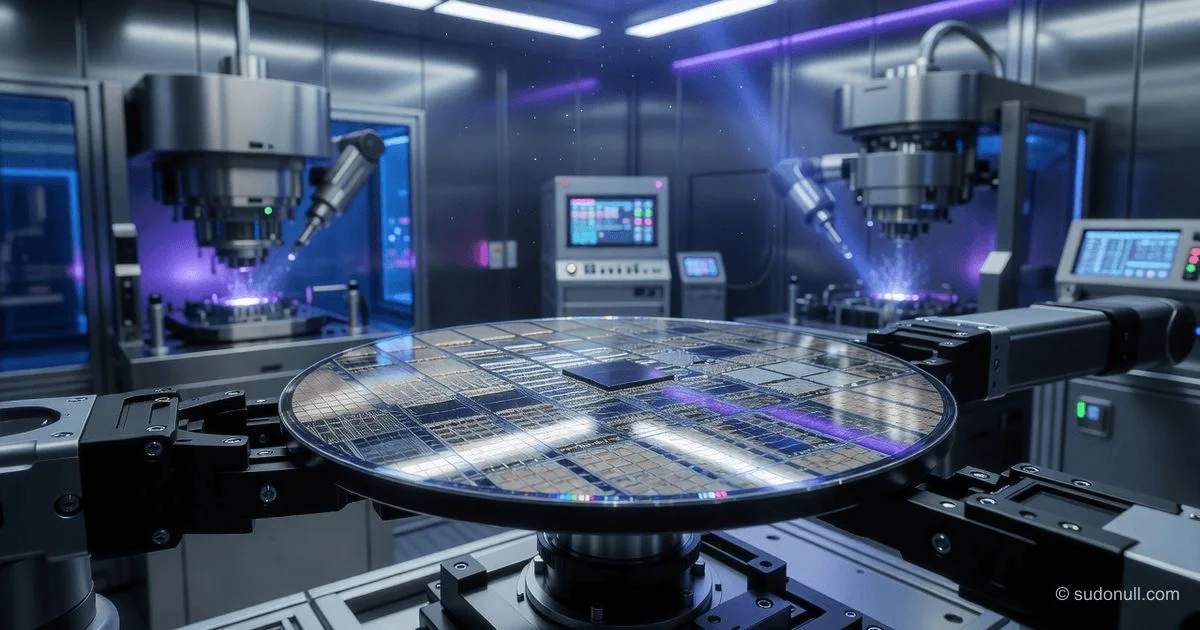
How are semiconductors made from sand? The process starts with silicon, a common element found in sand. The silicon is purified, melted, and grown into a single crystal, which is then sliced into thin wafers . Through a highly complex process involving photolithography, etching, and deposition, intricate circuit patterns are built on these wafers in specialized facilities known as fabs, creating hundreds of individual chips .
Why are semiconductors so important to the global economy? Semiconductors are the foundational technology for all modern electronics, from smartphones and computers to cars and medical devices. They enable productivity, communication, and innovation across every sector of the global economy . Because they are so integral, any disruption to their supply chain has a cascading effect on global trade and manufacturing.
What is the difference between a fabless company and a foundry? A fabless company, like Apple or Nvidia, is one that designs semiconductor chips but outsources their manufacturing . A foundry, such as TSMC or Samsung Foundry, is a company that specializes in the manufacturing of chips based on the designs provided by fabless companies. Some companies, like Intel, are Integrated Device Manufacturers (IDMs), doing both design and manufacturing .
What is Moore's Law and is it still true today? Moore's Law is the empirical observation, made by Intel co-founder Gordon Moore in 1965, that the number of transistors on a microchip doubles approximately every two years, leading to exponential growth in computing power . While it has been the driving force of the industry for decades, the physical limits of miniaturization are making it increasingly difficult and expensive to maintain this pace, though new technologies like 3D stacking are being explored to continue performance gains .
What are the biggest challenges facing the semiconductor industry? The industry faces several major challenges: the extreme technological and financial complexity of developing new manufacturing processes , a global supply chain vulnerable to geopolitical tensions and natural disasters , and a growing environmental footprint that demands more sustainable manufacturing practices . These factors have elevated chip manufacturing to a top-tier national security and economic policy concern for many countries.
Sources
- Semiconductor Industry Association
- Intel
- Britannica
- IET Digital Library
- All About Circuits
- u-blox
- Various LinkedIn articles from industry professionals (Fabian Warislohner, Randy Poznan, vishaal kumar, Ahmed Hassan) provide complementary industry analysis and up-to-date strategic context .
- Bisinfotech
— Editorial Team










No comments yet.