# Supercritical CO₂: The Key to Solving the Water Paradox in Abiogenesis
The aqueous environment, considered the natural cradle of life, creates a fundamental contradiction: key reactions for synthesizing nucleotides and peptides in water are thermodynamically unfavorable without enzymes, which could only emerge after life itself arose. A new study proposes a solution through supercritical carbon dioxide (scCO₂) as a medium that overcomes this contradiction thanks to its unique physicochemical properties.
Water Paradox: Thermodynamic Dead End
Classical abiogenesis hypotheses assuming life's origin in water face an apparently irresolvable contradiction. Polycondensation reactions for synthesizing peptides and nucleotides require removing water molecules, which is thermodynamically challenging in an aqueous environment. Meanwhile, the enzymes that catalyze such reactions in modern organisms could only arise after the first living systems formed. Analysis of archaic metabolic cycles (acetogenesis, reverse TCA cycle) shows that early organisms absorbed CO₂ and released water—the direct opposite of photosynthesis. This suggests a high-CO₂ environment as more likely for life's origin.
Supercritical CO₂: The Ideal Reaction Medium
At temperatures above 31°C and pressures over 73 atm, carbon dioxide enters the supercritical state (scCO₂), combining properties of both gas and liquid. Such a medium:
- Has high solubility for organic compounds
- Allows formation of microscopic water droplets upon pressure reduction
- Promotes phosphorylation of nucleosides with the correct phosphate group orientation
Experiments show that in scCO₂ with 10% water added, nucleotide yields (AMP, GMP, CTP, UMP) reach 10%—three times higher than drying methods. Critically, the phosphate attaches precisely to the 5th carbon of ribose, which is essential for subsequent polymerization into RNA.
Microcontainers and Catalytic Surfaces
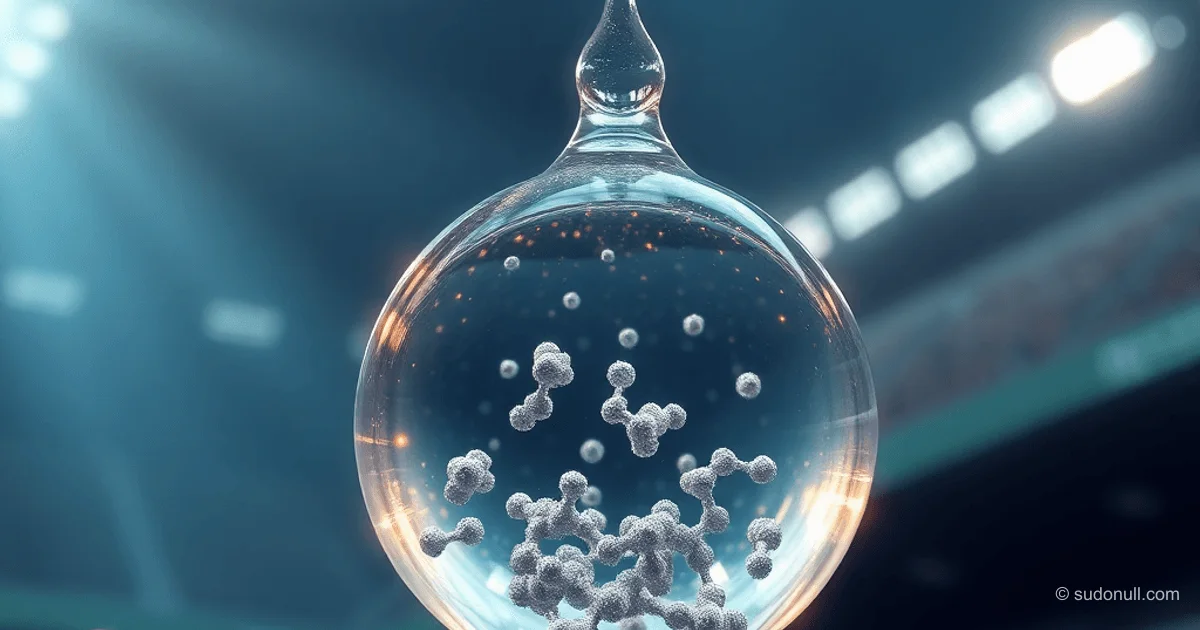
In scCO₂, stable water microdroplets 1–10 μm in diameter form, acting as reaction chambers. They arise in two ways:
- When scCO₂ flows through porous rocks, adsorbed water is flushed out
- Upon sharp drops in pressure/temperature, condensate precipitates
These droplets accumulate polar organic molecules (nucleosides, amino acids) arriving from space—their presence confirmed by analysis of Ryugu asteroid samples. At the same time, scCO₂ transports nonpolar compounds, creating conditions for their interactions at the phase interface.
Carbon Monoxide and Hydrogen Sulfide: Primary Energy Carriers
Analysis of planetary atmospheres shows CO as the third most abundant component in the universe after H₂ and He. In Earth's geothermal sources, its concentration exceeds 1% of CO₂. 1997 experiments and follow-ups revealed:
- At 100°C in the presence of Ni/Fe sulfides, CO + H₂S synthesizes:
- Acetate (CH₃CO₂⁻)—analog of LUCA's basic metabolic pathway
- Methanethiol (CH₃SH)—precursor to coenzyme A
- Nickel plays a key role: even without iron, nickel sulfide catalyzes formation of:
- Acetic and formic acids
- Propiolic and isobutyric acids (simplest lipids)
The mechanism of iterative hydrocarbon chain growth on the NiS surface resembles modern biosynthetic pathways. Each cycle adds a -CH₂- group, but practical synthesis is limited to C3–C4 compounds due to competing oxidation/reduction reactions.
Key Points
- Thermodynamic Advantage: Reactions that absorb CO₂ and release H₂O proceed more readily in a CO₂ medium, per Le Chatelier's principle
- Phosphorylation Selectivity: scCO₂ ensures correct phosphate attachment to ribose (5-position), critical for RNA
- Catalytic Role of Nickel: NiS catalyzes synthesis of key metabolites even without iron
- Cosmic Prevalence: scCO₂ conditions exist on Venus, Mars, and in Earth's deep layers
- Experimental Support: All stages—from nucleotides to lipids—have been reproduced in the lab
These findings form a coherent model where the scCO₂ environment resolves the water paradox via microcontainers, catalytic surfaces, and thermodynamically favorable reactions. The discovery paves the way for new experiments in protocell synthesis and a reevaluation of exoplanet habitability criteria.
— Editorial Team










No comments yet.