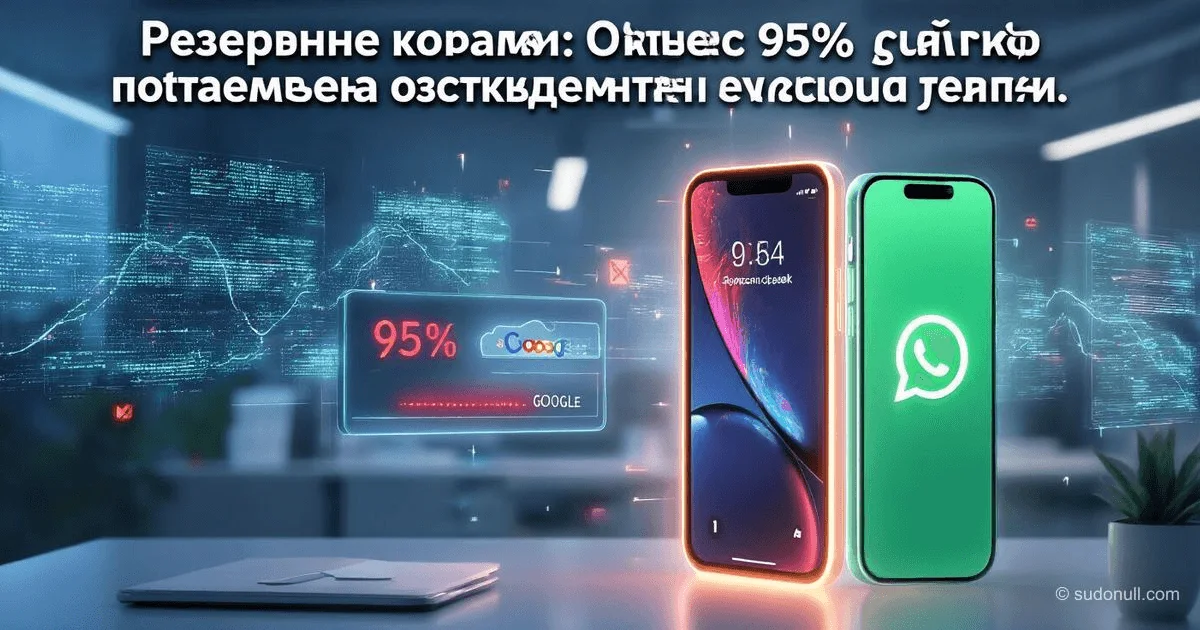
WhatsApp Backups: Why 95% of Chats Remain Unprotected
The biggest privacy flaw in WhatsApp lies in how message backups are handled. Experts estimate that around 95% of private conversations are stored unencrypted on Apple and Google cloud servers. This happens because backup encryption must be manually enabled and secured with a strong password—a step only a small fraction of users ever take.
Even when backup protection is turned on, chats remain vulnerable if the other person hasn’t taken the same precautions. As a result, over 90% of conversations are still accessible in plain text. On top of that, the platform collects metadata—information about contacts and communication patterns—that can be shared upon legal request.
How It Compares to Alternatives
Telegram takes a different approach: in its 12 years of operation, it has never handed over a single byte of user messages to third parties. This is made possible by avoiding automatic unencrypted backups and prioritizing local data storage.
Cloud giants like Apple and Google process thousands of data access requests every year. In the context of WhatsApp, this creates serious risks for users who rely on default settings.
- Telegram advantages: full message protection, no data disclosures, optional secret chats.
- WhatsApp vulnerabilities: unsecured backups by default, reliance on contact settings, metadata retention.
- Shared risks: government access to cloud copies through service providers.
Technical Background and Implications
End-to-end encryption (E2EE) in WhatsApp has been powered by the Signal protocol since 2016, securing messages as they travel between devices. However, backups stored in iCloud or Google Drive aren’t encrypted by default, making them accessible to the storage provider.
This design choice prioritizes ease of data recovery and ecosystem integration. But the trade-off includes potential leaks from account breaches or legal demands. For businesses, this raises compliance risks in regulated sectors like finance and healthcare.
Across the messaging industry, demand is growing for decentralized solutions where data is stored locally or in user-controlled encrypted clouds.
Key Takeaways
- 95% of WhatsApp backups are unprotected, undermining trust in its advertised encryption.
- Contact metadata is stored and can be shared with third parties.
- Alternatives like Telegram avoid these flaws through strict privacy policies.
- Users should manually enable backup encryption and verify their contacts’ settings.
- The trend toward decentralization will improve security in the long run.
The global messaging market exceeds $100 billion, with privacy becoming a major competitive edge. Regulators in the EU and US are tightening data protection rules, driving innovation in encryption technologies.
— Editorial Team










No comments yet.