Y-30: China's New Transport Aircraft Outperforms C-130J in Payload and Power
China’s latest turboprop transport aircraft, the Y-30, surpasses the American C-130J Super Hercules in key performance metrics, including double the payload capacity and more powerful engines. This advancement highlights China’s growing prowess in aerospace and could reshape the global military logistics landscape.
Technical Advantages of the Y-30
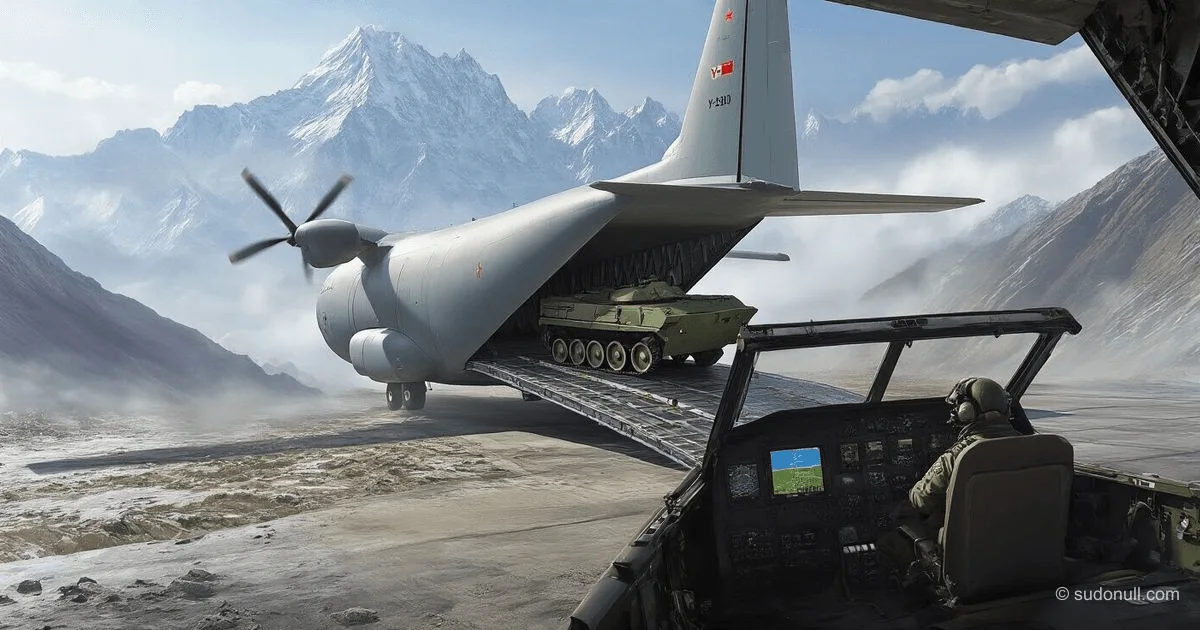
Developed by Shaanxi Aircraft Industry Corporation, the Y-30 is powered by four AEP-500 engines, outperforming the Rolls-Royce AE2100D3 engines used on the C-130J. With a payload capacity of up to 30 tons, it can carry heavy military equipment such as the Type 15 light tank or HQ-17 air defense systems.
The airframe incorporates advanced composite materials, reducing weight without compromising structural integrity. Its avionics suite leverages 2020s-era technology, giving it a clear edge over the C-130J, whose systems were modernized in the 1990s. This translates into improved reliability, situational awareness, and operational efficiency.
Performance Comparison
- Payload: Y-30 — 30 tons, C-130J — approximately 20 tons.
- Engines: AEP-500 offers higher output than AE2100D3.
- Airframe Materials: Composites vs. traditional metal alloys.
- Avionics: Modern digital architecture vs. legacy systems.
- Runway Requirements: Y-30 is optimized for rough-field and short-runway operations.
These capabilities significantly expand the Y-30’s operational flexibility, particularly in remote, mountainous, or island environments where infrastructure is limited.
Strategic Development Context
Military airlift capability is essential for modern armed forces. The C-130J, introduced in 1999, has proven its worth in NATO operations but faces production constraints. Meanwhile, China is investing heavily in self-reliant technologies to reduce dependence on foreign suppliers. The Y-30’s maiden flight in December 2024 accelerates its path toward full certification and deployment.
This progress stems from national initiatives to localize high-tech manufacturing. As a result, China’s export potential is rising—many Asian and African nations may now consider the Y-30 a cost-effective alternative to Western models. The broader impact includes intensified competition based on price, adaptability, and logistical accessibility.
Key Takeaways
- The Y-30 doubles the C-130J’s payload, enabling faster deployment of heavy combat assets.
- Composite construction and next-gen avionics improve fuel efficiency and lower lifecycle costs.
- Enhanced short-field performance boosts mobility in austere regions.
- The project underscores China’s push for technological sovereignty in aviation.
- The platform supports multiple variants—from troop carriers to specialized mission aircraft.
Global Market Implications
The emergence of the Y-30 intensifies competition in the medium military transport segment. Western manufacturers like Lockheed Martin now face pressure as their platforms are more expensive to produce and maintain. For international buyers, especially those under sanctions or facing supply chain disruptions, the Y-30 offers a viable, high-performance alternative.
China is likely to expand the Y-30 family, integrating it into PLA Air Force operations while actively marketing it for export. The broader trend points to a shift in aerospace dominance toward Asia, where production volume, innovation, and state-backed investment are rapidly increasing.
— Editorial Team










No comments yet.