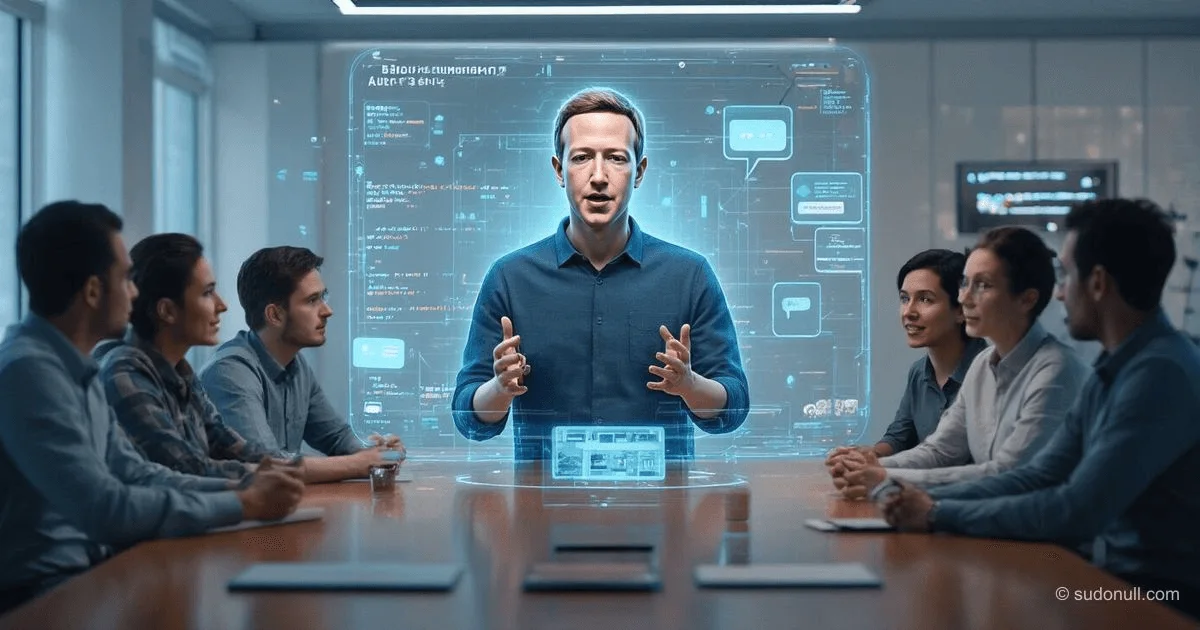
Meta Is Building an AI Twin of Zuckerberg to Communicate with Employees
Meta is investing in a photorealistic AI character that replicates Mark Zuckerberg’s appearance, voice, and speaking style. This tool is designed to interact with company staff, answer questions, and provide feedback. The project reflects Meta’s strategic shift toward integrating artificial intelligence into everyday business operations within a company valued at over $1.6 trillion.
Development is underway at Superintelligence Labs, focusing on real-time, lag-free communication. Realistic animation and speech synthesis rely on public behavioral data from the founder, including recent strategic statements—enabling leadership to stay connected with teams without physical presence.
Technical Challenges and Resource Demands
Creating convincing digital avatars requires immense computing power. Systems must simultaneously handle visual rendering, voice synthesis, and semantic analysis. Meta has already acquired startups PlayAI and WaveForms to strengthen its voice technology, accelerating progress in this domain.
This initiative is separate from another track: a personal AI assistant for Zuckerberg’s own use, focused on data retrieval. A broader trend at the company includes the CEO dedicating weekly programming hours (5–10 per week) and actively participating in AI development reviews.
Evolution of AI Characters in Meta’s Ecosystem
Meta has been building experience in virtual conversational agents since 2023. The launch of Meta AI and celebrity-branded chatbots—like Snoop Dogg—sparked user interest. The AI Studio platform allows users to create personalized AI clones, a feature particularly popular among content creators.
Past experiments revealed risks: a surge in unmoderated content led to teen access restrictions starting in January. Now, focusing on corporate applications helps minimize such issues.
- Key acquisitions: PlayAI and WaveForms for voice tech
- Platforms: Meta AI, AI Studio
- Limitations: underage access banned
- Goals: realistic, real-time interaction
Corporate Push and Skill Development
Meta encourages employees to master AI tools, including agent systems based on OpenClaw. Evaluation programs include system design tests and "vibe coding." Participation is voluntary, aimed at identifying learning gaps—though some interpret it as a signal toward workforce optimization.
The recent release of the Muse Spark model strengthened Meta’s position in visual analysis and medical applications, boosting shares by 7%. This is part of the race against OpenAI and Google to develop superintelligent systems.
Key Takeaways
- Zuckerberg’s AI twin enhances leadership-to-staff communication without face-to-face meetings.
- Highly resource-intensive, but backed by strategic voice-tech acquisitions.
- Meta’s corporate culture is shifting toward mandatory AI fluency.
- The project aligns with Meta’s broader bet on AI as a growth engine.
- Potential expansion to influencers following successful internal trials.
Industry Context and Implications
Meta’s initiative signals a transformation in leadership through AI. Drivers include top executives’ time scarcity and the need to scale communication across tens of thousands of employees. Outcomes may include higher efficiency—but also ethical concerns around interaction authenticity.
Across the industry, this accelerates the trend of digital twins: from assistants to full avatars. For Meta, success could solidify its AI leadership and potentially open up new services for external users. The AI character market is growing, fueled by platforms like Character AI, where engagement reaches millions. Yet security challenges and infrastructure demands remain barriers to mass adoption.
— Editorial Team










No comments yet.