# Why AI Hallucinates: Human Cognitive Bugs as a Model for LLMs
Hallucinations in language models aren't just technical glitches—they reflect fundamental cognitive limitations of human thinking. Developers try to eliminate them with RAG and strict prompts, but the root problem runs deeper: we're embedding our own systemic perceptual and reasoning errors into machines. Understanding this mechanism lets us stop fighting symptoms and start designing more robust interaction architectures.
Clinical Analogy: When a "Bug" Is an Evolutionary Feature
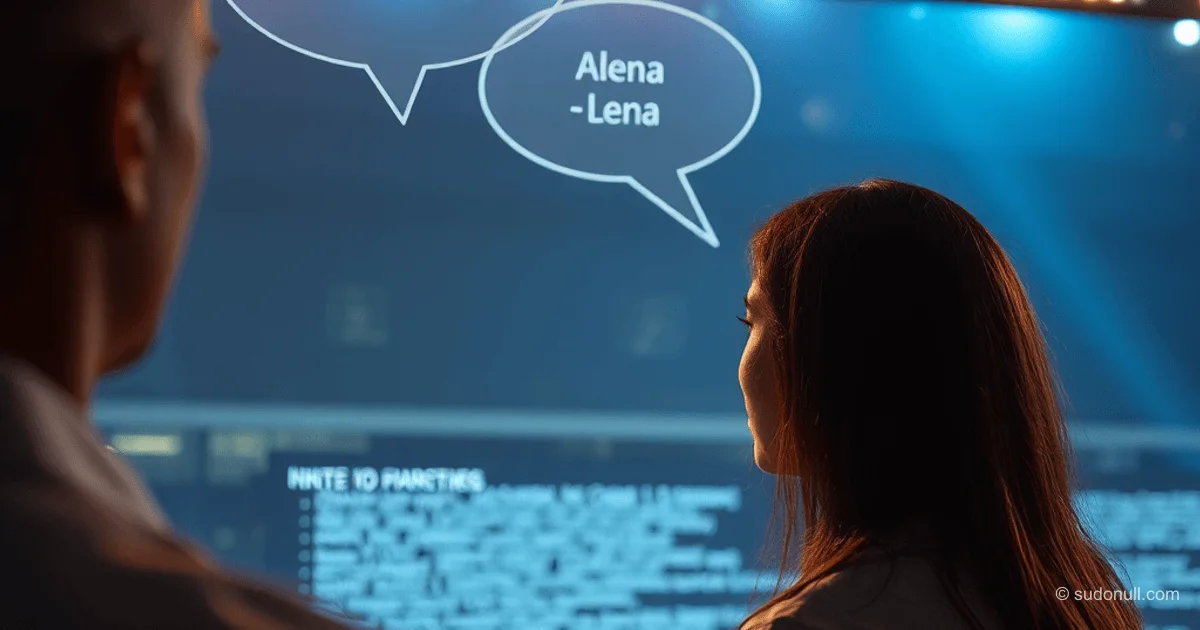
The human brain is optimized not for accuracy, but for speed and resource efficiency. The prefrontal cortex, responsible for attention control and task constraints, demands significant metabolic costs. That's why System 1 (per Kahneman) automatically swaps complex computations for statistically likely associations—even if they violate explicit constraints. Example: given the instruction "my name is Olga, at home—Alena," a person often responds "You're Lena," because the chain "Alena → Yelena → Lena" carries more weight in their associative memory than literal rule-following.
This isn't a user error—it's the standard mechanism of the cognitive system. In psychology, this behavior is called _jumping to conclusions_—premature judgment based on incomplete data. For survival in natural environments, such an algorithm is useful: better to err and react quickly than think long and miss a threat. But in AI interaction contexts, it becomes a source of conflicts.
Why RAG and Strict Prompts Don't Solve the Problem
Developers implement Retrieval-Augmented Generation and beef up prompts, hoping to "ban" hallucinations. However, these methods treat symptoms, not the cause. The model is still trained to maximize token sequence plausibility, not to obey logical or factual constraints. When the context window is overloaded or relevant data is missing, the model picks the most likely path—even if it contradicts the instructions.
The problem is compounded by the fact that:
- Training on internet corpora reinforces statistical, not logical, connections.
- Fine-tuning for specific tasks doesn't redefine the core prediction architecture.
- Human annotators labeling data are themselves prone to cognitive biases.
How to Design Interfaces That Account for Cognitive Limitations
Instead of demanding that the model "not hallucinate," it's more effective to design interactions that compensate for its (and our) weaknesses. Here are the key principles:
- Explicit Uncertainty Management. The model should be able to respond "I don't know" or "need a clarifying question"—like with a human prompt saying "unclear—ask." This reduces the risk of generating false but confident answers.
- Multi-Stage Verification. Task constraints should be repeated at different levels: in the system prompt, user query, and output post-processing.
- Context Isolation. For tasks requiring strict rule-following (e.g., legal or medical queries), the model should operate in a restricted mode—with external context disabled and hard constraints on output.
- Real-Time Feedback. The interface should let users instantly flag context violations—and the system should adapt, not ignore the note.
Key Takeaways
- AI hallucinations aren't a bug; they're a byproduct of designing after human thinking, which is prone to distortions itself.
- Fighting hallucinations with RAG and complex prompts doesn't eliminate the cause—it masks symptoms.
- Effective solutions lie in interface and workflow design, not just model retraining.
- Human cognitive biases are a valuable data source for building more resilient AI systems.
- Embracing "managed uncertainty" over "perfect accuracy" makes AI interactions predictable and safe.
Understanding that AI replicates not just our knowledge but our errors changes how we use it. Instead of demanding the impossible—flawless logic—from the model, we should learn to build processes that account for its nature. This isn't a compromise; it's a shift to a more mature human-machine interaction paradigm.
— Editorial Team










No comments yet.