Artemis II Mission: Lunar Trajectory Maneuver and IT Problems in Space
The Orion spacecraft crew, as part of the Artemis II mission, executed a key maneuver to transition onto a lunar trajectory. On April 2, NASA administrator Jared Isaacman confirmed: the crew is officially heading to the Moon. The maneuver involved firing the main engine for 5 minutes 49 seconds with thrust up to 2.7 tons, starting at 02:49 MSK on April 3.
The SLS rocket carrying Orion launched on April 2 at 01:35 MSK from Kennedy Space Center in Florida. Crew: NASA astronauts Reid Wiseman, Christina Koch, Victor Glover, and Canadian Jeremy Hansen. Plan — flyby of the Moon at a distance of 8,000 km from the surface, total mission duration — 10 days. This is the first crewed mission to the Moon since Apollo 17 in 1972.
Technical Malfunctions at Launch
After launch, issues arose:
- Temporary loss of radio contact with Mission Control.
- Smoke in the crew module cabin.
- Toilet problems: sensors, fan, valves.
NASA quickly resolved the incidents. Engineers are recording all data for analysis, confirming the presence of fix protocols. Such events are expected in a test flight.
IT Glitches: Outlook and Optimus in Weightlessness
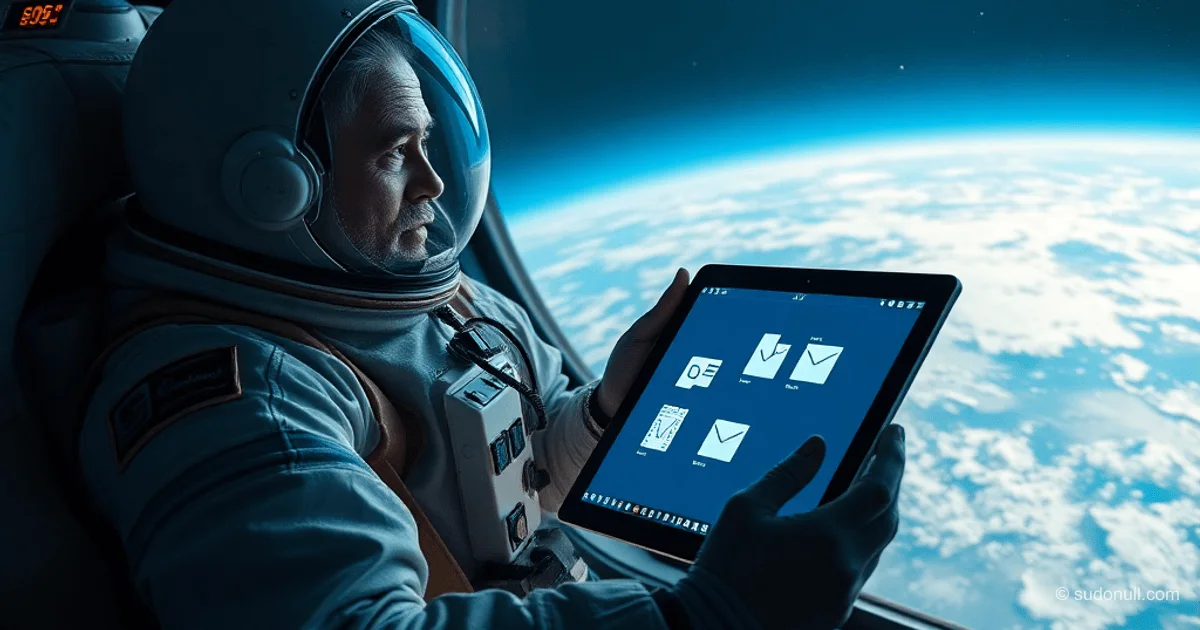
The crew encountered typical software problems. On the Microsoft Surface Pro tablet, Outlook email failed — two instances launched, neither worked. Reid Wiseman requested remote access from Mission Control: “I have two Microsoft Outlook, and neither works. Check Optimus and these two Outlook.”
Mission Control connected to the astronaut's PC (PC 1), restored Optimus, and launched Outlook in offline mode. This is standard behavior for an isolated system.
With Crew-12 and Artemis II, astronauts are taking personal devices: iPhone 17 Pro is being tested in microgravity aboard Orion.
Communication Systems and Software in Space Missions
The mission highlights challenges of integrating COTS devices (commercial off-the-shelf) into the space environment:
- Process Duplication: Two Outlook instances indicate a conflict in auto-start or cache.
- Remote Access: Mission Control uses secure protocols for intervention without risk to onboard systems.
- Offline Mode: Outlook in offline mode minimizes network traffic, critical with communication delays up to 2.5 s at lunar distance.
- Personal Gadgets: iPhone 17 Pro is tested for radiation resistance and API stability in microgravity.
Key Takeaways
- Lunar trajectory maneuver completed successfully, engine thrust — 2.7 t.
- Communication, smoke, and toilet issues resolved; data for post-flight analysis.
- Outlook on Surface Pro restored remotely, Optimus fixed.
- Personal iPhone 17 Pro in flight — step toward consumer tech in space.
- Mission lasts 10 days, Moon flyby at 8,000 km.
— Editorial Team










No comments yet.