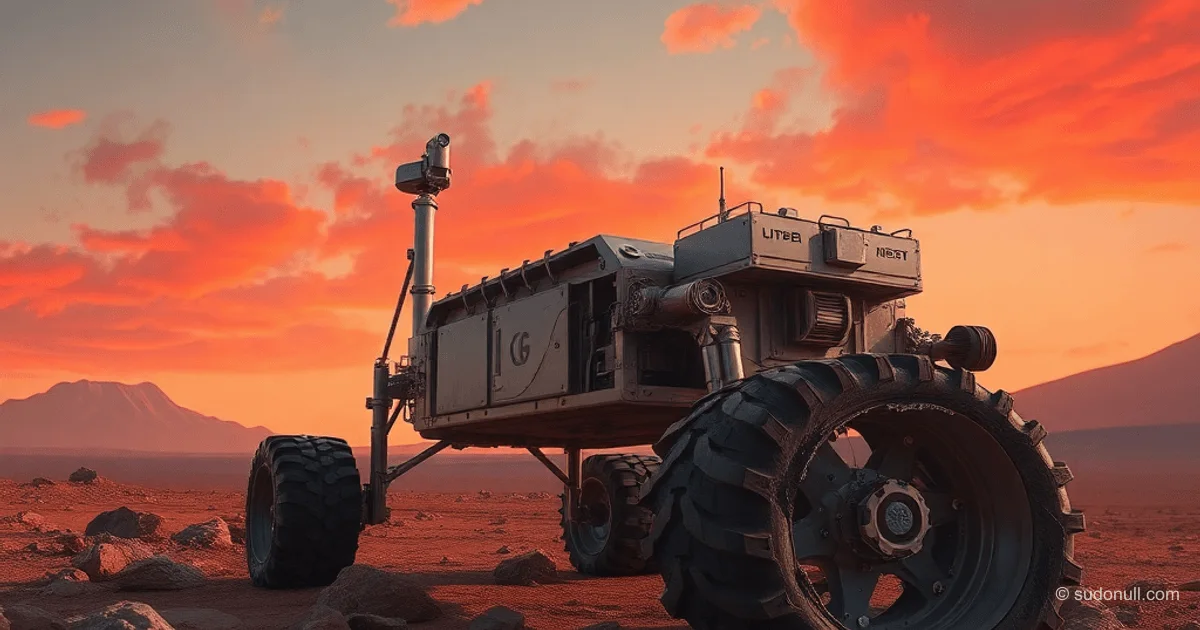
Curiosity Rover Wheel Damage: Wear Analysis and NASA's Strategies
The Curiosity rover, operating in Gale Crater since 2012, has traveled nearly 37 km across the Martian surface. Recent raw images revealed significant damage to the middle right wheel. The NASA team quickly rerouted the rover to less hazardous terrain to slow further wear.
The first signs of degradation in the six aluminum wheels appeared in 2013 due to sharp, wind-formed rocks. By 2017, the wheel system's lifespan was estimated at 60% depleted, despite implemented precautions.
Evolution of Wear and Terrain Transitions
Early mission stages traversed rocky plains where damage was minimal. A key moment was the transition to the soft rocks of Mount Sharp after the Pahrump Hills area. Here, wear on the front and middle wheels intensified sharply due to small rocks inevitable during movement.
Transitioning to such terrain altered the load dynamics: treads began to tear off, exposing the structure. NASA notes that terrain type doesn't fully determine damage—collisions with sharp objects remain the primary cause.
Traction Control Algorithm
To minimize damage, a real-time traction control algorithm was developed:
- Monitors changes in the suspension system to determine wheel contact points.
- Calculates optimal speed for each wheel, preventing slippage.
- Adjusts pressure, improving grip on the Martian surface.
This approach allows adaptation to uneven terrain, reducing stress on the treads. The algorithm is integrated into the onboard software and has proven effective on mixed terrain.
Testing on Earth Analogs
NASA uses two test rigs to simulate scenarios:
- Scarecrow — a simplified model with wheels and motors. Tests mobility on various surfaces and behavior during wheel failure.
- Vehicle Surface Testbed — a full replica of Curiosity with cameras and robotic arm.
Scarecrow tests showed: the rover retains mobility even after losing traction on one wheel. The vehicle can move indefinitely if the damaged part is safely detached.
Wheel Detachment Strategies
Continuing operation with a severely damaged wheel risks the internal cables. The team is developing removal methods:
- Locking the damaged wheel and driving on the remaining five until natural detachment.
- Alternative techniques tested at the test site.
Despite being designed for a two-year mission, Curiosity has been operating for over 13 years. An individual wheel can withstand significant wear without affecting overall mobility.
Key Points
- The middle right wheel sustained new damage; the route was changed to reduce risks.
- The traction algorithm adjusts wheel speeds in real time, minimizing slippage.
- Scarecrow tests confirm the ability to operate with one faulty wheel.
- Transition to Mount Sharp accelerated wear due to small rocks.
- The mission has been extended thanks to adaptive management strategies.
— Editorial Team










No comments yet.