Biotech Breakthroughs: How Genetic Engineering Works
Biotechnology has quietly become one of the most transformative forces in modern life, influencing everything from the food we eat to the medicines that save lives. At its heart lies a simple but powerful question: how does biotechnology use genetic engineering to rewrite the very code of life? This article unpacks the mechanisms driving this revolution, from the precision of CRISPR to the latest breakthroughs in gene insertion, offering a clear look at a technology that is reshaping our world.
What You'll Learn
By the end of this article, you'll understand the core principles of genetic engineering, from the "molecular scissors" used to cut DNA to the advanced techniques that allow scientists to insert whole genes. You'll see how these tools are moving from the lab into real-world applications in medicine and agriculture, and you'll gain a clear perspective on the future of this rapidly evolving field. The single most important takeaway is that genetic engineering is becoming more precise, more powerful, and more accessible than ever before, promising to tackle some of humanity's most intractable problems.
How It Works: The Toolkit of Genetic Engineering
To understand how biotechnology uses genetic engineering, it helps to think of it as a highly sophisticated form of biological editing. The process is not a single technique but a collection of tools and steps, all designed to make specific, targeted changes to an organism's DNA.
The Foundation: Recombinant DNA
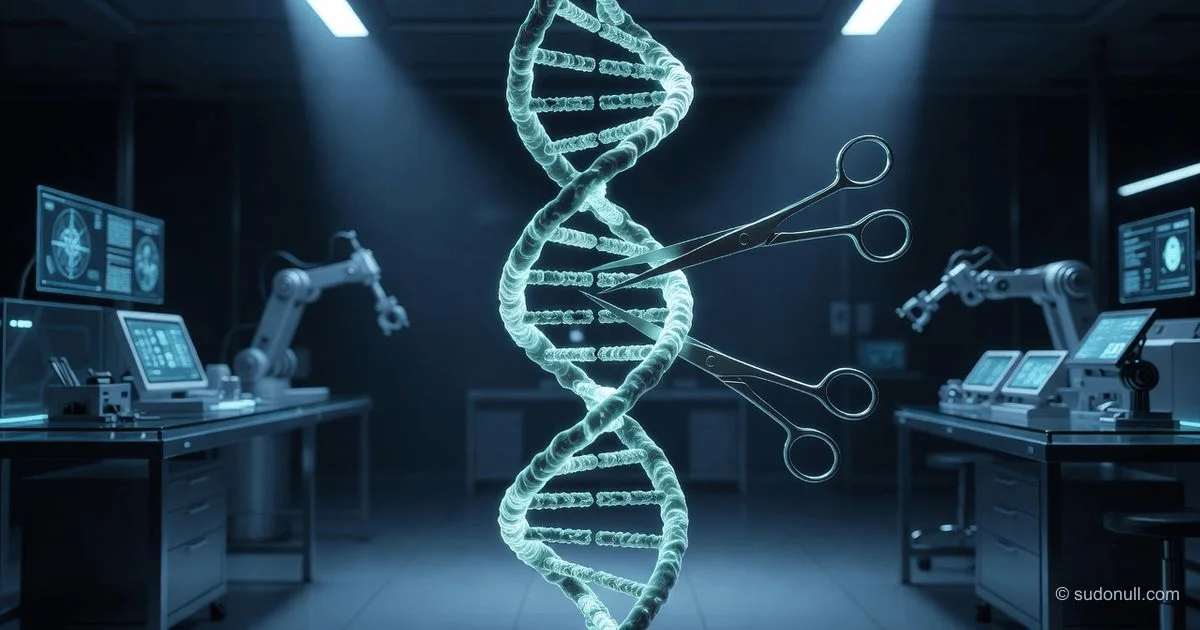
The foundational technique, developed in the 1970s, is recombinant DNA technology. This involves taking a gene from one organism and inserting it into the DNA of another. Scientists use "molecular scissors," called restriction enzymes, to cut DNA at specific sequences. Then, they use another enzyme, DNA ligase, to "paste" the desired gene into a carrier, or vector—often a circular piece of bacterial DNA called a plasmid. This new, combined DNA is known as recombinant DNA . A classic example is inserting the human gene for insulin into bacteria, which then act as tiny factories to produce the life-saving hormone .
The Revolution: CRISPR-Cas9
While recombinant DNA was a major leap, it was relatively imprecise. The real game-changer came with the discovery of CRISPR-Cas9, a system adapted from a bacterial immune defense . This technology has provided a definitive answer to the question of how does biotechnology use genetic engineering with unprecedented precision.
The CRISPR-Cas9 system works like a guided missile. It has two main components:
- Guide RNA (gRNA): A short piece of RNA that is designed to match a specific DNA sequence, acting as a GPS to guide the system to the exact target gene .
- Cas9 Protein: An enzyme that acts as "molecular scissors," cutting the DNA at the precise location specified by the guide RNA .
Once the DNA is cut, the cell's natural repair machinery kicks in. Scientists can exploit this repair process in two ways:
- Non-homologous end joining (NHEJ): The cell stitches the broken ends back together, which often introduces small errors (insertions or deletions) that can disable a gene . This is useful for "knocking out" a malfunctioning gene.
- Homology-directed repair (HDR): If a DNA template containing a correct gene sequence is provided, the cell can use it as a blueprint to repair the cut, effectively "pasting" a new or corrected gene into the genome .
Compared to older gene-editing tools like zinc finger nucleases, CRISPR is easier to design, more cost-effective, and highly versatile .
Beyond CRISPR: The Next Generation
The field is advancing rapidly. While CRISPR-Cas9 is revolutionary, newer techniques address its limitations. For instance, base editing and prime editing allow for precise single-letter changes in the DNA code without creating a double-strand break, reducing the risk of unintended side effects . Meanwhile, a new system called evoCAST, developed using directed evolution, can insert entire genes into human cells with high efficiency—a breakthrough for treating diseases where patients have different mutations in the same gene .
Why It Matters: From Medicine to Agriculture
The applications of genetic engineering are vast and deeply impactful, touching nearly every aspect of our lives.
Medicine
Genetic engineering is driving a revolution in healthcare. It is at the forefront of gene therapy, offering potential cures for inherited disorders like sickle cell disease, muscular dystrophy, and cystic fibrosis by correcting the underlying genetic mutation . In oncology, it is used to engineer a patient's own immune cells (CAR-T cells) to better recognize and attack cancer . The ability to track these processes in real-time has also advanced, with innovations like "GlowCas9," a bioluminescent Cas9 protein that lights up while performing gene editing, allowing scientists to monitor the process in living cells .
Agriculture
In agriculture, genetic engineering is used to create crops that are more resilient and sustainable. This includes developing crops with drought and heat tolerance to withstand climate stress, as well as disease resistance to reduce the need for chemical pesticides . For example, Bt cotton, which has been modified with a gene from a bacterium to produce its own insecticide, has led to a 97% reduction in insecticide use in Australia since its introduction .
Industrial and Environmental Uses
Genetically engineered microbes are also being deployed for environmental cleanup, to produce alternative fuels, and to manufacture products like vanilla flavoring and medicines .
By the Numbers
| Milestone | Year | Significance | Source |
|---|---|---|---|
| First Recombinant DNA | 1972 | Stanley Cohen and Herbert Boyer create the first recombinant DNA molecule, laying the foundation for modern genetic engineering. | |
| First Genetically Engineered Bacteria | 1973 | E. coli bacteria are first genetically engineered, opening the door for biomanufacturing. | |
| Discovery of CRISPR-Cas9 | 2012 | Scientists adapt the bacterial CRISPR-Cas9 system for use as a genome-editing tool, revolutionizing the field. | |
| Nobel Prize for CRISPR | 2020 | Emmanuelle Charpentier and Jennifer Doudna are awarded the Nobel Prize in Chemistry for their work on CRISPR-Cas9. | |
| evoCAST Gene Insertion | 2025 | A laboratory-evolved CAST system (evoCAST) demonstrates efficient, targeted insertion of entire genes into human cells for the first time, opening new avenues for gene therapy. | |
| GlowCas9 for Real-Time Tracking | 2025 | Scientists develop "GlowCas9," a bioluminescent version of the Cas9 enzyme, allowing real-time tracking of gene editing in living cells. |
Common Myths vs. Facts
| Myth | Fact |
|---|---|
| Genetic engineering is the same as traditional breeding. | Traditional breeding mixes thousands of genes and takes generations, while genetic engineering allows for the precise insertion, deletion, or alteration of a single, specific gene in a single generation . |
| Genetically modified foods are unsafe to eat. | Major scientific organizations, including the WHO and the U.S. National Academies, have found that GM foods currently on the market are safe to eat. They are subject to rigorous safety testing . |
| CRISPR is error-free and always works perfectly. | While highly precise, CRISPR can have "off-target" effects, where it cuts DNA in unintended places. Ongoing research is focused on improving its accuracy and safety . |
| Genetic engineering is only for big pharmaceutical and agricultural companies. | The technology has become more accessible and affordable. Gene-editing tools like CRISPR are now used by academic labs and startups worldwide, fostering innovation in diverse fields . |
| All GMOs are "transgenic" (containing DNA from another species). | Modern techniques like gene editing can make precise changes to an organism's own genome without introducing foreign DNA, creating a distinction from older transgenic GMOs . |
What You Should Do With This Knowledge
Understanding how genetic engineering works empowers you to engage with this technology critically. It's not a monolithic "good" or "bad" force, but a powerful tool. Stay informed by following reputable scientific sources and asking questions about the products you buy and the policies being proposed. For example, support science communication that explains concepts clearly and advocate for transparent regulation of gene-edited products. If you or a loved one has a genetic condition, understanding this field can help you have more informed conversations with healthcare professionals about emerging therapies.
Frequently Asked Questions
Is genetic engineering the same as gene editing? While often used interchangeably, gene editing is a more precise subset of genetic engineering. Genetic engineering is the broader term for any direct manipulation of an organism's genes, which can include older techniques like inserting a gene randomly. Gene editing typically refers to newer, more precise techniques like CRISPR that allow for targeted changes at a specific location in the genome .
What is CRISPR-Cas9 and how does it work? CRISPR-Cas9 is a revolutionary genome-editing tool adapted from a bacterial defense system. It works like a pair of "molecular scissors." A guide RNA directs the Cas9 enzyme to a specific DNA sequence, where it makes a precise cut. The cell's natural repair mechanisms then kick in, allowing scientists to either disable a gene or insert a new one .
Is genetically modified food safe to eat? Yes. Genetically modified (GM) crops currently on the market have been deemed safe to eat by major global scientific and regulatory bodies, including the World Health Organization, the FDA, and the U.S. National Academies of Sciences, Engineering, and Medicine. They are subject to extensive safety testing .
Can genetic engineering cure diseases? Genetic engineering holds immense promise for treating and even curing diseases. Gene therapies, many of which rely on tools like CRISPR, are being developed for conditions like sickle cell disease, certain types of cancer (through CAR-T therapy), and muscular dystrophy. While many are still experimental, some have already been approved for clinical use .
What are the risks of genetic engineering? The main risks include off-target effects (unintended edits elsewhere in the genome), potential ethical concerns regarding germline editing (edits passed to future generations), and the possibility of unintended ecological consequences from modified organisms. This is why rigorous safety testing, regulation, and ethical debate are crucial parts of the field .
Sources
- Nature (Experimental & Molecular Medicine): Revolution of Biotechnology with CRISPR.
- Caltech Science Exchange: How Do Scientists Engineer Microbes, and What Are They Used For?
- ScienceDirect (Journal of Biotechnology): CRISPR Cas9 revolutionizing genetic engineering and therapeutic applications.
- evokeAG: How biotechnology and genetic engineering are transforming agriculture.
- Department of Science & Technology (India): New light to track gene editing.
- ScienceDirect (Biotechnology Advances): Genetic Engineering (2022).
- MIT News: A new system can dial expression of synthetic genes up or down.
- IIT Kanpur (NCERT): Chapter 11 Biotechnology: Principles and processes.
- Broad Institute: Evolved gene editor inserts entire genes in human cells.
- CK-12 Foundation: Biotechnology Study Guide.
— Editorial Team










No comments yet.