# Automating Your Personal Knowledge Base: Why LLM Wiki Harms Reflection
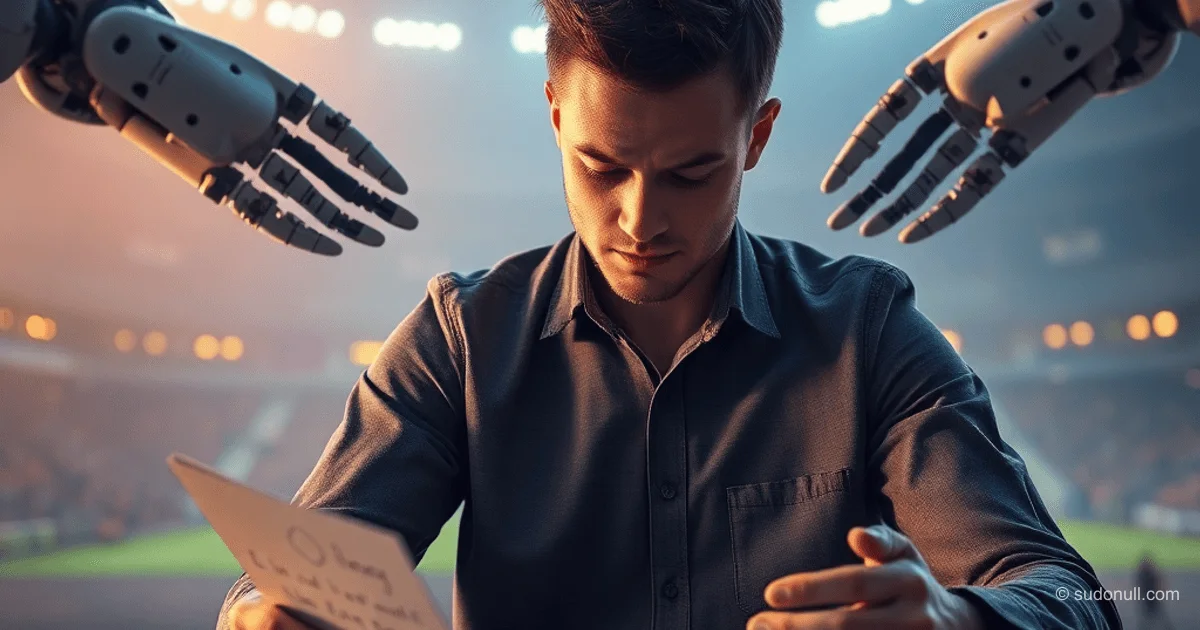
The LLM Wiki model, proposed by Andrey Karpathy, is positioned as a solution for automating corporate knowledge bases. However, applying it to personal knowledge management systems risks undermining the cognitive value of written reflection. Let's break down why delegating note-taking to language models contradicts the very essence of personal thinking.
The Cognitive Process of Writing: Not Just Storage, but Thought Formation
Writing has traditionally been seen as a tool for capturing knowledge. Yet philosophers from Marcus Aurelius to Michel Foucault have emphasized its reflective role. In particular, Foucault's Hermeneutics of the Subject analyzes the practice of hypomnemata—personal notebooks where writing serves not as archiving, but as a way to internalize experience. The key point: the cognitive act happens precisely during the writing process, not before or after.
When an LLM generates notes from raw sources, you lose that transformative moment where information becomes knowledge. Automated linking between notes creates the illusion of structure but robs you of the discovery process: "Oh, this connects to what I wrote last year." That discovery is thinking—it's not reducible to algorithmic link-finding.
Corporate and Personal Knowledge Bases: Different Goals, Different Approaches
In a corporate setting, a knowledge base often acts as a reference tool: its goal is to minimize search time and standardize solutions. Karpathy's model works well here: the LLM processes documents, generates structured articles, and keeps things up to date. But a personal knowledge base serves a different purpose—not memorization, but understanding. Its value lies in how writing shapes your own worldview.
Tech professionals often lean toward over-optimization. In the IT community, knowledge bases become efficiency tools, overlooking the original need for reflection. Remember: automation for its own sake in a personal context destroys what makes a knowledge base valuable—its role as a mirror of your thinking.
How to Properly Integrate AI into Your Personal Knowledge Base
You can automate stages that don't involve the cognitive process. Here are the key principles:
- Rewrite what you've read in your own words—don't hand this off to an LLM. Model-generated content eliminates the need to reprocess the material.
- Find connections between notes yourself. Automatic backlink generation gives you a connection graph but deprives you of the aha moment of discovery, which is thinking.
- Reread old notes without a specific search goal. The aim is to reconnect with your past self, not to find info for a current task.
- Automate only support processes: audio transcription, source gathering, searching the existing base. The writing moment must remain human.
- Split your base into reflective and reference sections. Reflective notes can have a free structure; reference ones should be rigid, optimized for quick access.
Key Points
- Writing as a cognitive act: automating note creation destroys the thinking process.
- A personal knowledge base should serve reflection, not just memorization.
- Separate functions: reflective notes are free-form, reference notes are structured.
- AI is useful before and after writing, but not during.
- Automating note connections robs you of thinking's core element—discovery.
Using LLM Wiki in a personal knowledge base risks turning it into a mere archive, losing its true value: shaping your thinking. It's justified for corporate tasks, but in personal use, it swaps reflection for data processing. Draw the line: let AI help with gathering and searching, but not writing.
— Editorial Team










No comments yet.