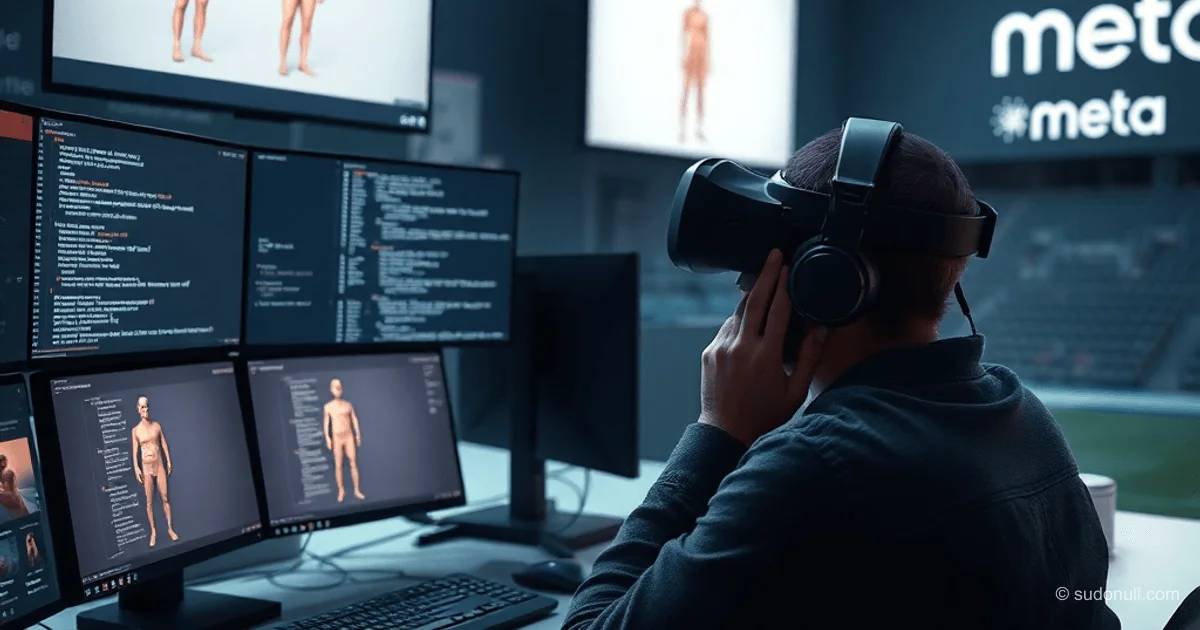
# Meta's Metaverse: Technical Failures and Lessons for the VR/AR Industry
Meta invested $88 billion in the metaverse but ran into fundamental technological limitations and unrealistic expectations. Analysis reveals that the core issues stem from basic computer graphics, economic models, and human interaction.
Technical Limitations of Virtual Worlds
Meta's first promo video in 2021 featured animated scenes rather than the actual product. The key problem? Avatars lacked legs. This wasn't merely a design oversight but a fundamental hurdle in full-body tracking. Motion-capture systems demand high-precision sensors and real-time data processing algorithms. Even by 2026, solutions remain inefficient:
- Headset computational power limitations
- Lower-body motion synchronization issues
- High data processing latency
- Insufficient sensor density in consumer devices
A year later, Meta's team touted a "breakthrough" with virtual legs, only for it to emerge that the demo relied on pre-rendered animation, not live tech. This gap underscores the disconnect between marketing hype and technical reality.
Economic Unviability of the Project
Meta's metaverse investments hit $88 billion, yet monetization is elusive. Financial reports reveal:
- Annual Reality Labs losses topping $10 billion
- No mass demand for enterprise solutions
- Low engagement on social VR platforms
- Dismal retention rates (under 15% active users after 30 days)
McKinsey consultants projected $5 trillion in revenue by 2030, but their model hinges on hypotheticals. Real-world data shows virtual real estate—like plots in The Sandbox fetching $450k—fails to deliver recurring revenue. The metaverse economy relies on speculative assets, not sustainable business models.
Lessons for VR/AR Developers
Architectural Design Mistakes
Meta fixated on high-level visuals while neglecting foundational tech problems. Key lessons:
- Prioritize core functionality—full-body rendering must come before social features
- Set realistic expectations—the 75-minute promo created a false sense of readiness
- Conduct user testing—floating torsos break human-computer interaction principles
- Integrate with existing ecosystems—isolating the metaverse from the real world hampered adoption
Technical Requirements for Future Projects
- Low-latency full-body tracking via multi-sensor fusion
- Rendering optimization for consumer devices (under 20 ms latency)
- Open standards over closed ecosystems
- Progressive enhancement for gradual feature rollout
Key Takeaways
- Technical debt is critical—overlooking basics like leg rendering stalls progress
- Economics are unsustainable—no recurring revenue dooms the model
- User experience comes first—artificial limits like floating avatars shatter immersion
- Open standards are key—closed systems stifle growth and innovation
- Realistic KPIs matter—target retention and lifetime value, not vanity metrics
VR/AR's future hinges on tackling core technical challenges, not marketing blitzes. The industry must prioritize:
- Better sensor fusion for full-body tracking
- Lower hardware costs
- Open-source engines for compatibility
- Viable business models
Meta serves as a cautionary tale on innovation pitfalls. Rather than iterating via MVPs, the team chased sci-fi visions, blind to tech constraints. Developers' takeaway: tech maturity must outpace hype.
— Editorial Team










No comments yet.