October 18, 2014 at 00:29
Classification of types of testing
I taught students the subject of “Testing and debugging software” at IzhSTU. The structure of the training course is based on the classification of types of testing.
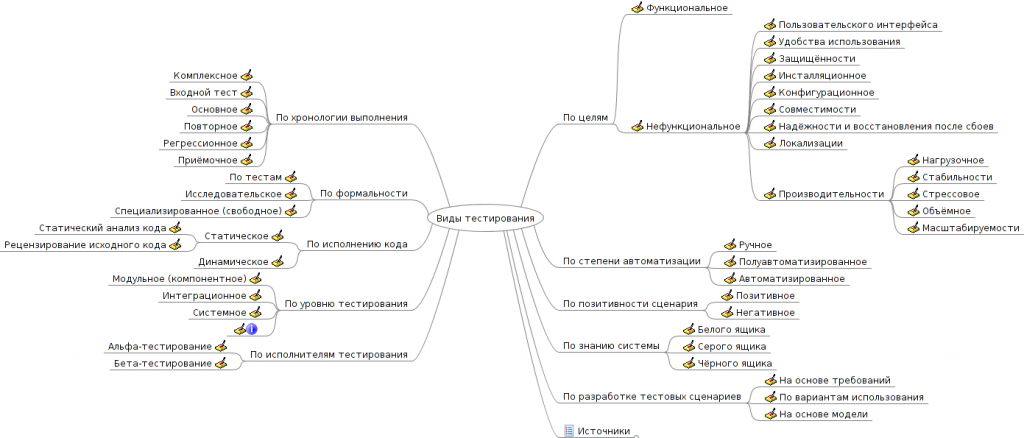
The map can be downloaded here .
Proverb of different nations of the world.
Types of testing are grouped on the mind-map by:
Each lesson was chosen:
We began to carry out test work within the framework of the selected reference type of testing.
The composition of the test work was selected from the reference list:
Each time a map was used to select the type of testing. Each time a reference list of job types was used.
The author is unknown to me, perhaps Friedrich Nietzsche or Rene Descartes.
Using specific examples, we examined which test-design technique in preparing scripts is more applicable to functional testing, and which to configuration . We examined the differences between the execution of tests for basic functional research testing and basic functional testing by tests . How test plans will differ. How at the same time, test projects look like a checklist or mind-map, against instructions with an order of actions and the expected result). What is common is the process of tracking defects.
We considered how the configuration reports differtesting and testing scalability , or reports on load and volume .
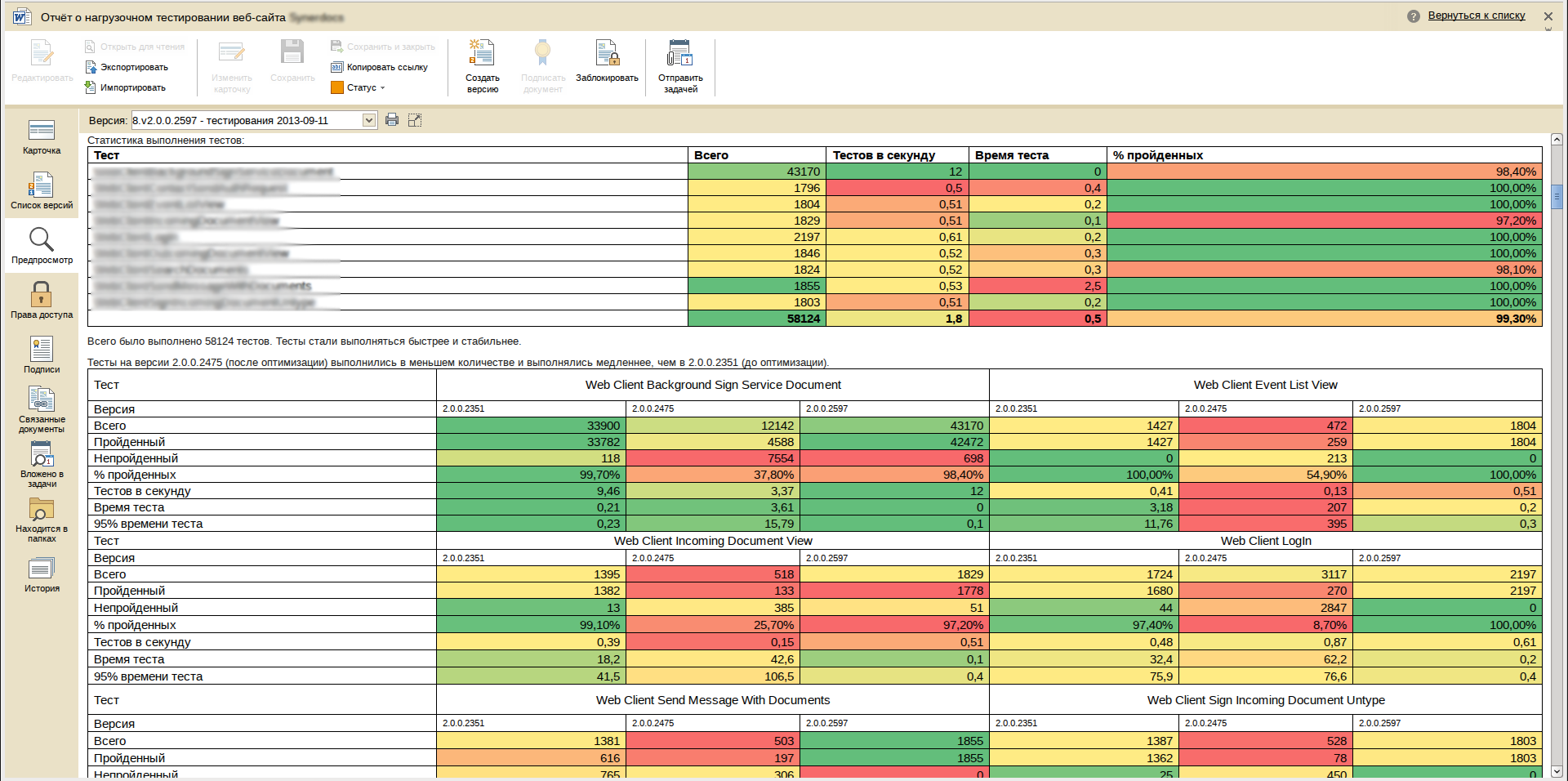
He brought examples of reports, unclassified and old, reduced them to 3 pages, deleting confidential information. We sorted out what is in the reports of the general (structure: goals, basis, brief results, details). What are the differences. How to read them. How to make up. How to form automatically.

So, sorting out the types of testing in pairs, I formed an idea about the choice of tools, approaches, goals and objectives of the studied activity.
The list of testing works was taken from SWEBOK (v3), chapter 4 “Software Testing”, section “Test Process”, subsection “Test Activities”.
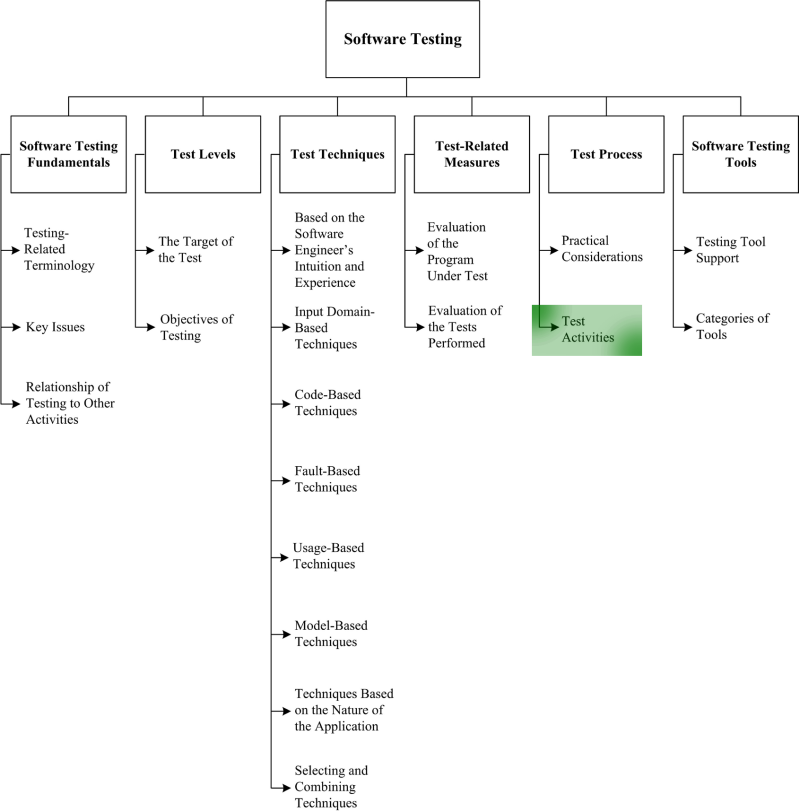
These types of work are performed by testing engineers all the time. Each type of work is important. For everyone there are good and bad recommendations, tools, techniques. The purpose of the lecture classes was to convey to students the types of testing and types of testing work. A relatively small list of knowledge, and this knowledge is enough to begin to improve the quality of software.
Fedor Ivanovich Tyutchev, February 27, 1869. The
map is a supporting summary for the teacher. Reminds me of what, I must have time to say. It helps not to say too much. After all, there is so little time, and so much to tell.
Previously, he taught in a classroom, where there were only desks blackboard and chalk. I came to classes precisely at the beginning, I did not prepare a board. I did not want to stand with my back and draw the studied subject area during classes. It is convenient to explain the relationships in the diagrams. Therefore, for each topic I made a mind-map. Printed in several copies, distributed to students in class. I used the blackboard and chalk to represent examples. They painted how bytes move according to the system scheme and lead to SQL injection, or how horizontal scaling works. This formed the habit of preparing mind cards.
The map allows you to:
Leading a lesson, you read on paper, but reading between the lines is acceptable.
Students, having a map before their eyes, have more choices:
They think more, find analogies easier, more confidently answer questions. You prepare a map for each lesson, students begin to wait for the next material. And if, suddenly, you don’t prepare the diagram, then the lesson will begin with the question: “Is the printer broken?”, They laugh, it's good.
A feature of this card with types of testing is the availability of definitions for each node. If you save the map in html format, you get voluminous reading.
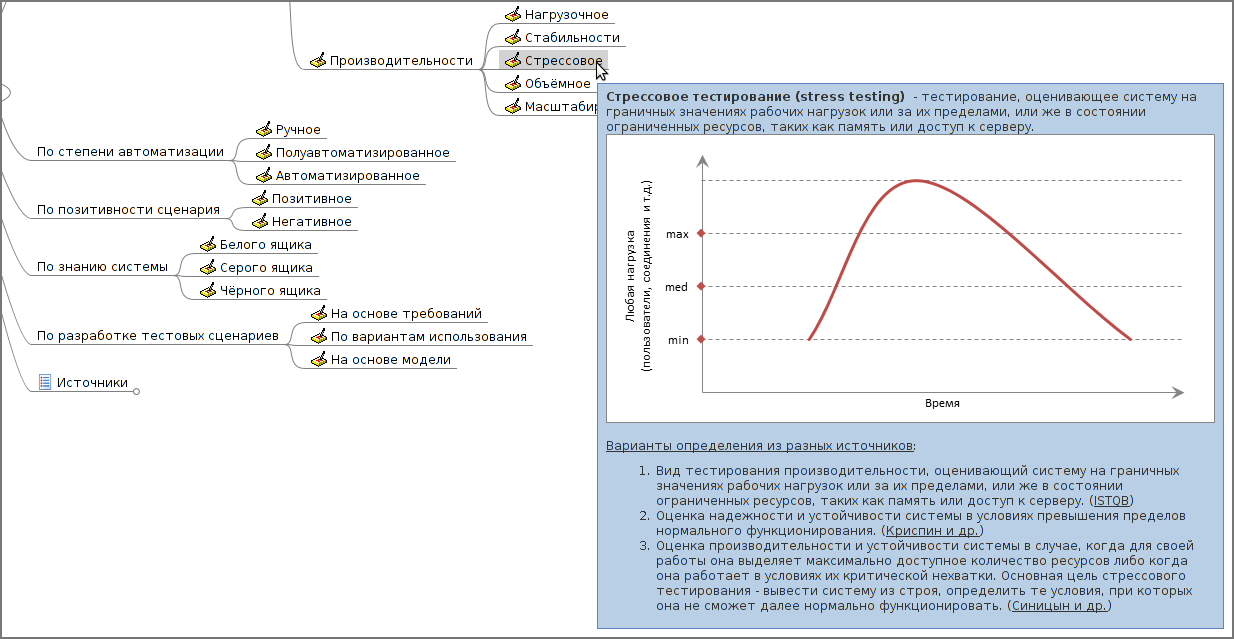
There are restrictions on the use of mind maps in preparing the topic of the lesson. With a large number of nodes, the card does not read well on the format of the landscape sheet. And then it is better to use a blackboard and chalk - duplicate parts of the diagram on the blackboard.
You need to train a beautiful handwriting and try to draw diagrams as works of art. At first I drew quickly, wrote unevenly. I think it looked like a mad scientist with disheveled hair.
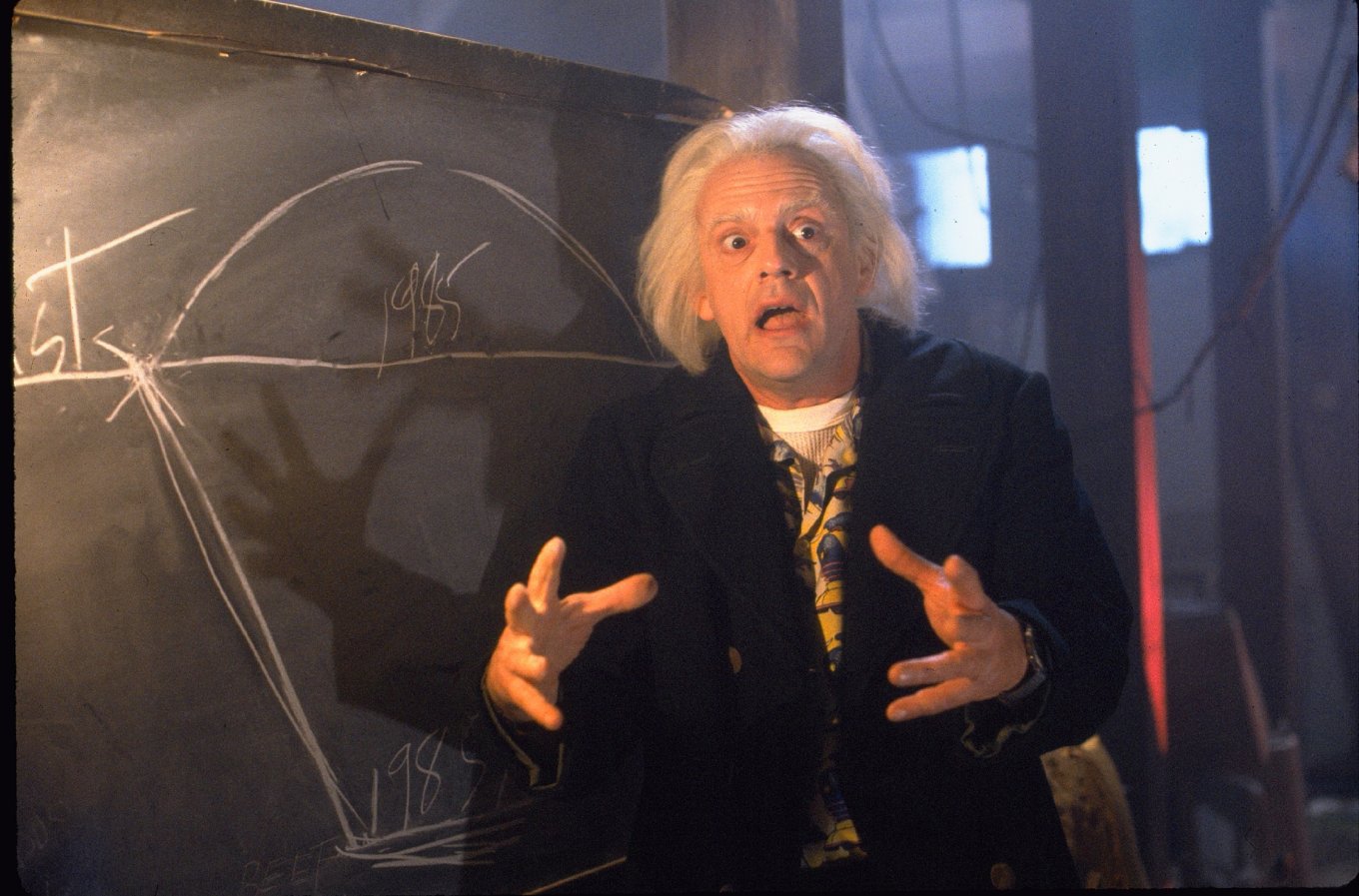
Then he began to try to write and draw, as in primary school. Exactly, beautifully, clearly (“like syllables in a pioneer speech”). Students began to ask more questions. It became clearer that classes became clearer.
Prepared thoroughly. There were technical failures and hitches; not everything was able to show and explain. You can tell a separate story about each case. So the preparation of laboratory work on testing is the road to Everest, laid by a rake. Debugging the work of an automatic test in a perfect environment can be difficult. And if the environment is imperfect, it is different on each educational computer, and the student wrote the test in haste, then only telepathy and the "developer effect" in which you transform, can help.
Teaching allows you to learn to better tell, write, see. Choose basic and simple. And there will be something to remember with a smile.
Worth trying.
The map can be downloaded here .
Card with types of testing for each lesson
Repetition is the mother of learning.
Proverb of different nations of the world.
Types of testing are grouped on the mind-map by:
- goals;
- execution chronology;
- formalities;
- positivity;
- ...
Each lesson was chosen:
- Testing application or service: email client, video hosting, ...
- The reference type of testing, for example, the main functional manual positive ... testing
- Several types of testing to compare with the reference: repeated, automatic, negative
We began to carry out test work within the framework of the selected reference type of testing.
The composition of the test work was selected from the reference list:
- Planning.
- Scripting
- Preparing a test environment.
- Running tests.
- Analysis of test results.
- Reports.
- Tracking defects.
Each time a map was used to select the type of testing. Each time a reference list of job types was used.
Pairwise comparison
Everything is known only in a correctly performed comparison.
The author is unknown to me, perhaps Friedrich Nietzsche or Rene Descartes.
Using specific examples, we examined which test-design technique in preparing scripts is more applicable to functional testing, and which to configuration . We examined the differences between the execution of tests for basic functional research testing and basic functional testing by tests . How test plans will differ. How at the same time, test projects look like a checklist or mind-map, against instructions with an order of actions and the expected result). What is common is the process of tracking defects.
We considered how the configuration reports differtesting and testing scalability , or reports on load and volume .
He brought examples of reports, unclassified and old, reduced them to 3 pages, deleting confidential information. We sorted out what is in the reports of the general (structure: goals, basis, brief results, details). What are the differences. How to read them. How to make up. How to form automatically.
So, sorting out the types of testing in pairs, I formed an idea about the choice of tools, approaches, goals and objectives of the studied activity.
The list of testing works was taken from SWEBOK (v3), chapter 4 “Software Testing”, section “Test Process”, subsection “Test Activities”.
These types of work are performed by testing engineers all the time. Each type of work is important. For everyone there are good and bad recommendations, tools, techniques. The purpose of the lecture classes was to convey to students the types of testing and types of testing work. A relatively small list of knowledge, and this knowledge is enough to begin to improve the quality of software.
Why card
We cannot predict how our word will respond ...
Fedor Ivanovich Tyutchev, February 27, 1869. The
map is a supporting summary for the teacher. Reminds me of what, I must have time to say. It helps not to say too much. After all, there is so little time, and so much to tell.
Previously, he taught in a classroom, where there were only desks blackboard and chalk. I came to classes precisely at the beginning, I did not prepare a board. I did not want to stand with my back and draw the studied subject area during classes. It is convenient to explain the relationships in the diagrams. Therefore, for each topic I made a mind-map. Printed in several copies, distributed to students in class. I used the blackboard and chalk to represent examples. They painted how bytes move according to the system scheme and lead to SQL injection, or how horizontal scaling works. This formed the habit of preparing mind cards.
The map allows you to:
- memorize material faster;
- save time at the start of classes;
- Use an officially approved cheat sheet for both teacher and student.
Leading a lesson, you read on paper, but reading between the lines is acceptable.
Students, having a map before their eyes, have more choices:
- just listen;
- cospect
- paint.
They think more, find analogies easier, more confidently answer questions. You prepare a map for each lesson, students begin to wait for the next material. And if, suddenly, you don’t prepare the diagram, then the lesson will begin with the question: “Is the printer broken?”, They laugh, it's good.
A feature of this card with types of testing is the availability of definitions for each node. If you save the map in html format, you get voluminous reading.
There are restrictions on the use of mind maps in preparing the topic of the lesson. With a large number of nodes, the card does not read well on the format of the landscape sheet. And then it is better to use a blackboard and chalk - duplicate parts of the diagram on the blackboard.
About chalkboard and chalk
You need to train a beautiful handwriting and try to draw diagrams as works of art. At first I drew quickly, wrote unevenly. I think it looked like a mad scientist with disheveled hair.
Then he began to try to write and draw, as in primary school. Exactly, beautifully, clearly (“like syllables in a pioneer speech”). Students began to ask more questions. It became clearer that classes became clearer.
About teaching
Prepared thoroughly. There were technical failures and hitches; not everything was able to show and explain. You can tell a separate story about each case. So the preparation of laboratory work on testing is the road to Everest, laid by a rake. Debugging the work of an automatic test in a perfect environment can be difficult. And if the environment is imperfect, it is different on each educational computer, and the student wrote the test in haste, then only telepathy and the "developer effect" in which you transform, can help.
Teaching allows you to learn to better tell, write, see. Choose basic and simple. And there will be something to remember with a smile.
Worth trying.
Captions
 | The classification of types of testing was made by Julia Grigoryeva, as far as I know (if there were several authors, please inform). The result was a set of articles on the wiki site of the testing department. | |
 | In compiling the articles, various sources were used:
| |
 | The resulting set of articles was designed in the form of a map. Terms can be clarified, so I posted the file on github to support versioning. Pictures are still posted in Yandex.Photo, we should put them together with the card and fix them in the releases section. | TypesOfTesting |
 | I used FreeMind 0.9.0 for mapping. You can also use xMind and other tools that support the format with the extension “mm”. | FreeMind - free mind mapping software |
 | SWEBOK 3 was originally the backbone of a training course. In the description of the specialty it was written that students are studying software engineering. When asked an experienced teacher what to take as the basis of the course, he said that software engineering is SWEBOK. | Software Engineering Body of Knowledge (SWEBOK) Home |
 | The training course "Testing and debugging software" was tested in 2014 by students of the department "Software": Nadezhda, Oleg, Ramil, Dmitry, Anatoly, Arthur, Yuri. | |
 | The audience and equipment were provided by Izhevsk State Technical University named after M.T. Kalashnikov. | www.istu.ru |
 | The article uses a frame from the movie Back to the Future 2, where Doc explains how Beef created the version of the future in which the characters are now. | Photos with Christopher Lloyd |
 | The article uses proverbs, poems and phrases that, through the efforts of different people, have settled in the head. And icons from the Faenza theme. | Faenza |