May 7, 2014 at 13:36
Roboforum 2014: dossier for 40 speakers and one big question

Do not worry about copyright - the author of the picture will also come to the forum.
Almost a week later, the Roboforum will begin , at which a critical mass of robotics will gather. 1000 delegates, 40 speakers, 35 media. Their lectures, reports and speeches will finally allow to outline the contours of the brave new world waiting for us beyond the threshold of massive robotics. The program of the four days of the forum is on the site .
Below is a list of participants, but first I would like to raise one topic.
Imagine what a world would be like without World War I? Probably he would be even more different from what arose. Peaceful changes are not so visible, but they change life more radically. If the Caribbean crisis led to World War III, we would say that consumer electronics and mass pop culture are the result of a military turning point, rather than a household revolution.
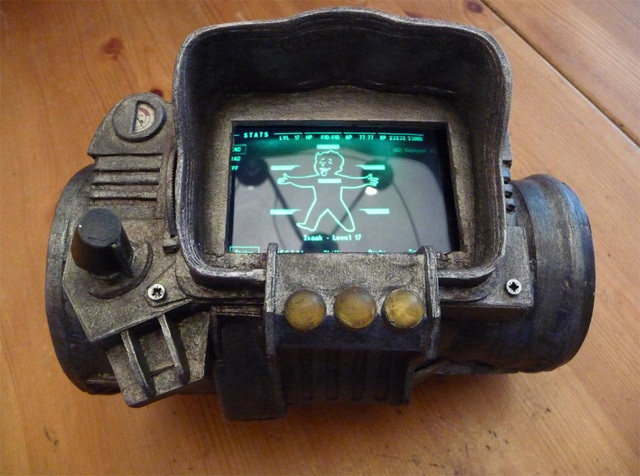
An iPhone might look like that after the Caribbean crisis.
Household revolutions will shake the 21st century and the 20th will soon become a distant, distant past. Some robots will hit the brains in such a way that they won't seem enough. This is the collapse of all traditional life in the post-ancient era. A coup comparable only to the agrarian revolution.
Take all this nagging twentieth century about "slavery." And what will a person face in this century? With him, darling. Man will be surrounded by anthropoid robots that he bought and are in his full ownership. And he will use them as servants and as sexual objects. And this will require significant changes in everyday culture and communication culture. Do you know how to talk with a robot? Roman - was able. And we simply do not have an appropriate “consumption culture”.
At the same time, robots will possess intelligence and make decisions (otherwise why are they needed?) - but who will be responsible for these decisions? Now every operator is being watched by a human operator, but for now.
Military robots today fill the land, air and sea, and with each new model they become more deadly, autonomous and even intelligent. “The robots you see today are like Ford's T model. We are only observing the earliest stages of technology development, ”said a senior employee of one of the companies developing robots. As you know, Henry Ford sold only 239 copies of his super-famous car in the first year - and 15 million over the next 19 years. Demand for robotic systems is growing unusually fast.

without a robot you are a native in a loincloth
What will happen in any of 2030? Fortunately, not only do we have such questions. The government of Great Britain and the USA are already worried about the issue. In 2006, futurological research on the subject of research and robotics was commissioned by the British Department of Science and the Center for the Study of Innovation. Specialists from Ipsos-MORI , Outsights Consulting Agency and the United States-based Future Institute, took part in it .
This document states that:
- Mass production of anthropoid robots will begin in about 20 years. Robots will have artificial intelligence comparable to human, and will be capable of self-programming and self-reproduction.
- Robots will turn into digital citizens, unlike things that have legal rights and obligations. Robots will participate in elections, pay taxes, and be required to serve in the army. By the way, something similar happened in the USSR - all jeeps and shepherd dogs were registered with the military enlistment offices and requisitioned in case of war.
- Robots obtain civil rights in several stages and are likely to be accompanied by great social tension. Similar to the process of granting civil rights to blacks in the United States.
The study, or at least in its published part, does not say anything about the main problem of a robotic society: anthropoid robots make the existence of the vast majority of humanity socially unnecessary. In addition, the economic gap between a robotic and an ordinary state is so wide that it turns the most modern non-robotic state into a reservation of obsolete equipment, obsolete culture and outdated social relations.
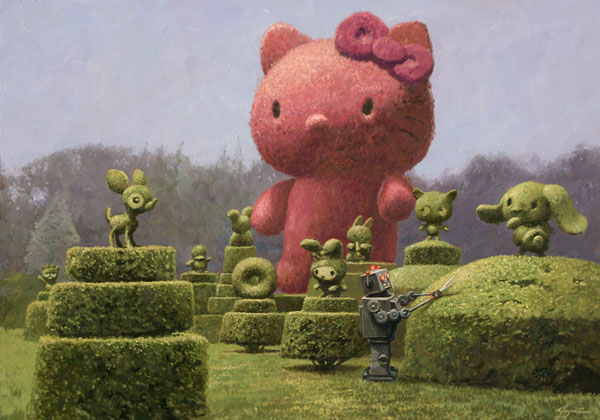
The military use of robots is soldiers with demonstrational significance. It is about a global turn in the economy, equal to the industrial or even agricultural revolution. With the advent of robots, the economy will begin to develop itself, without human participation as a production unit. Removing a person from their sphere of eco-economics will turn him into an absolute consumer, and the cost of goods will make it close to zero.
At the same time, the anthropomorphism of robots is fundamental, because all the technology of the Earth is sharpened to the human standard. In fact, a robot is not a mechanical person with artificial intelligence, but a free (!) Mechanical person with artificial intelligence. You can build a toy for a billion dollars - that’s not the point. It's not about the manual assembly of gold carriages for a dozen European kings, it's about Ford T and the conveyor. The era of robots is when out of 8,000,000,000 people, 7,800,000,000 say: Everything is free. Eat popcorn, watch cartoons.
It is interesting to ask how professionals see the future of robots. Now, actually, the defendants:

JUN-HO Oh (JUN-HO OH) Professor of the leading Korean Institute of Science and Technology, creator of the Hubo robot / Korea
Over the past ten years, he has created a unique model of the humanoid robot of the KHR-1, KHR-2, Hubo and Hubo 2 series, and he also developed Albert Hubo and Hubo FX-1. The professor is the director of the Hugo Lab Research Center of the Korean Institute of Science and Technology (KAIST). He participated in many industry and government research projects to study innovative technologies. In addition, Rong Ho Oh is a member of the National Engineering Academy of the Republic of Korea. Currently, his activity is aimed at developing and improving robot models, namely, the search for technologies that will allow robots to move at a higher speed and have a reliable integration system.
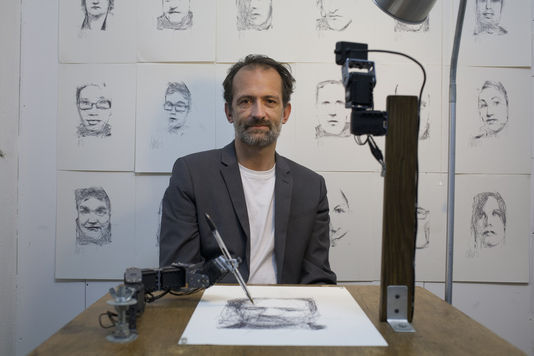
PATRICK TRESSET / Artist and scientist, creator of the robot artist Paul / Russia
For several years he was engaged in the creation of the robot Paul, who knows how to draw no worse than a living person. To create this robot, Patrick Tresse studied and analyzed thousands of graphic works by artists of different styles and eras for many years. The idea of the programmer was realized thanks to software that supports an algorithm for moving a mechanical arm, which is the design of the robot. Currently, the activities of Patrick Tresse are aimed at improving his creation and an attempt to teach him different drawing styles of famous artists, so that in the future the robot has its own drawing style.
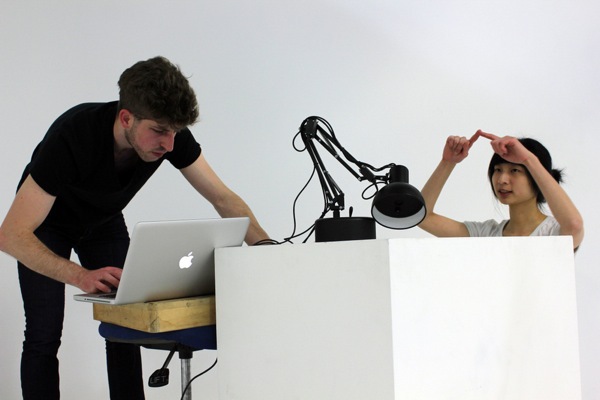
ADAM BEN-DROR / Industrial Designer, University of Victoria, Wellington / Australia
He studied industrial design at Victoria University of Wellington. Adam is mainly involved in creating objects that are a model of a balance between aesthetics and functional utility. He considers his passion for studying the synergy between beauty and utility to be his catalyst. The basis of his activities are experiments with various materials, balance and scale. She is also interested in creating products for animals and introducing new media technologies into her projects. In recent years, Adam has received many awards, including the Click Suite prize for innovation in media design (2012) and the New Zealand Best Awards gold in the interactive category (2013).
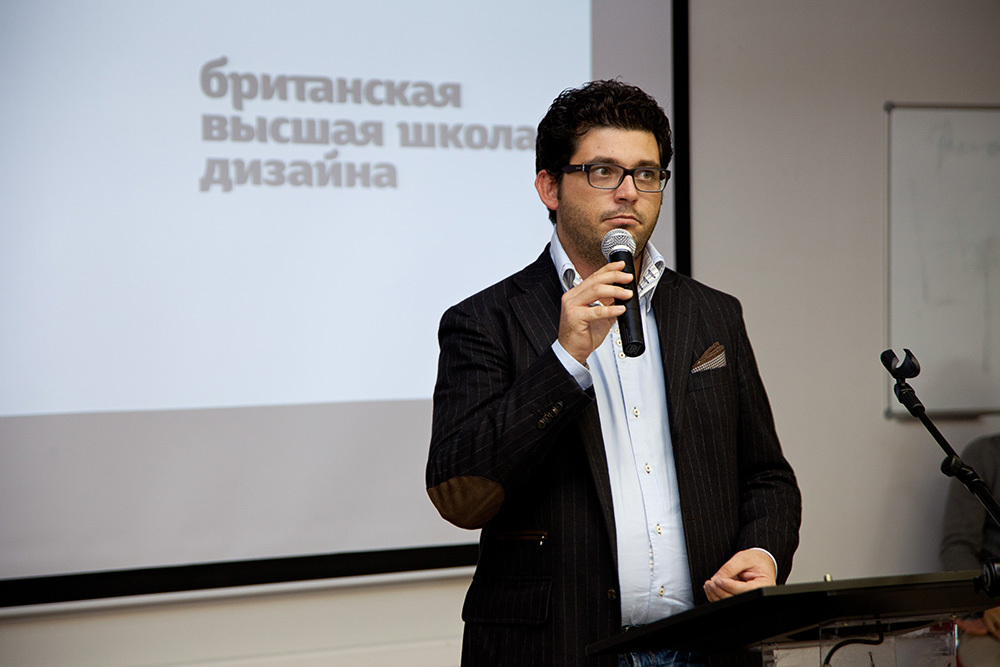
UMBERTO GIRAUDO / Lecturer at the British Higher School of Design and curator of the Industrial Design course, founder of Design Zavod Studio / Italy
Lecturer at the British Higher School of Design and curator of the Industrial Design program. He graduated from the Polytechnic University of Milan with a degree in Industrial Design. In 2002, he worked in collaboration with Professor Toshiro Ikegi for the Japanese Eco-Design Network. He was engaged in car design, design management and organizational issues at the Geneva Motor Show. Subsequently, he developed the concept of development and surface modeling for new fire fighting equipment at airports.
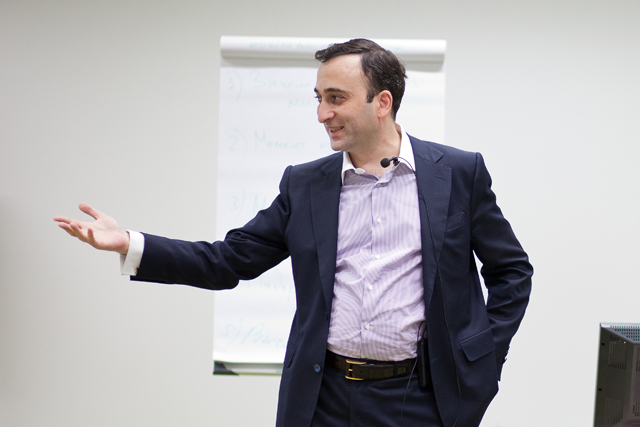
GOR NAKHAPETYAN (GOR NAKHAPETYAN) / Founder of BALA ROBOTOV, entrepreneur and adviser to the rector of the Moscow School of Management SKOLKOVO / Russia
Gore began his professional career in 1992 at DialogBank. Dialogue moved to Troika in 1993 and stood at the origins of the creation of the company. From February to September 2013, Gor Nakhapetyan held the position of Vice President of Sberbank. In this position, he oversaw the HR unit, whose key tasks are the formation and development of a corporate culture, the improvement and development of the employee motivation system, the creation of a corporate university, and the construction of an effective communication system within the organization.
Since 2006, he is a member of the Coordinating Council of the Moscow School of Management SKOLKOVO, as well as the Chairman of the Human Resources Committee.

FRANCESCO FREZA (FRANCESCO FREZA) / Architect, founding partner of Piuarch studio, the best architect of Italy 2013 / Italy
To date, the summary of the Piuarch studio has dozens of projects, including the development of show rooms, business centers, fashionable headquarters, villas and shops. It is this studio that is responsible for the style of Dolce & Gabbana boutiques, and it was this studio that developed the functional design of Passage 15 and Helen Marlen 2.
He believes that the same principles lie in both areas of his work - the success of the work of both the designer and the architect depends on a clear weathered proportion, a harmonious combination volumes and selection of materials.
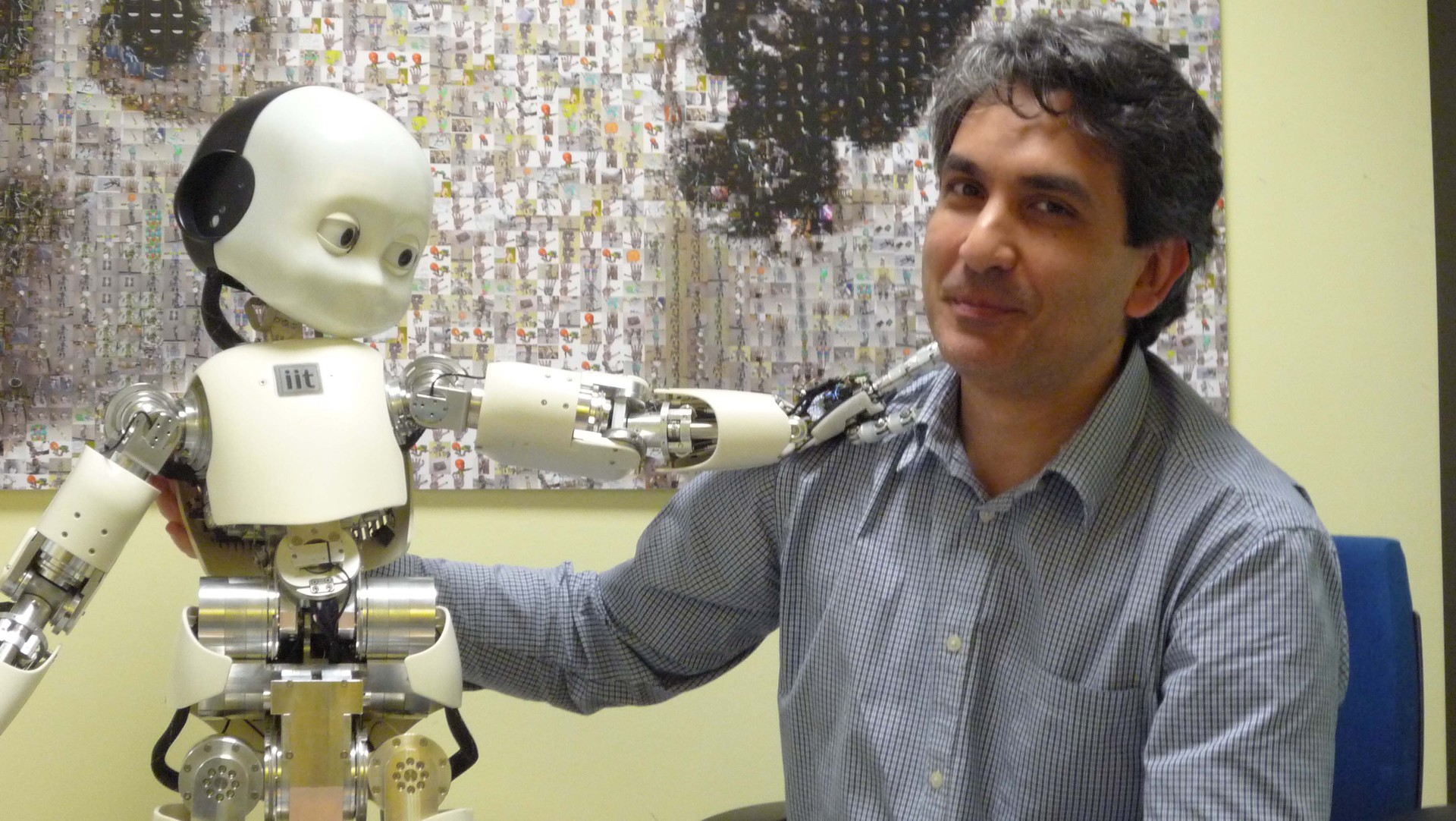
GIORGIO METTA / Creator of the ICub humanoid robot, Director of the iCub division of the Italian Institute of Technology (IIT) / Italy
The research activity of the scientist is concentrated in the field of biologically motivated robots. Giorgio also takes part in the development of humanoid robots that can adapt and learn from their own experience. His research was developed in collaboration with leading European and international scientists of various disciplines: neuroscience, psychology, computer science and robotics. Giorgio Metta is the author of about 250 publications. He has worked as a lead researcher in more than ten international as well as national projects.

VLADIMIR KONYSHEV / General Director of Neurobotics / Russia
Vladimir Konyshev - MD, head of the company Neurobotics, which specializes in the development and supply of systems for the study of human and animal physiology. It is one of the key figures in the initiative group of the strategic social movement “Russia 2045”, which advocates for the development of man, including by accelerating technological progress and integrating modern technologies.
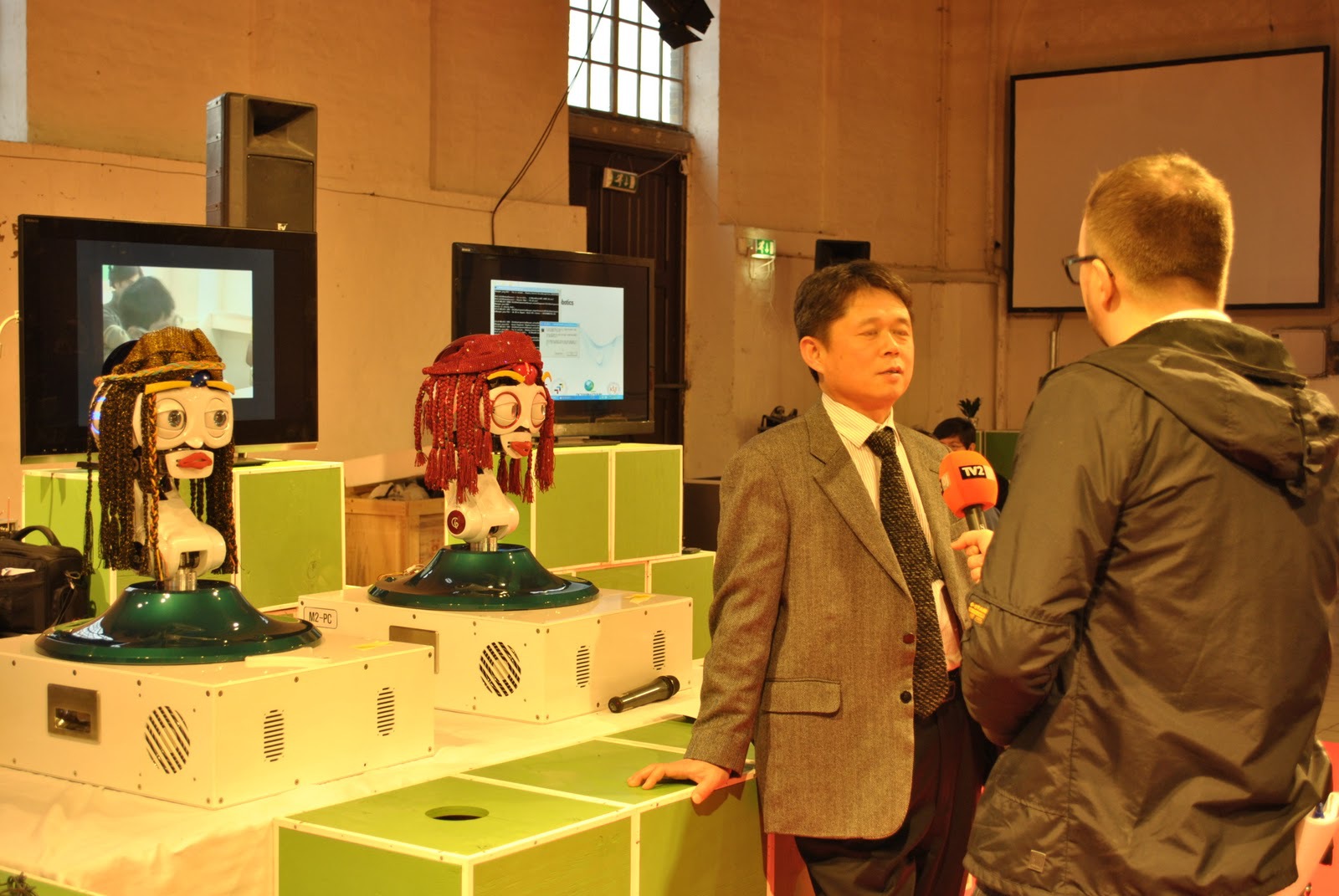
KIM MUNG SUN / Director of the Center for Intelligent Robotics at the Korea Institute of Technology, member of the robot team Mero, Kibo, Ciros and Silbot / Korea
Kim Munsang received a master's degree from Seoul National University, after which he defended his doctoral dissertation in technical sciences at the Technical University of Berlin (Germany). He is the author of numerous scientific articles and books on robotics, and also regularly participates in conferences. Received more than 20 awards for research and technological development.
He currently holds the position of Director at the Center for Intelligent Robotics at the Korean Institute of Technology, and is also involved in the creation of robots Mero, Kibo, Ciros and Silbot.

LOUIS-PHILIPPE DEMER / Blind robot designer Professor, School of Arts, Design and Media at Nanyang University of Technology / Singapore
Louis-Philippe Demers is known for his large-scale theatrical robotic productions and interactive media projects. Over the past two decades, he has taken part in 70 art projects and designed more than 300 robots. His works were presented at major venues; he himself participated in numerous international exhibitions and festivals. Louis-Philippe Demers is a laureate of many prizes, prizes and awards, including the first prize of the international competition for artificial life projects VIDA 2.0 (Madrid, 1999). From 2001 to 2005 he was a professor at the Higher Art School of the Center for Arts and Media Technologies (ZKM, Karlsruhe).

FRANCESCO FERRO / General Manager of PAL Robotic, the company that created the REEM robot / Italy
Expert in robotics. He received a master’s degree at the Higher Institute of Electronics (Lille, France), as well as an MBA diploma in “High-Tech Business”. Since 2011, he has been CEO of PAL Robotics (Barcelona, Spain), specializing in the creation of humanoid robots. The main development of the company is the line of humanoid robots REEM; 5 models are currently released. The latest generation is the REEM – S robot, which is able to see, speak, recognize faces and speech in several languages, and independently navigate the terrain.
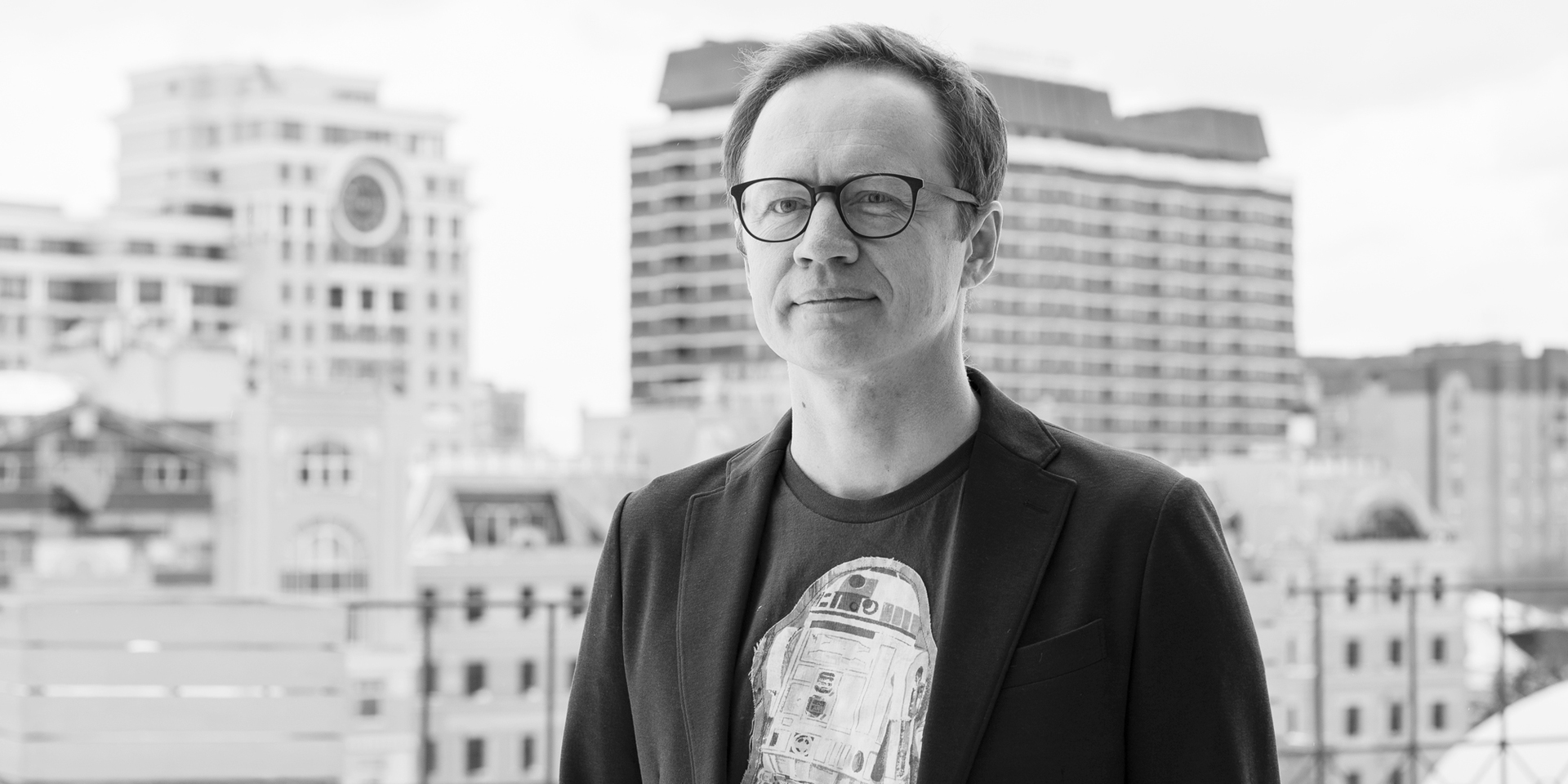
MAXIM KASHULINSKY / Editor-in-chief of the SLON portal / Russia
Business journalist, media manager, business expert. He graduated from the Faculty of Philosophy of Moscow State University named after Lomonosov. He began his journalistic career in 1994 at the Skate news agency. Then he worked as a correspondent for the Business department of the Segodnya newspaper, as chief editor of the Company magazine, and served as deputy chief editor and editor of the Consumer Market department of the Vedomosti newspaper. In September 2003, Kashulinsky began working at the Axel Springer Russia publishing house, where he took over as chief editor and, later, as chief editor of Forbes magazine. Since March 2011 and since January 2012, he has been the CEO and head of the Slon.ru portal as the acting general director of Big City LLC.

WILL JACKSON / Head of Engineered Arts Ltd, creator of RoboThespian / USA
Design Engineer, creator of Robo Thespian and SociBot. In the past, Will Jackson designed interactive stands for museums and exhibitions. Having received several orders for the development of "mechanical actors", he came to the conclusion that it was necessary to create a universal programmable model. He later decided that “actors” needed the ability to interact. So there was a company Engineered Arts, engaged in the creation of humanoid robots. The first versions of the robots were rather clumsy, but the creators continued to improve the robots and managed to achieve significant success.

CHRIS WAKE / Vice President, NanoSatisfi Products / Business Development, USA
Chris Wake is NanoSatisfi's commercial product strategist, serial entrepreneur, Oxford graduate. Chris Wake worked and was a leader in both large and small companies. His work has been featured in publications such as Forbes, The Huffington Post and Wired. Since February 2013, he has been working at Nanosatisfi, which launches open-source satellites into orbit. In just a year, they were able to independently create and launch three models, but they do not intend to stop there.
Words written by Chris Wake about himself on his blog: “I do cool things. In space. "" I consistently transform chaos into process. "
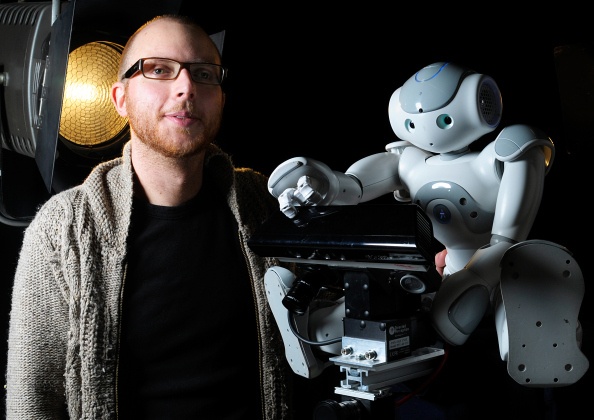
NICK HAWES / Senior Lecturer, Birmingham School of Computer Science, Artificial Intelligence Specialist / England
The basis of Nick's activities is the field of application of artificial intelligence and methods for creating intelligent autonomous robots that could work for people. Nick Hayes worked for many years on processing information of building intelligent systems, introducing AI planning methods into various robotic systems. Currently, he is the coordinator of the “STRANDS” project focused on the production of intelligent mobile robots. Nick Hayes also participated in many programs and events: BBC News; BBC World Service; British Science Festival; Cheltenham Science Festival, where he actively lectured on his research.
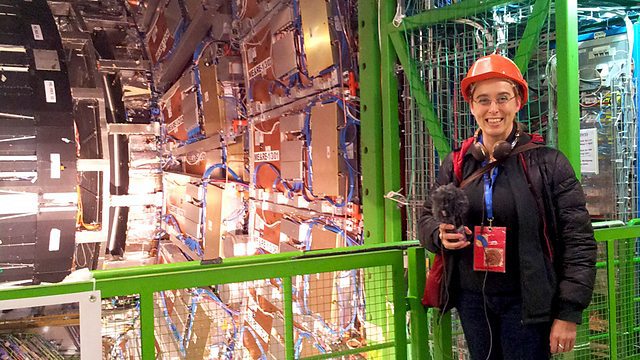
TIMANDRA HARKNESS / Writer, journalist, BBC Radio 4, famous British science fiction host, science stand-up comedian / England
Timandra is professionally engaged in comedy on a scientific subject. Now she is performing with the solo show “BrainSex”. In the past, she worked on a comedy research project with Matt Parker, which resulted in a stand-up show that they performed in England and Australia. Very often acts as a moderator or moderator at various scientific and political debates. Among other things, she writes scripts for films, radio programs and scientific exhibitions.

VYACHESLAV KOZLOV (VYACHESLAV KOZLOV) / Specialist in innovation strategies, co-founder of Summon, member of the European Council of the Internet of Things, mentor of startup accelerators in Italy and the Netherlands / Russia
Vyacheslav Kozlov is a famous futurologist and futurodesigner, sociologist, psychologist, co-founder and head of Summon, whose activities are aimed at developing scenarios for a possible future in the field of innovation and strategic planning. Vyacheslav is also the host of the IACS exit program “Economics of Knowledge: Design Thinking as a New Approach to Solving Business Problems”. He worked for more than ten years in the Strategic Future Design department of the Phillips Design design agency in the Netherlands. Vyacheslav participated in many projects to study and analyze possible scenarios for the development of industries, countries and enterprises, and also took part in creating innovative solutions, products and services for many companies, including Phillips. He made a certain contribution to studies of human behavior, ethnographically oriented,
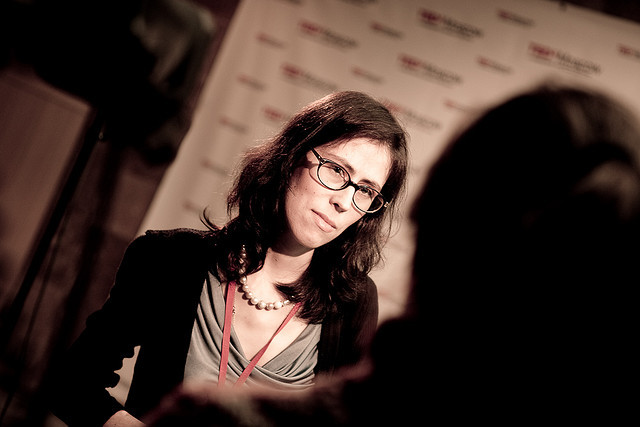
EKATERINA KHRAMKOVA / Futurodesigner, founder and CEO of the Lumiknows Innovation Design Agency / Russia
Ekaterina Khramkova specializes in the development of innovative products (New Product Design & Development). Ekaterina is one of the first Russian design researches in the field of consumers and the context of the use of products, services, brands, identifying difficult to formulate consumer preferences. Ekaterina Khramkova is also a developer and teacher of the design research and forecasting course at the British Higher School of Design in Moscow and the leading column on design thinking and innovation at Harvard Business Review - Russia. In 2005, Catherine won a British Government scholarship in New Product Development, which helped her to obtain a British Master of Arts: Design & Branding Strategy degree from Brunel University.
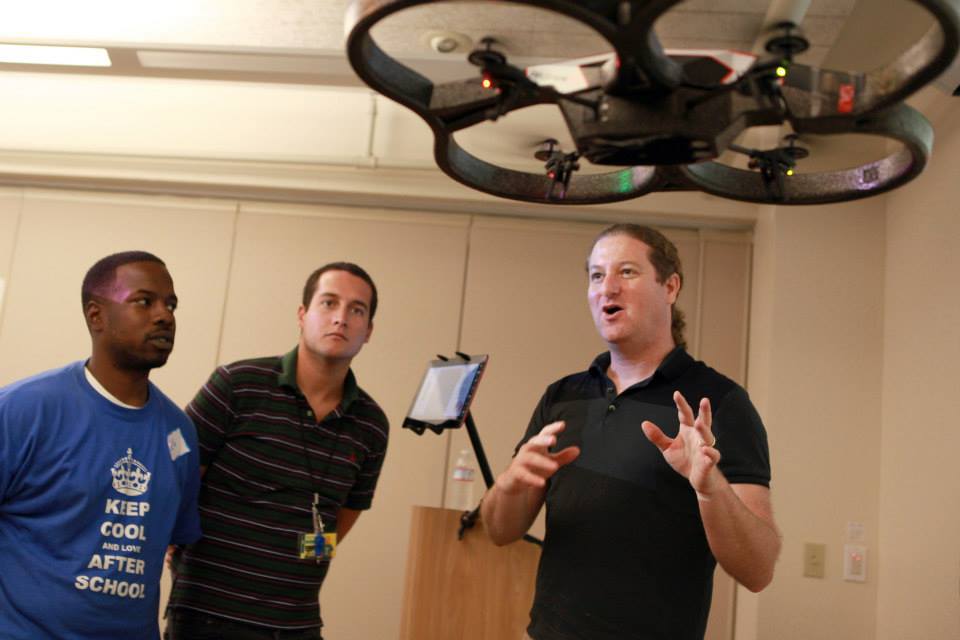
ELAD INBAR / ONLINE / Creator RobotAppStore / USA
In 2011, the first online application store for robots RobotAppStore began to work in test mode. In 2012, it became available to all users, now there are applications for 10 robot models posted there. RobotAppStore was founded by serial entrepreneur Elad Inbar. He previously created MassiveImpact, a mobile marketing platform, as well as RobotsLab. “I worked with customers and I realized that everyone needs about the same applications, but there is no platform where you can buy them. The opening of the application store is a milestone in the history of robotics. ” Inbar believes that a cheap and understandable consumer robot will appear in the very near future, but does not undertake to predict in which country this will happen. “It can be invented anywhere, really,” Inbar smiles and remarks that investors around the world are keenly interested in robotics,
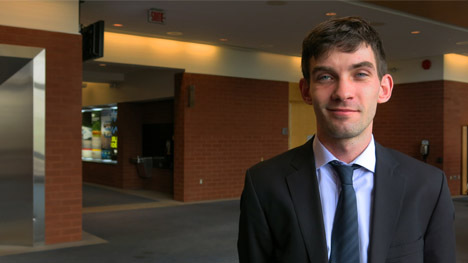
REMY GLAISNER / Co-founder of Myria Research / USA
Remy Glaisner is a co-founder and analyst of Myria, which takes part in events dedicated to the main trends in robotics and intelligent systems and their impact on business and market development. Research & Advisory - Myria offers services that provide customers with constantly updated independent research. The data obtained during the research, allow the company's customers to increase work efficiency, competitiveness in the market and promote their business.
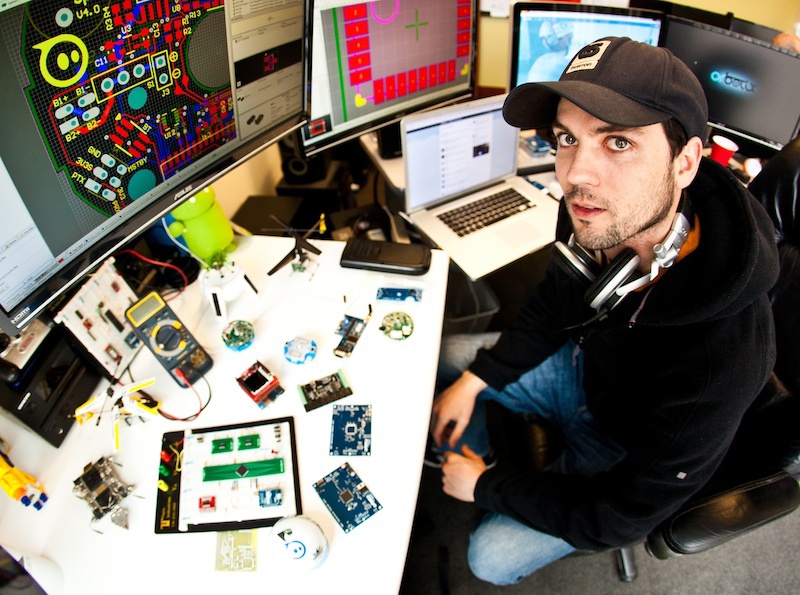
IAN BERNSTEIN / Co-Founder and Chief Technology Officer, Orbotix / USA
From childhood, Jan was interested in electronics. At age 12, he took part in BEAM International Robot Games, which sparked his interest in robotics for life. Under the leadership of Mark Tilden, a renowned robotics specialist, Ian created robots not only as a hobby, but also for university projects, international robotics competitions, and even for the science center of the Houston Space Center. “We have created toys that combine new technologies with the latest innovations in robotics, and have proposed a new type of games in open space. With our savvy robots and open source software, we hope to inspire the next generation to become inventors and programmers. We make funny robots
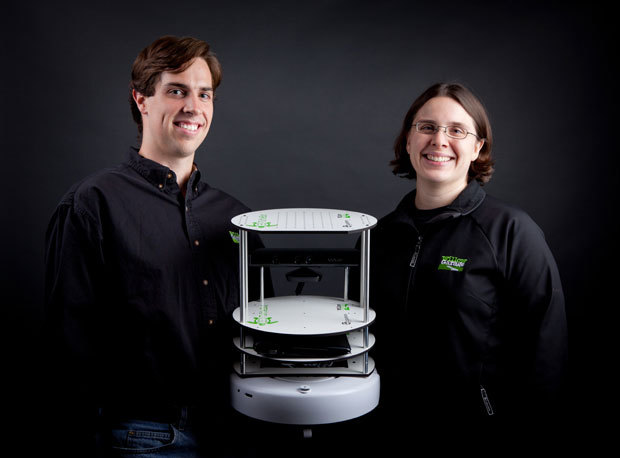
MELONEE WISE / CEO and Co-Founder of Unboundedrobotics / USA
CEO and Co-Founder of Unboundedrobotics. Before becoming one of the founders of Unboundedrobotics, Meloni was a robot development manager at Willow Garage, a leading group of specialist engineers to develop the next generation of robots. For more than ten years, she has been involved in the development and design of various hardware and software for robots. Some of her projects included the development of algorithms, libraries, and equipment for autonomous boats, automobiles, and personal robotic platforms. At Willow Garage, Meloni was one of the creators of an inexpensive personal robot with affordable software.

ALEXANDER REBEN / Robotics and artist, creator of BlabDroid, researcher at MIT / USA media laboratory
Alexander Reben develops robots and new interfaces for experimental studies of the relationship between humanity and technology. His works were shown at Ars Electronica, MIT, Axiom, Eyebeam, Whitney Biennale, and were featured in the journal New Scientist, Fast Company, BBC, CBC, Hack Day. After his MIT dissertation “Boxie,” he was invited to speak at the TED conference. Alexander’s recent interactive installation, The Resident Robot, is the first documentary to be fully shot and directed by robots. The premiere took place at the Doclab International Documentary Film Festival in Amsterdam.
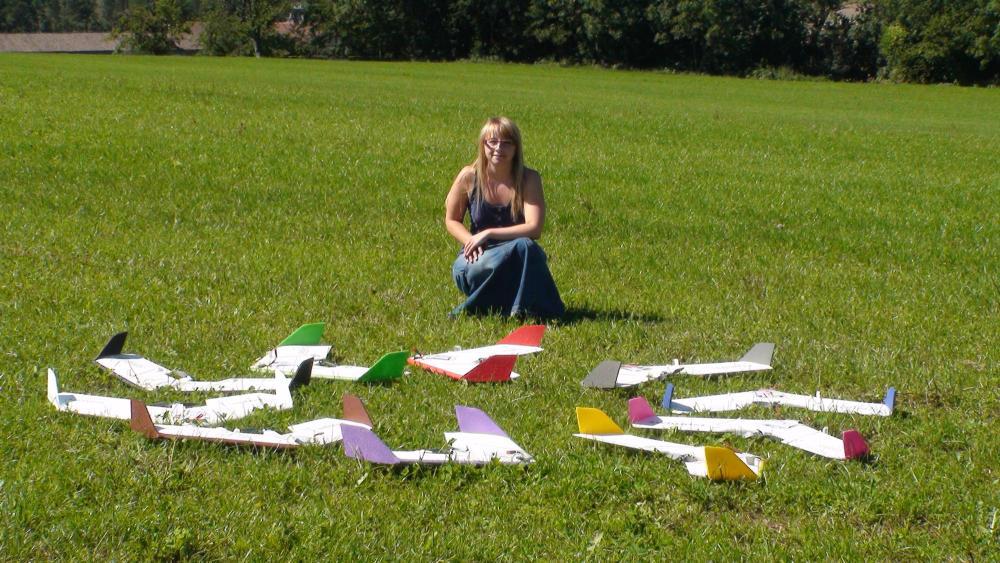
SABINE HAUERT / Representative of the Massachusetts Institute of Technology, researcher in the field of nanorobots / USA
Sabina Hayyar - scientist from the laboratory MIT + SNSF (Switzerland). Her professional interests are: design of large self-organized robotic systems inspired by natural phenomena based on a large number of microdrons with further use in medicine (human brain, immune system).
Sabin has extensive experience in popularizing science on resources such as Robohab / Robopodcast / Autonomous Robots (Springer), her articles and interviews have been published many times in CNN, The Wall Street Journal, Wired, Engadget, PopSci, and New Scientist.
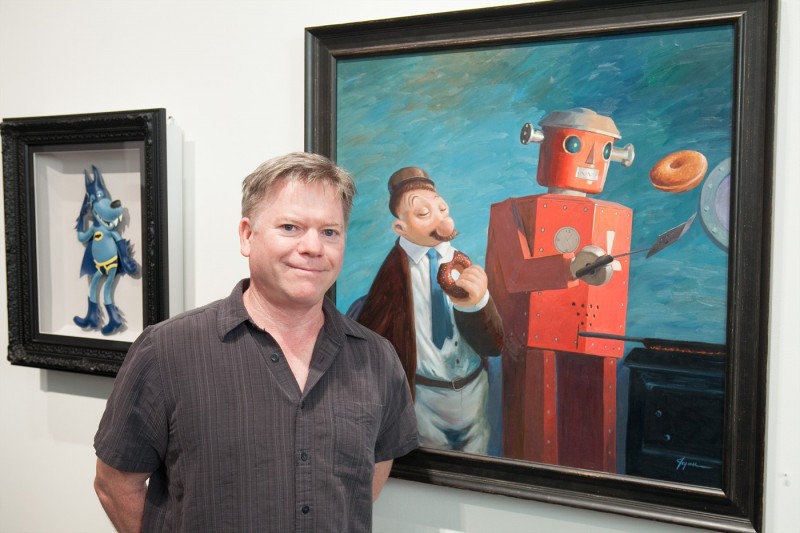
ERIC JOYNER / Illustrator. In his work, he chose a robot as the protagonist of his works.
In 1983, Eric graduated from the University of San Francisco. For over 20 years now, he has been working as a freelance illustrator and has collaborated with a number of companies such as Mindscape, Spunky Productions and Midland Productions. Joyner's works are exhibited in New York and California, and the artist himself has many awards.
The subjects of his paintings are fiction, and the main models are robots. Joyner robots are often travelers. An old vision of the future that will never come true is the background image of his paintings, where robots are created based on Japanese toys. Robots in his paintings often struggle with each other or with the classic sci-fi monster.
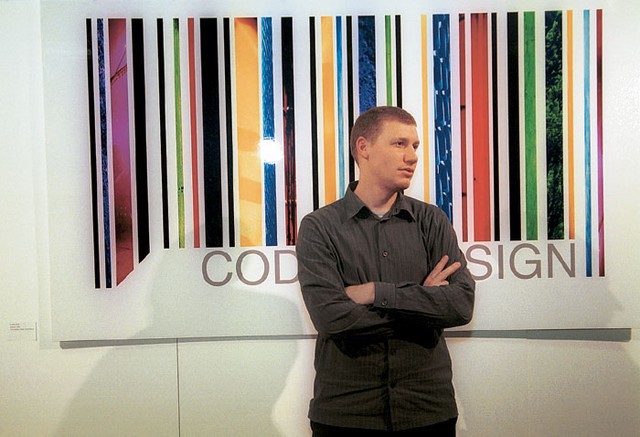
MARTIN BRICELJ BARAGA / Artist and program director. Founder of the MoTa Museum. Creator of the RoboVox art object concept
Baragi’s works are devoted to the study of the interaction and relations between man and machine, which today play an important role both in pop culture and in the political and social life of society. Martin is the author of interactive works based on the creation of new situations in the public space.
In his works, he positions time as a key element. All his works can be considered as a social experiment, which is aimed at the study of artistic production in emergency situations.
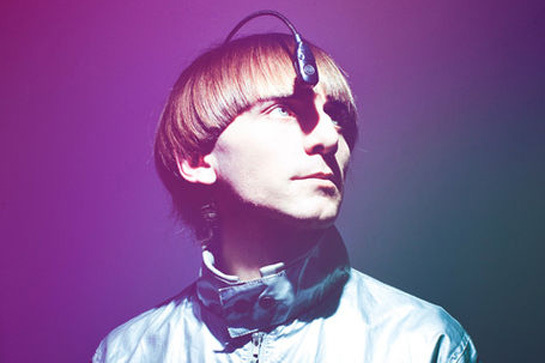
NEIL HARBISSON / A contemporary artist, musician and cyborg activist, widely known for his unique ability to “hear” colors.
Artist Neil Harbisson was born with a complete inability to distinguish colors. However, now with the help of a special device called Ayborg - a cyborgized eye, which consists of a webcam, computer and headphones, Harbisson can literally hear 360 different colors, some of which are indistinguishable to the human eye. Neil became the first person in the world who was allowed to take a passport picture with a cyborgized device on his head, was considered by some as an official recognition of Harbisson as a cyberg. In 2010, Neal founded the Cyborg Foundation, an international organization that helps people become cyborgs and fight for their rights. www.ted.com/talks/neil_harbisson_i_listen_to_color
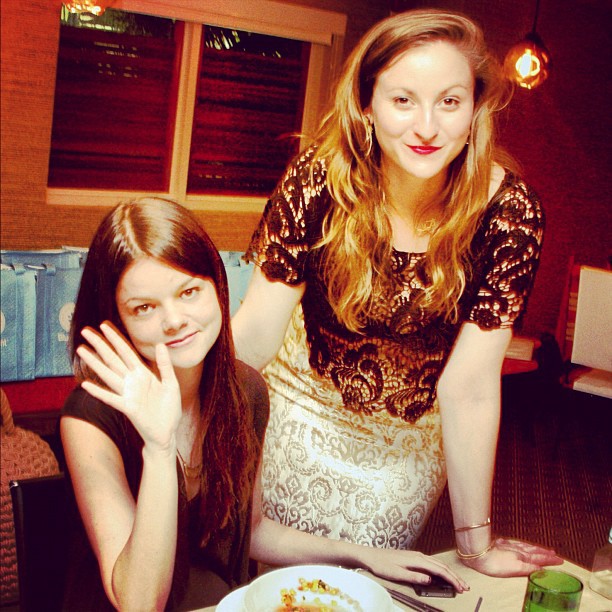
MONICA LOCASIO / Author, curator, gallery owner and art director specializing in art & science, CultureShock agency / USA
From talented parents, Monica received an insatiable desire for knowledge, a keen ear, keen on eye aesthetics and an extraordinary ability to work in a variety of disciplines. Starting her career in New York as a co-publisher and art director of Overspay, Lokasio soon became director of PAPER magazine, the work on which, in turn, led her to the post of art director of EXTRAEXTRA, a full-time marketing agency for PAPER magazine, where she worked on promoting brands such as American Express, Absolut, LANVIN, Mattel and Target. Monica was also the author and editor of a number of publications for the publishing houses Rizzoli and ABRAMS and was the independent curator of a number of art galleries in New York and Vienna. Before becoming part of the Creative Agency Culture Shock, Lokasio worked as an executive producer of the SCOPE Art Show - the first exhibition,
Register for Roboforum here .