DigiTop VA-protector 63A current monitoring voltage relay overview

Intro
When repairing their own future housing, in addition to shifting all the wiring in the apartment and installing a shield with automatic machines, the question arose of ensuring the protection of equipment from overvoltage.
The constant construction of new houses requires laying new and new power cables with a voltage of 35 and 110 kV, but they “forget” their capacity to compensate: shunt reactors are simply not installed. Because of this, there is a resonance with pumping power.
In particular, this happened on December 2 in Kiev, when the generator at TEC-5 “fell off” and a decent amount of equipment burned out in some areas of Kiev due to a power surge.
Hidden text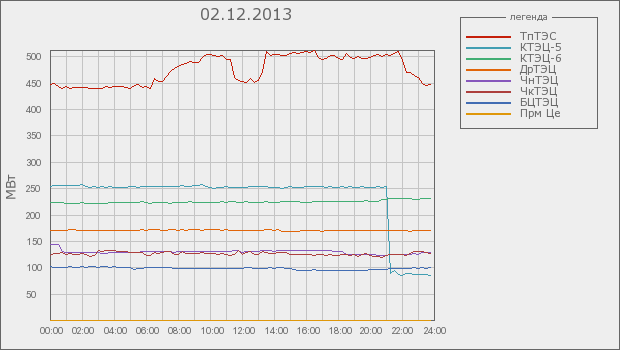
This prompted me to choose and install a voltage relay (LV).
When searching for existing solutions, devices of well-known European brands either did not provide the required characteristics (since LVs are mainly used in industry, they are designed for current up to 10 A and installation paired with a contactor, which requires a minimum of 4 seats on DIN rail, which I did not have), or cost decent amounts.
A quick analysis of domestic manufacturers' devices showed that the devices are of poor quality and sometimes even dangerous to use, as evidenced by reviews and tests of similar devices in various forums:
krainamaystriv.com/threads/12117
krainamaystriv.com/threads/10395
krainamaystriv.com/ threads / 9559
krainamaystriv.com/threads/3885
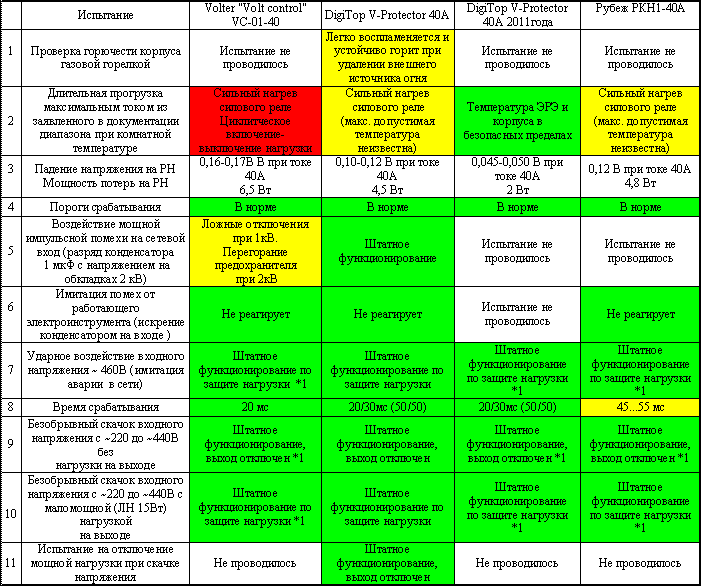
There were also references to the new DigiTop relay and statements that they were much better than what was released earlier. Unfortunately, we could not find a review or at least a photo of the insides of the device.
It was decided to buy a cat in a bag and take it apart, because I didn’t want to trust an unknown box with the safety of the whole house.
Specifications
| Parameter | Value |
|---|---|
| Input voltage: | 0-400V |
| Indicated voltage: | 50-400V |
| Voltmeter Accuracy: | no more than 5 V |
| Maximum load current: | no more than 80A |
| Upper limit trip time: | 0.02 sec |
| Lower limit tripping time | no more than 1 second (120-200V) 0.02 second (<120V) |
| Current shutdown time | 600 sec (Inom <Iism <Imax :); 0.04 sec (Iism≥Imax) |
| Lower trip limit (1V step): | 120-200 V |
| Upper Trip Limit (1V Step): | 210-270 V |
| Turn-on delay time (step 5 sec): | 5-600 sec |
Design
The device is available in a three-unit case (according to DIN 43 880, for the mounting strip according to EN 50 022, the width of one module mounting on the strip is set to 17.5 mm.) For installation on the mounting profile TH / 35-7.5 and TH / 35-15 - in people - DIN rail. The manufacturer claims the material of the case as an ABS plastic that does not support combustion.
The gripe is caused by the tongue, which fixes the case of the device on the DIN rail: it is frankly weak and the device can freely move from side to side.
On the front panel there are 2 LED digital indicators (three-digit seven-segment with a dot), covered with red matte plastic, they are quite bright. To the right of them are 3 control buttons.
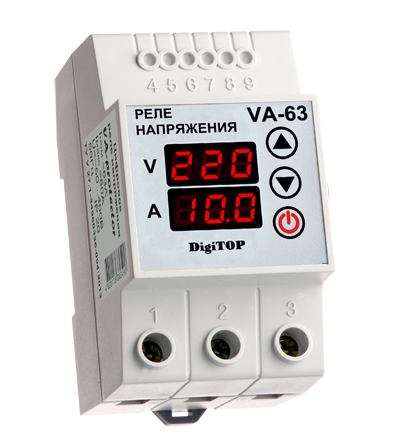
Conductors are connected from below. The terminals are made of copper and brass. They are quite massive.
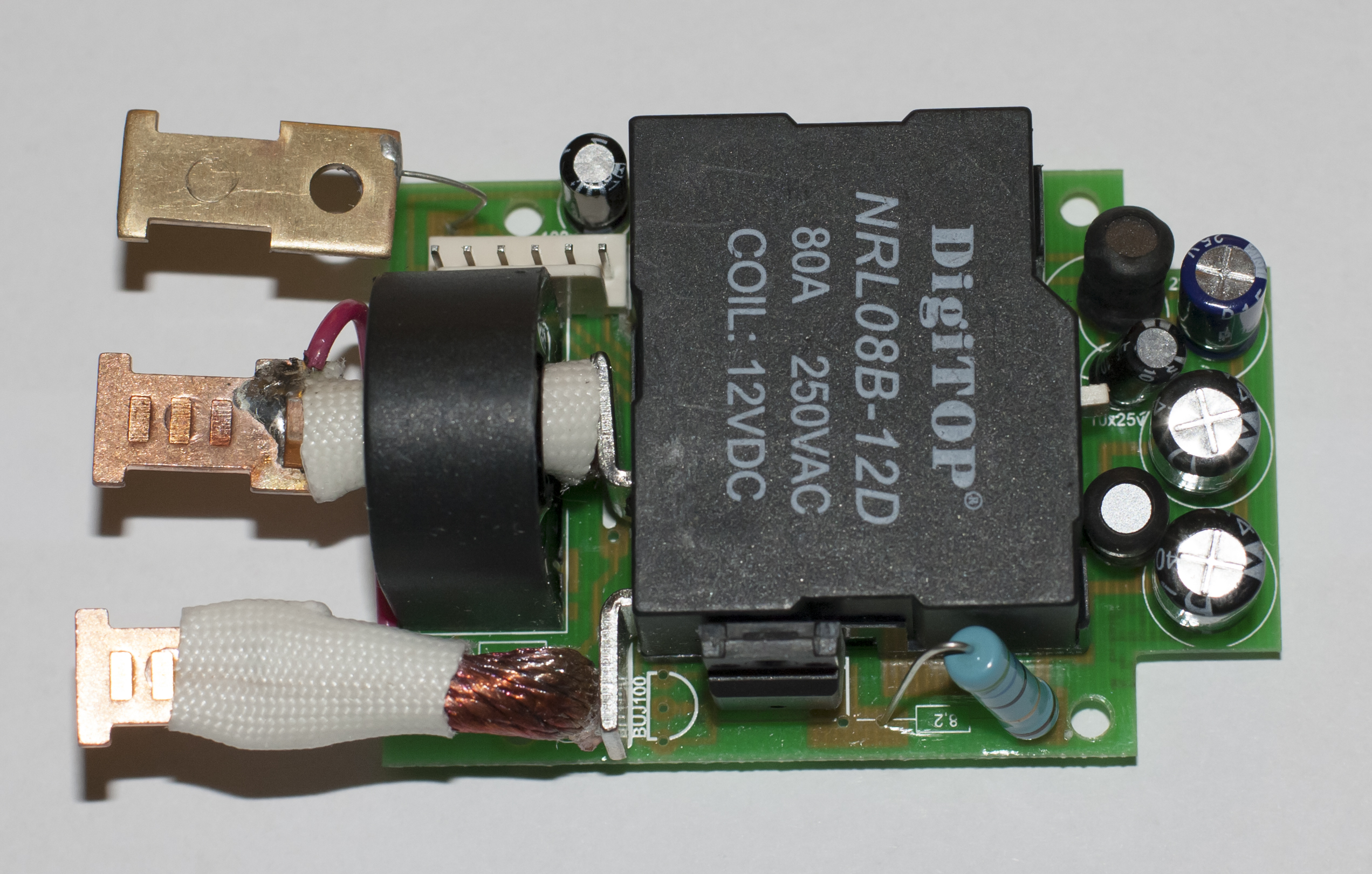

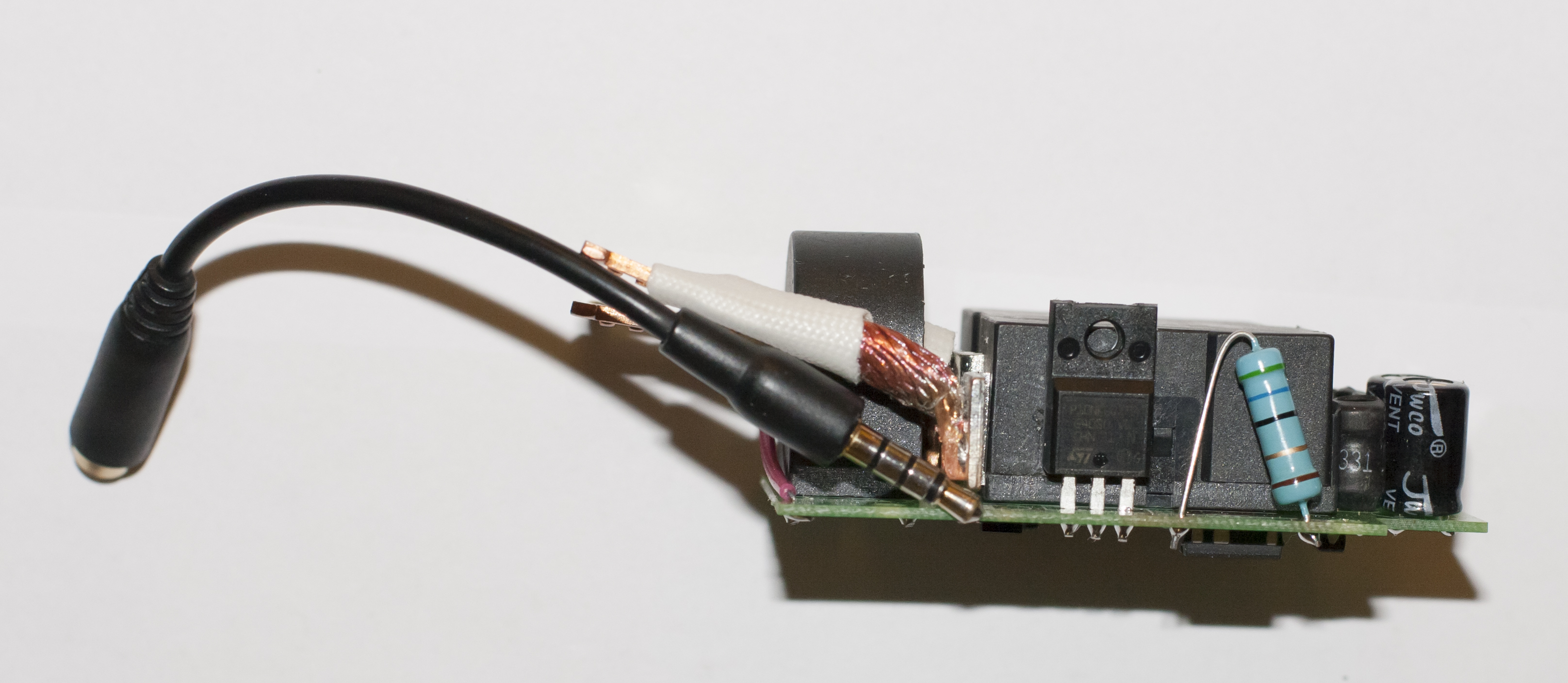
The switching relay is connected to the terminals using a flexible copper bus welded by resistance welding at both ends (Jack 3.5 mm - for comparison).
Circuitry
The power part of the device is based on the Chinese relay NRL08B-12D ( www.terraelectronica.ru/pdf/NCR/NRL-08B.pdf ).
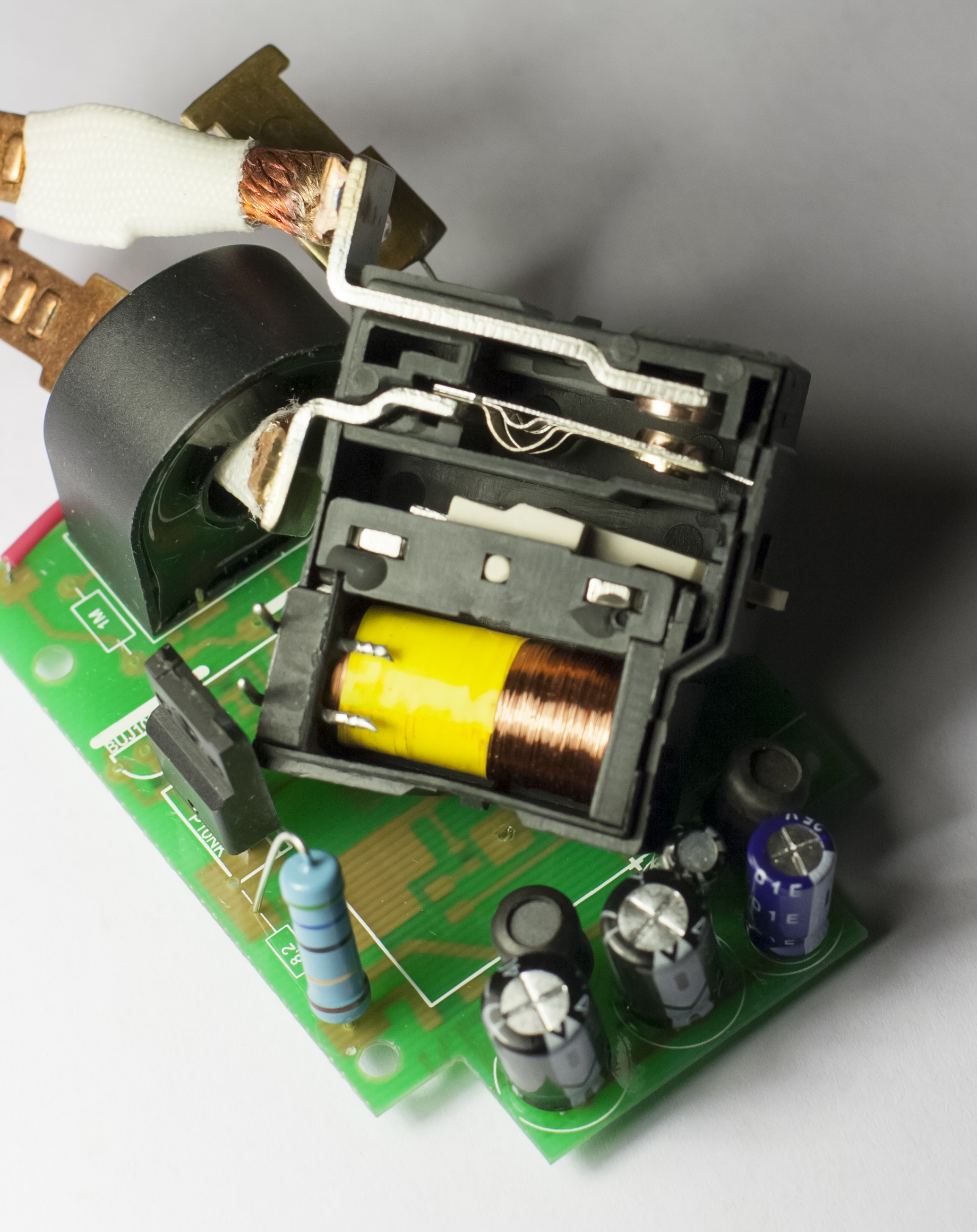
This is a latching relay with normally open contacts. Datasheet tells us that it can open a load of 15000VA, which is 68A at a voltage of 220V. The contacts are silver plated. The maximum response time is 15ms.
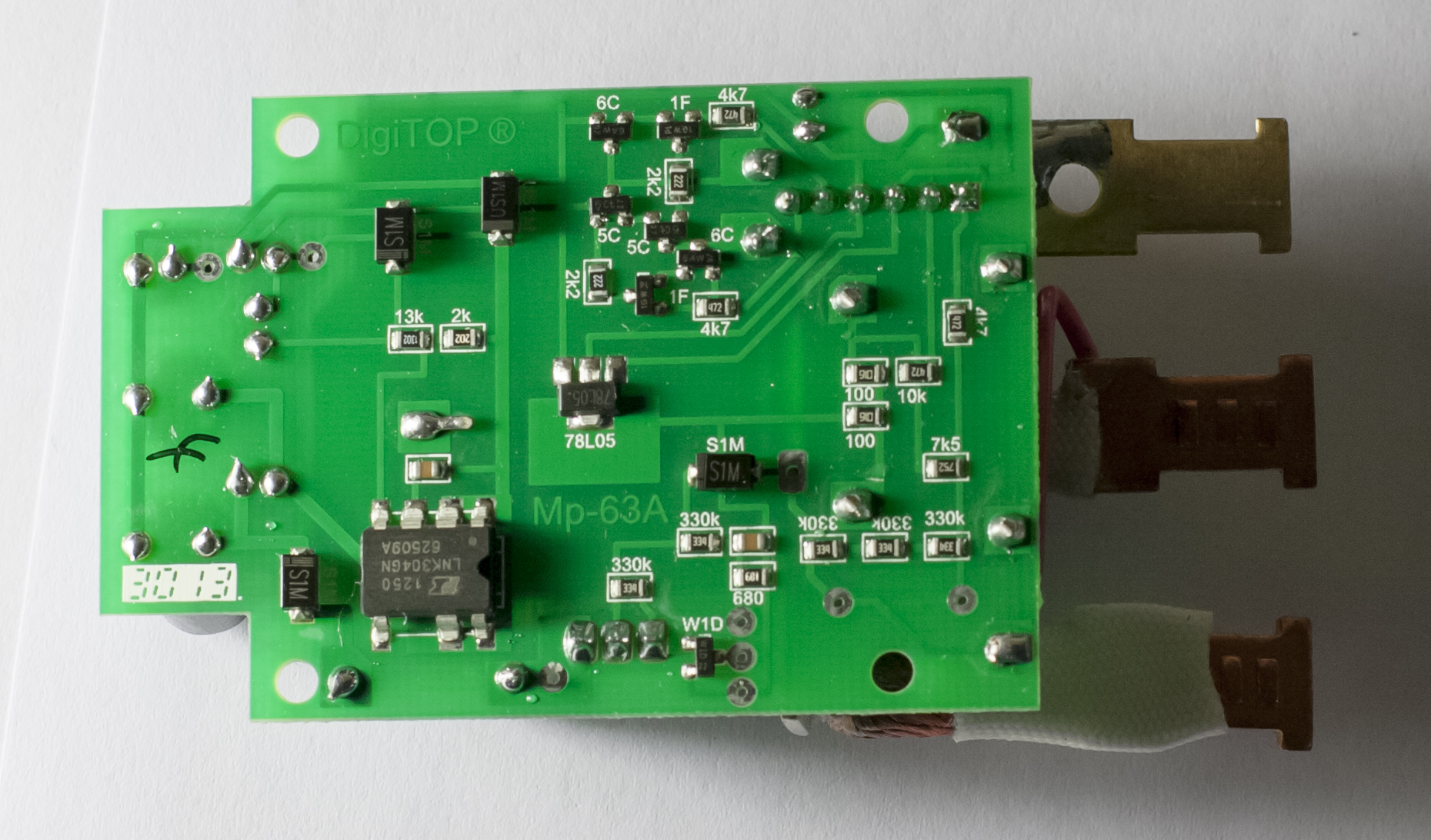
The power supply for the control part is based on the specialized IC LNK304-306 for power supply without galvanic isolation.
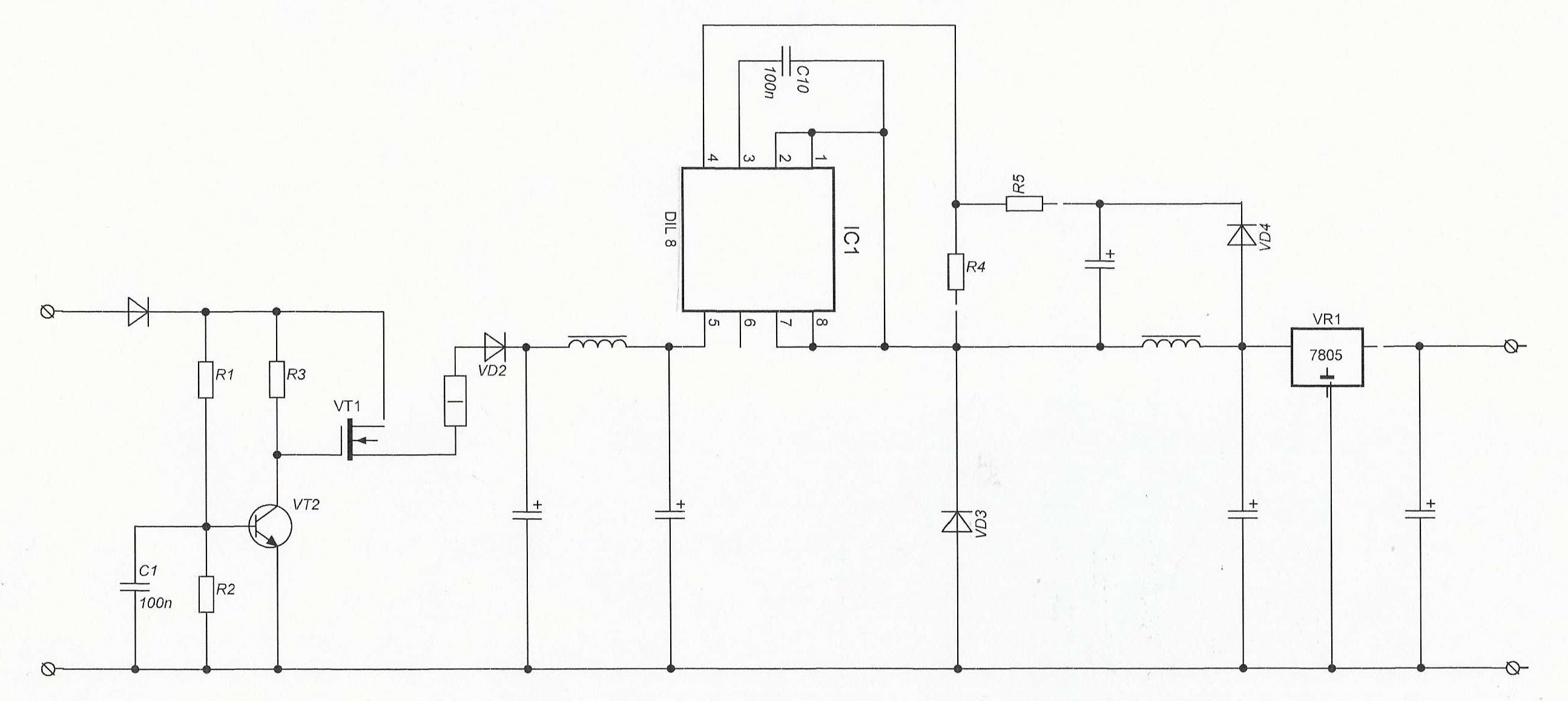
Schema from datasheet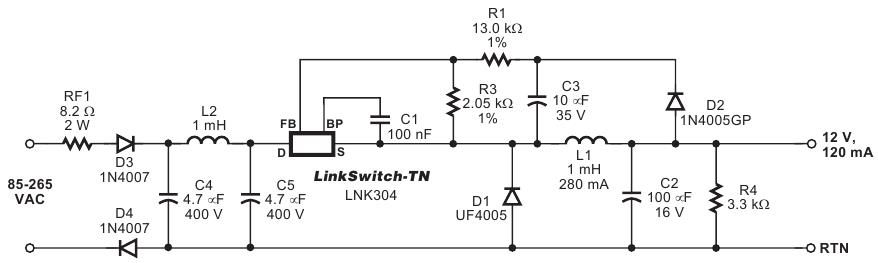
A good solution, in my opinion, unlike previously used on ballast capacitors.
At the input of the power supply, a limiter is installed on the field-effect transistor, which limits the voltage at the electrolytic capacitors and the input of the microcircuit (LNK304-306).
The control part is made on the PIC controller.
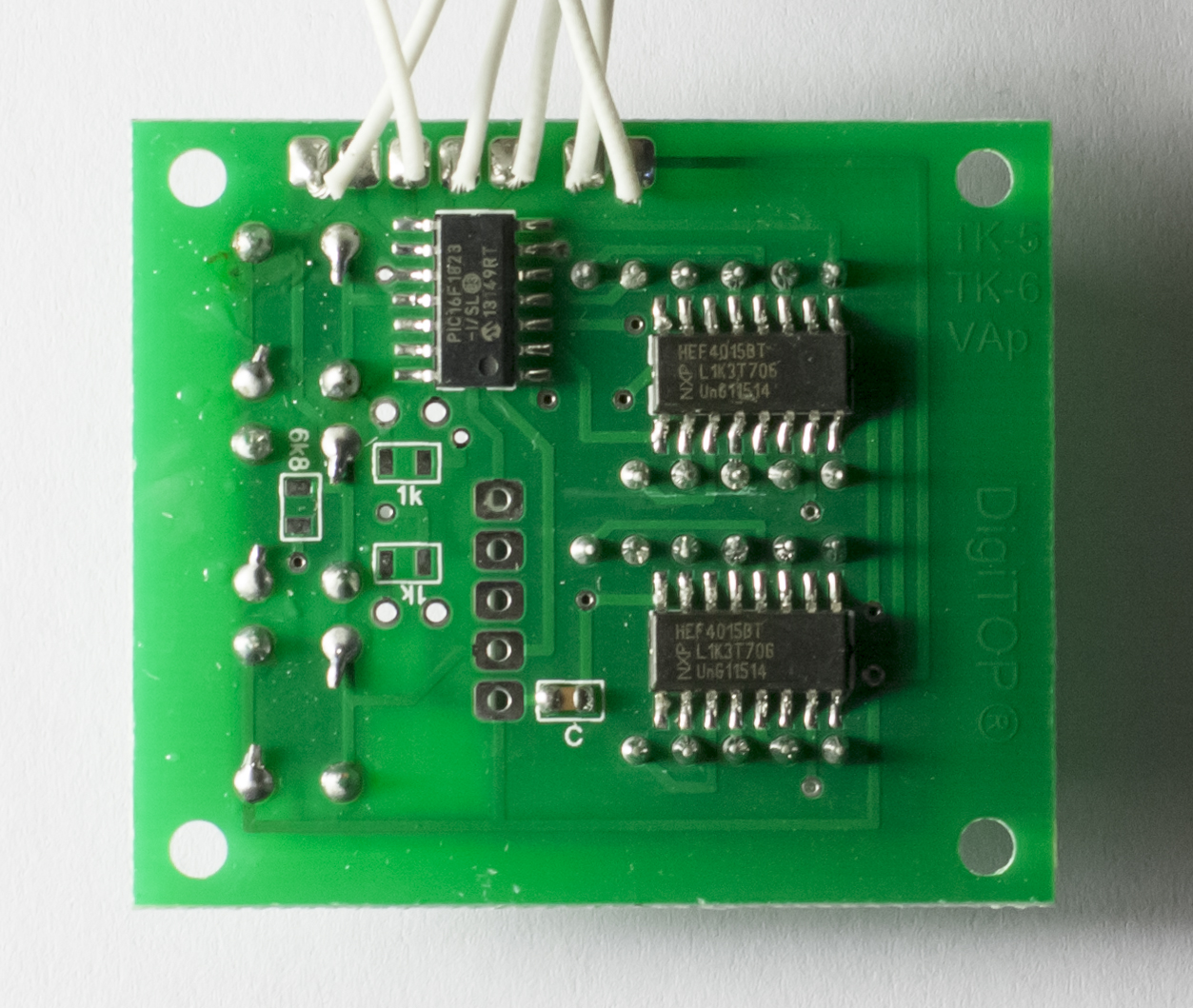
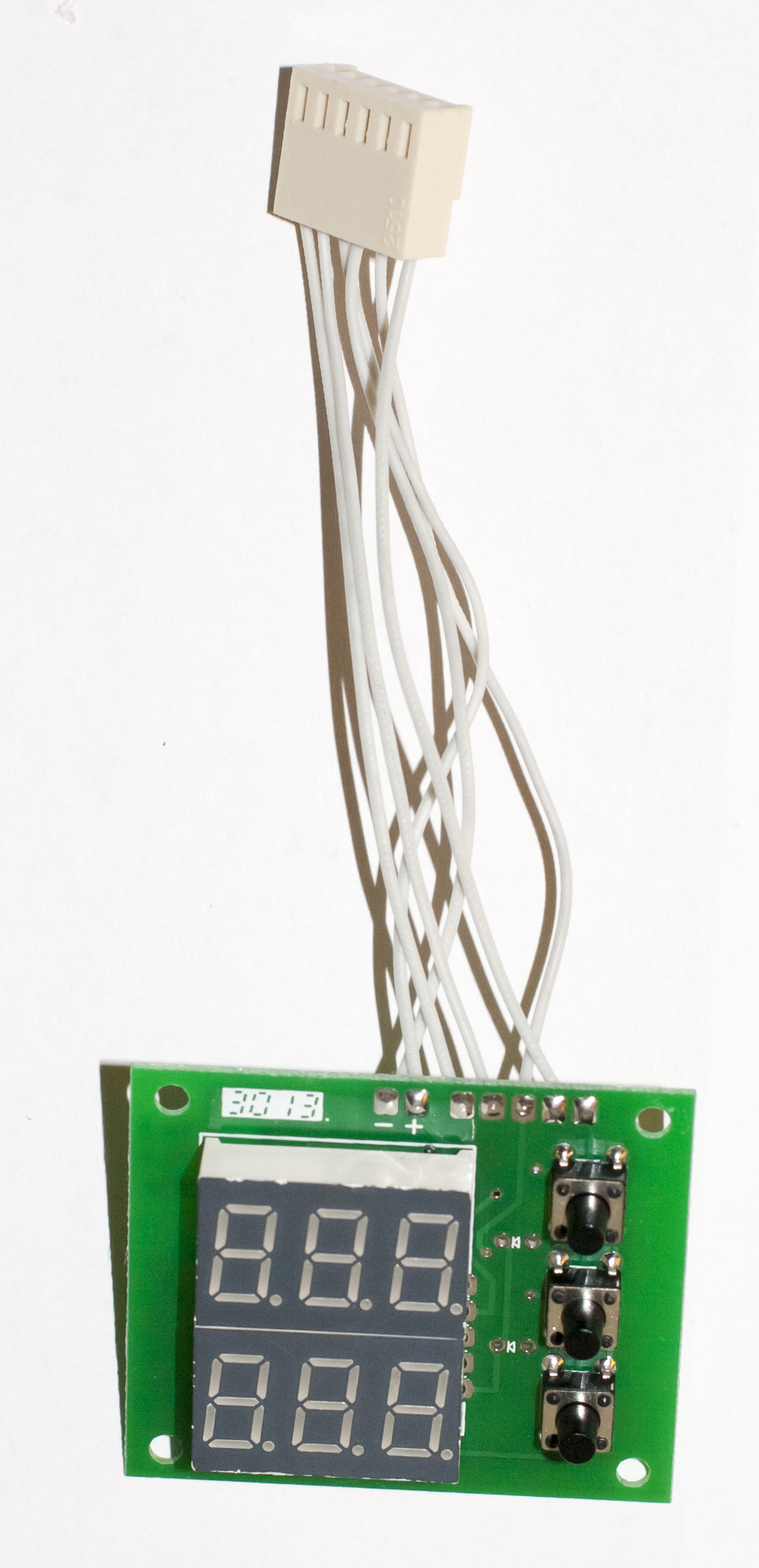
Allows you to configure the upper and lower limits on voltage, set the delay on the device, after the protection is activated, enable or disable current protection. The device does not allow to set the shutdown time for Inom <Iism <Imax. The selection of the breaking current is possible only when choosing the rating of the device (32, 40, 50 and 63 A).
Ergonomics
Device management is simple and intuitive.
Certain inconveniences are caused by the speed of increasing / decreasing the thresholds of voltage and delay in the settings mode - 1V / s and 5s / s both when holding and when pressed frequently.
Installation quality
Installation is well done, the soldering is brilliant, the solder is moderate. Flux residues are removed almost everywhere. There are slight discrepancies in the dimensions of the parts with their seats.
conclusions
The relay considered is a quality All-in-one product for a democratic price. The manufacturer thoroughly redesigned the design, applied a competent circuit solution and good components. There are some flaws that do not affect the performance of the device. My rating is 4+. Such a device is not scary to install for the protection of the whole house.
Result
In crowded but not mad