Amazon through the eyes of an insider
Hi, Habrahabr!
The other day I decided to see what is on Habré about the Internet giant Amazon. I was very surprised when I discovered that among the many posts about all kinds of Kindle releases and news about Amazon Web Services, there is practically nothing about the company itself. Therefore, I decided to write this post in order to tell some interesting stories and talk about the culture of this company. The author of this post had the honor to spend twice in three months in Amazon as an intern (Software Development Engineer Intern), working on real projects at Webstore and Kindle.
First of all, I should note that many of my friends from the post-Soviet space have heard little about Amazon, and that is probably why they consider this company not so significant in comparison with Google, Facebook, Microsoft, Apple, and others. However, in the States, all of the above companies, including Amazon, belong to the highest echelon of the IT industry, and which company in this Olympus is in the first place, and which one in the second is the subjective judgment of the people working there. In the end, with approximately the same (and extremely favorable) salary level in equivalent positions, people choose where to work based on geographic preferences and the unique culture that each company can offer. Employee rotations within and between top-tier companies are also very common.
Amazon is headquartered in Seattle, Washington. The company, as it should be a decent Internet phenomenon, originated in the garage of the founder Jeff Bezos in the distant 95th. Initially, only books were sold on Amazon; when it went, CDs were added to the circulation. Slowly but surely, in Amazon it became possible to buy clothes, furniture, video games, bicycles, pots - in a word, whatever your heart desires. For eighteen years, the company changed several office buildings until it settled in downtown Seattle, in the South Lake Union area. About a dozen chic office buildings that make up the Amazon campus belonged to Paul Allen for a long time, and only in 2012, Amazon became the full owner of this place, paying the former owner more than a billion dollars.
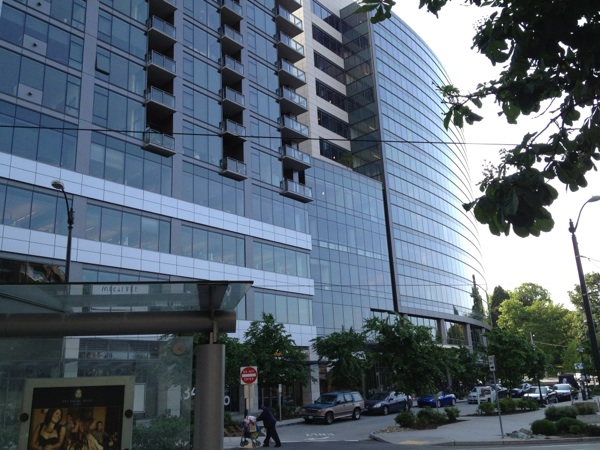
To my great surprise, a person strolling in downtown Seattle is unlikely to notice that he wandered into the Amazon campus - neither logos on buildings (like Microsoft), nor security (like Google), nor even a change of industrial context. As it turned out, it was intended that the headquarters of the corporate giant fit organically into the environment without unnecessary pathos or pretentiousness.
Rather, about their names. Each campus building, in addition to its official address, has an alternative name: Fiona, Rufus, Obidos, Wainwright, Arizona, Day 1 (South and North) and so on. Each name, of course, has its own story. For example, Rufus was the four-legged friend of the chief engineer; clicking his paw on the mouse launched one of the Amazon systems. Fiona is the code name for the first Kindle, which, in turn, was named after the heroine of the Diamond Age novel, which was then read by the company's vice president. Wainwright is the name of the first Amazon.com customer. Day 1 comes from the favorite saying of the founder Jeff Bezos: “It's still day one” - he likes to repeat, saying that our technologies, Amazon as a company, or even we ourselves are only at the very beginning of an exciting journey.
Amazon's three huge branches are Amazon Retail, Amazon Web Services, and Kindle. Retail is best known to the general public in America: it is the online store Amazon.com, the online payment service Amazon Payments, the Amazon Webstore platform, and many more other branches that are strongly and not very connected with each other. AWS is most known to the people on Habré, so I won’t stop here. Let me just say that AWS originated from the ambitious desire of Amazon.com to never fall (especially during the Christmas holidays), and later grew into a separate resource open for use outside of Amazon. Finally, Kindle is a kind of sentiment of the giant, who began by selling books from the garage.
The company's mission is to be "the most customer-conscious company on Earth." Whether it's a return of purchase or a broken device - Amazon always seeks to leave the customer satisfied, even at the cost of its own losses, firmly believing that customer trust is the most expensive asset.
Another hallmark of Amazon culture is thrift. Unlike Google and Facebook, Amazon does not provide free dinners, gyms, video games, and so on. The workstations of the first workers were made of doors. Did I say the first workers? Amazon worktops are still raw doors.
In Amazon, the division into the so-called “two pizza teams” is practiced. This means that the size of the team is determined by the fact that everyone can be fed two pizzas. That is an average of about eight people in a team. Thus, Amazon retains the feeling of a start-up, while being a corporate giant.
Every day in the company’s offices you can meet four-legged Amazons. Dogs are welcome (yes, yes, right in the buildings themselves)! This dog-loving culture originates from Rufus, which was described above.
Here is such a story, about everything and about nothing. I hope that such a shallow and short narrative will foster Khabravchan interest in this company with a unique culture. If interest arises, I will try to talk about the workflow and projects that I have encountered.
The other day I decided to see what is on Habré about the Internet giant Amazon. I was very surprised when I discovered that among the many posts about all kinds of Kindle releases and news about Amazon Web Services, there is practically nothing about the company itself. Therefore, I decided to write this post in order to tell some interesting stories and talk about the culture of this company. The author of this post had the honor to spend twice in three months in Amazon as an intern (Software Development Engineer Intern), working on real projects at Webstore and Kindle.
Seattle Varzea Building, Amazon Webstore and Fulfillment by Amazon
First of all, I should note that many of my friends from the post-Soviet space have heard little about Amazon, and that is probably why they consider this company not so significant in comparison with Google, Facebook, Microsoft, Apple, and others. However, in the States, all of the above companies, including Amazon, belong to the highest echelon of the IT industry, and which company in this Olympus is in the first place, and which one in the second is the subjective judgment of the people working there. In the end, with approximately the same (and extremely favorable) salary level in equivalent positions, people choose where to work based on geographic preferences and the unique culture that each company can offer. Employee rotations within and between top-tier companies are also very common.
About location
Amazon is headquartered in Seattle, Washington. The company, as it should be a decent Internet phenomenon, originated in the garage of the founder Jeff Bezos in the distant 95th. Initially, only books were sold on Amazon; when it went, CDs were added to the circulation. Slowly but surely, in Amazon it became possible to buy clothes, furniture, video games, bicycles, pots - in a word, whatever your heart desires. For eighteen years, the company changed several office buildings until it settled in downtown Seattle, in the South Lake Union area. About a dozen chic office buildings that make up the Amazon campus belonged to Paul Allen for a long time, and only in 2012, Amazon became the full owner of this place, paying the former owner more than a billion dollars.
To my great surprise, a person strolling in downtown Seattle is unlikely to notice that he wandered into the Amazon campus - neither logos on buildings (like Microsoft), nor security (like Google), nor even a change of industrial context. As it turned out, it was intended that the headquarters of the corporate giant fit organically into the environment without unnecessary pathos or pretentiousness.
About buildings
Rather, about their names. Each campus building, in addition to its official address, has an alternative name: Fiona, Rufus, Obidos, Wainwright, Arizona, Day 1 (South and North) and so on. Each name, of course, has its own story. For example, Rufus was the four-legged friend of the chief engineer; clicking his paw on the mouse launched one of the Amazon systems. Fiona is the code name for the first Kindle, which, in turn, was named after the heroine of the Diamond Age novel, which was then read by the company's vice president. Wainwright is the name of the first Amazon.com customer. Day 1 comes from the favorite saying of the founder Jeff Bezos: “It's still day one” - he likes to repeat, saying that our technologies, Amazon as a company, or even we ourselves are only at the very beginning of an exciting journey.
About the device and departments
Amazon's three huge branches are Amazon Retail, Amazon Web Services, and Kindle. Retail is best known to the general public in America: it is the online store Amazon.com, the online payment service Amazon Payments, the Amazon Webstore platform, and many more other branches that are strongly and not very connected with each other. AWS is most known to the people on Habré, so I won’t stop here. Let me just say that AWS originated from the ambitious desire of Amazon.com to never fall (especially during the Christmas holidays), and later grew into a separate resource open for use outside of Amazon. Finally, Kindle is a kind of sentiment of the giant, who began by selling books from the garage.
About culture
The company's mission is to be "the most customer-conscious company on Earth." Whether it's a return of purchase or a broken device - Amazon always seeks to leave the customer satisfied, even at the cost of its own losses, firmly believing that customer trust is the most expensive asset.
Another hallmark of Amazon culture is thrift. Unlike Google and Facebook, Amazon does not provide free dinners, gyms, video games, and so on. The workstations of the first workers were made of doors. Did I say the first workers? Amazon worktops are still raw doors.
In Amazon, the division into the so-called “two pizza teams” is practiced. This means that the size of the team is determined by the fact that everyone can be fed two pizzas. That is an average of about eight people in a team. Thus, Amazon retains the feeling of a start-up, while being a corporate giant.
Every day in the company’s offices you can meet four-legged Amazons. Dogs are welcome (yes, yes, right in the buildings themselves)! This dog-loving culture originates from Rufus, which was described above.
Other fan facts
- The smile on the company logo is also an A to Z arrow, hinting that everything from A to Z can be found on Amazon.

- The company was originally called Cadabra (as in Abra Cadabra), but was later changed, as the original name was heard as cadaver , which means corpse .
- One of the company's main awards is called Just do it and is a well-worn Nike shoe. Entrusted with the performance of some seemingly impossible task.
- Another interesting award is a toy school desk door (which was already mentioned above). Vows for a vivid manifestation of frugality.
- Until 2012, the legendary (Meow) was present in the source code of the main page. (Maybe before 2013, I don’t know when and why this cultural relic was removed).
Here is such a story, about everything and about nothing. I hope that such a shallow and short narrative will foster Khabravchan interest in this company with a unique culture. If interest arises, I will try to talk about the workflow and projects that I have encountered.