Pentium is 20 years old
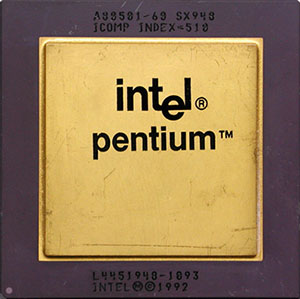
On this day, exactly 20 years ago, Intel released the Pentium 60 processor, which forever changed the computer industry.
It was based on the P5 architecture (the word “Pentium” is derived from the Greek “penta” - five), contained 3.1 million transistors and was built using the 800nm process. The Pentium 60 used a 5-volt Socket 4 , which was subsequently replaced by a 3.3-volt Socket 5 in the Pentium 75 (which had the same P54C architecture as the Xeon Phi - a modern coprocessor, one of Intel's top products).
But Pentium had a long way to go to succeed.
The first versions of the processors were not something outstanding. The Pentium 60 worked with a 30 MHz system bus and was hardly faster than the 486 competitors. In addition, they were exposed to a serious error in the floating-point module , which Intel did not want to recognize for a long time. But still, under pressure from the public, she was forced to replace defective processors. The company, led by Gordon Moore , used this bitter experience to understand what went wrong and improve its internal processes.

The market situation has changed dramatically with the release of architecture P6 and Pentium III based on itwhich far exceeded the performance of its competitors.
After P6 came Netburst - an absolutely new architecture aimed at increasing clock speeds (the Tualatin frequency reached 1.4 Hz, while Prescott - already 3.8 Hz). But this increase was achieved through dubious compromises. The processors were very hot and required powerful, and therefore noisy cooling systems. These shortcomings were partially corrected in later revisions - but ultimately this architecture turned out to be a mistake that allowed AMD to gain ground with its Athlon and Athlon 64.
During the serious battles between Pentium 4and Athlon, the Pentium III core peacefully settled in the Centrino Pentium M family of mobile processors (Banias / Dothan), which became a real sensation. In 2007, Intel released Yonah , their dual-core modification.
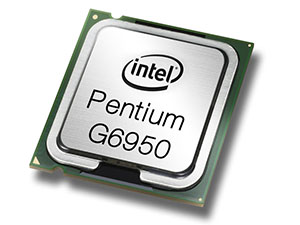
Then came the era of Core and subsequent processors - Nehalem , Sandy Bridge , Ivy Bridge and the upcoming Haswell . Intel is still using the Pentium brand. But today he refers to products in the initial price range, often with some truncated features, such as Hyper-Threading .
Although at first Pentium was a huge headache for Intel and caused huge financial losses, but in the end this brand helped the company sell tens of millions of processors and made it a dominant player in the silicon industry.
Happy Birthday, Pentium!
UPD: Found a rare Pentium ad from 1994: