November 25, 2011 at 12:48
Acer Allegro - my opinion
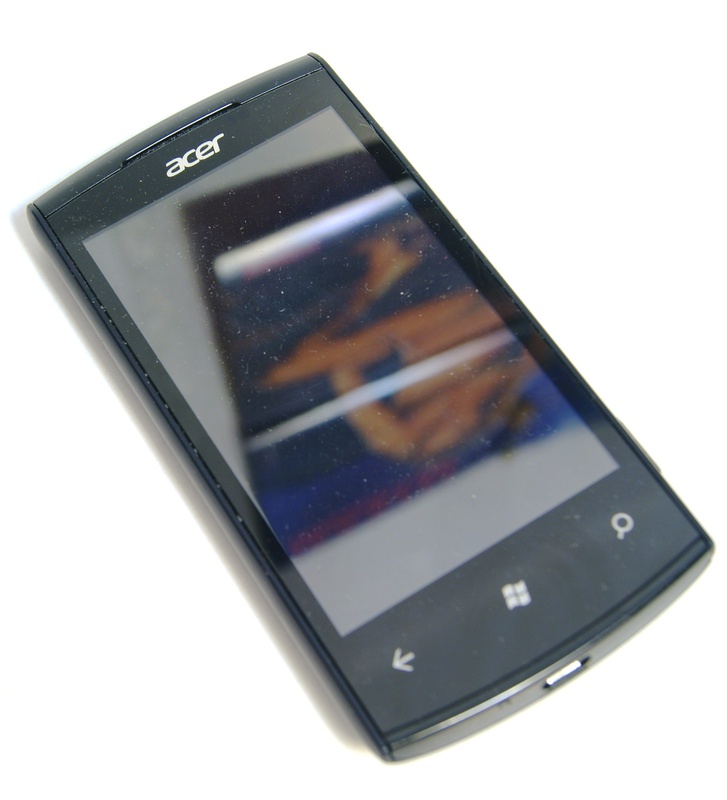
To get started - a brief introduction and picture.
IPhone OS was released on June 29, 2007. At the moment, we have its fifth major version.
The Android operating system was released on September 23, 2008. At the moment, we have its fourth major version.
The Windows Mobile operating system was released on April 19, 2000. She died on February 15, 2010.
The Windows Phone 7 operating system was released on October 11, 2010.
It is no coincidence that I separated Windows Phone from Windows Mobile. Just these two OSs - something like the VAZ 2101 and Lada Kalina. It seems both from the same manufacturer, but spare parts from the "penny" to the "viburnum" do not stand up. So here - Microsoft threw a trick - all old applications are in the past. All from scratch. And, it should be noted - this has benefited the operating system. Currently, WP7 has become a competitive OS that can compete with market leaders (Google Android and Apple iOS).
To exacerbate (or maybe vice versa - to improve) the Old Believers' perception of the new OS, Microsoft has firmly set the framework for the hardware side of devices.
Microsoft has announced minimum requirements for devices on Windows Phone 7.
All devices must have:
- capacitive multi-touch display (recognition of at least 4 touches at a time). With a resolution of 800x480 (WVGA).
- a processor with a frequency of at least 1 GHz;
- from 256MB of operational and 8GB flash memory;
- Support for DirectX 10;
- GPS receiver;
- accelerometer;
- electronic compass;
- FM radio;
- a camera with a flash and a resolution of at least 5 MP.
Also, all devices must have 6 hardware buttons, namely:
1. Turn on / off: this button can have several uses - turning the device on and off directly, locking the device, or turning the display on and off.
2. Sound volume control: adjusts the sound volume, both general and during a call.
3. Camera: this button should support half and full pressing (as in conventional digital cameras). Pressing the button halfway will adjust the focus, and pressing it fully will directly take the picture. In addition, clicking on the camera button will activate the corresponding application.
4. Back: allows you to go one step or page back in the same application or between applications. Among its other functions may be closing the menu, window, and so on.
5. Start: all active applications are paused and the start page opens.
6. Search: Bing search engine to search for content on the device. Determining the current location of the user, this function, inter alia, will allow performing a local search.
And it is not surprising that today's monitored smartphone has exactly those characteristics that it has. This is both the law and the “golden” solution for the “smartphone” segment. At least in the field of working with a smartphone, and not geek "4 cores, 12 megapixels, FullHD".

Size 115.8 x 59 x 12.9 mm
Weight ~ 135 g
Li-Po Battery 1300 mAh
Mobile Communications 850, 900, 1800, 1900 MHz
Modem Speed HDSPA 14.4 / HSUPA 5.76 Mbps
Processor Qualcomm 7230, 1 GHz
ROM / RAM 8 GB / 512 MB
Display LCD 3.6 ”WVGA, Multi-touch (4 touches)
Camera 5 MP EDOF 480p @ 30fps
WiFi 802.11 b / g / n
Bluetooth Class 2.1 + EDR
GPS With support for A-GPS
Micro-USB, 3.5mm audio jack
Sensors: Accelerometer, light sensor, proximity sensor The
smartphone lies in his hand like a glove - he moderately compact, but the display has an optimal diagonal for its resolution. In other words - if the display was larger (and with it the smartphone) - there would be grain, there would be a "spade".
The display matrix is made using TN technology - good colors and viewing angles. But this is far from AMOLED and IPS. However, it is pleasant to use it, the eye rejoices, viewing angles are good.
Touch reactions are instant, accurate.

Touch buttons under the display are not always noticeable, it’s good that they glow brightly in the dark.
The physical buttons - and this is the power button, volume buttons and on-off camera button - are all chrome-plated, shiny, thin, but comfortable. There were no accidental clicks.
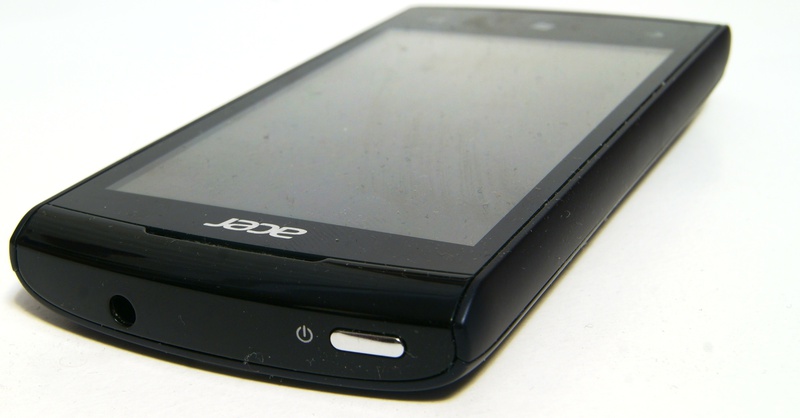
At the upper end: the power and wake button, 3.5 mm jack - for headsets and headphones.
There is nothing on the left side.
On the right side is a volume rocker, a two-position camera button (it works even when the screen is locked).
On the bottom there is a microphone hole and a micro-USB connector.
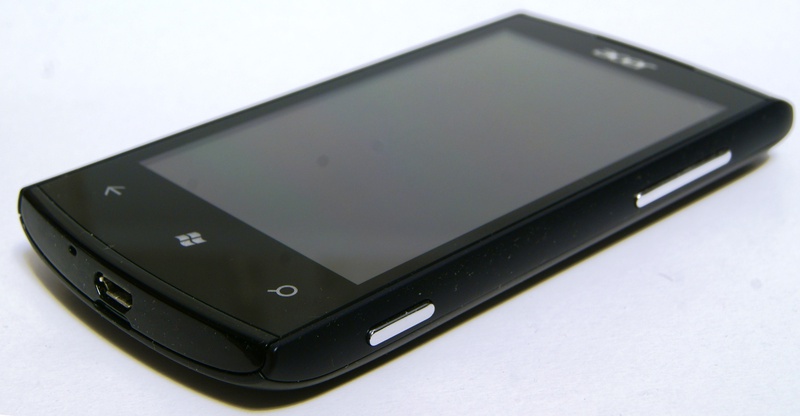
On the front side there is a 3.7-inch screen covered with glass, three touch buttons, a light sensor, a proximity sensor and a speaker (with an event light indicator).

On the back side is a 5 MP camera and speaker grille (which plays music, tunes and is used for speakerphone).
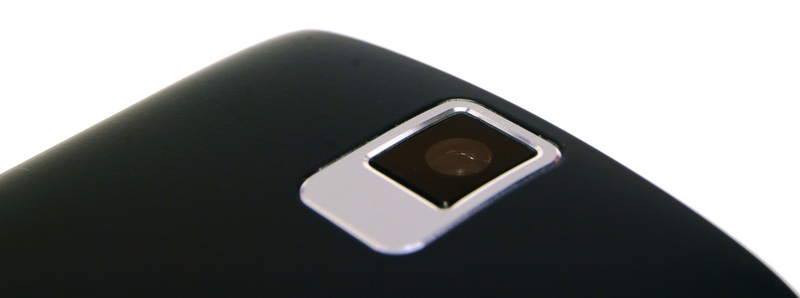
The material of the smartphone’s body can be divided into 4 elements: the back cover of the soft touch, the sides of the soft touch, the upper and lower ends are made of glossy plastic, and the display is glass.

The design of the device is quite strict, very similar to the Android-solutions of the company (Liquid). The assembly is good, the lid does not creak, nothing is skewed anywhere, it does not leave.
The only thing that is unusual with a smartphone is a SIM card landing - it goes sideways.
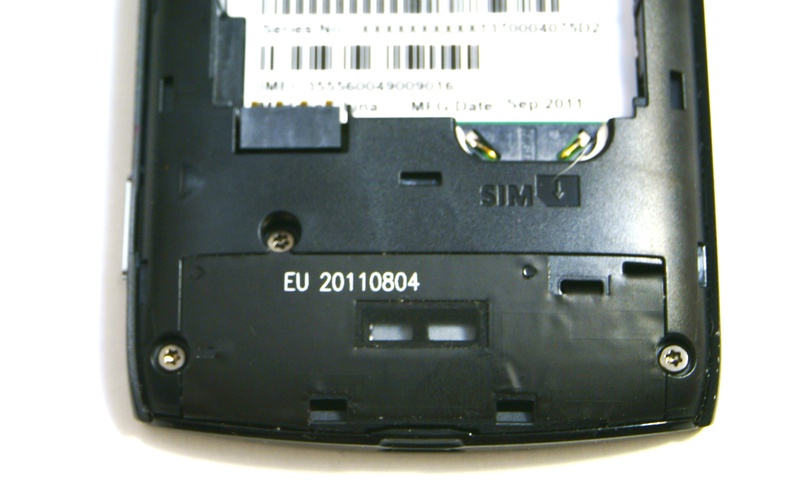
I kept the battery for about two working days - I constantly use the Internet, maps, read friends' feeds, calls for 30-45 minutes, sms.
If you are not particularly actively using it, just call for 30 minutes, SMS will live 3-4 days. But for a smartphone there is no sense in such a regime.
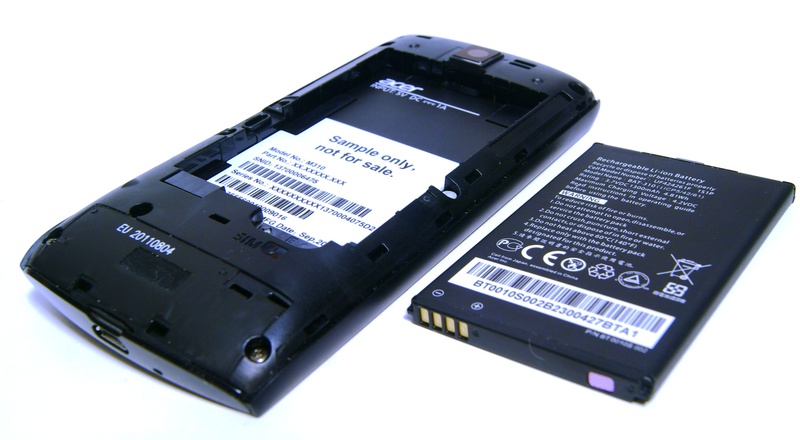
Acer Allegro creates a feeling of a serious thing - that is, in general, when communicating with Allegro, not a single “WOW! Not like everyone else! ” and this is good. This smartphone is an ideal workhorse for those who need a smartphone, without showing off. And all would be fine, but the model is called Acer Allegro - translated from Italian, it means "funny." In my opinion, it would be worth calling it Acer Impresa - after all, a smartphone is business-like.
By the way, this smartphone is the first device from Acer after changing the logo (it has become more strict and uniform).

Photo Gallery: here
IPhone OS was released on June 29, 2007. At the moment, we have its fifth major version.
The Android operating system was released on September 23, 2008. At the moment, we have its fourth major version.
The Windows Mobile operating system was released on April 19, 2000. She died on February 15, 2010.
The Windows Phone 7 operating system was released on October 11, 2010.
It is no coincidence that I separated Windows Phone from Windows Mobile. Just these two OSs - something like the VAZ 2101 and Lada Kalina. It seems both from the same manufacturer, but spare parts from the "penny" to the "viburnum" do not stand up. So here - Microsoft threw a trick - all old applications are in the past. All from scratch. And, it should be noted - this has benefited the operating system. Currently, WP7 has become a competitive OS that can compete with market leaders (Google Android and Apple iOS).
To exacerbate (or maybe vice versa - to improve) the Old Believers' perception of the new OS, Microsoft has firmly set the framework for the hardware side of devices.
Microsoft has announced minimum requirements for devices on Windows Phone 7.
All devices must have:
- capacitive multi-touch display (recognition of at least 4 touches at a time). With a resolution of 800x480 (WVGA).
- a processor with a frequency of at least 1 GHz;
- from 256MB of operational and 8GB flash memory;
- Support for DirectX 10;
- GPS receiver;
- accelerometer;
- electronic compass;
- FM radio;
- a camera with a flash and a resolution of at least 5 MP.
Also, all devices must have 6 hardware buttons, namely:
1. Turn on / off: this button can have several uses - turning the device on and off directly, locking the device, or turning the display on and off.
2. Sound volume control: adjusts the sound volume, both general and during a call.
3. Camera: this button should support half and full pressing (as in conventional digital cameras). Pressing the button halfway will adjust the focus, and pressing it fully will directly take the picture. In addition, clicking on the camera button will activate the corresponding application.
4. Back: allows you to go one step or page back in the same application or between applications. Among its other functions may be closing the menu, window, and so on.
5. Start: all active applications are paused and the start page opens.
6. Search: Bing search engine to search for content on the device. Determining the current location of the user, this function, inter alia, will allow performing a local search.
And it is not surprising that today's monitored smartphone has exactly those characteristics that it has. This is both the law and the “golden” solution for the “smartphone” segment. At least in the field of working with a smartphone, and not geek "4 cores, 12 megapixels, FullHD".
Size 115.8 x 59 x 12.9 mm
Weight ~ 135 g
Li-Po Battery 1300 mAh
Mobile Communications 850, 900, 1800, 1900 MHz
Modem Speed HDSPA 14.4 / HSUPA 5.76 Mbps
Processor Qualcomm 7230, 1 GHz
ROM / RAM 8 GB / 512 MB
Display LCD 3.6 ”WVGA, Multi-touch (4 touches)
Camera 5 MP EDOF 480p @ 30fps
WiFi 802.11 b / g / n
Bluetooth Class 2.1 + EDR
GPS With support for A-GPS
Micro-USB, 3.5mm audio jack
Sensors: Accelerometer, light sensor, proximity sensor The
smartphone lies in his hand like a glove - he moderately compact, but the display has an optimal diagonal for its resolution. In other words - if the display was larger (and with it the smartphone) - there would be grain, there would be a "spade".
The display matrix is made using TN technology - good colors and viewing angles. But this is far from AMOLED and IPS. However, it is pleasant to use it, the eye rejoices, viewing angles are good.
Touch reactions are instant, accurate.
Touch buttons under the display are not always noticeable, it’s good that they glow brightly in the dark.
The physical buttons - and this is the power button, volume buttons and on-off camera button - are all chrome-plated, shiny, thin, but comfortable. There were no accidental clicks.
At the upper end: the power and wake button, 3.5 mm jack - for headsets and headphones.
There is nothing on the left side.
On the right side is a volume rocker, a two-position camera button (it works even when the screen is locked).
On the bottom there is a microphone hole and a micro-USB connector.
On the front side there is a 3.7-inch screen covered with glass, three touch buttons, a light sensor, a proximity sensor and a speaker (with an event light indicator).
On the back side is a 5 MP camera and speaker grille (which plays music, tunes and is used for speakerphone).
The material of the smartphone’s body can be divided into 4 elements: the back cover of the soft touch, the sides of the soft touch, the upper and lower ends are made of glossy plastic, and the display is glass.
The design of the device is quite strict, very similar to the Android-solutions of the company (Liquid). The assembly is good, the lid does not creak, nothing is skewed anywhere, it does not leave.
The only thing that is unusual with a smartphone is a SIM card landing - it goes sideways.
I kept the battery for about two working days - I constantly use the Internet, maps, read friends' feeds, calls for 30-45 minutes, sms.
If you are not particularly actively using it, just call for 30 minutes, SMS will live 3-4 days. But for a smartphone there is no sense in such a regime.
Acer Allegro creates a feeling of a serious thing - that is, in general, when communicating with Allegro, not a single “WOW! Not like everyone else! ” and this is good. This smartphone is an ideal workhorse for those who need a smartphone, without showing off. And all would be fine, but the model is called Acer Allegro - translated from Italian, it means "funny." In my opinion, it would be worth calling it Acer Impresa - after all, a smartphone is business-like.
By the way, this smartphone is the first device from Acer after changing the logo (it has become more strict and uniform).
Photo Gallery: here