Masterpieces of world column design: Technics SB-1000 - standard of AC from Matsushita
There are devices that remain in the memory of several generations, and sometimes even firmly go down in history and become symbols of their era. I described such devices in my cycles “Legendary amplifiers” and “Soviet HI-FI and its creators”. Today we will talk about the AU, and this post will be a pilot in the new cycle "Legends of the world column construction". A series of publications will be entirely devoted to acoustics, which, in my subjective opinion and objective data, deserve to be called legendary.
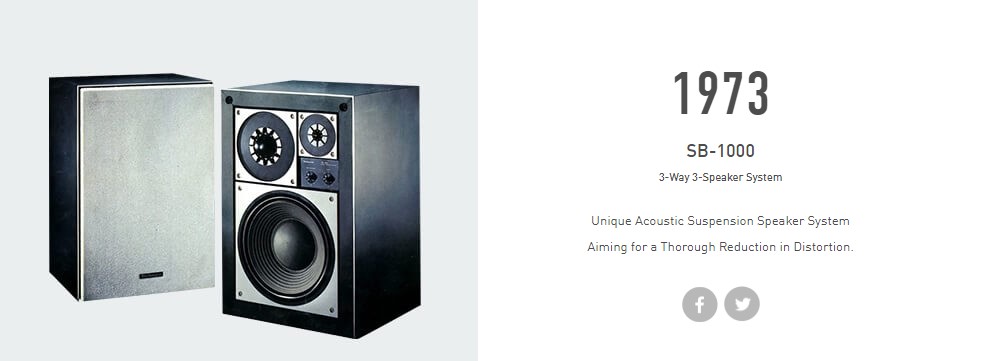
In this post, the story of the speaker system, which was compared with such best-sellers as JBL L200 Studiomaster, Yamaha NS-1000, Coral DX-Eleven, Sony SS-G7. The theme of the material is the legendary small-scale Technics SB-1000, which still amazes audio lovers. Interestingly, this acoustics is recognized as one of the best in the world by both representatives of the subjective-audiophile and engineering, scientific-psychoacoustic approach, which in itself is a rarity. Moreover, the system is the subject of a kind of cult and a coveted dream of many audio collectors. Find a negative review about this system, as well as its very - quite difficult.
By the end of the 60s, the requirements for the average audio product increased markedly - this was fully applicable to acoustic systems. The consumer has become picky both in Europe and the USA, and in Japan itself. People wanted more power with less distortion and this was the most logical way to develop audio technology.
Buying HI-FI and striving to get high fidelity sound has become a fashionable trend. Even despite the fact that at that moment there was no relevant standard, the very concept of High fidelity went to the masses and began to excite not only limited audiophile groups, but other social groups as well.
The Japanese corporation felt well the current trend and sought to create something conceptually new and astounding both sound quality and design. The company of the great Konosuke Matsushita wanted to keep the leadership in a fairly tough competitive environment, which required appropriate measures.
So the engineers of Matsushita Electric had the idea to create a model that surpasses the analogs in fidelity of reproduction, functionality, and also having a compact overall dimensions. Ideally, the product should have been well ahead of its time and give impetus to the development of fundamentally new acoustic systems.
An important requirement for the product was the ability to fit into a complex interior, which seriously limited the capabilities of developers. Also, high levels of the number of distortions and frequency range seriously slowed down the development. So the first prototype of the device, launched in 1969, appeared only by 1972. To implement the project, a series of psychoacoustic studies was needed, the results of which were repeatedly used by the company afterwards.
By the beginning of 1973, it was possible to fully prepare the three-way speaker for the series and start production. By 1974, the system got on the exhibition and a little later on the shelves of Japanese, European and American stores. The price of the device was relatively high - 220,000 Yen, which today would be about $ 9,000, taking inflation into account. Critics from the then honest and almost incorruptible audio press responded very flatteringly about the product.
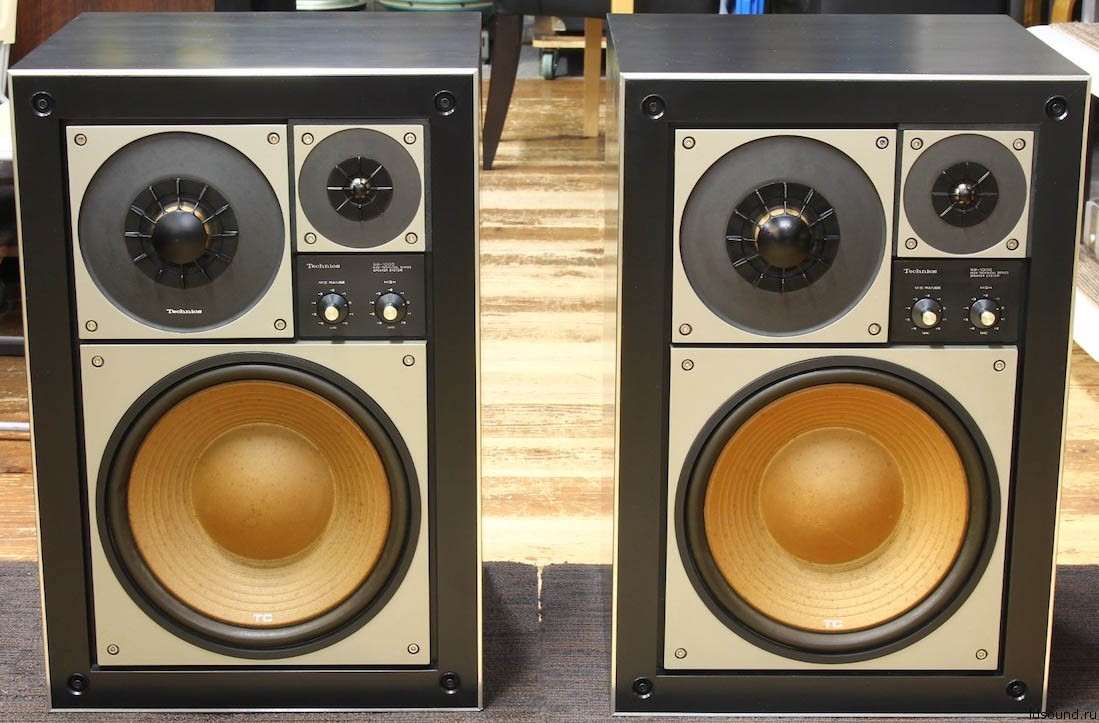
Most of those who shared their impressions of the new speakers noted accented reproduction of bass, the frequency range that was limited for that time, went beyond the threshold of human perception, and clear sound, devoid of noticeable distortion even on a complex symphonic music signal.
Due to the high cost in the company of the great and terrible (cross out) Konosuke Matsushita decided not to launch the device in a full-scale series. Instead, the pragmatists from Technics limited themselves to small-scale release for a narrow circle of music lovers who understand the sound.
For 1974, the SB-1000 was a product that embodied years of development and innovation in one device. New dynamic GGs unique for that time were created for the system. In addition, fundamentally new approaches to the development of the hull and structure were tested for the first time, and vibrations were significantly reduced.
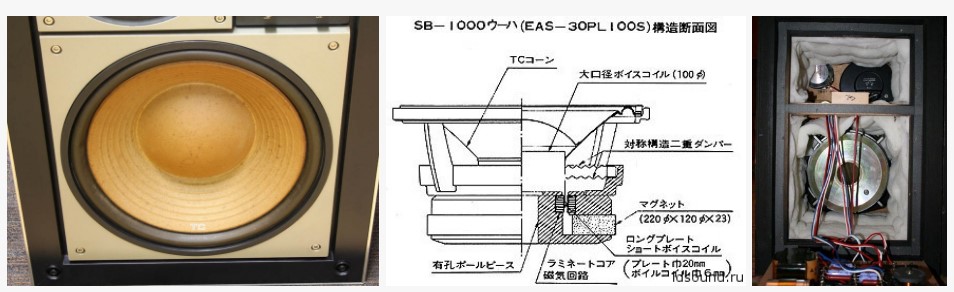
Sound engineers have been able to significantly improve the signal-to-noise ratio in the low-frequency range. As the main one in the low-frequency spectrum, 30 cm of conical-shaped low-frequency speakers EAS-30L100S were used. The membrane of this speaker was made of a three-layer composite, which has a high Young modulus. The membrane is durable and has a low frequency distortion.
Improved suspension allows you to partially reduce non-linear distortion. The diffuser travel hole, placed in the magnet, provides not only the unimpeded membrane movement, but also optimal cooling of the coil.
To reduce the resistance of the stroke of the diffuser in the magnet has a large hole, which also removes heat well.
The dynamic capabilities of the loudspeaker are provided by a powerful magnetic system with a magnet diameter of 220 mm (magnet size 220x120x23 mm) with a speaker diameter of 300 mm. Traditionally, such powerful magnets are used in concert equipment. One can hardly recall a different case of using such giants in home haifa.
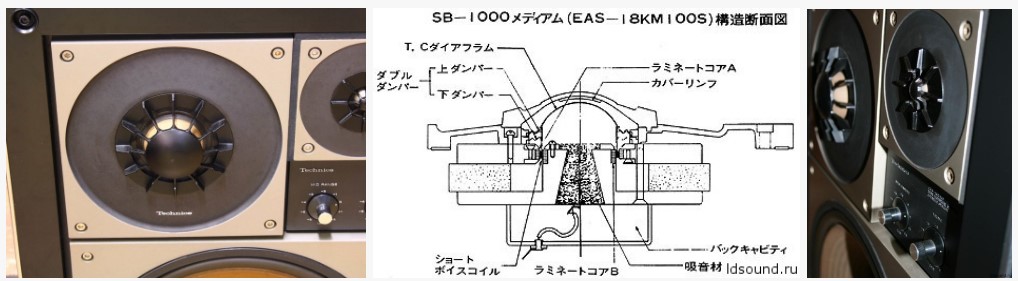
The sound in the midrange is provided by a 4.5 cm driver EAS-18KM100S with a dome, the membrane of which is also made of a three-layer
pulp-carbon composite. The manufacturer also reported that in order to reduce losses in mid-range drivers, electrical steel sheet cores with impressive magnetic induction were used. The course of the midrange emitter coil was increased by 7 mm.
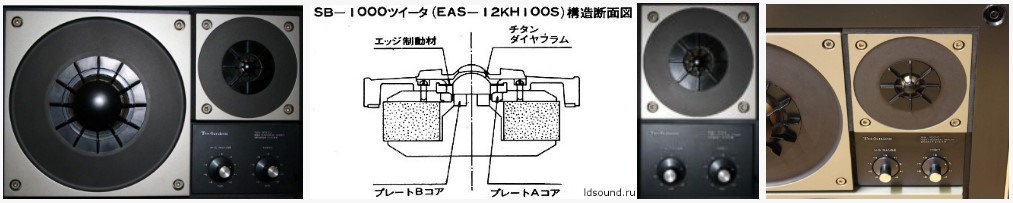
. A 19mm tweeter device, the EAS-12KH100S was made from a titanium alloy of only 20 microns thick. This alloy is 30% lighter than aluminum and has more impressive transient characteristics. The magnetic flux density of the RF radiator is approx. 19000 Gs. In addition, the tweeter is equipped with a choke made of silicon-containing alloy on a steel base, which allows to reduce the SOI of the tweeter to less than 0.1% per 100W.
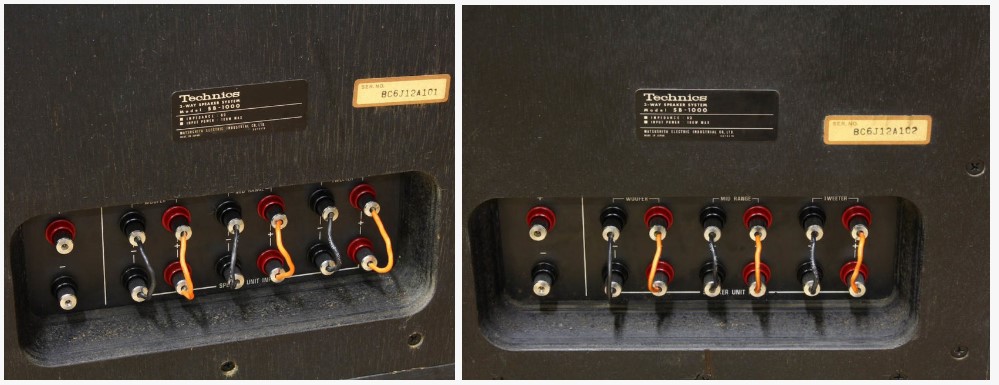
An interesting feature is that the connection to the speakers can be made through a crossover or directly to each speaker separately.
The speaker enclosure is made of three layers: the surface and inner plywood layers are 9 mm thick, the intermediate chipboard layer is 18 mm thick (total 36 mm). Reliable internal damping allowed to get rid of parasitic resonances, which, according to the manufacturer, do not exist. Another feature of the case was the use of vibration-damping coatings from the outside.
Technics SB-1000 became a kind of benchmark for a high-fidelity home acoustic system right up until the early 1990s, although its release was completed in 1975. It is still on the place of honor among the landmark products of the company Panasonic (Matsushita Electric).
On numerous audioforums, she is remembered of this day, and is usually referred to as monitors. Given the characteristics - this is not surprising. With a strong desire to legendary and rare vintage can be purchased at auction. As a rule, the cost of such a speaker in good and perfect condition is not lower than in 1974.
Used photographic materials
ldsound.ru
www.technics.com/us
The catalog Pult.ru presents a wide range of acoustic systems
In this post, the story of the speaker system, which was compared with such best-sellers as JBL L200 Studiomaster, Yamaha NS-1000, Coral DX-Eleven, Sony SS-G7. The theme of the material is the legendary small-scale Technics SB-1000, which still amazes audio lovers. Interestingly, this acoustics is recognized as one of the best in the world by both representatives of the subjective-audiophile and engineering, scientific-psychoacoustic approach, which in itself is a rarity. Moreover, the system is the subject of a kind of cult and a coveted dream of many audio collectors. Find a negative review about this system, as well as its very - quite difficult.
Background to the appearance of the legend
By the end of the 60s, the requirements for the average audio product increased markedly - this was fully applicable to acoustic systems. The consumer has become picky both in Europe and the USA, and in Japan itself. People wanted more power with less distortion and this was the most logical way to develop audio technology.
Buying HI-FI and striving to get high fidelity sound has become a fashionable trend. Even despite the fact that at that moment there was no relevant standard, the very concept of High fidelity went to the masses and began to excite not only limited audiophile groups, but other social groups as well.
The Japanese corporation felt well the current trend and sought to create something conceptually new and astounding both sound quality and design. The company of the great Konosuke Matsushita wanted to keep the leadership in a fairly tough competitive environment, which required appropriate measures.
So the engineers of Matsushita Electric had the idea to create a model that surpasses the analogs in fidelity of reproduction, functionality, and also having a compact overall dimensions. Ideally, the product should have been well ahead of its time and give impetus to the development of fundamentally new acoustic systems.
An important requirement for the product was the ability to fit into a complex interior, which seriously limited the capabilities of developers. Also, high levels of the number of distortions and frequency range seriously slowed down the development. So the first prototype of the device, launched in 1969, appeared only by 1972. To implement the project, a series of psychoacoustic studies was needed, the results of which were repeatedly used by the company afterwards.
The triumph of the small series champion
By the beginning of 1973, it was possible to fully prepare the three-way speaker for the series and start production. By 1974, the system got on the exhibition and a little later on the shelves of Japanese, European and American stores. The price of the device was relatively high - 220,000 Yen, which today would be about $ 9,000, taking inflation into account. Critics from the then honest and almost incorruptible audio press responded very flatteringly about the product.
Most of those who shared their impressions of the new speakers noted accented reproduction of bass, the frequency range that was limited for that time, went beyond the threshold of human perception, and clear sound, devoid of noticeable distortion even on a complex symphonic music signal.
Due to the high cost in the company of the great and terrible (cross out) Konosuke Matsushita decided not to launch the device in a full-scale series. Instead, the pragmatists from Technics limited themselves to small-scale release for a narrow circle of music lovers who understand the sound.
The design that defines the main trend of the generation
For 1974, the SB-1000 was a product that embodied years of development and innovation in one device. New dynamic GGs unique for that time were created for the system. In addition, fundamentally new approaches to the development of the hull and structure were tested for the first time, and vibrations were significantly reduced.
Sound engineers have been able to significantly improve the signal-to-noise ratio in the low-frequency range. As the main one in the low-frequency spectrum, 30 cm of conical-shaped low-frequency speakers EAS-30L100S were used. The membrane of this speaker was made of a three-layer composite, which has a high Young modulus. The membrane is durable and has a low frequency distortion.
Improved suspension allows you to partially reduce non-linear distortion. The diffuser travel hole, placed in the magnet, provides not only the unimpeded membrane movement, but also optimal cooling of the coil.
To reduce the resistance of the stroke of the diffuser in the magnet has a large hole, which also removes heat well.
The dynamic capabilities of the loudspeaker are provided by a powerful magnetic system with a magnet diameter of 220 mm (magnet size 220x120x23 mm) with a speaker diameter of 300 mm. Traditionally, such powerful magnets are used in concert equipment. One can hardly recall a different case of using such giants in home haifa.
The sound in the midrange is provided by a 4.5 cm driver EAS-18KM100S with a dome, the membrane of which is also made of a three-layer
pulp-carbon composite. The manufacturer also reported that in order to reduce losses in mid-range drivers, electrical steel sheet cores with impressive magnetic induction were used. The course of the midrange emitter coil was increased by 7 mm.
. A 19mm tweeter device, the EAS-12KH100S was made from a titanium alloy of only 20 microns thick. This alloy is 30% lighter than aluminum and has more impressive transient characteristics. The magnetic flux density of the RF radiator is approx. 19000 Gs. In addition, the tweeter is equipped with a choke made of silicon-containing alloy on a steel base, which allows to reduce the SOI of the tweeter to less than 0.1% per 100W.
An interesting feature is that the connection to the speakers can be made through a crossover or directly to each speaker separately.
The speaker enclosure is made of three layers: the surface and inner plywood layers are 9 mm thick, the intermediate chipboard layer is 18 mm thick (total 36 mm). Reliable internal damping allowed to get rid of parasitic resonances, which, according to the manufacturer, do not exist. Another feature of the case was the use of vibration-damping coatings from the outside.
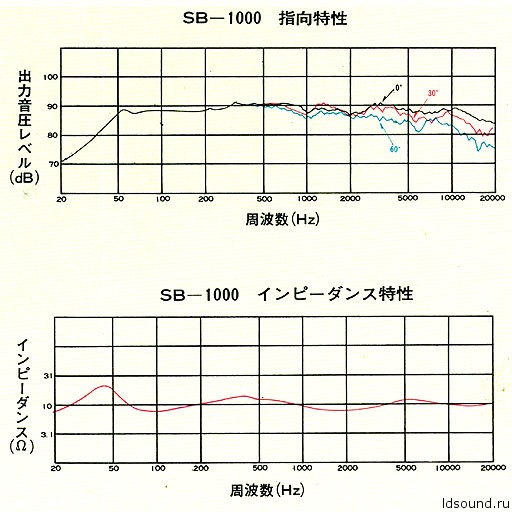
- Further I list the dry characteristics of the system:
- Frequency range: 20 - 30000 Hz;
- Sensitivity: 90 dB / W / m;
- Power (DIN): 100 W;
- Resistance: 8 Ohm;
- Crossover cutoff frequency: 500 Hz and 5000 Hz;
- Overall dimensions (HxWxD): 582х392х397 mm;
- Weight: 52 kg;
Total
Technics SB-1000 became a kind of benchmark for a high-fidelity home acoustic system right up until the early 1990s, although its release was completed in 1975. It is still on the place of honor among the landmark products of the company Panasonic (Matsushita Electric).
On numerous audioforums, she is remembered of this day, and is usually referred to as monitors. Given the characteristics - this is not surprising. With a strong desire to legendary and rare vintage can be purchased at auction. As a rule, the cost of such a speaker in good and perfect condition is not lower than in 1974.
Used photographic materials
ldsound.ru
www.technics.com/us
The catalog Pult.ru presents a wide range of acoustic systems